
The decision / Miami-Dade
When to stop repairing a garage door opener
Replace the opener when the fault is the unit rather than a part of it. Four signals settle that, and only three of them are financial: an obsolete safety design, a control board that fails intermittently, a gear that has been replaced once already, and a motor that is undersized for the door it now carries.
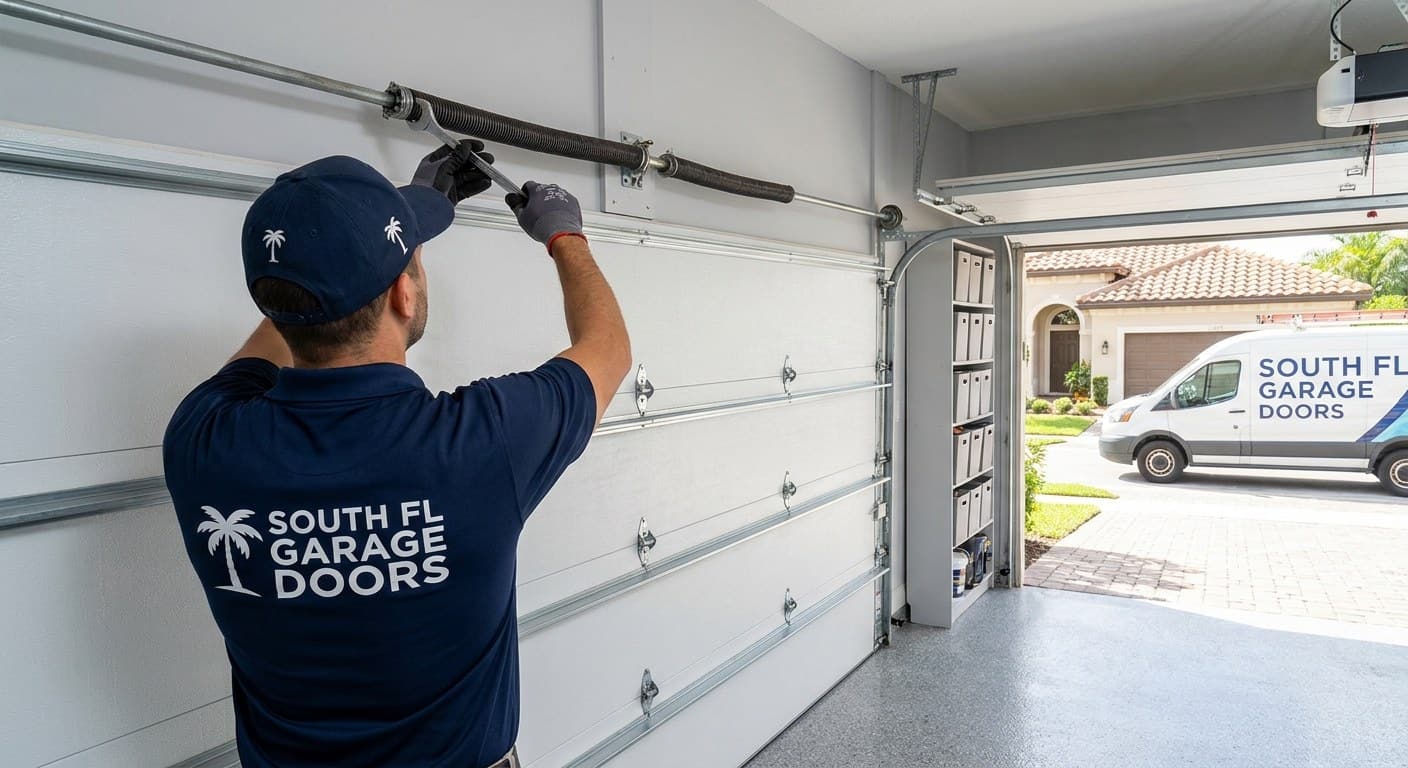
Three reasons that decide it
Fifteen years
the practical replacement line
Working photo-eyes
non-negotiable, at any age
A second failure
the rest of the unit is the same age
What makes an opener worth replacing
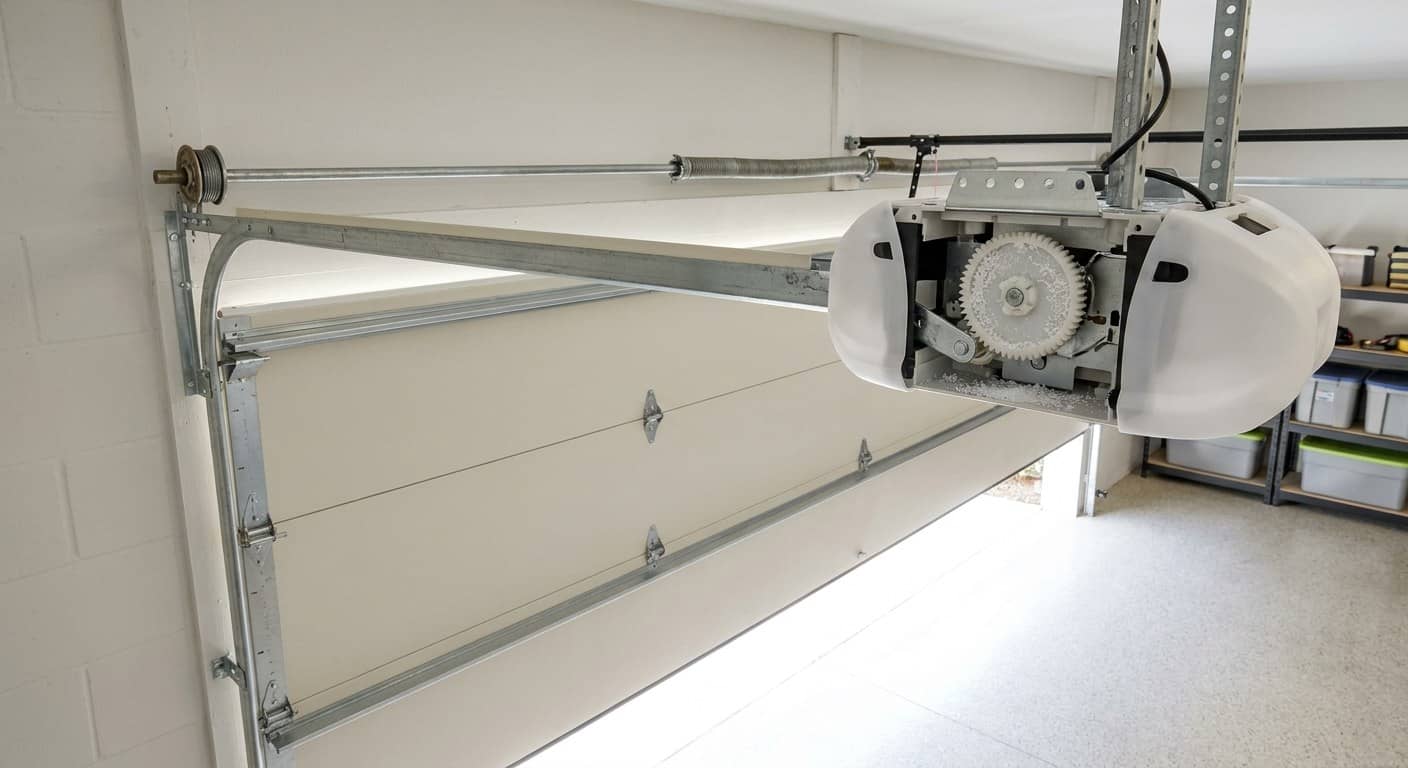
Repeated gear failure
Once is a repair; twice is a pattern
No safety sensors
Required on residential openers since 1993
Noise under living space
A belt drive is the reason people replace a working unit
A worn trolley
Slipping under load is a whole-unit symptom
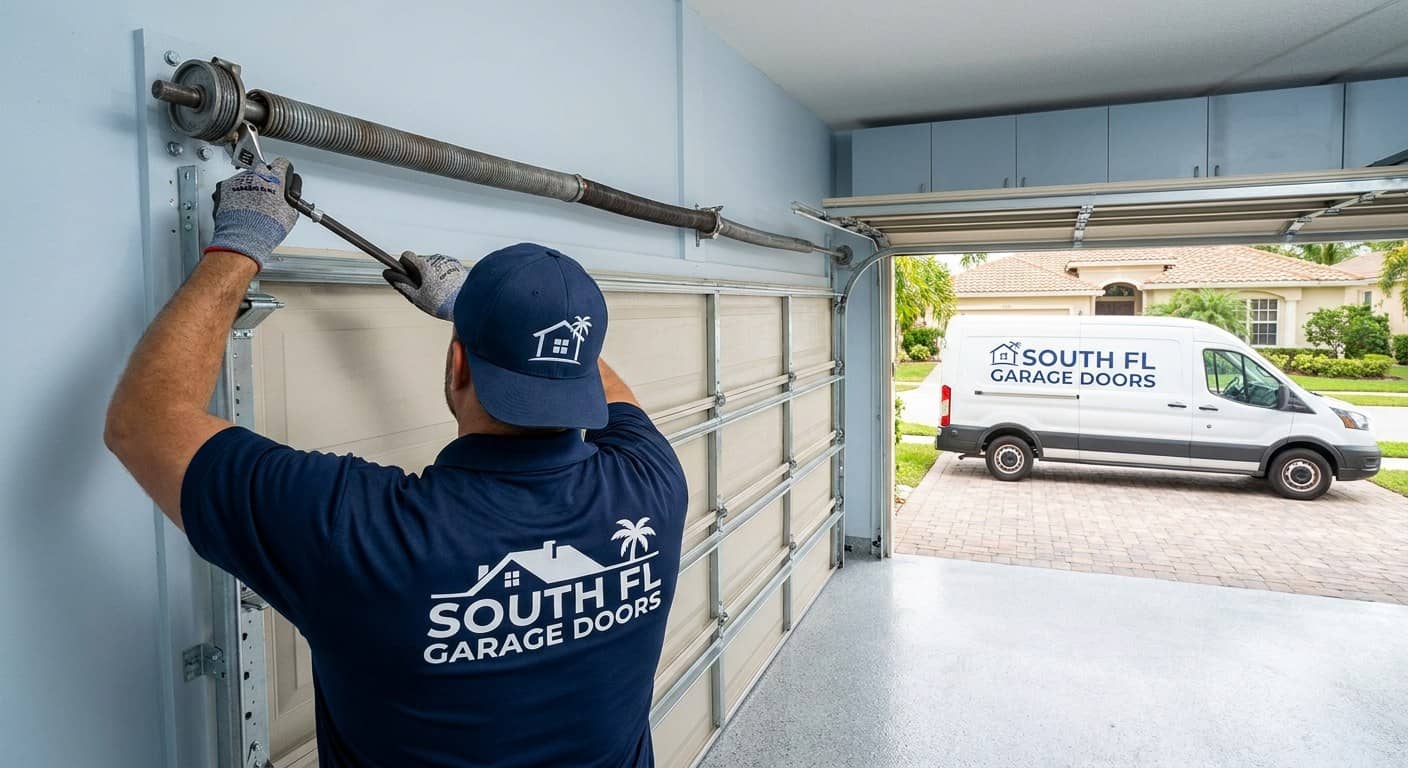
When replacing beats repairing
| Situation | What it means | Timing | Next step |
|---|---|---|---|
| No photo-eye sensors at all | Predates the federal safety requirement | Replace now | No repair makes an unsafe opener safe |
| Fifteen years or more | Past the usual working life | Replace at the next fault | Parts get scarce and boards get brittle |
| Second failure in twelve months | The rest of the unit shares those hours | Replace | Two repairs usually exceed a new unit |
| Chain drive under a bedroom | Nothing is broken — it is simply loud | Replace by choice | A belt drive is dramatically quieter |
| No battery backup | Required on new Florida installations | Replace at the next fault | An outage is exactly when the door matters |
| Before hurricane season | You do not want this decision in June | Plan it in spring | Lead times stretch as the season approaches |
Worth keeping vs. worth replacing
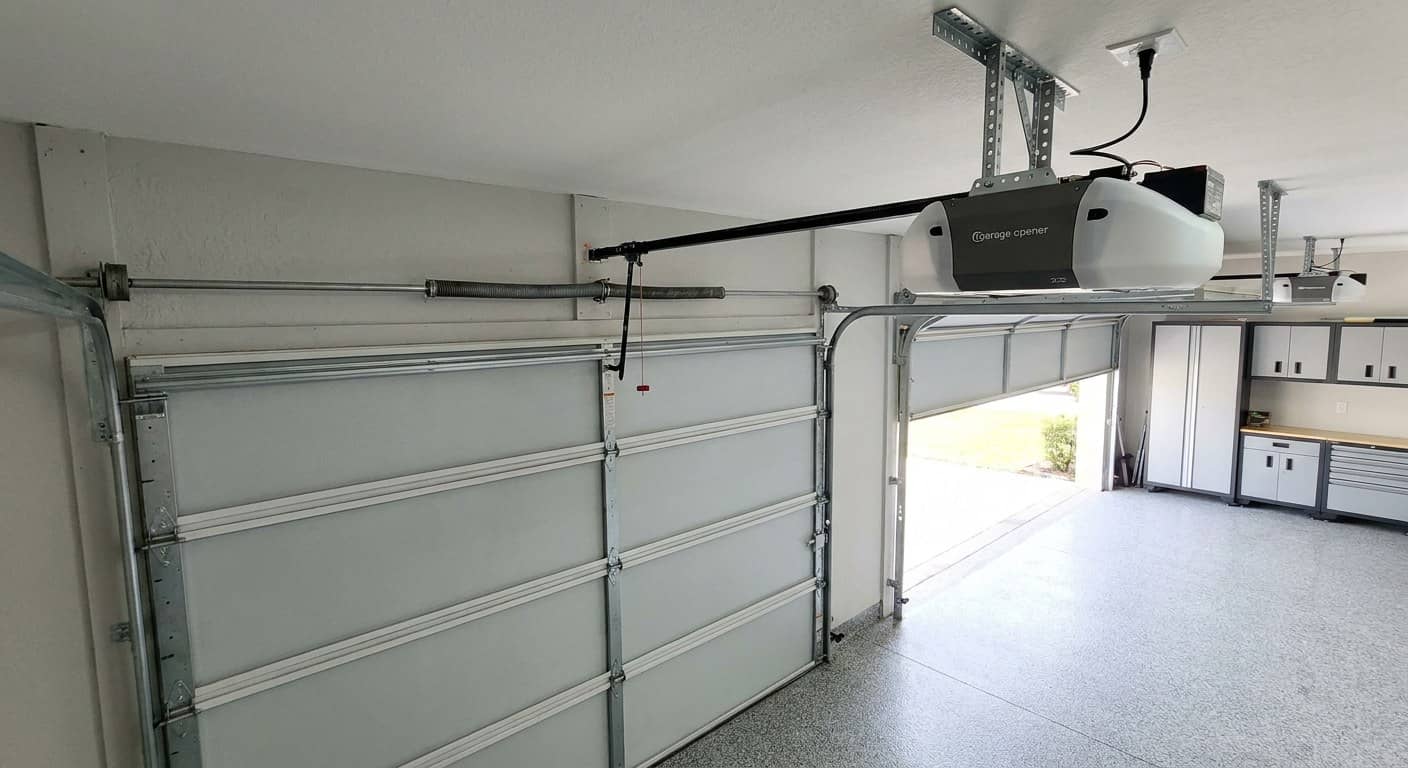
Normal
Quiet and current
A belt drive with working sensors and battery backup is the modern baseline.
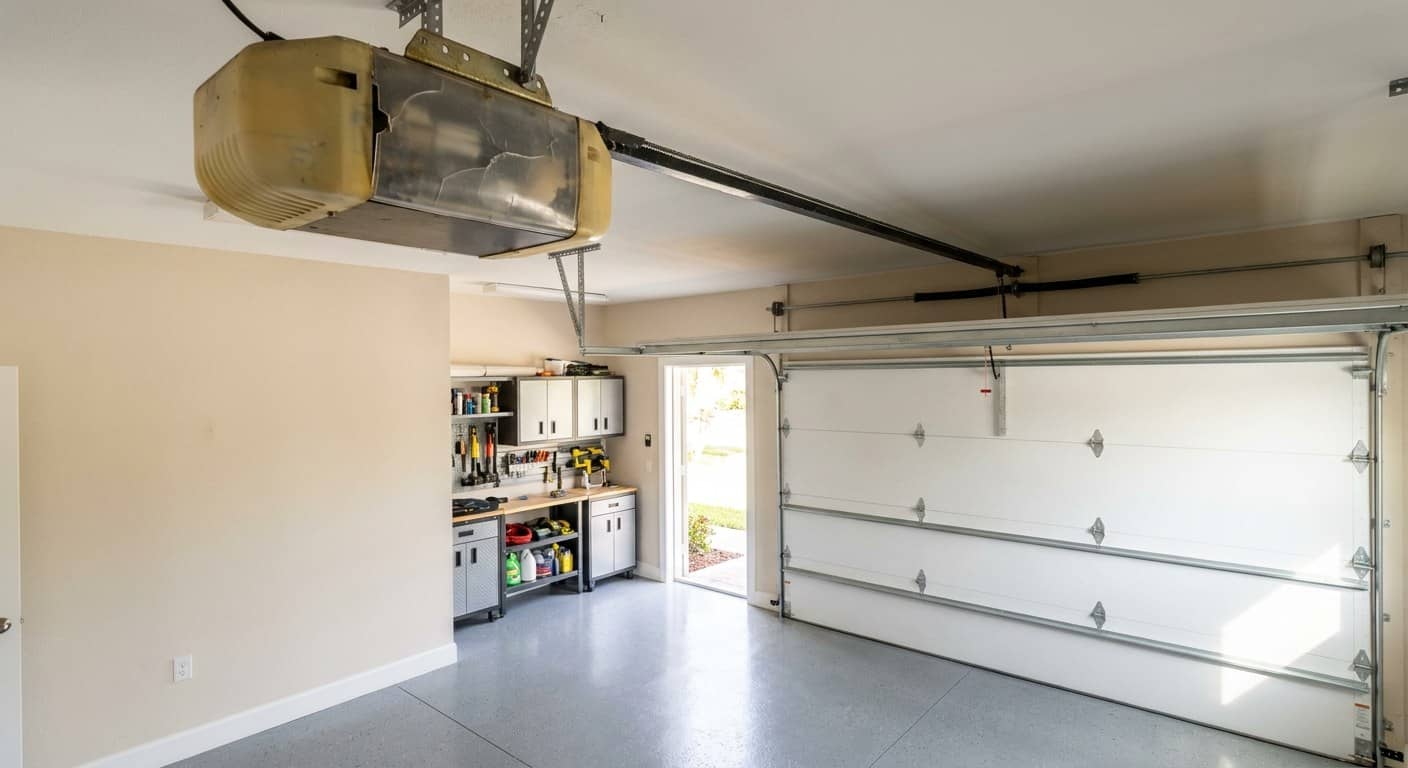
Warning
Worn drive
A stripped gear on an older unit rarely travels alone.
1993
since when photo-eye sensors are federally required
2
visits after which you are financing a diagnosis
2nd
stripped gear that means the fault is elsewhere
More detail if you want it
The signal that is not negotiable
Federal rules have required photo-eye sensors on residential openers since 1993. A unit older than that reverses on resistance alone, if at all — it has no way of knowing that something is under the door until it has already touched it. Repairing one keeps a machine in service that cannot pass a modern safety test, and no amount of remaining life justifies that on a door a child walks under.
Dating the unit takes a minute: the manufacture label is on the side or back of the head, and if the housing has no photo-eye terminals at all, the answer is already in. This is the one case where the arithmetic does not get a vote.
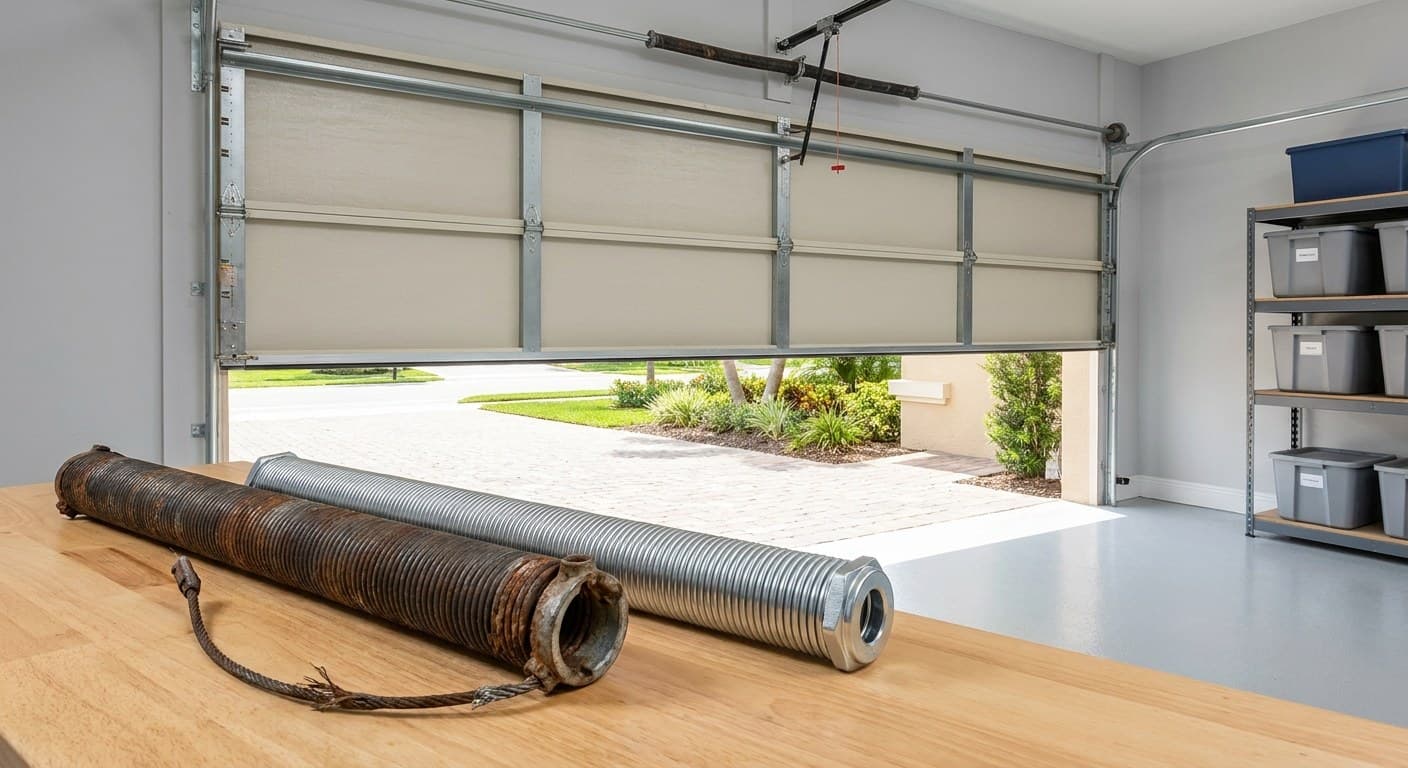
Intermittent beats broken, and not in a good way
A unit that fails outright is diagnosable in one visit. A unit that works four times and refuses the fifth is the expensive one: it is usually a board with a cold joint or a tired capacitor, it will test fine on the bench, and it will send a technician back to your house twice before anyone accepts that the part is the whole point. Two callouts and a board rarely cost less than a new unit fitted.
The useful question is not how much the board costs. It is how many visits the fault has already taken. Past two, you are financing a diagnosis rather than a repair.
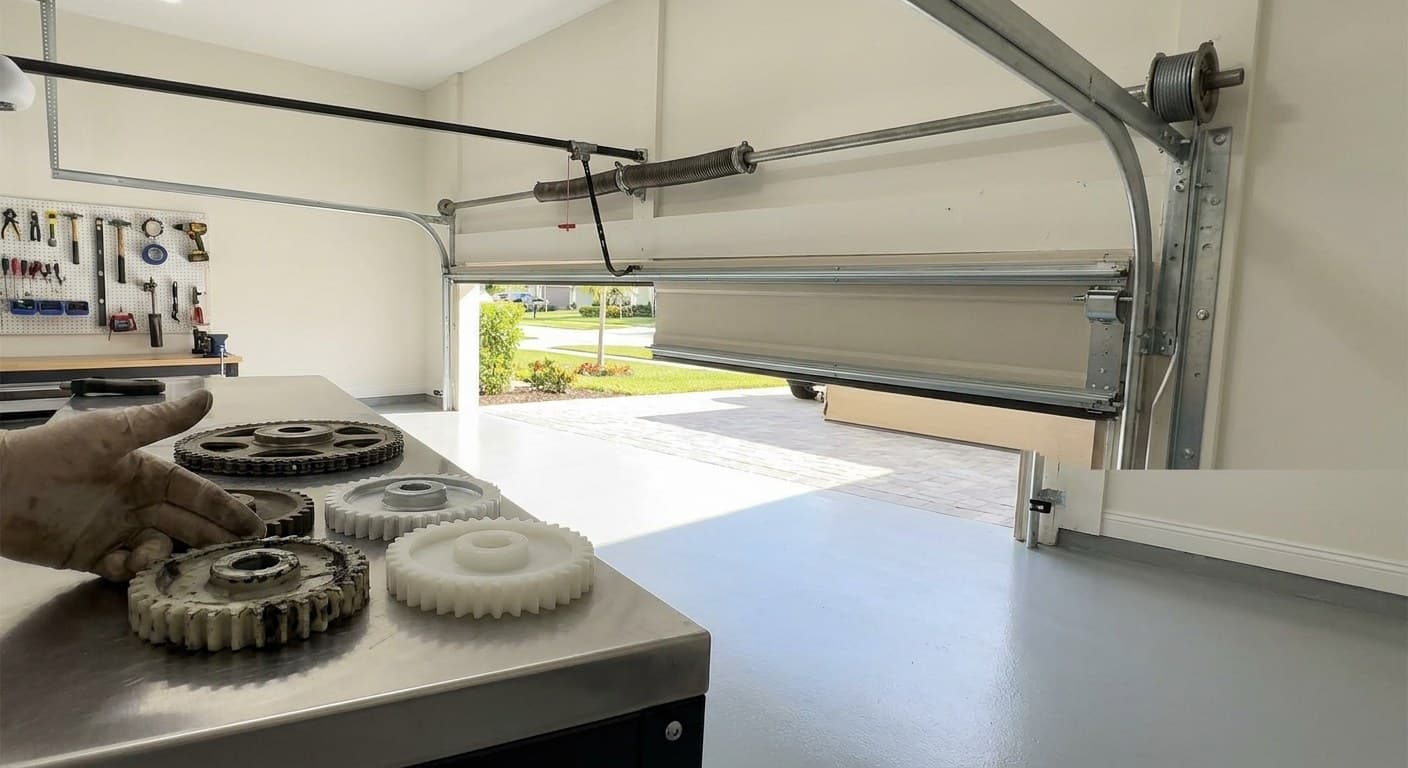
The second gear, and the door that changed underneath it
A stripped drive gear is a normal repair the first time. The second time on the same unit is a message: either the door is out of balance and is being carried by the motor, or the motor is simply too small for what it now lifts. Replacing the gear again without settling which of those two is true guarantees a third one.
This is where an old opener and a newer approved door meet badly. The panel went up in weight when it was replaced; the opener did not. It kept working, so nobody flagged it — and then it starts eating gears on a schedule.
Knowing when an opener is finished: common questions
Is a loud garage door opener a reason to replace it?
Noise on its own is a weak reason to replace a garage door opener, because the racket is more often the door than the drive.
- Dry rollers make a healthy chain sound terminal
- Have the door checked by hand first
- Quiet by hand and loud at the head: comfort choice
The remote works but the wall button does not. Is the opener dying?
That pattern points at the low-voltage wire or the wall button itself, both of which are cheap and independent of the head unit's health.
- A staple or a screw through the run of wire
- A button contact worn out from years of use
- Have the part named before shopping for a head
Is there any benefit to replacing a garage door opener before it fails?
The benefit of replacing early is the date: a planned opener replacement happens on a day you choose, and an unplanned one happens when a storm is named.
- Every installer in the county books out at once
- Stock moves before the cone even narrows
- Waiting means the calendar chooses for you
How many times should a stripped opener gear be replaced?
A stripped drive gear is a normal repair the first time, and the second time on the same unit is a message rather than a part.
- The door may be out of balance and carried by the motor
- Or the head is simply too small for the panel
- Fitting a third gear buys a few months
Sources
- U.S. Consumer Product Safety Commission
- Florida Department of Business and Professional Regulation
Edited by Avidan Benichay · Updated
General information about garage doors in South Florida — not a diagnosis of your door, and not a quote. Code and prices vary by address and change over time. Terms of use
Before you decide
- How long openers lastTen to fifteen years is the figure the industry quotes, and it holds up reasonably well — but it describes a dry garage in a mild climate hanging a light door.10-15 yrquoted service life in a mild climate
- Opener replacement costA replacement opener fitted to an existing door generally lands between $450 and $850 in this market, motor and labor together.$450-850fitted replacement, motor and labor
- Safety sensors blinkingEvery opener made since the early nineties carries two photo-electric eyes near the floor, and they use their indicator lights to report their own state: one solid light and one blinking light means the pair has lost sight of each other.2eyes, and they must face the same plane
- Checking your door is safeFive checks, no tools, about five minutes: reversal on contact, the photo eyes, the balance, the cables, and the emergency release.5 minmonthly routine, no tools required
Next step
Find out what your address actually requires.
Design pressure depends on your exact wind zone and the geometry of the opening. We check it before quoting anything — no guesswork, no round numbers.
You describe what the door is doing
The noise it makes, how far it travels, whether the opener runs.
We test it on site
Springs, cables, balance, tracks, opener force and the safety reverse.
You get the price before any work starts
Itemized in writing, including the permit when the job needs one.
- 4.9/5 from 300+ local reviews
- Licensed & insured
- Free visit, no obligation