
A new noise
Garage door making a noise it never made before?
Grinding, squealing, banging or a slap from the ceiling — a new noise is a part telling you it has changed. Yes, we handle this, and most of it is cheap while it is still only a noise.
A garage door that has started making noise usually points to worn rollers, cracked hinges, a dry bearing, a slack opener chain, or a door that has drifted out of balance. We listen to it run, isolate the part, and give you the price before approved work begins.
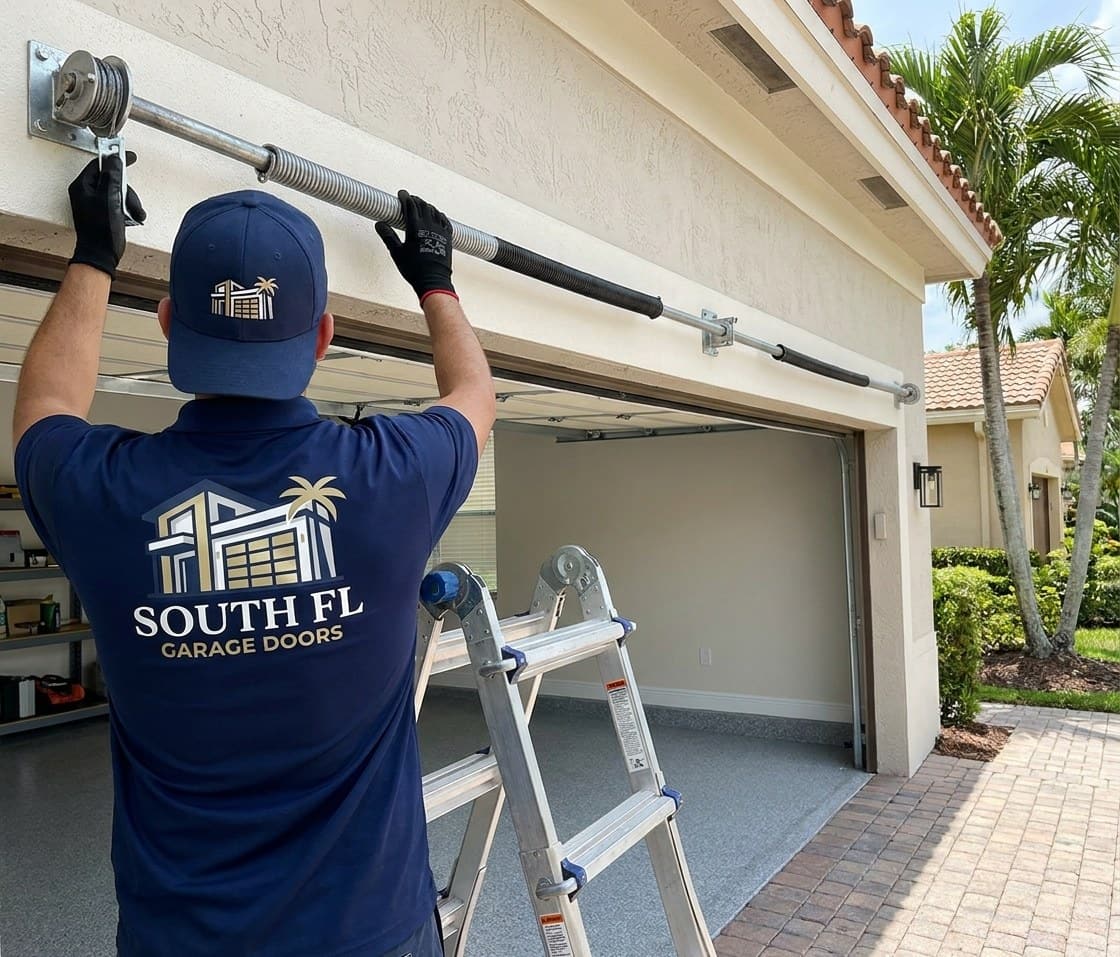
A bang is not a noise problem.
One loud bang, then a door that will not lift, is a snapped spring. Stop using the door and call — that one is not on this page.
Common issue
Rollers, hinges, bearings or chain
Handled on site
We listen to it run before quoting
Cheap while it is a noise
Most of these are wear, not failure
Three counties
Miami-Dade · Broward · Palm Beach
Quick answer
What makes a garage door suddenly noisy?
A door has about forty moving parts. A new noise narrows that to one, and the sound tells you which.
The most common causes we see
Salt air shortens the life of every bearing surface on the door, which is why doors here get noisy years earlier than the manufacturer's cycle count suggests.
Worn rollers
Steel rollers grind long before they fail, and they are the most common noise on this coast.
Cracked hinges
A cracked hinge clicks once per section, every cycle, until it does more than click.
Dry or rusted bearing
A dry bearing squeals at the same point of travel every single time, which is how you tell it apart.
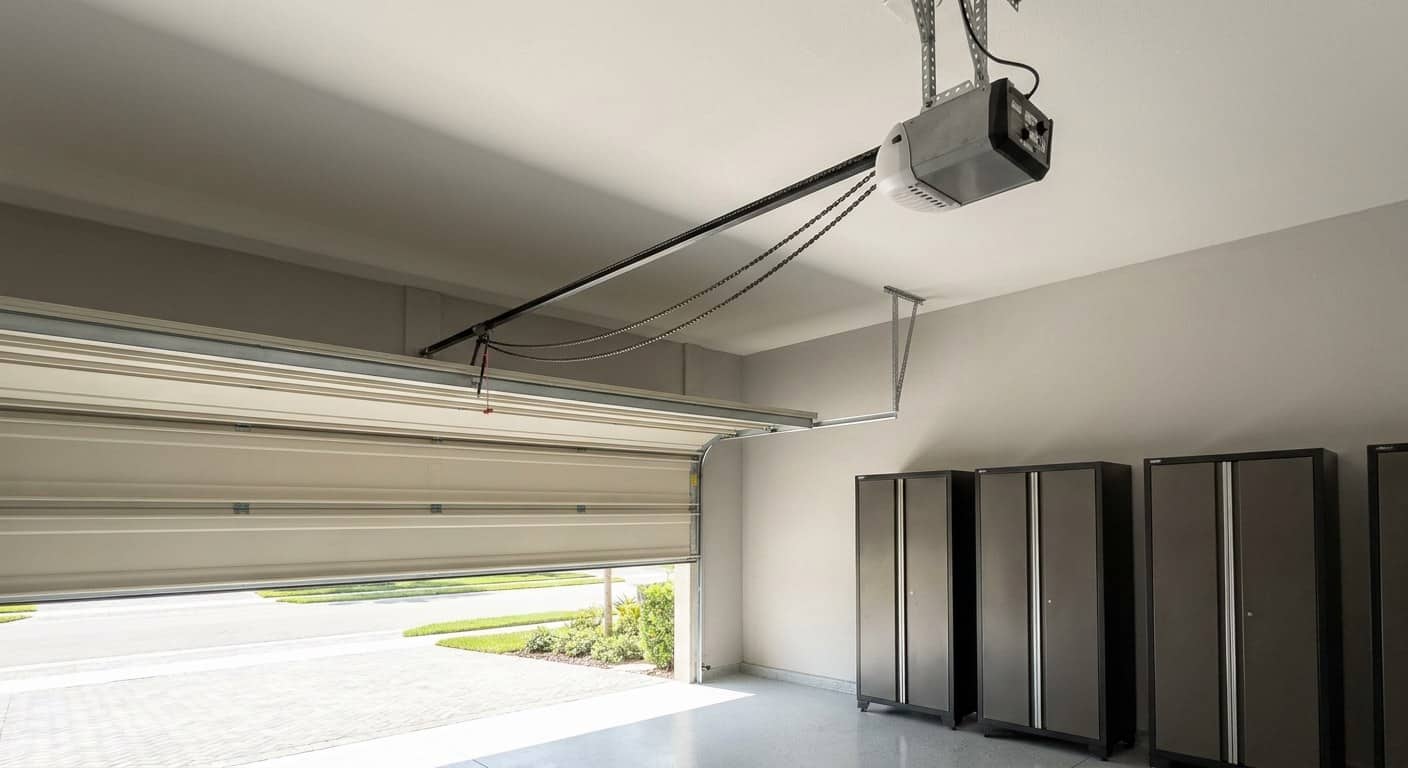
Slack opener chain
A slack chain slaps the rail, and the sound comes from the ceiling rather than the door.
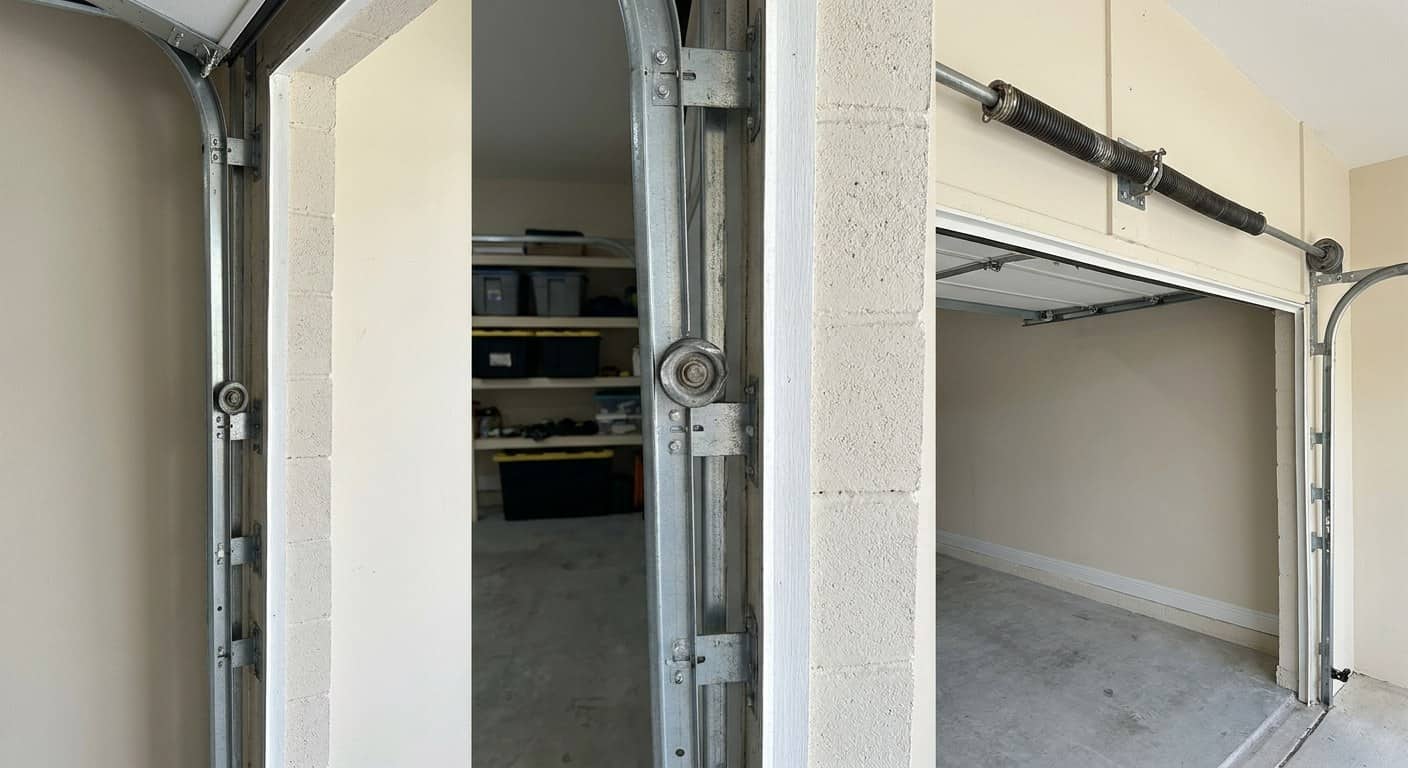
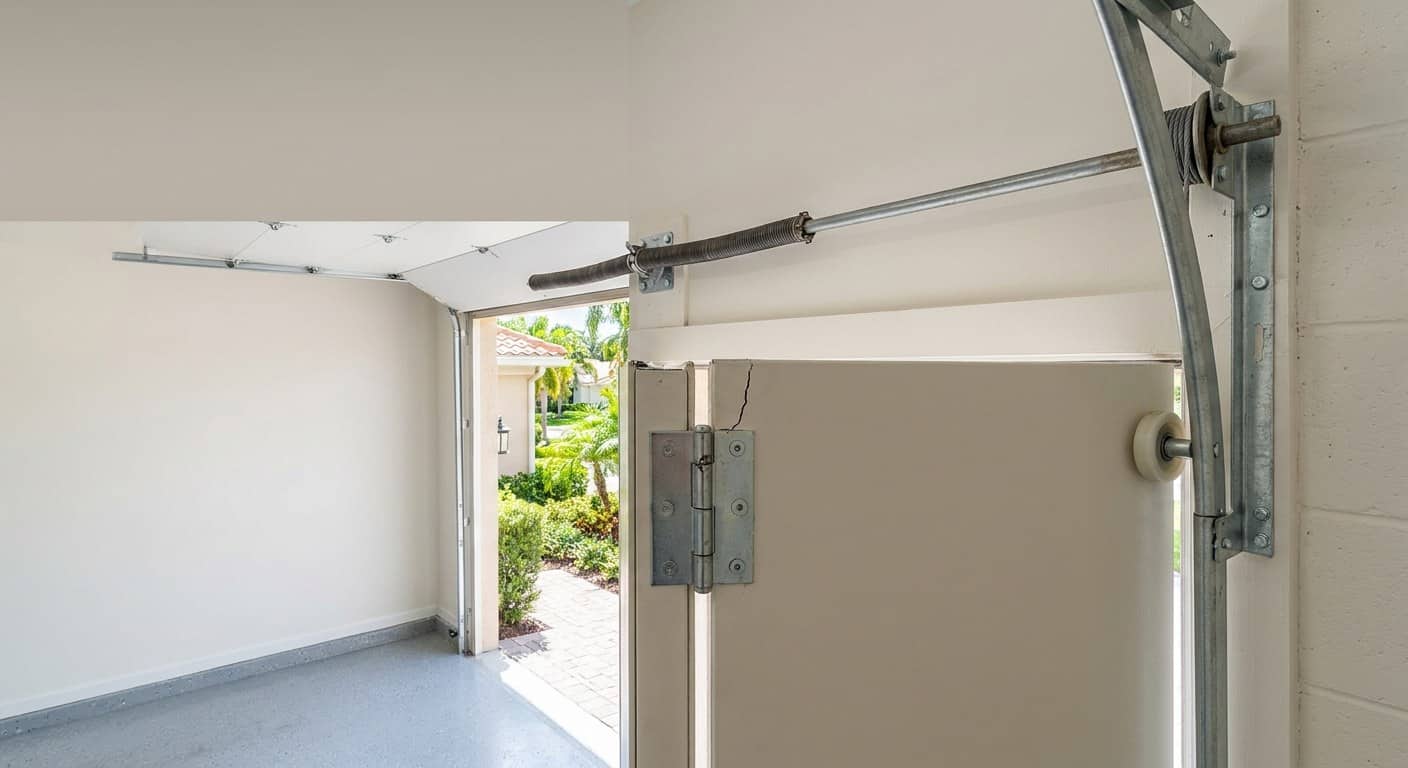
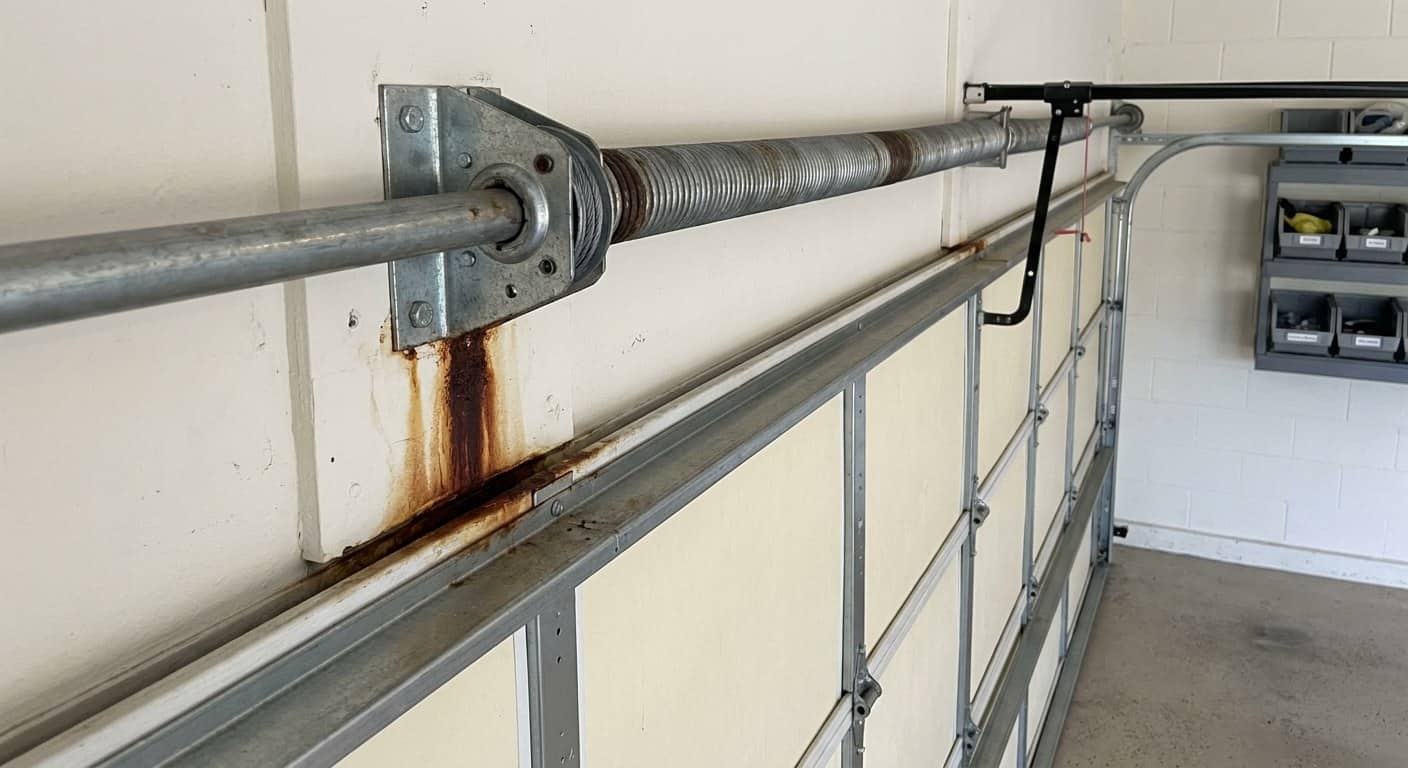
What the problem sounds like
Customers usually describe it one of these ways.
The sound and where it comes from are most of the diagnosis.
Grinding along the track
Steel on steel, loudest at the curve where the door changes direction.
A squeal at the same point
Repeatable to the inch, which points at a bearing rather than at the door.
A slap from the ceiling
The chain, not the door: it sags and hits the rail on the way past.
A click once per section
Counted per cycle, that is a hinge, and hinges are numbered by position.
What we check on site
Listen first. Then change one part.
A noise diagnosed from a description is a guess. We run the door, listen, and isolate the part before quoting anything.
Rollers
Play in the stem, flat spots on the wheel, and how each one sits in the track.
Hinges
Cracks at the knuckle and elongated bolt holes between the sections.
Bearings and shaft
End bearings, the center bearing, and whether the shaft still turns true.
Chain or belt tension
Slack at the trolley, and wear on the rail where the chain has been slapping.
Balance
A door out of balance makes every other part work harder and louder.
Track alignment
Bends and loose brackets that let the door move where it should not.
Still hearing it?
Book a diagnostic visit or call now and we'll take it from there.
Likely repair paths
What the fix often turns out to be.
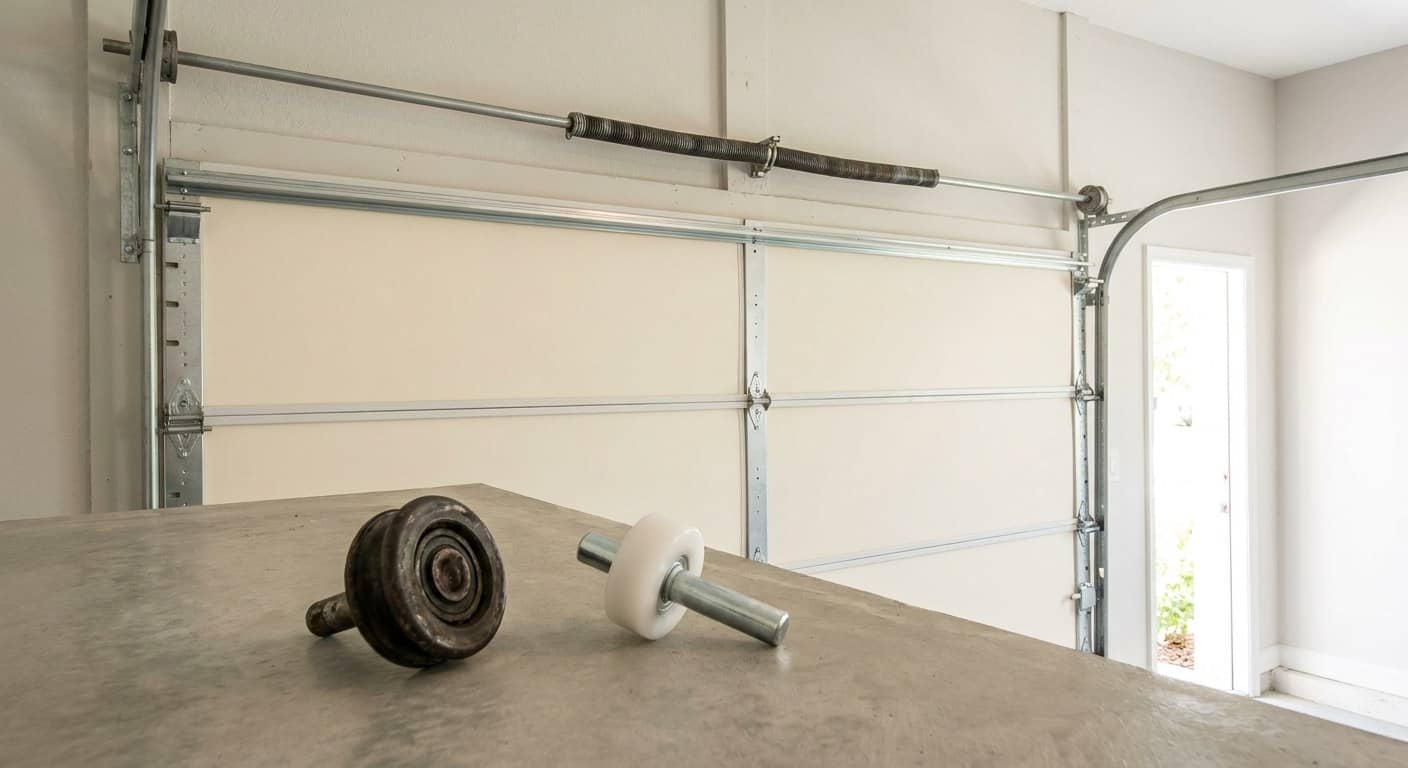
Roller replacement
The single cheapest change that makes a door quieter, and the one most doors here need first.
What roller service can include
- Nylon roller replacement across all sections
- Track cleaning and alignment
- Hinge inspection while the door is apart
- Balance check after the change
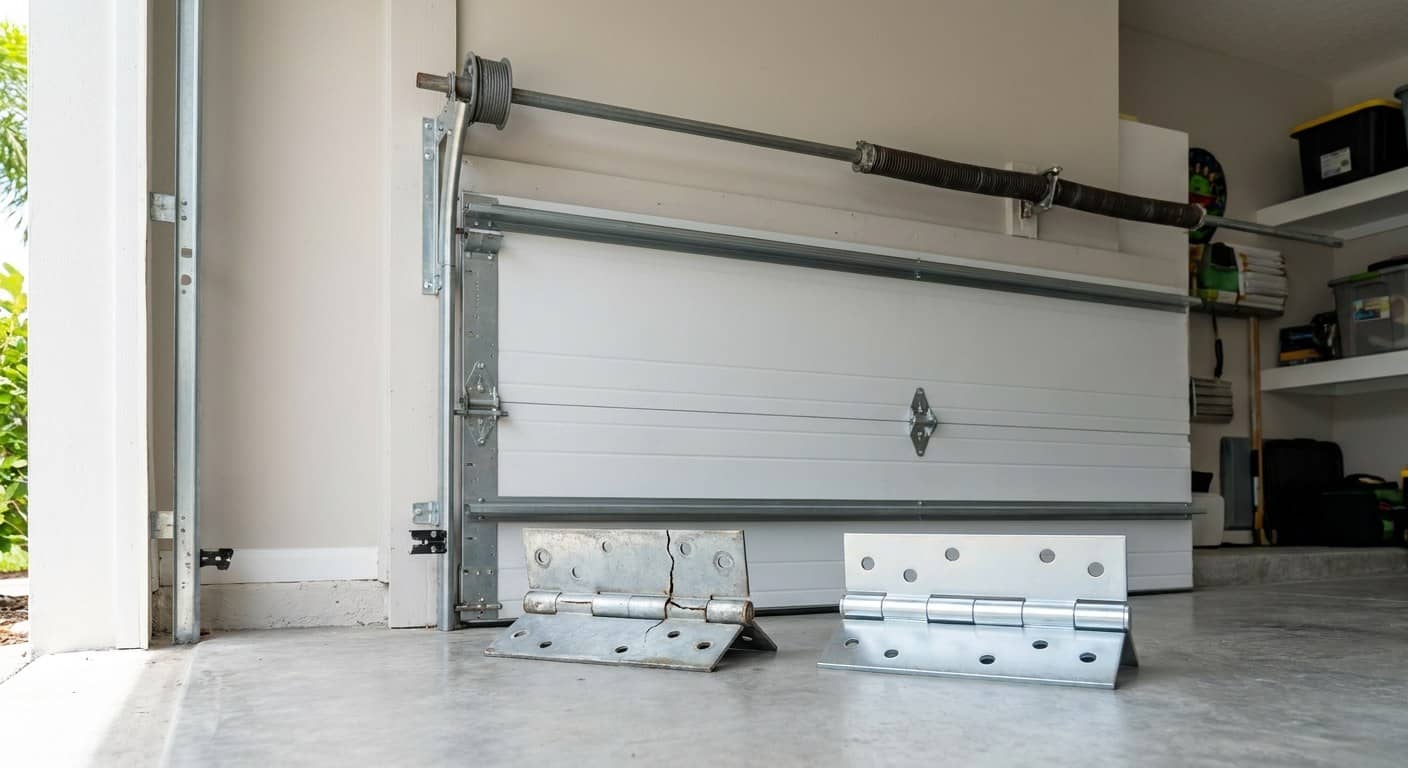
Hinge replacement
Hinges are numbered by position: the wrong number in the right place binds the section it holds.
What hinge service can include
- Numbered hinge replacement by position
- Elongated bolt-hole repair
- Section alignment after the change
- Fastener replacement where corroded
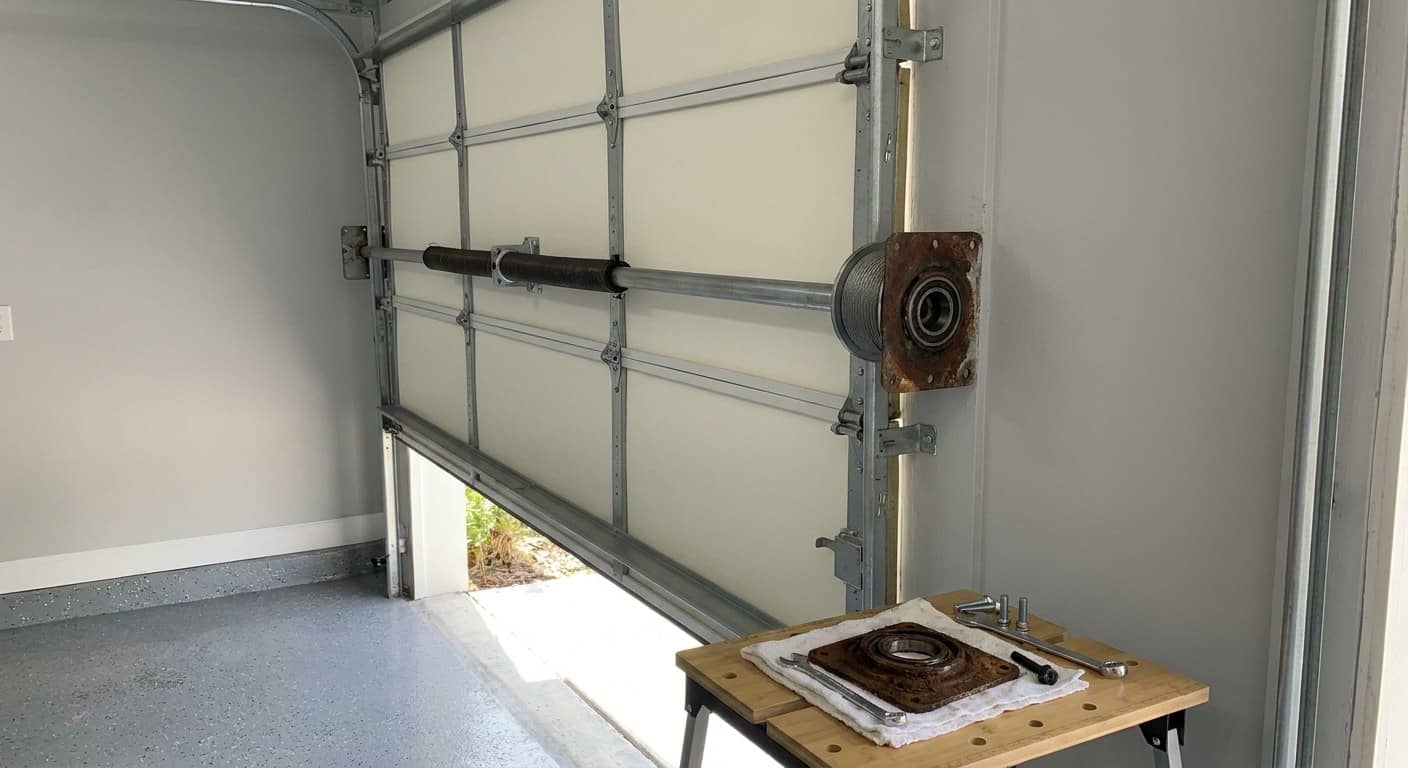
Bearing and shaft service
Salt reaches the bearing before it reaches anything you can see from the driveway.
What bearing service can include
- End and center bearing replacement
- Shaft inspection for run-out
- Bearing plate replacement where corroded
- Spring and drum check while unloaded
No surprises
How the visit goes
Simple process, clear diagnosis, and no surprises before work starts.
- 01
You tell us the door won't open
Describe what the door is doing. You do not need to know the technical name of the failure.
- 02
We inspect and identify the cause
We test the system on site and show you the component or condition that is actually stopping the door.
- 03
You get the price before work starts
If you approve the work, we proceed. If not, you still have a clear diagnosis and next step.
Why South FL Garage Doors
Local, licensed, and ready to help.
Local, licensed, and used to this problem.
We have been serving South Florida homeowners since 2014 with repair, opener, spring, track, and emergency garage door service.
Since 2014
Serving South Florida homeowners
FL License 25BS00124
Licensed & insured
3 counties
Miami-Dade · Broward · Palm Beach
Free diagnostic visit
No obligation
Typical repair ranges
What the price often depends on
The exact price depends on the failed component, the condition of the door, and the repair required.
- Rollers or track repair$75–$350
- Annual tune-up and safety check$100–$240
- Lift cable replacement (pair)$225–$375
- Torsion spring replacement (pair)$250–$450
These are published market ranges for South Florida, not a quote. The failed component and the condition of the door decide the final price.
Fixed point
squeal is rotational, at the shaft
Traveling
scrape follows the door: rollers
One bang
heard once, at night, is a spring
More detail if you want it
Match the sound to the part
A high continuous squeal that rises and falls with speed and stays fixed at one spot on the wall is rotational: the shaft bearing. A dry rasping scrape that travels with the door and changes character at the curve is the rollers. A rhythmic thump repeating at even intervals is a wheel that has worn a flat and is now dragging instead of turning.
A single violent bang, usually heard once and often at night, is the torsion spring letting go. A metallic rattle across the whole travel is loose hardware — the fasteners on hinges and track brackets backing out. A deep groan under load, with the door moving slowly, is the opener straining against weight the springs should be carrying.
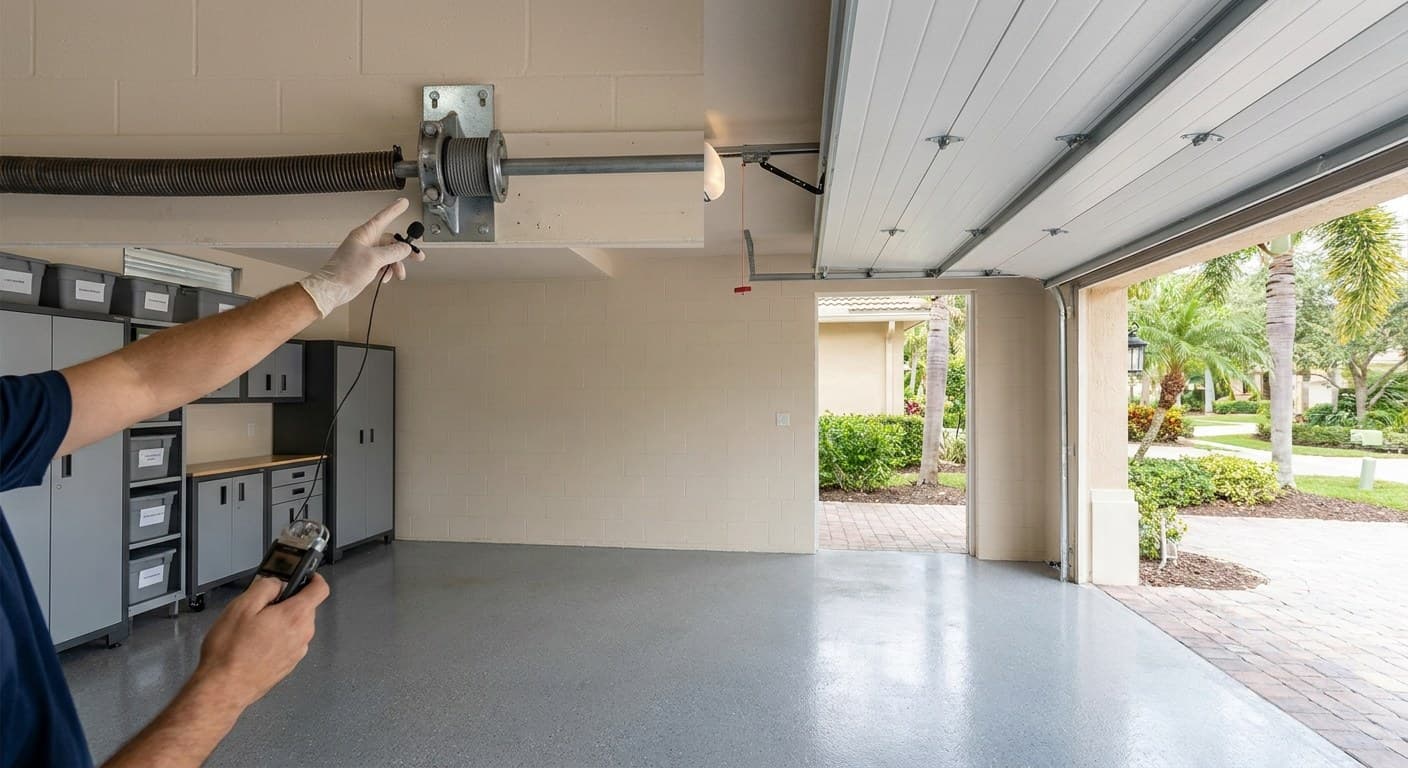
The noises that mean stop using it
Most door noises are an invitation to book a service call at your convenience. Three are not. The bang of a spring, any grinding that coincides with the door sitting visibly crooked in the opening, and a popping or cracking from the panels themselves all mean the assembly is no longer carrying load the way it was designed to, and each further cycle spreads the damage.
The distinction worth holding onto is between noises that come from friction and noises that come from something carrying a load it should not. Friction is annoying and gets worse slowly. Misplaced load gets worse quickly, and it moves from cheap components to expensive ones.
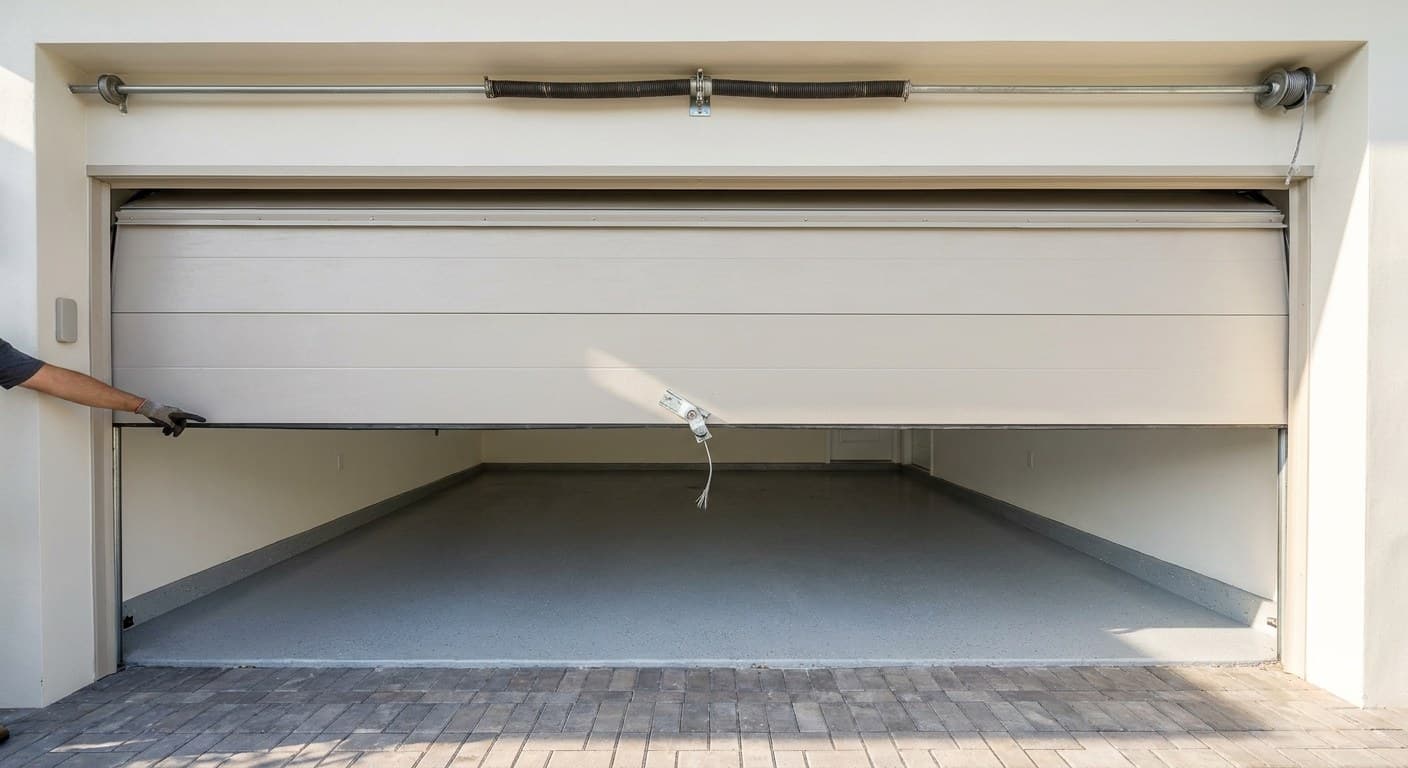
Why a Miami garage gets loud faster
Two conditions here accelerate everything that makes noise. Humidity keeps a permanent film on unprotected steel, so any bare metal surface is slightly rough within a season rather than a decade. And airborne salt turns ordinary dust into a mild abrasive, which is why open bearings and unsealed wheels here reach the dragging stage years earlier than the same hardware inland.
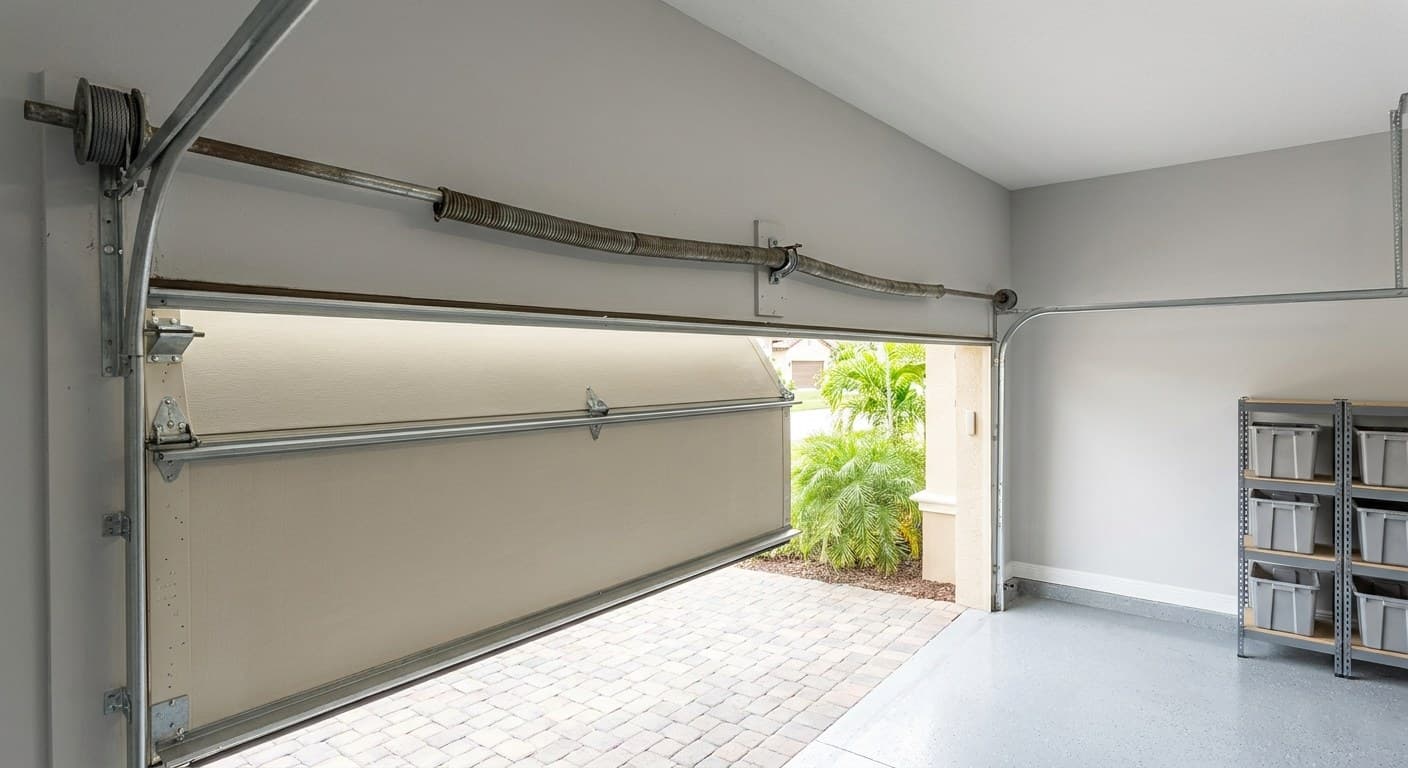
Garage door noises, and what each one usually means
Will lubricating a garage door stop the noise?
Lubrication quiets friction noise for a while and does nothing at all for load noise, which makes it a poor way to diagnose.
- Wrong surfaces attract grit and speed up wear
- A squeal fixed at one spot is a bearing
- Find the source first, then treat that source
Is a garage door that has always been loud a fault?
A garage door that was loud from day one usually has builder-grade steel wheels on a chain drive, which is a noisy combination rather than a fault.
- Steel rollers where nylon would run quiet
- A chain drive mounted over a bedroom wall
- Louder than it was is the signal that matters
Can garage door noise be fixed without replacing parts?
Some garage door noise clears with adjustment alone: fasteners brought back to torque, track realigned, the correct lubricant on the right surfaces.
- Loose hinge and bracket fasteners
- Track alignment at the curve
- A wheel or bearing already worn will not come back
Why does a garage door get noisy faster in Miami?
Humidity here keeps a permanent film on unprotected steel, and airborne salt turns ordinary dust into a mild abrasive.
- Bare metal roughens in a season, not a decade
- Salt film on springs and on the cable drums
- Wheels flatten sooner on the coastal side
That makes it a maintenance-interval question rather than a parts question, and it is why the same door runs quieter inland.
Sources
- U.S. Consumer Product Safety Commission
- Florida Building Commission — Product Approval
Edited by Avidan Benichay · Updated
General information about garage doors in South Florida — not a diagnosis of your door, and not a quote. Code and prices vary by address and change over time. Terms of use