
Doing it right / Miami-Dade
The five-minute garage door safety check
Five checks, no tools, about five minutes: reversal on contact, the photo eyes, the balance, the cables, and the emergency release. Run them monthly. Between them they catch nearly every fault that either injures somebody or leaves a door immovable on the morning it matters most.
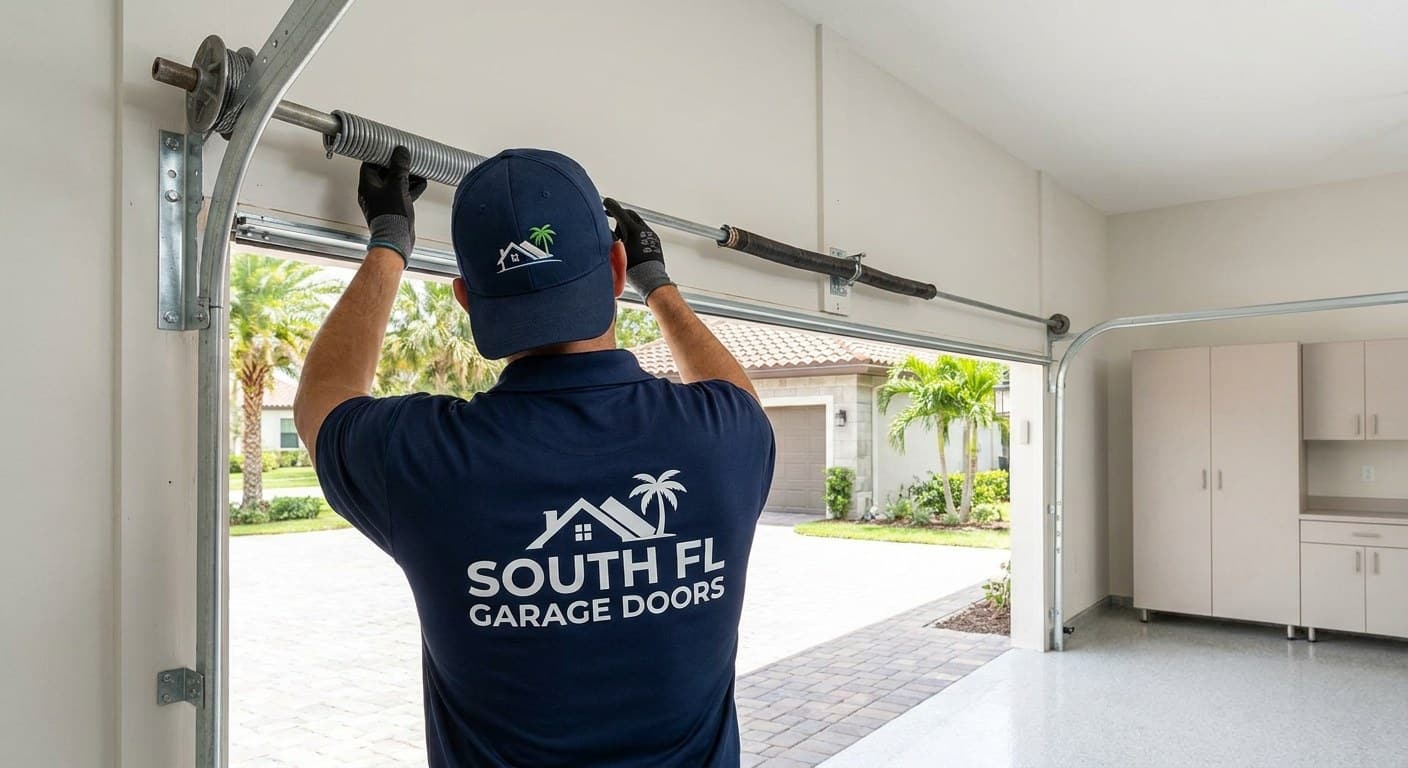
Three checks worth doing monthly
The reverse test
an object under the door, every month
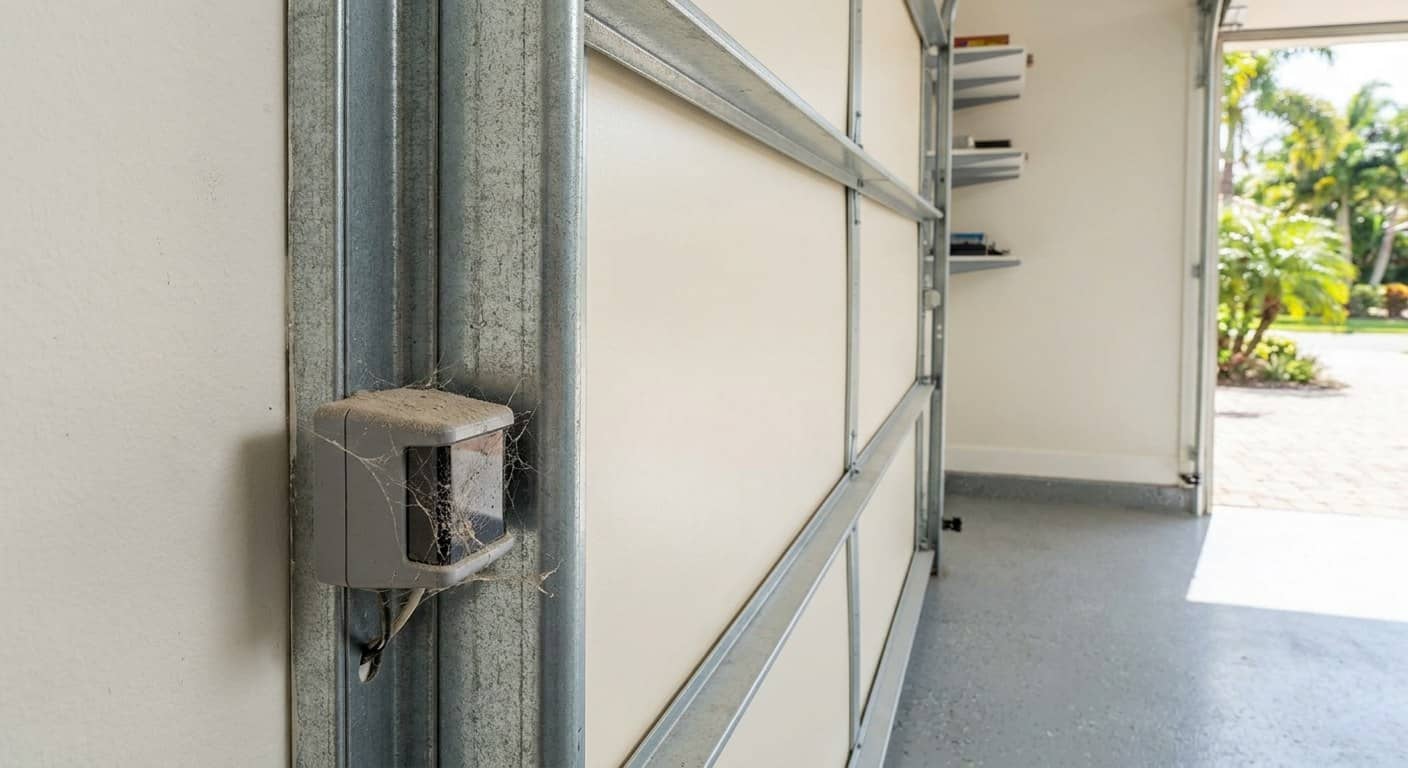
Both sensor lights
steady, not blinking
It takes two minutes
and it is the whole safety system
The safety systems on your door
Photo-eyes
The beam that stops the door on anything crossing it
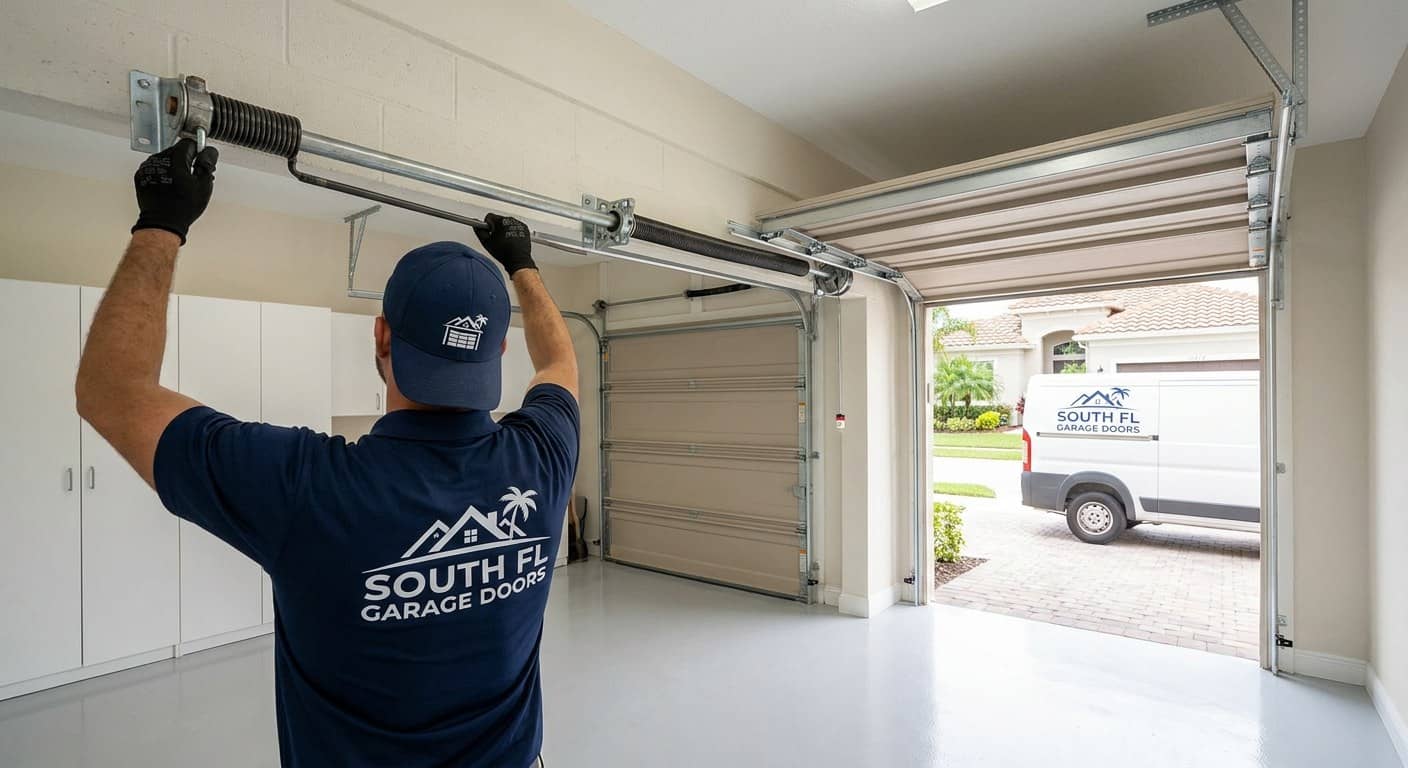
Springs and cables
The counterbalance that makes the door liftable
Emergency release
Your way out when the power is
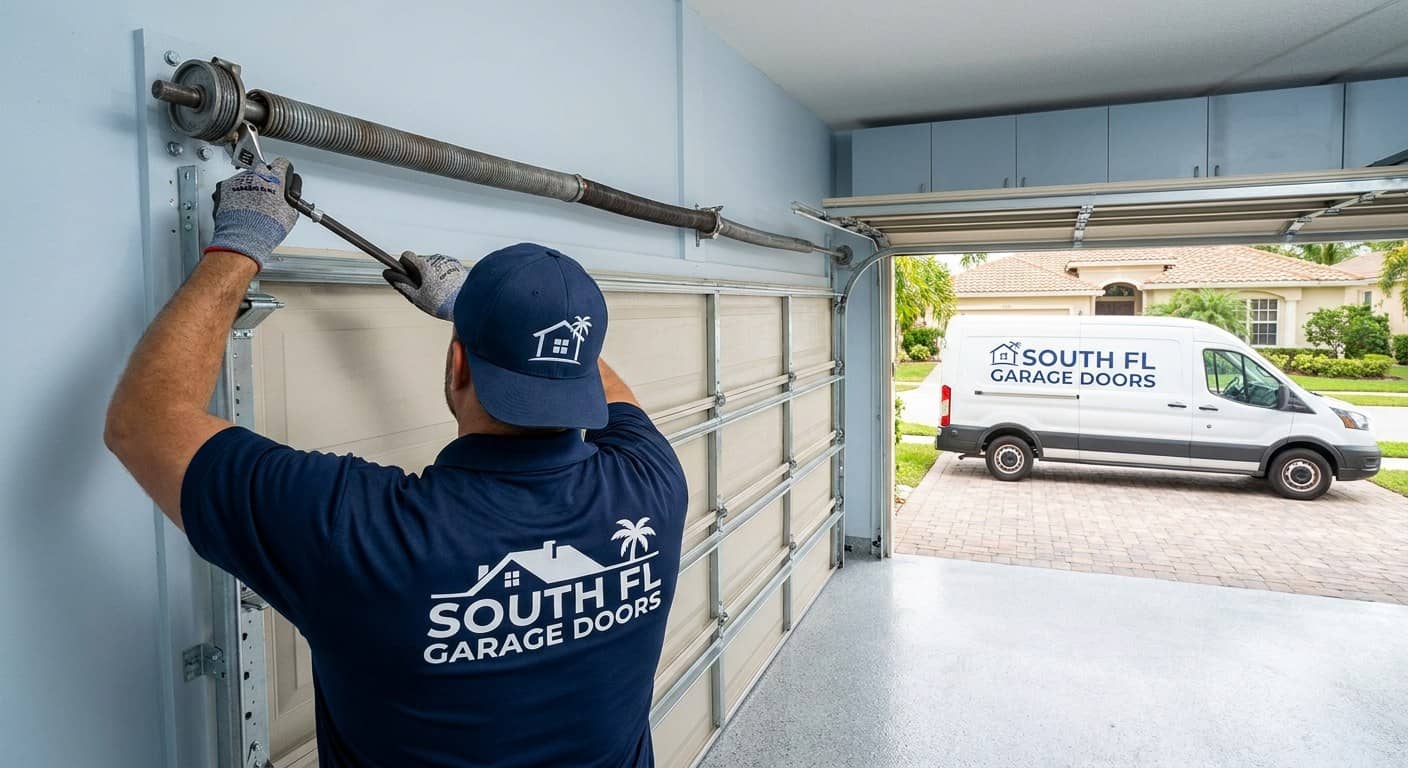
Hardware
Hinges, brackets and fasteners that hold it together
The safety checks, and how often
| Task | Who can do it | Risk | What we advise |
|---|---|---|---|
| Reverse test with an object | Anyone | None | Monthly: the door must reverse on contact |
| Balance test | Anyone, with the opener released | Low | Half-open, it should stay put |
| Sensor height and aim | Technician | Low | Near the floor, by federal requirement |
| Wall control height and remotes | Anyone | None | Controls high, remotes out of reach |
| Everyone knows the red cord | Anyone | None | Teach it before you need it |
| Annual service | Technician | Low | Cables, springs and fasteners get looked at |
The three rules that matter most
Never bypass the sensors
They are the only thing that stops the door on a person
Never walk under a moving door
Teach children that it is not a game
Controls are not toys
Wall buttons high, remotes out of small hands
Never do this…
- Never bypass the sensors
- Never walk under a moving door
- Controls are not toys
A door that passes vs. a door that does not
Normal
Reverses on contact, every time
Two steady sensor lights and an immediate reverse on an object mean the safety system works.
Warning
Hesitates, or does not reverse
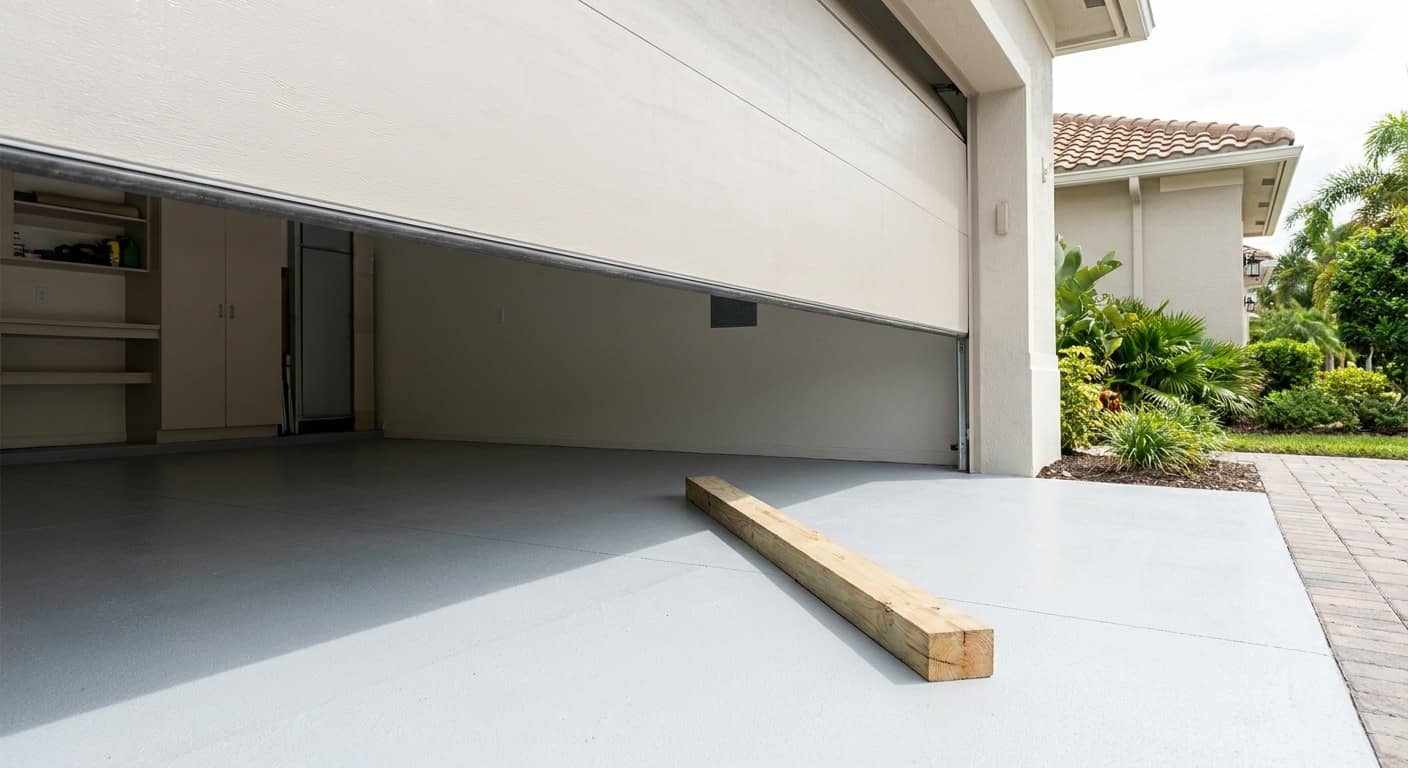
A door that crushes the object, or reverses only sometimes, is out of service until it is adjusted.
5 min
monthly routine, no tools required
2
independent protections a door must pass
waist
height at which a balanced door holds position
More detail if you want it
Reversal and the eyes: two different protections
Lay a length of two-by-four flat on the floor under the middle of the opening and close the door onto it. It should touch, stop and go back up. If it presses down and keeps pressing, the force setting is wrong and the door has lost the protection that catches anything the beam is too low to see — a hand on the bottom edge, for instance.
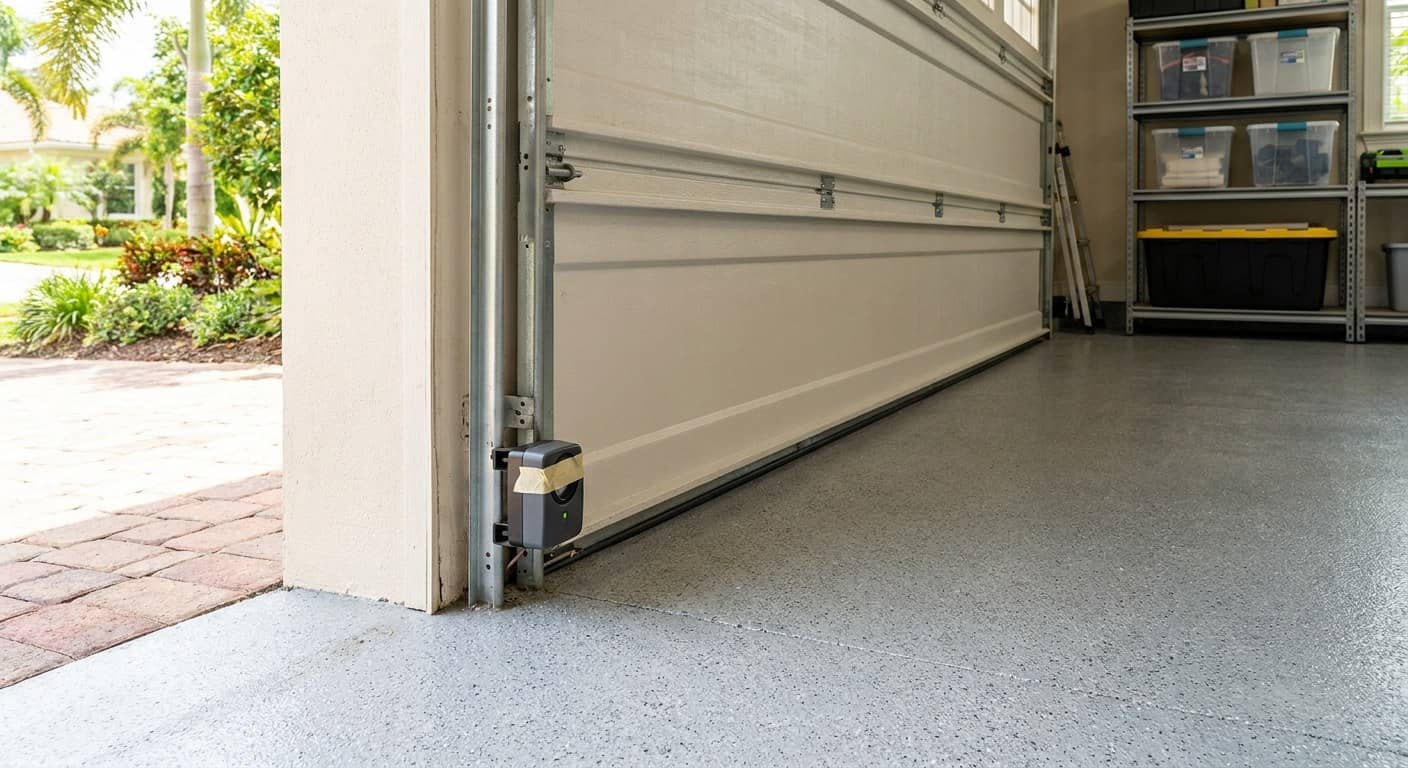
The beam near the floor is the second and separate system, and it is the one that fails most often here because the units sit at ankle height in a room that gets swept, hosed and bumped. The two protections are independent by design: one working does not excuse the other, and a door should pass both before anyone parks under it again.
Balance: the check that predicts the others
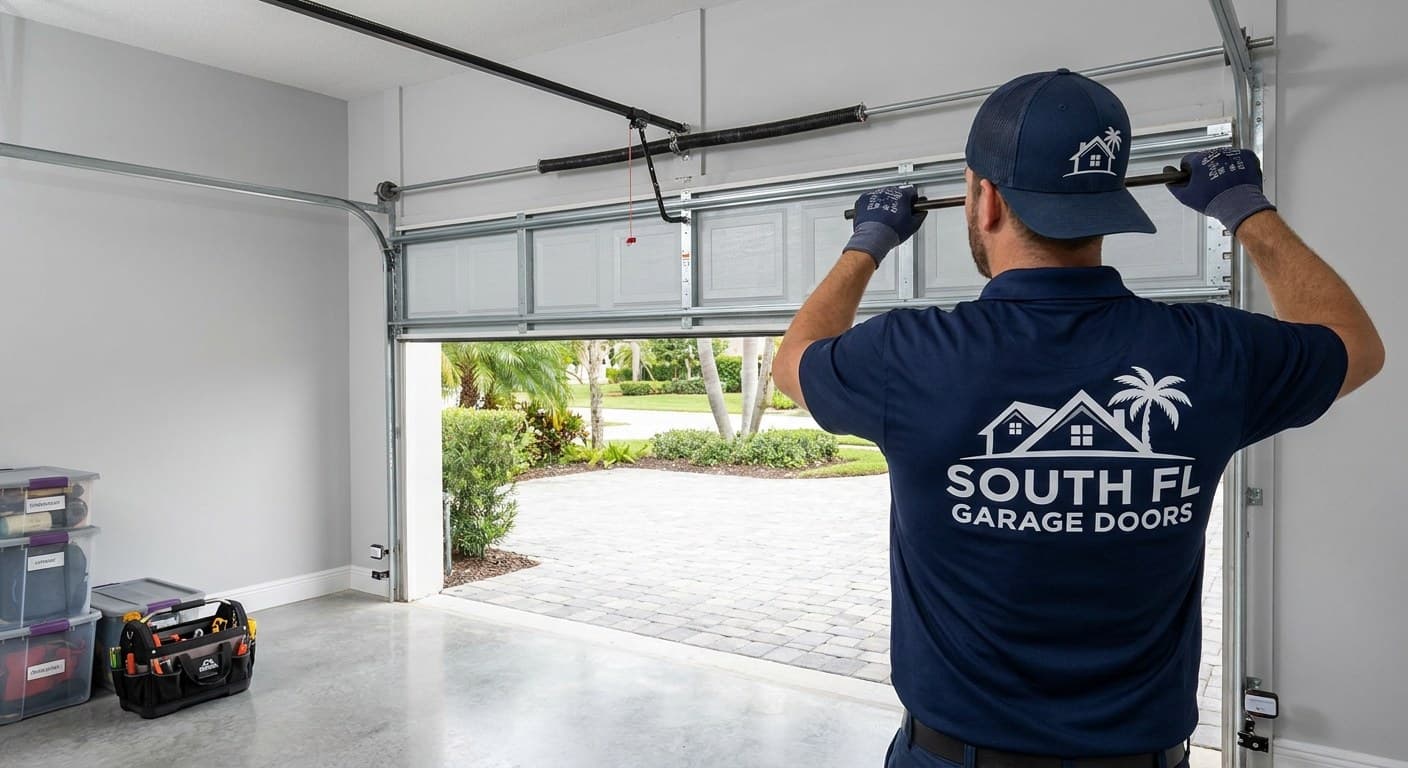
Pull the release cord with the door closed, then lift the door by hand to about waist height and let go. A correctly counterweighted door stays roughly where you left it. One that sinks is being carried by its opener on every cycle; one that flies upward is over-tensioned, which is its own problem. Either way the springs are no longer doing the job they were wound for.
This one check is worth the other four put together, because a door out of balance is the upstream cause of most of what goes wrong downstream: burnt gears, frayed cables, a bottom section that lands hard enough to bend.
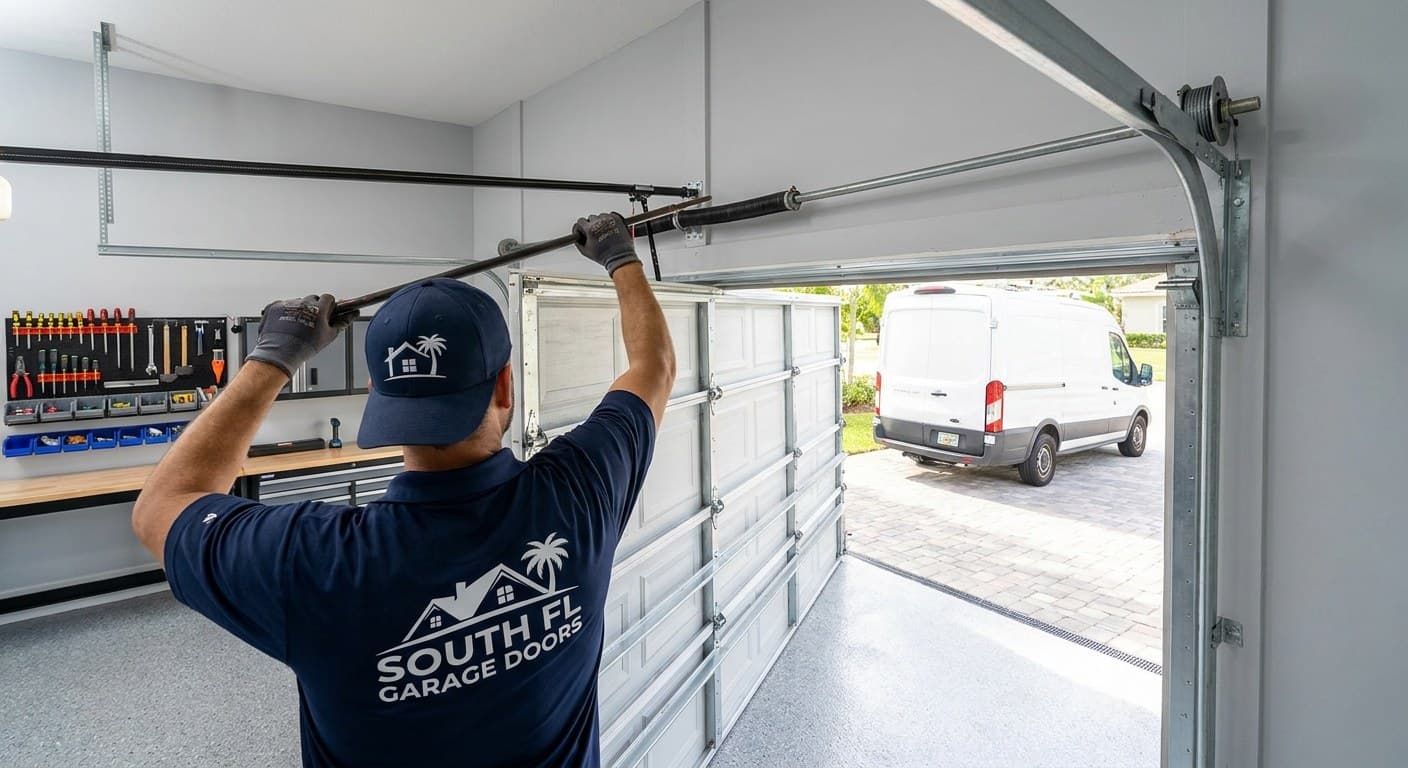
Cables, and the cord you hope never to need
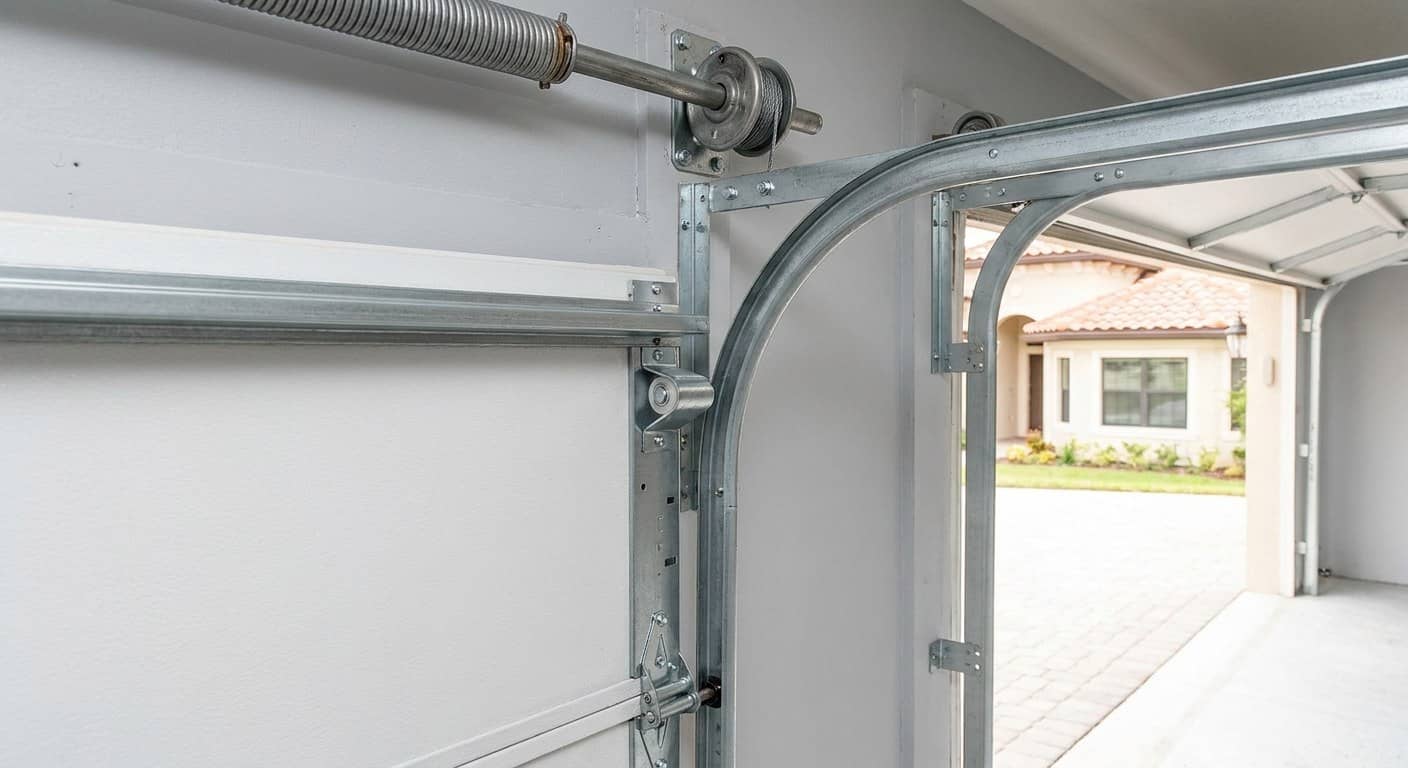
Look at the lift cables where they wind onto the drums at the top of each vertical track. You are looking for broken strands standing proud of the lay, or a rust bloom on the wire itself. A cable does not part all at once; it gives you weeks of warning in the form of whiskers, and almost nobody looks.
Then pull the emergency release and open the door by hand once, all the way. That cord is what gets a car out of a garage when the power is gone, and the day you need it is not the day to discover that the trolley is seized or that the door is too heavy to lift because the springs went first. Practicing it once a month costs nothing and is the single most Florida-specific item on this list.
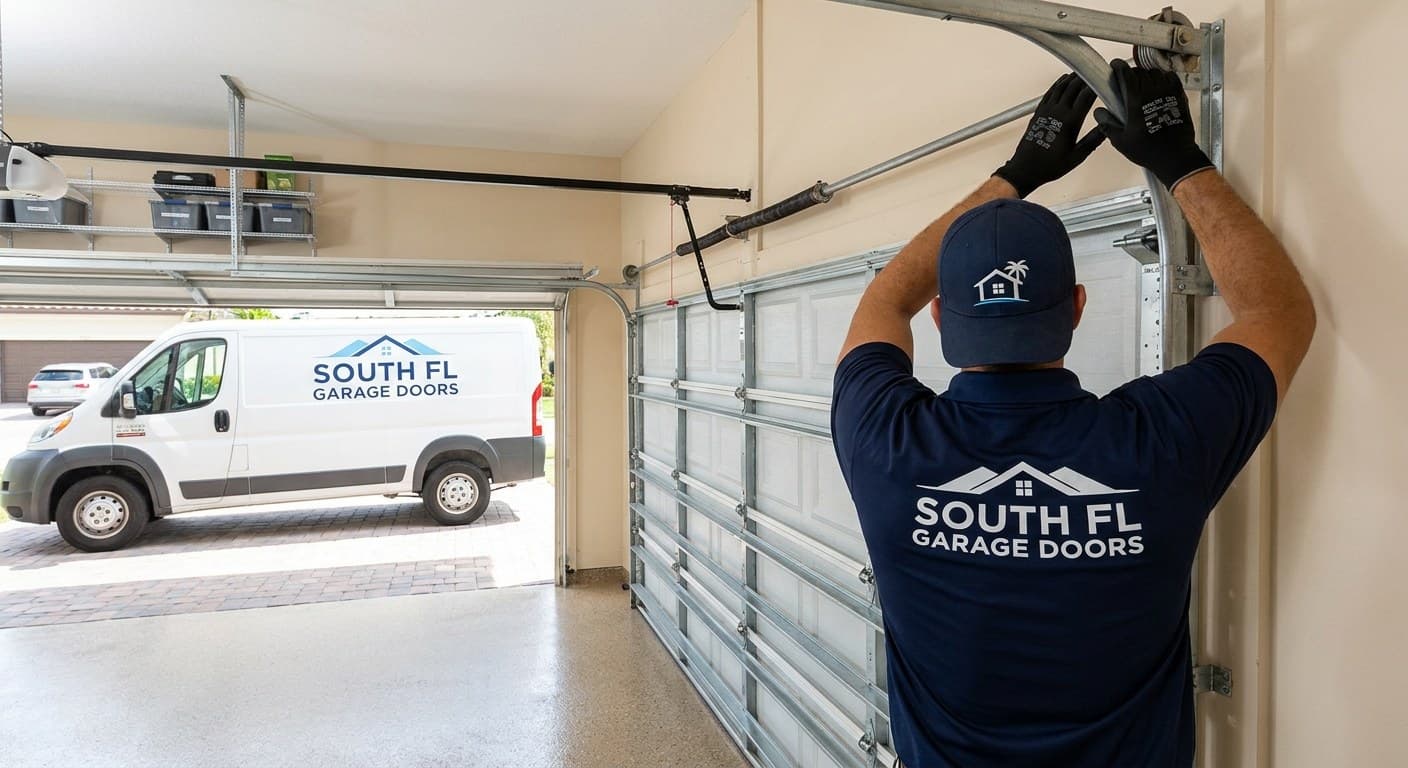
Garage door safety checks: the questions behind them
How often should a garage door be looked at by somebody else?
Once a year covers most households, and the useful month is the one before storm season rather than whenever it comes up.
- Fastener torque measured at the jamb
- Track alignment measured rather than eyeballed
- The state of the reinforcement behind the panels
A garage door reverses for no reason. Is that a safety fault or a nuisance?
A garage door that reverses with nothing in its path is usually reporting friction somewhere in its travel.
- A roller binding in the vertical track
- A track pinched where it was knocked
- A section catching at the same height each time
The protection is behaving as designed, so raising the force setting to silence it is the one response that makes matters worse.
Is it safe to leave a garage door open a few inches for ventilation?
Ventilating through a partly open garage door is common, and it carries one local catch worth knowing.
- A gap presents the underside to wind pressure
- That geometry lifts a panel out of its track
- Fine on a still afternoon, not with weather forecast
Left that way when weather is coming, the largest opening in the building becomes a sail.
How is garage door balance tested by hand?
Pull the release cord with the door closed, lift the door to about waist height by hand, then let go.
- It stays put: the springs are still doing their job
- It sinks: the opener is carrying the door
- It flies upward: the springs are over-wound
Sources
- U.S. Consumer Product Safety Commission
- National Hurricane Center (NOAA)
Edited by Avidan Benichay · Updated
General information about garage doors in South Florida — not a diagnosis of your door, and not a quote. Code and prices vary by address and change over time. Terms of use
Worth knowing first
- Safety sensors blinkingEvery opener made since the early nineties carries two photo-electric eyes near the floor, and they use their indicator lights to report their own state: one solid light and one blinking light means the pair has lost sight of each other.2eyes, and they must face the same plane
- Changing a spring yourselfPhysically you can, and every year a number of people in this county find out what that costs.2winding bars the job requires, sized to the cone
- Broken lift cableTwo steel cables carry the entire weight of the door from the bottom brackets up to the drums on the spring shaft.2cables, always replaced as a set
 Opening it by handThe red handle hanging from the opener rail disconnects the door from the motor so you can raise it by hand, and the single most important rule is to pull it only when the door is fully closed.Closedalways: pull the handle with the door down
- ContactWrite to contact@southflgaragedoors.com and you will get a real answer rather than a callback form.7–7weekday hours, and 8 to 5 on Saturday
 Emergency serviceAn out-of-hours callout carries a surcharge, so the useful thing to establish first is whether you need one.3situations that genuinely will not keep until morning
Next step
Not sure which part failed?
Most garage door faults are identifiable from the noise and the way the door moves. Start there — it usually costs less than you expect.
You describe what the door is doing
The noise it makes, how far it travels, whether the opener runs.
We test it on site
Springs, cables, balance, tracks, opener force and the safety reverse.
You get the price before any work starts
Itemized in writing, including the permit when the job needs one.
- 4.9/5 from 300+ local reviews
- Licensed & insured
- Free visit, no obligation