
Safety sensors / Miami-Dade
What a blinking garage door sensor is telling you
Every opener made since the early nineties carries two photo-electric eyes near the floor, and they use their indicator lights to report their own state: one solid light and one blinking light means the pair has lost sight of each other. Reading which eye is blinking tells you whether you have an aiming problem, a wiring problem, or a failed unit.
What the two lights mean
One light blinking
the beam is broken
Both steady
the circuit is healthy
Fails in the afternoon
low sun in the receiver
Why photo-eye sensors stop working
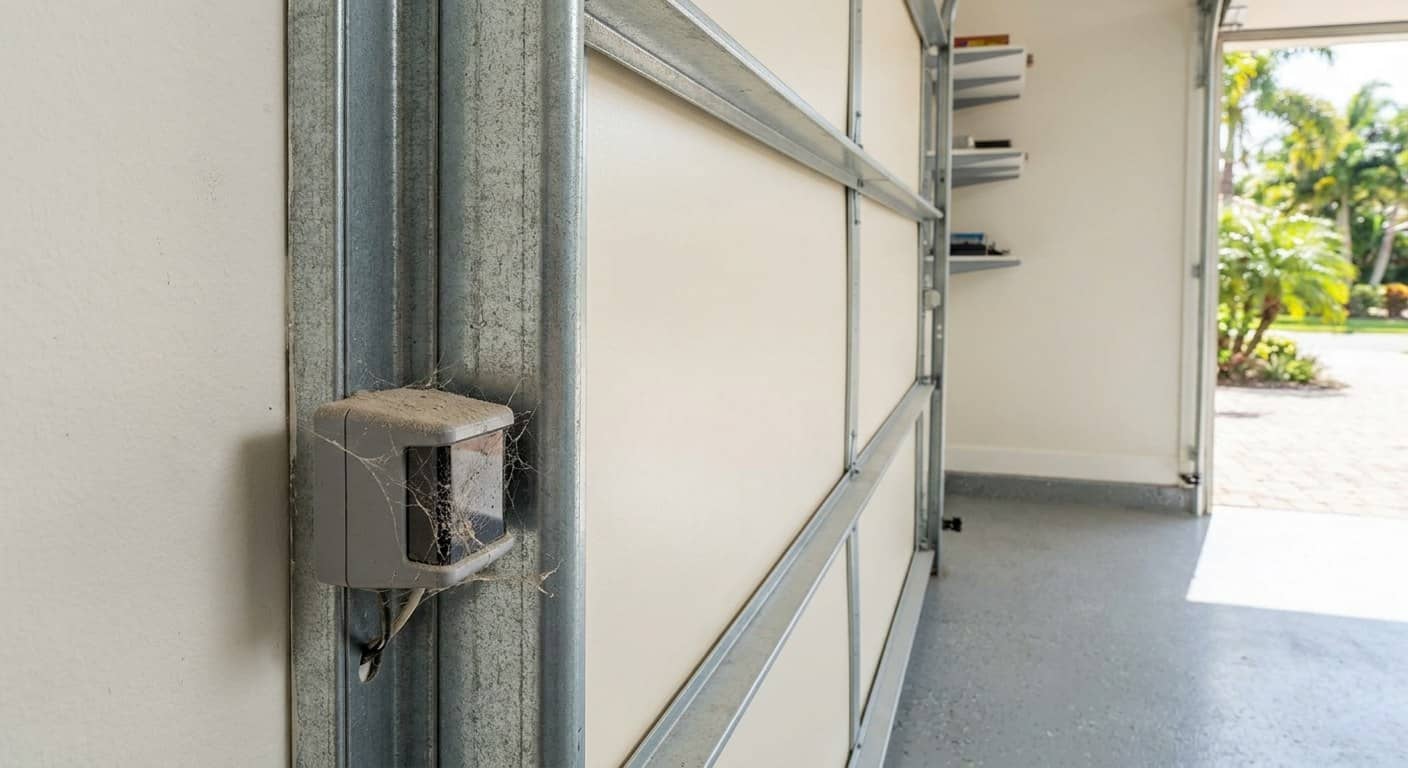
Dirty lens
Dust, cobwebs and coastal film block the beam
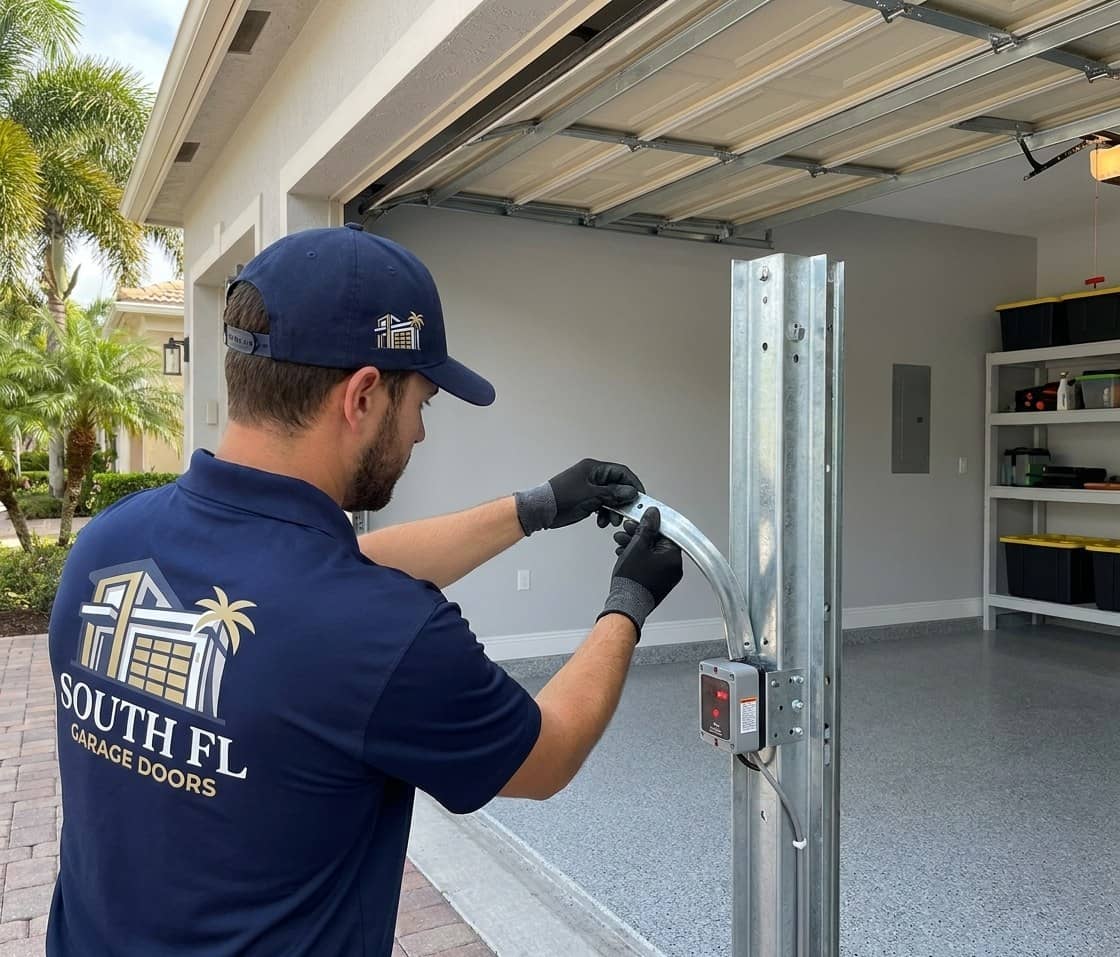
Knocked out of aim
A bicycle or a bin is enough to shift a bracket
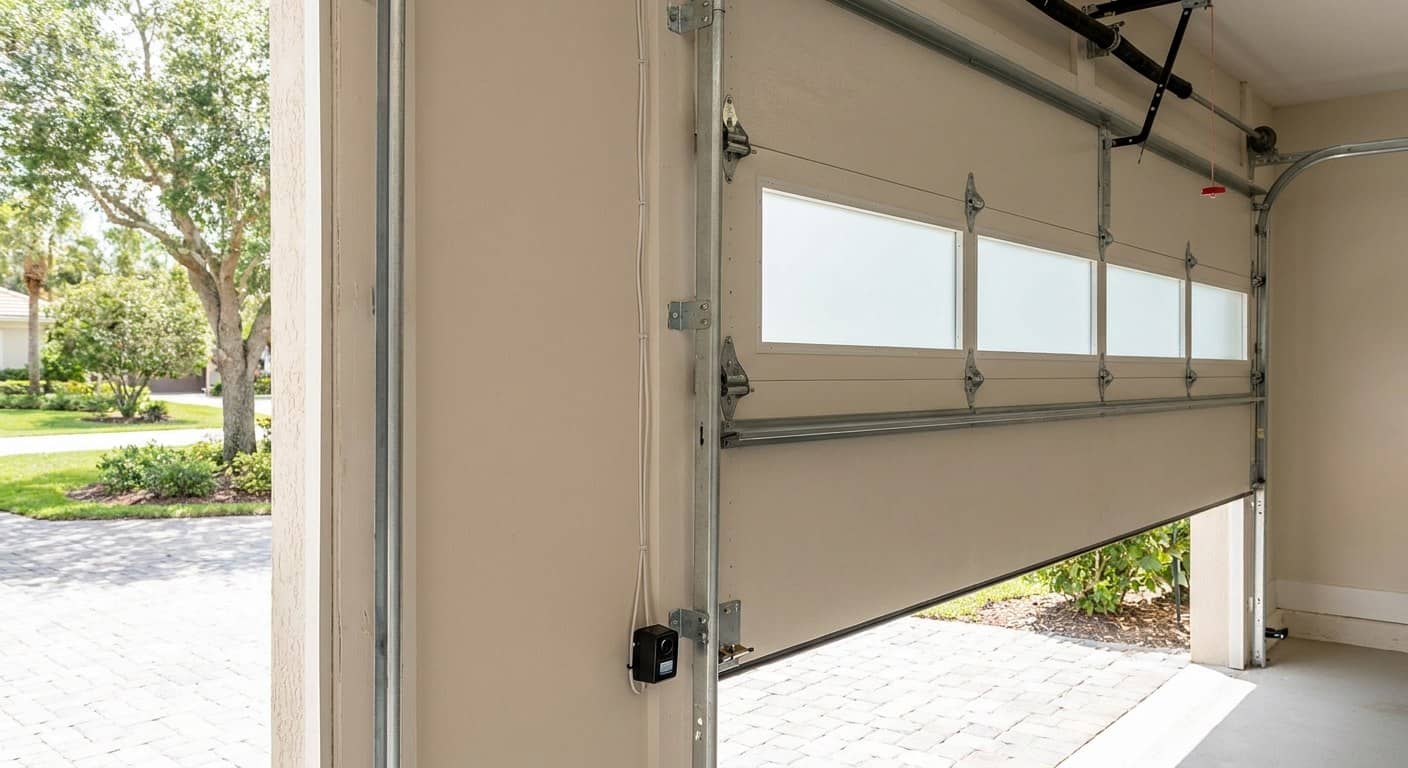
Damaged wiring
A staple through the wire kills the circuit
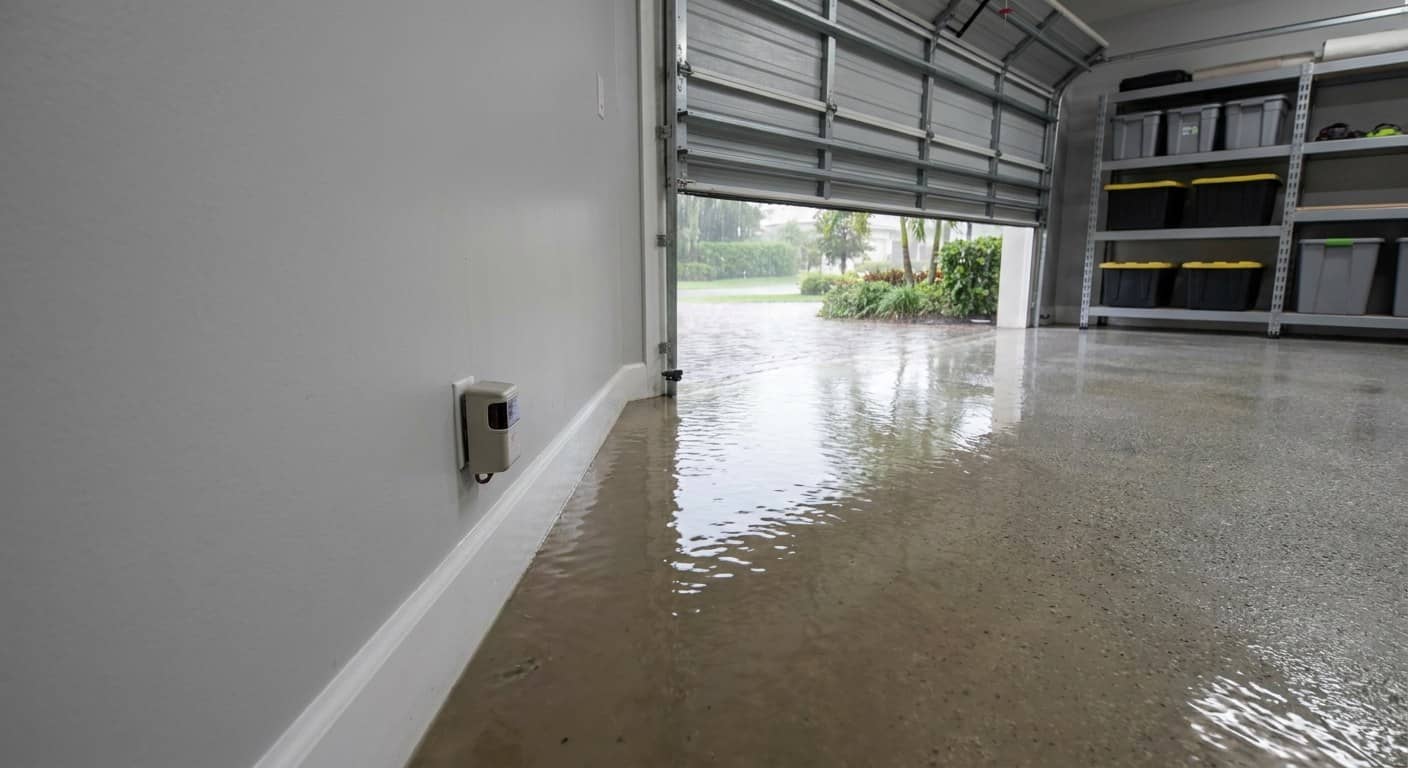
Flood damage
Sensors sit inches off the slab, below any storm water
The lights, the cause, and the fix
| What you see | Likely cause | Urgency | Next step |
|---|---|---|---|
| Both lights steady | Beam aligned and clear | Routine | Nothing to do — test monthly |
| One light blinks continuously | Misaligned or blocked beam | Routine | Clean both lenses, re-aim the bracket |
| One sensor shows no light at all | Wiring break or a failed sensor | Routine | Book — the pair is usually replaced together |
| Works in the morning, fails at sunset | Direct sun saturating the receiver | Routine | A shield or a swap of sides fixes it |
| Intermittent since a storm | Corrosion inside a flooded sensor | Soon | Replace — a wet sensor fails unpredictably |
The sensors are not the problem to work around
Never bypass the beam
Twisting the wires together or holding the button defeats the only device that stops the door on a person.
Six inches, no higher
Federal rules put the beam near the floor precisely so it catches a small child lying down.
Test with an object
Lay a roll of paper towel in the opening and close: the door must reverse on contact, every time.
A healthy sensor pair vs. one that needs replacing
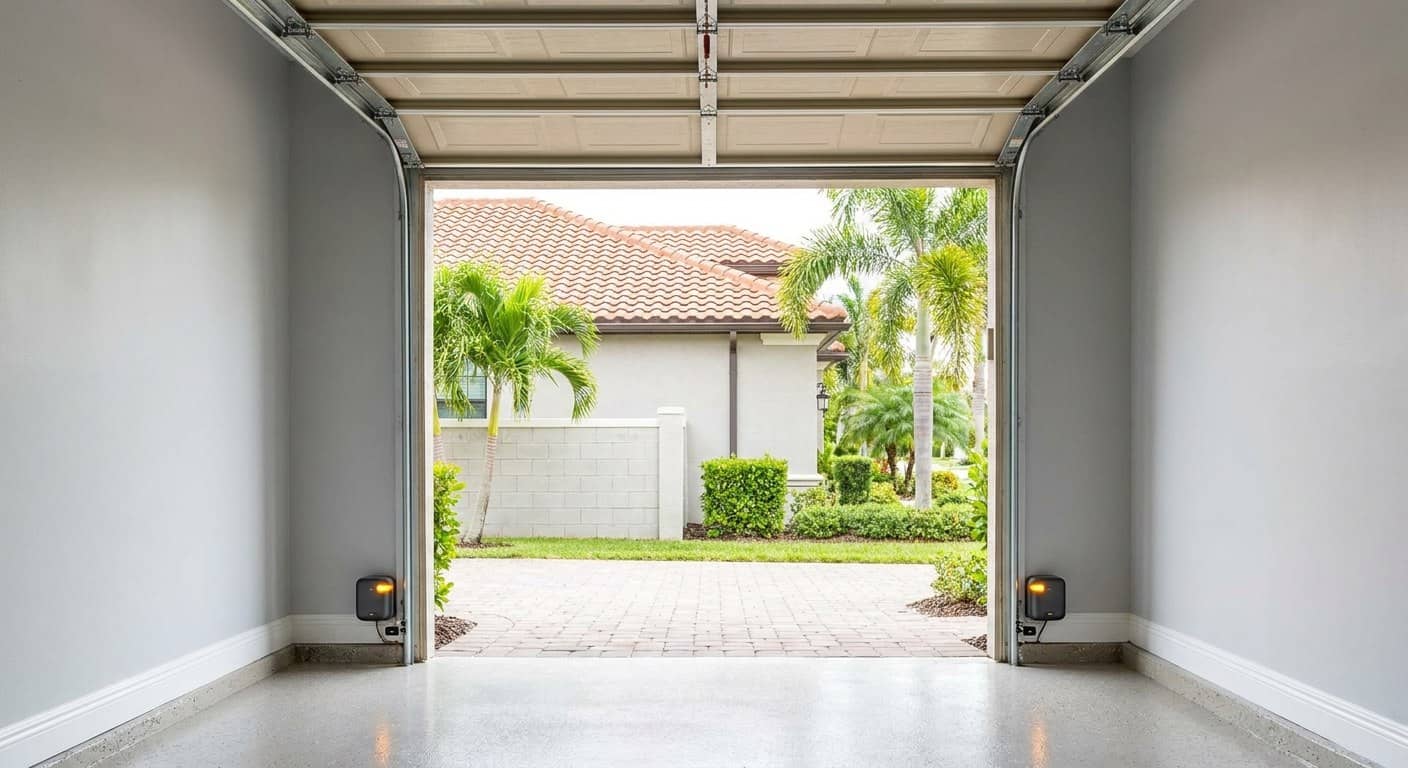
Normal
Two steady lights, clean reverse
Aligned sensors show steady indicators and reverse the door the moment the beam is broken.
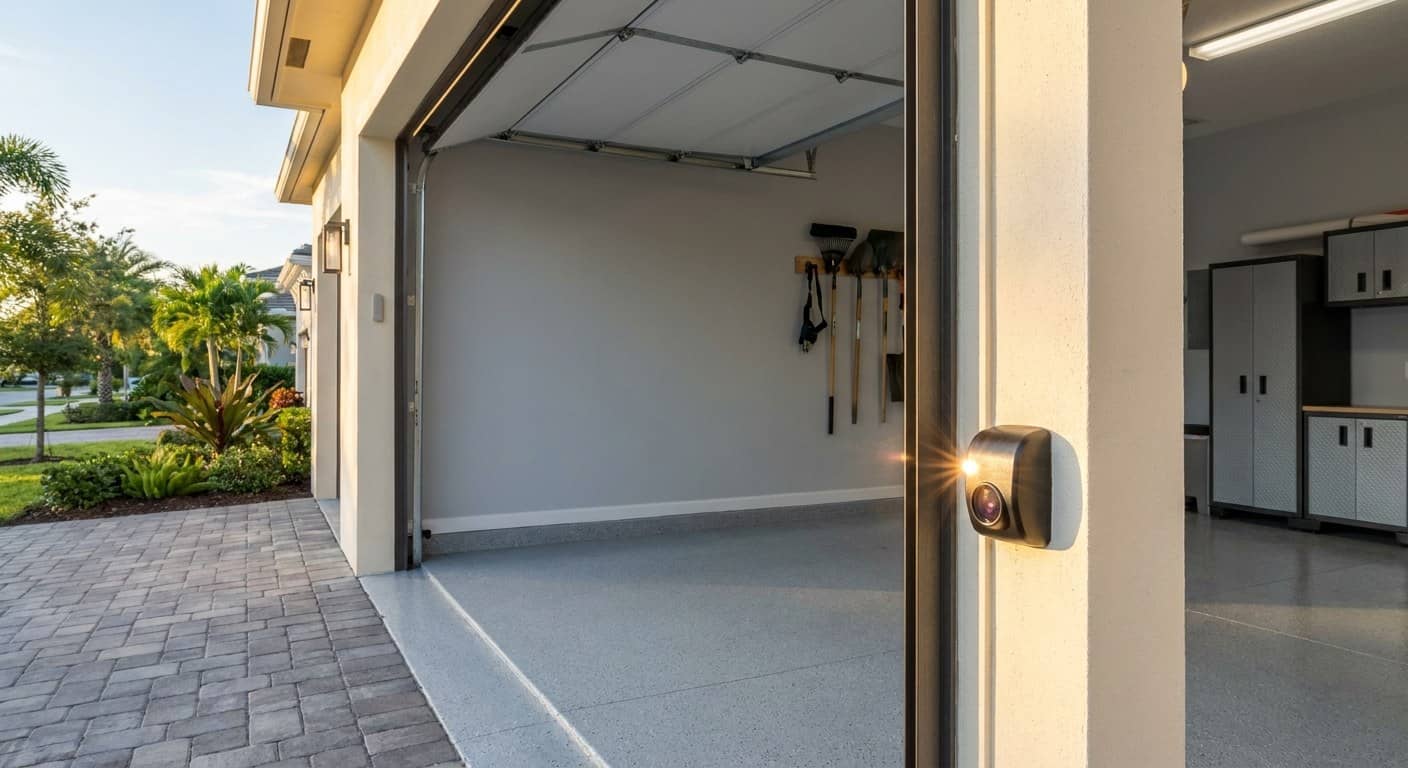
Warning
Intermittent after water or age
A sensor that works some days and not others has usually taken water: replace the pair rather than chase the fault.
Why South Florida hardware wears out sooner

2
eyes, and they must face the same plane
Steady
light on the receiver means the beam is seen
Low
voltage bell wire — the part that fails most
More detail if you want it
Which eye is which, and what its light means
One unit sends an infrared beam and the other receives it. The sending eye normally shows a steady light whenever it has power, and it will keep showing that light even when the pair is completely misaligned — it has no way of knowing whether anyone is listening. The receiving eye is the informative one: steady when it can see the beam, blinking when it cannot.
So a dark sending eye and a dark receiving eye is a power or wiring fault, not an alignment fault. A steady sender with a blinking receiver is the classic aiming or obstruction case. Manufacturers differ on color — green and amber on some, both red on others — but the steady-versus-blinking logic is near universal.
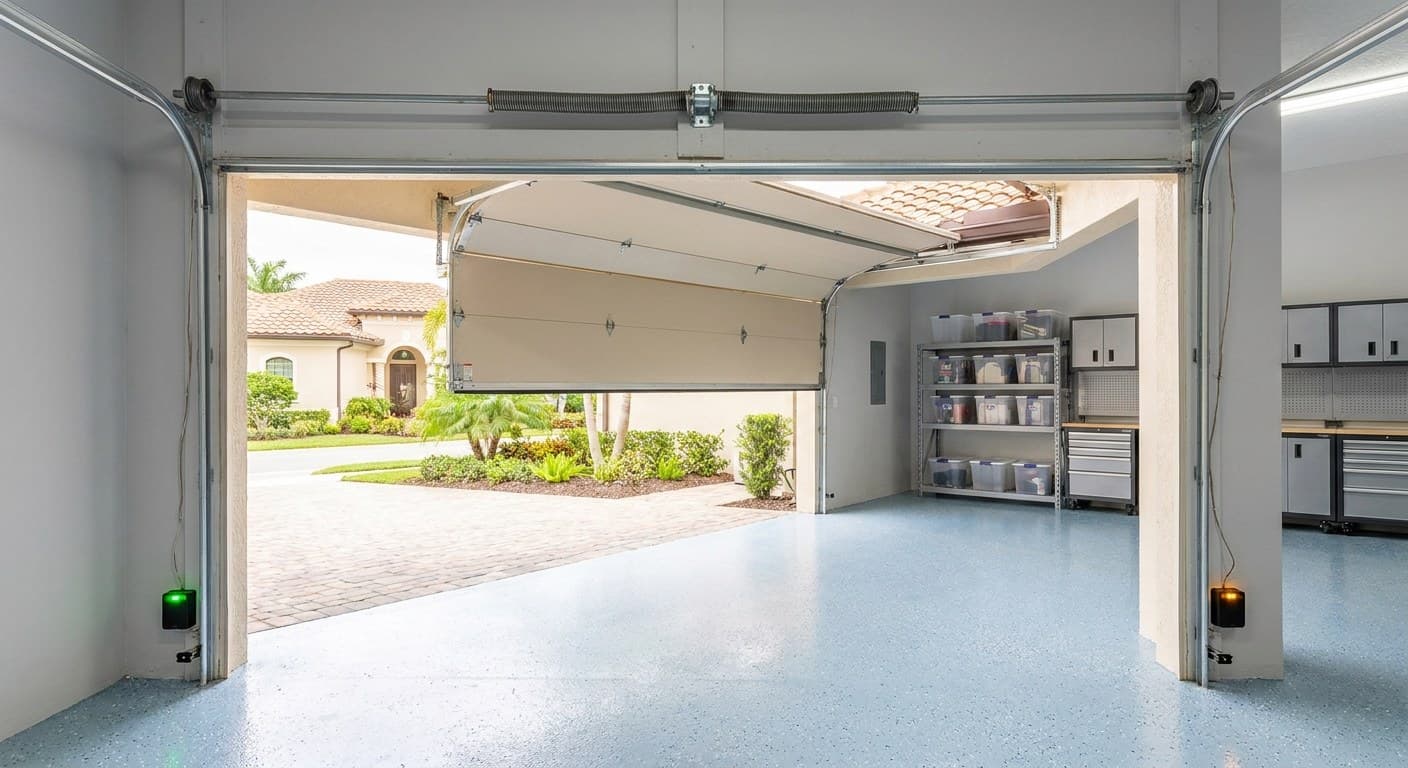
Realigning them without guesswork
Loosen the wing nut on the bracket of the blinking unit just enough that it moves with friction, then swing it slowly through its arc while watching the light. It will settle solid at the point where it picks the beam up. Tighten from there, and confirm both heights match: the two eyes must face each other on the same plane, so a bracket that has slipped down an inch on one side is enough to break the link.
Clean both lenses while you are down there. In a Miami garage the film that builds on them is a mix of dust, salt haze and lawn-treatment residue, and it dims the beam gradually enough that nobody connects the eventual failure to anything in particular. A dry microfibre cloth is enough; solvents craze the plastic.
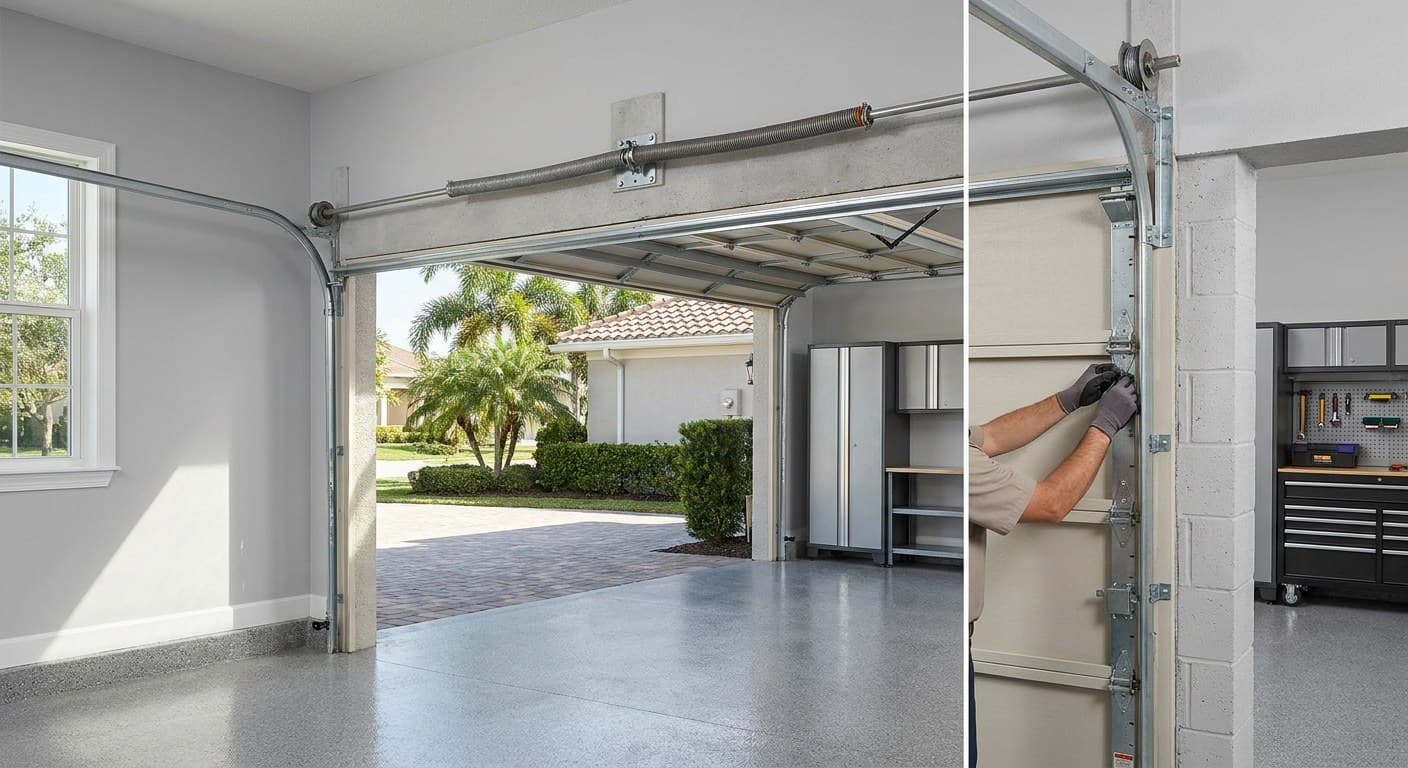
Wiring, water and when to give up on a unit
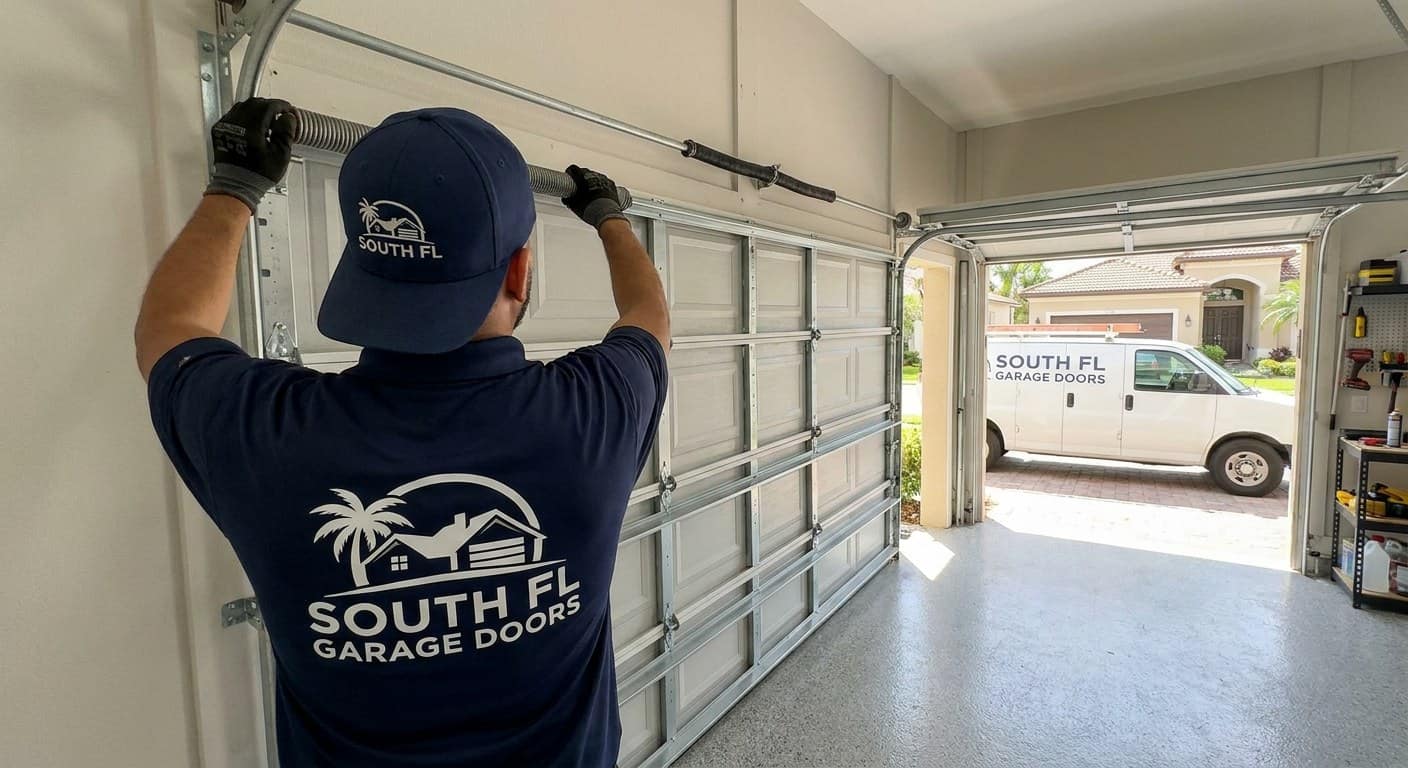
The eyes run on low-voltage bell wire stapled along the wall, and that wire is the most commonly damaged part of the whole system. Look for a staple driven through the insulation, a section chewed by a rodent, or a run that has been nicked by a shelf bracket. A short between the two conductors produces exactly the same symptom as a misaligned eye.
Flooding is the local failure mode worth knowing. These units sit a few inches off the slab, which is below the water line in a garage that takes water during a heavy summer storm or a surge event. A sensor that has been submerged may work for weeks afterwards and then fail intermittently as corrosion creeps through the board — if your garage has flooded, replace the pair rather than chasing the fault.
Garage door safety sensors: what the lights are saying
Can a single garage door sensor be replaced on its own?
Garage door photo eyes are sold and matched as a pair, and mixing generations is a common source of intermittent faults.
- One damaged eye still means replacing both
- Mismatched pairs pass a bench test, then misbehave
- Match the manufacturer of the opener head
Do garage door sensors from another brand work?
Sensors from another brand may connect electrically, but the safety circuit is certified as part of the opener taken as a whole system.
- Unpredictable behavior in service is the risk
- Certification covers the head and its eyes together
How is the safety reversal on a garage door tested?
A safety reversal is tested by passing an object such as a length of timber through the beam while the door closes; the door must stop and rise fully.
- Every few months, with the door on its way down
- Never with a hand, a foot or a pet
- A full reversal counts, a pause does not
Is an opener with no garage door sensors legal to keep?
An opener built before the federal requirement took effect may legitimately have no photo eyes, and owning one is not unlawful.
- No primary safety device on a heavy approved door
- Retrofitting eyes to an old head is rarely clean
- Replacement is the dependable answer
Why does a garage door open normally but refuse to close?
Closing is the only direction the safety circuit is allowed to block, so a door that rises freely and will not come down is a sensor question first.
- A beam broken, misaligned or simply dirty
- An opener is always allowed to raise a door
- The rule forbids powered closing, not opening
Sources
- U.S. Consumer Product Safety Commission
- Miami-Dade County — Product Control and Permitting
Edited by Avidan Benichay · Updated
General information about garage doors in South Florida — not a diagnosis of your door, and not a quote. Code and prices vary by address and change over time. Terms of use
While you are in there
- Garage door won't closeWhen a door opens normally but reverses partway down, the opener is not broken — it is doing exactly what it was built to do, because something told it the path was blocked.6 inheight of the safety eyes above the floor
- Door off its trackA door that has jumped its track is the one fault where doing nothing is the right first move.0further cycles once the door is off track
- Opener not workingAn opener that is not working is really three different faults wearing the same description, and they have almost nothing in common: the drive is disconnected from the door, the internal gear has stripped, or the unit has lost power.3unrelated faults share this one description
 Remotes and keypadsOpeners made before the mid-nineteen-nineties send the same code every time, which means a device sitting in a parked car can record it once and repeat it later.1993roughly when rolling code replaced fixed code
Next step
Not sure which part failed?
Most garage door faults are identifiable from the noise and the way the door moves. Start there — it usually costs less than you expect.
You describe what the door is doing
The noise it makes, how far it travels, whether the opener runs.
We test it on site
Springs, cables, balance, tracks, opener force and the safety reverse.
You get the price before any work starts
Itemized in writing, including the permit when the job needs one.
- 4.9/5 from 300+ local reviews
- Licensed & insured
- Free visit, no obligation