
Insurance / Miami-Dade
Claiming for garage door damage after a storm
Photograph everything before you clear anything, and understand what you are claiming for. A garage door on its own will usually fall under a hurricane deductible measured as a percentage of the whole house. The claim that pays is almost always the one covering what happened after the door gave: the roof, the ceilings, the contents.
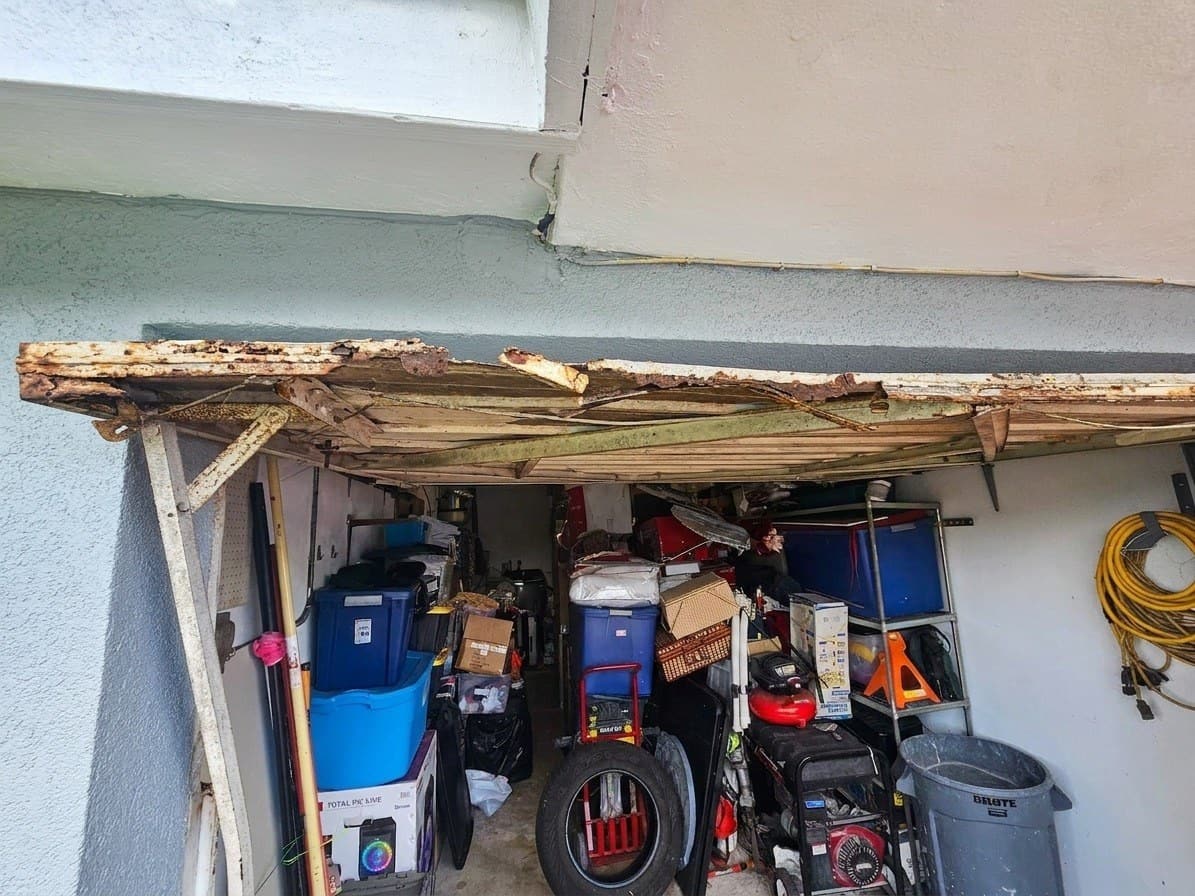
Three things to do first
Photograph everything
before anything is moved
Make it safe, not finished
temporary protection is usually allowed
Wait for the adjuster
permanent repairs can wait a few days
How a storm damage claim works
Document the damage
Wide shots and close shots, with the date
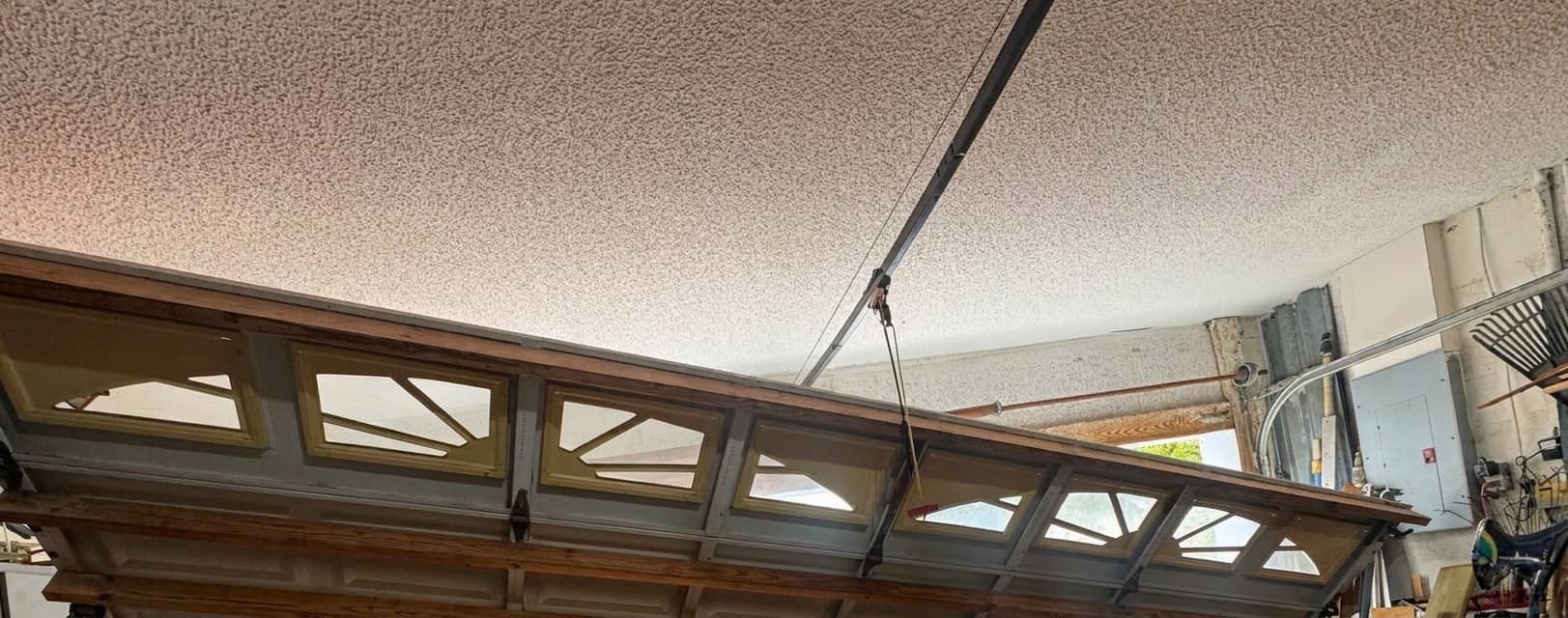
Temporary protection
Prevent further damage — policies usually require it
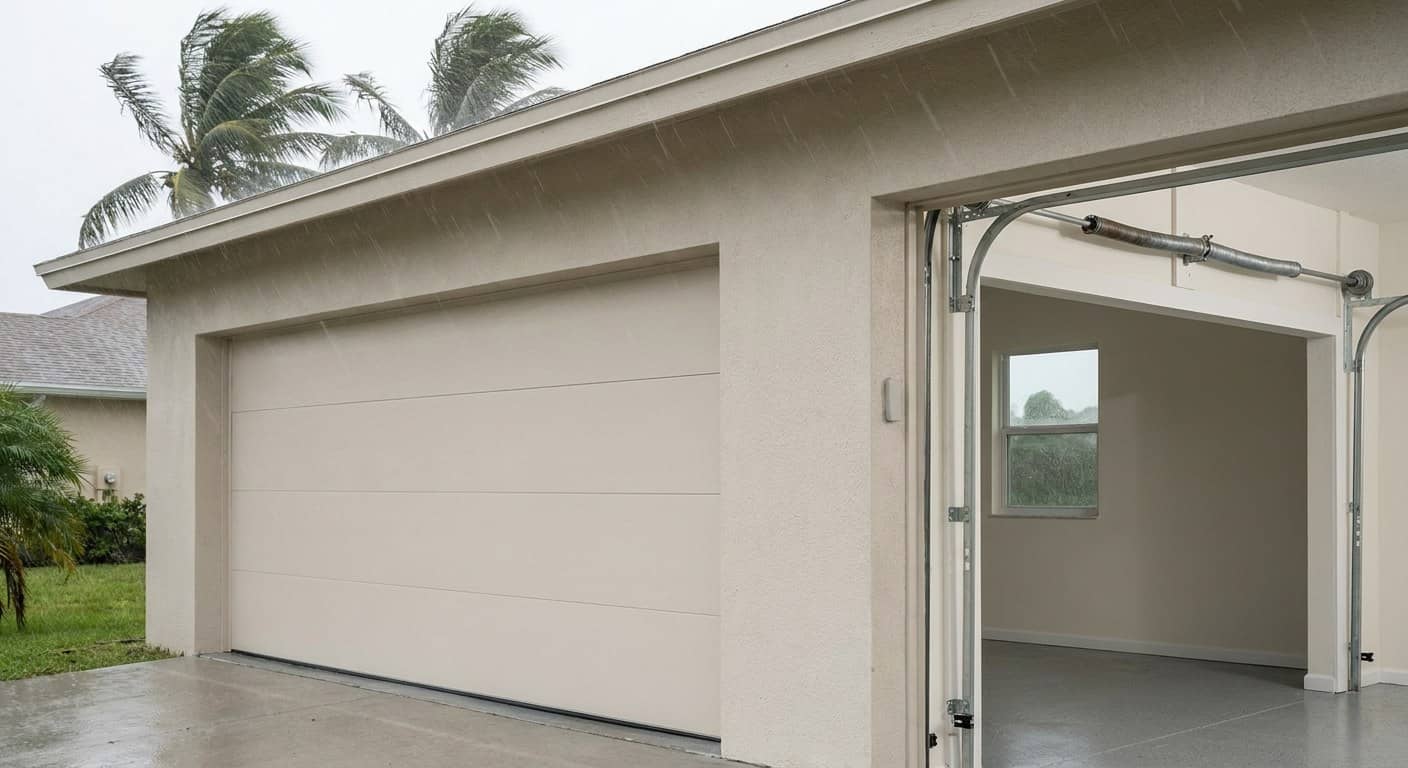
A written estimate
Model, approval and scope, itemized
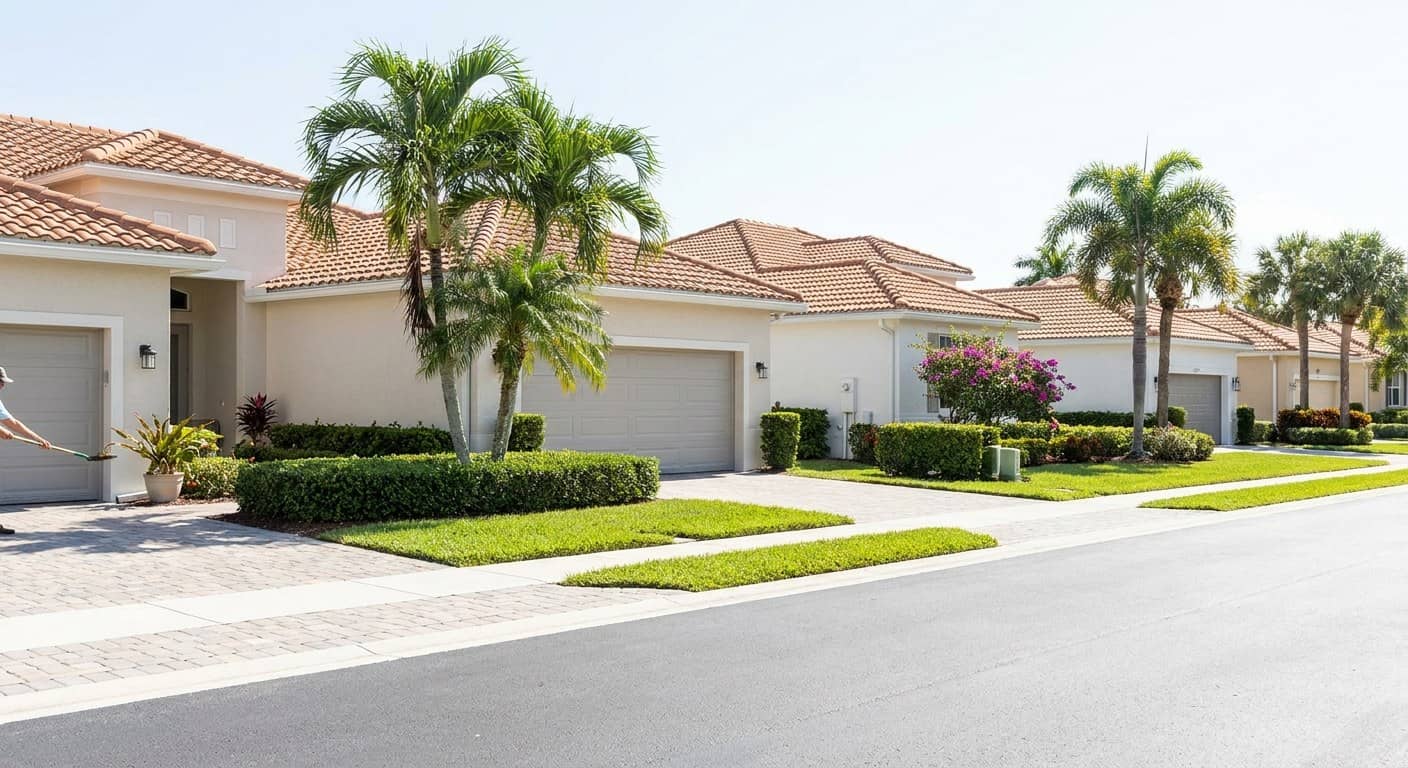
Code upgrade
The replacement must meet current code, and that costs more
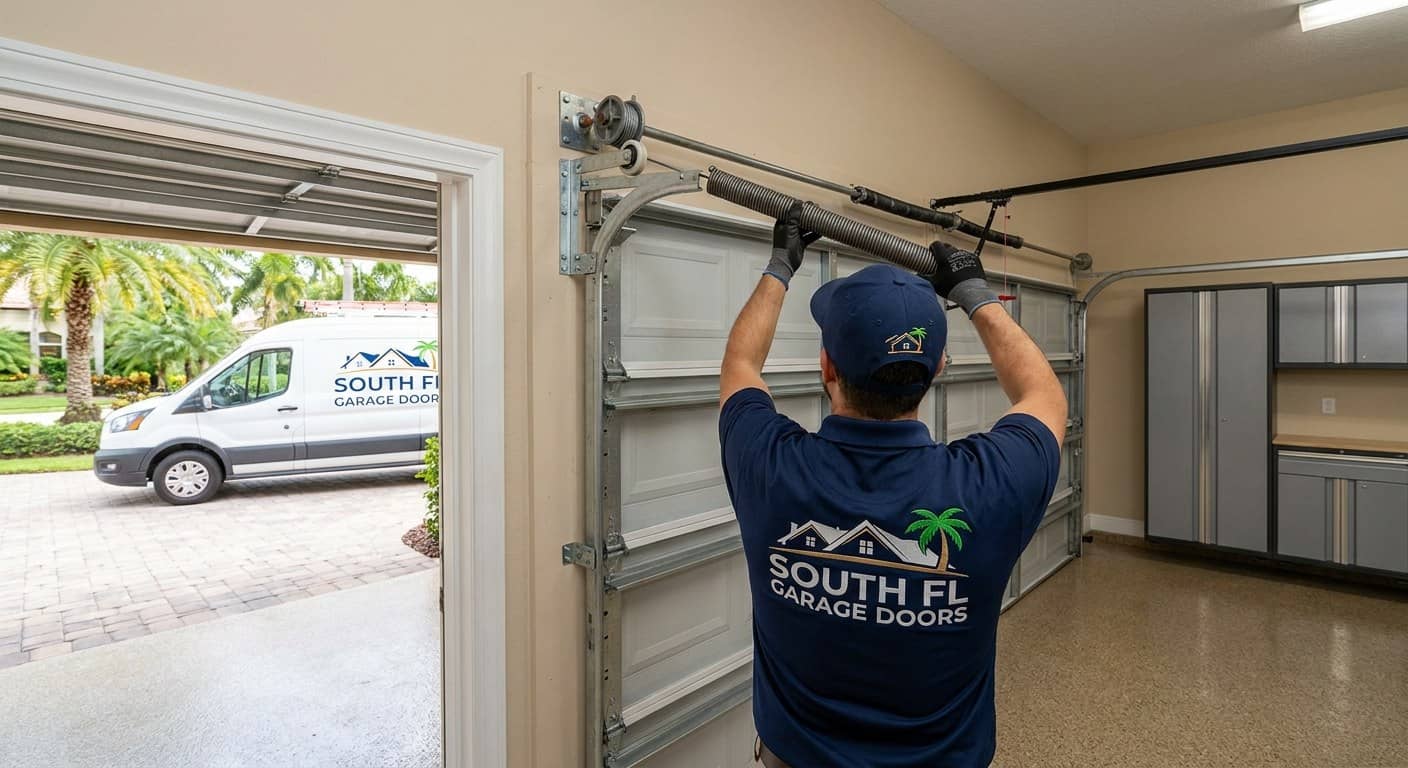
The claim, step by step
| Situation | Usually covered? | What decides it | What to do |
|---|---|---|---|
| Before anything is moved | This is where claims are won | Photographs with a date | Wide, close and from inside |
| Temporary protection | Usually expected of you | Preventing further damage | Keep the receipts |
| A written estimate | Needed by the adjuster | Scope, model and approval number | Get it from a licensed contractor |
| The adjuster visit | The pivotal step | What they see and what you show | Be present, with your photographs |
| Code upgrade cost | Sometimes covered separately | Your policy's ordinance or law cover | Ask about it explicitly |
| Paperwork | Needed later | Permit, invoice, approval, photographs | Keep it all with the house records |
before
when the photographs have to be taken
1
permit file that dates and proves the installation
roof
where a failed opening sends the pressure next
More detail if you want it
Why the door is rarely the claim
When a garage door fails in high wind it does not simply break. It admits the wind, and the pressure that follows has nowhere to go but up against the underside of the roof. That is the recognized failure sequence, it is the reason the door is treated as a structural opening in the first place, and it is why the damage listed on a serious claim starts at the garage and ends in rooms nobody was standing in.
Understanding that ordering changes how you document the day. The photograph of the buckled panel is the least valuable one you will take. The valuable ones are of water lines on interior walls, displaced ceiling boards, and the position of debris — all of which establish that the opening failed first and the rest followed.
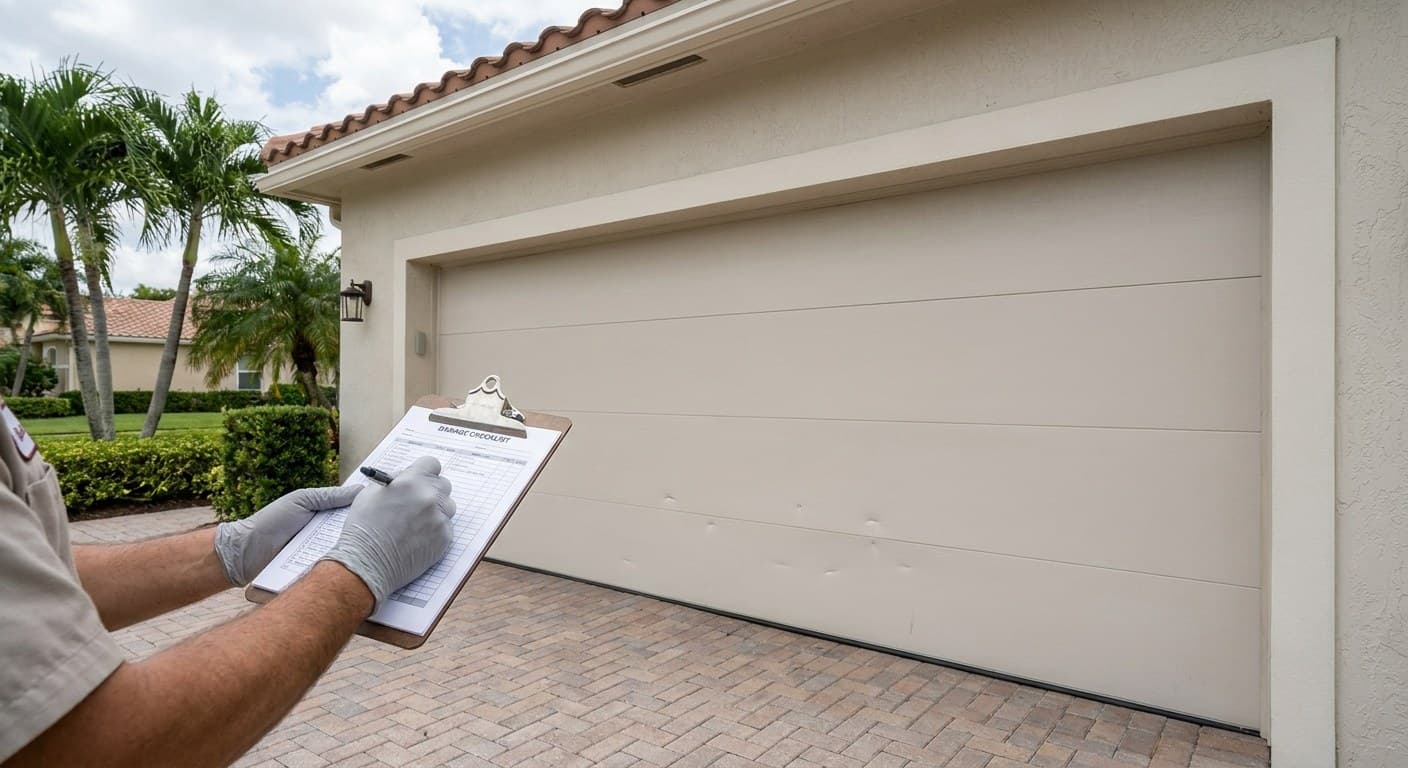
The paperwork that is already on your side
If your door was installed under a permit, the file behind it names the approved product and the design pressure the assembly was engineered to hold. That is an independent, dated record produced by a third party before anyone had a reason to argue — which is a far stronger document than anything you can assemble after a storm.
It cuts both ways honestly. If the door was compliant and failed anyway, the file supports you. If there is no permit behind it, the absence is itself a finding, and it is the first thing a carrier looks for on a large loss. That is the practical, unglamorous reason permits are worth insisting on years before any of this becomes relevant.
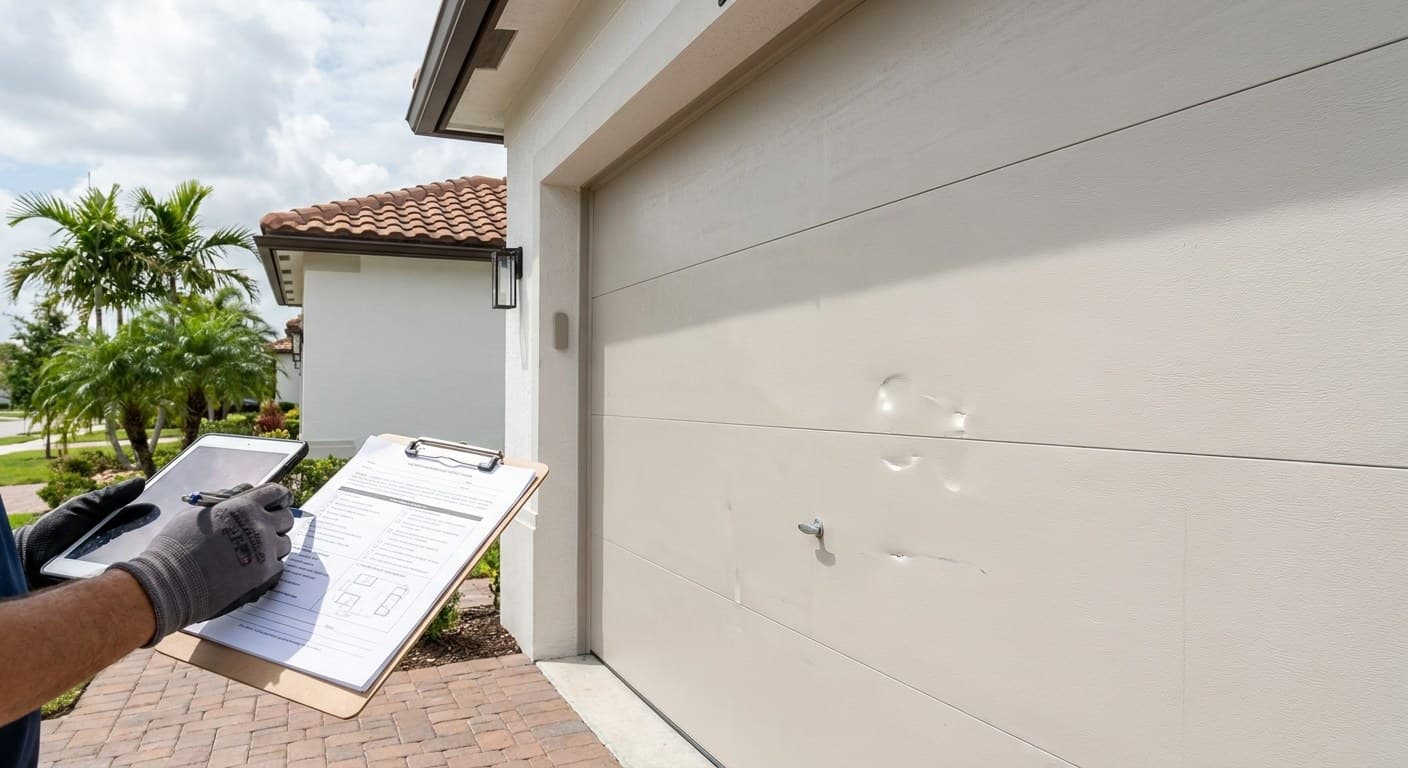
Emergency work, and the receipt that goes with it
A policy expects you to prevent further loss — boarding an opening, extracting standing water, stopping the next rain getting in. That work is generally recoverable, but only as documented: photographs before and after, an itemized invoice, and materials kept rather than thrown out. Doing the right thing and keeping no evidence of it is the most common way homeowners pay twice.
Resist the pressure to authorize a full permanent repair before the adjuster has seen it, however long the wait feels. Temporary protection is expected of you; a finished replacement removes the evidence, and that is a conversation nobody wants to have from behind a new door.
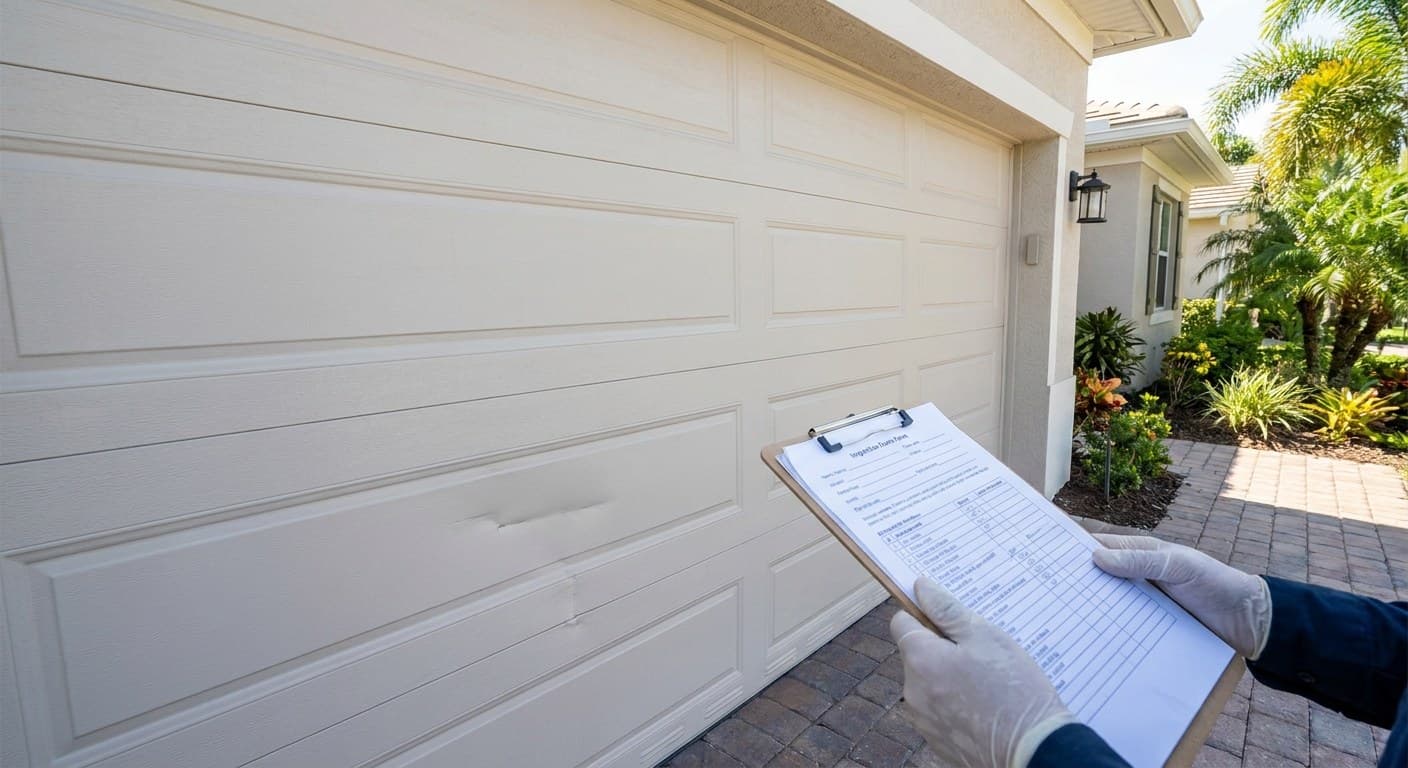
Storm claim questions on a failed garage door
What has to be photographed before a damaged garage door is cleared away?
Photograph the failed garage door where it lies, before anything is moved, swept or boarded.
- The panels, from inside and from the street
- The jamb where the hardware pulled out
- Whatever the wind reached once it was inside
The claim that pays is usually the one covering what happened after the door gave, so the interior photographs matter as much as the door itself.
How long is there to report garage door storm damage in Florida?
State law sets deadlines for notifying a carrier of a windstorm loss, and those deadlines have been shortened in recent years.
- The exact period depends on when the policy was written
- Report immediately, then read your own contract
- What applied to a neighbor may not apply to you
The adjuster says the garage door failed from age, not from wind. What answers that?
That position is answerable with documents rather than with argument.
- The permit record, for what it was rated to hold
- Maintenance invoices, for its condition beforehand
- The failure pattern itself, which tells a story
Panels pushed inward at the center read very differently from hardware that pulled out of a corroded jamb, and asking for the finding in writing is your right.
Can the contractor who repairs the garage door handle the insurance claim?
A contractor can document, quote and explain what failed, and negotiating a settlement on your behalf is regulated work in Florida.
- That role belongs to a public adjuster, or to you
- Documentation from the trade is genuinely useful
- Ask directly which of the two you are being offered
Sources
- Florida Senate — Statutes
- Florida Office of Insurance Regulation
Edited by Avidan Benichay · Updated
General information about garage doors in South Florida — not a diagnosis of your door, and not a quote. Code and prices vary by address and change over time. Terms of use
Worth knowing first
- Is the door covered?Sudden and accidental damage to a garage door is usually covered under the dwelling section of a Florida homeowners policy; gradual deterioration never is.2deductibles a Florida policy carries at once
- Lowering the premiumOften, and by more than people expect.weakestopening on which the whole grade is set
- Permits for door workChanging the door itself requires a building permit, filed with the approval number of the exact product going in and closed out by an inspection; repairing what is already there — springs, cables, rollers, hinges, an opener — does not.Replacementthe trigger — repairs to existing hardware are not
- Bracing a door you keepBracing is a vertical post or a set of horizontal struts fixed to a door already in place, and it addresses one failure only: the panels bending out of their guides under wind pressure.0impact rating gained by adding a brace
Next step
Find out what your address actually requires.
Design pressure depends on your exact wind zone and the geometry of the opening. We check it before quoting anything — no guesswork, no round numbers.
You describe what the door is doing
The noise it makes, how far it travels, whether the opener runs.
We test it on site
Springs, cables, balance, tracks, opener force and the safety reverse.
You get the price before any work starts
Itemized in writing, including the permit when the job needs one.
- 4.9/5 from 300+ local reviews
- Licensed & insured
- Free visit, no obligation