
Parts and hardware / Miami-Dade
How to open your garage door in a power cut
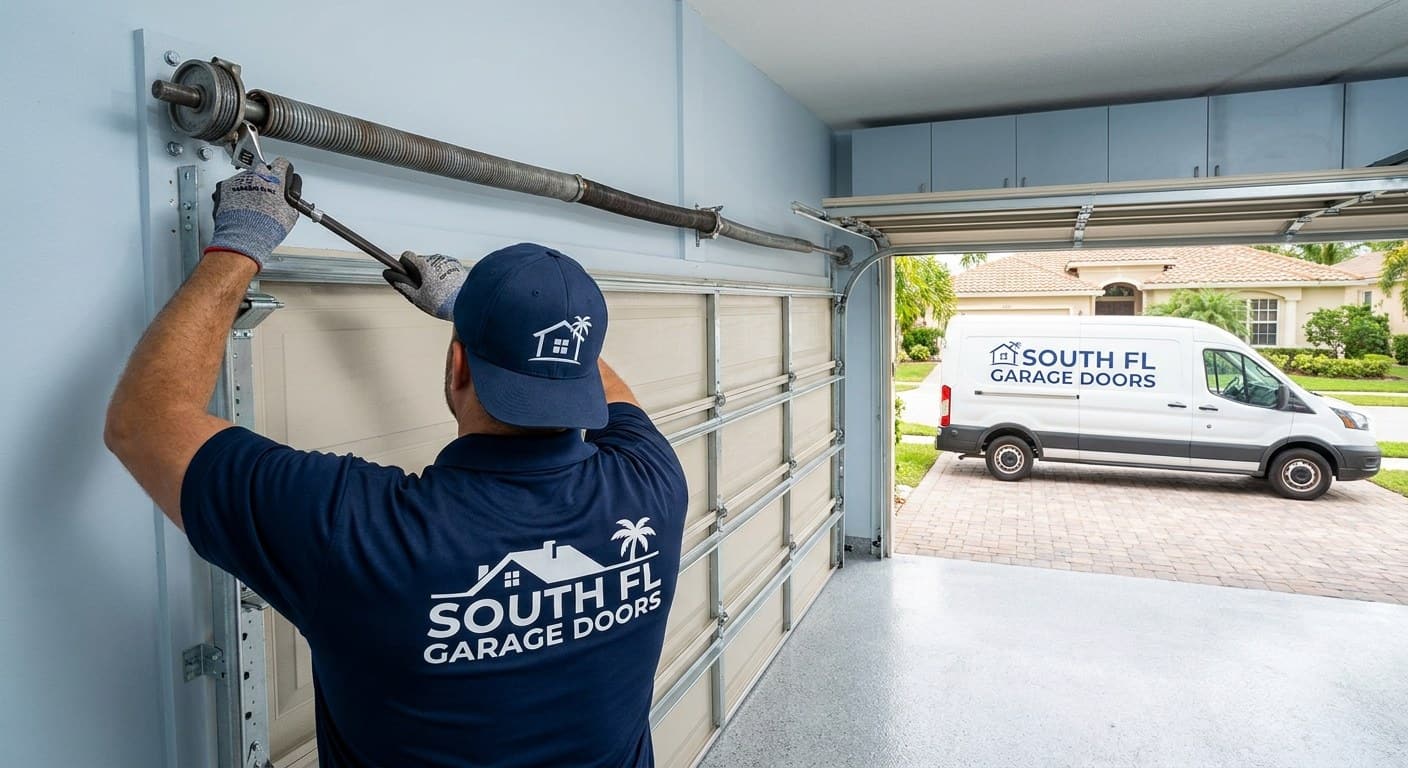
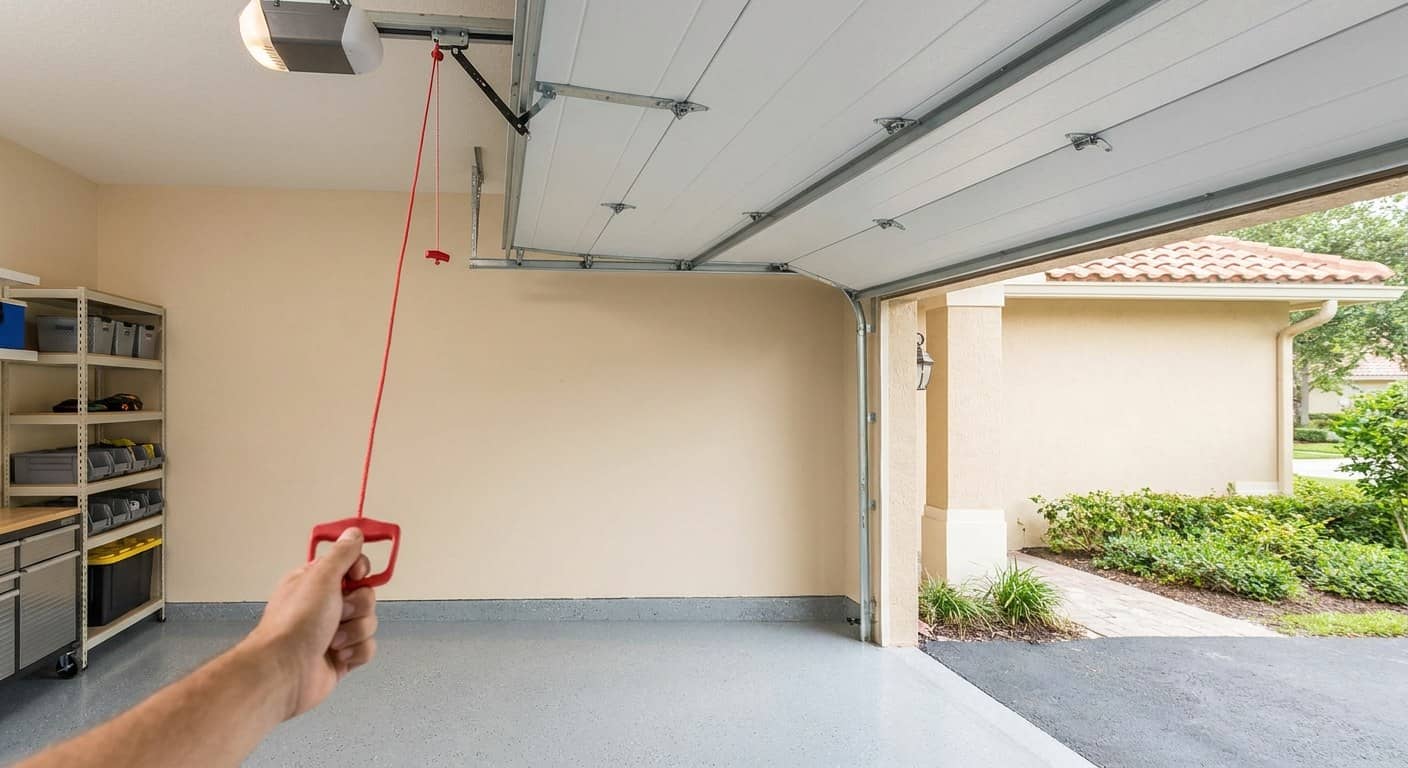
The red handle hanging from the opener rail disconnects the door from the motor so you can raise it by hand, and the single most important rule is to pull it only when the door is fully closed. Pulled while the door is up, it hands you the entire weight of the panels with nothing holding them.
Three facts about the red cord
It disconnects the door
from the opener carriage
Use it with the door closed
almost always
Re-engaging is simple
the carriage clicks back on
What the emergency release is for
The red cord
Pull it and the door is free of the opener
The carriage
What the cord actually releases
Door closed first
Releasing an open door lets it fall
Security
The cord can be reached from outside on some doors
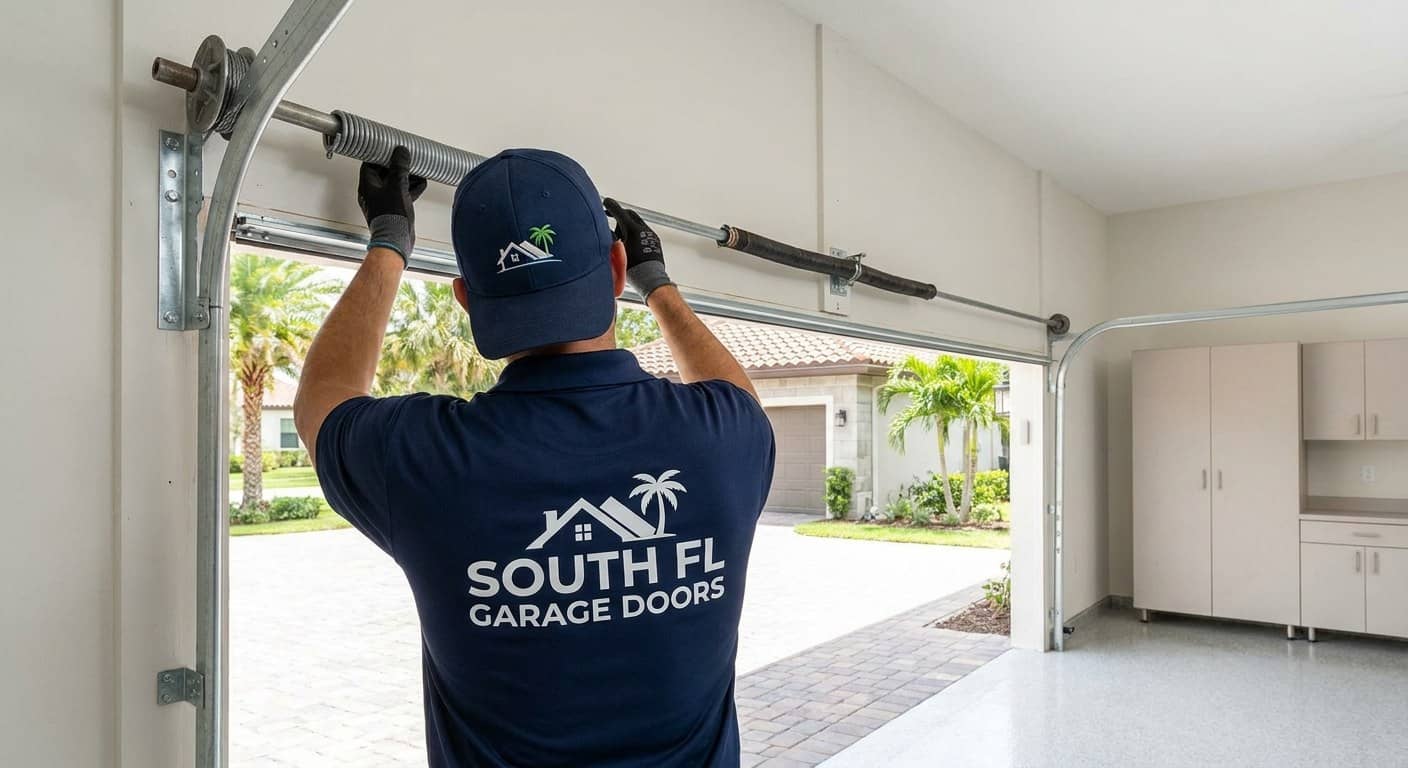
When to use the release, and when not to
| Symptom | What it means | Urgency | Next step |
|---|---|---|---|
| Power outage, car inside | The opener cannot run | Routine | Release with the door closed, then lift |
| Opener dead, door fine | You need the garage now | Routine | Release, operate by hand, then book |
| Door stuck open | Releasing now may drop it | Urgent | Do not pull the cord — call |
| Reconnecting afterwards | The carriage re-latches on the next cycle | Routine | Close the door, then run the opener |
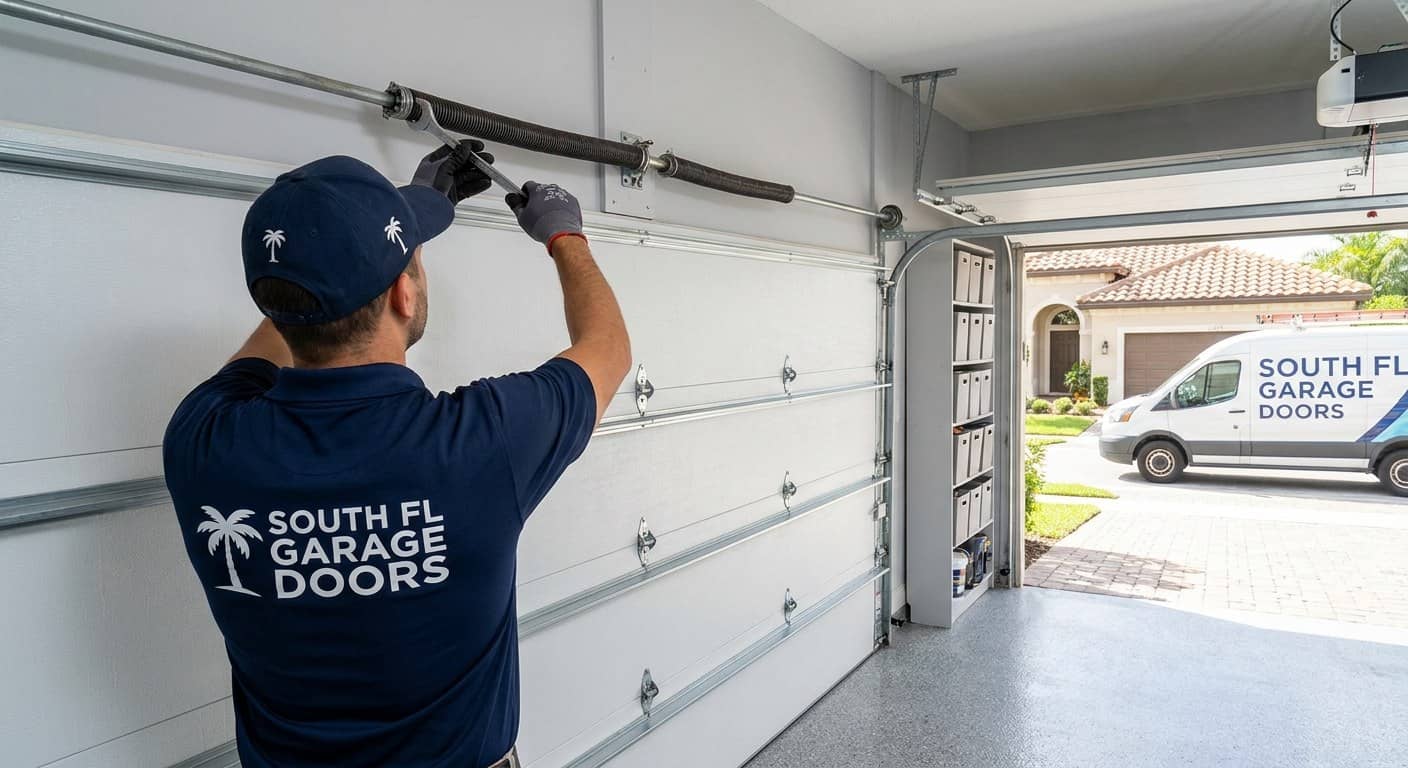
| Spring is broken | The door weighs its full weight | Urgent | Do not lift it by hand |
| Cord reachable from outside | A known entry method on some doors | Routine | Ask about a shield or a tie |
The one rule about the red cord
Never pull it on an open door
With a failed spring the door can come down at once
Check the spring first
If a spring is broken, manual lifting is dangerous
Test it once a year
With the door closed, so you know it works before you need it
Do not do this…
- Never pull it on an open door
- Check the spring first
- Test it once a year
Closed
always: pull the handle with the door down
Stays put
where you stop it means balance is good
No lock
on a door left disconnected from the opener
More detail if you want it
The sequence, in order
Close the door completely. Cut power to the opener at the outlet if you can reach it, so the motor cannot start while your hands are on the panel. Pull the red handle straight down until you feel the carriage let go — one deliberate pull, not a series of tugs. Then lift the door from the bottom edge with both hands, keeping your fingers away from the joints between sections.
A properly balanced door should rise with modest effort and stay wherever you stop it. That behavior is your safety check: it tells you the springs are carrying the weight. If it feels heavy, or slides back down when you let go, stop and leave it closed — you have found a spring fault, and holding that door open by hand is not something to attempt.
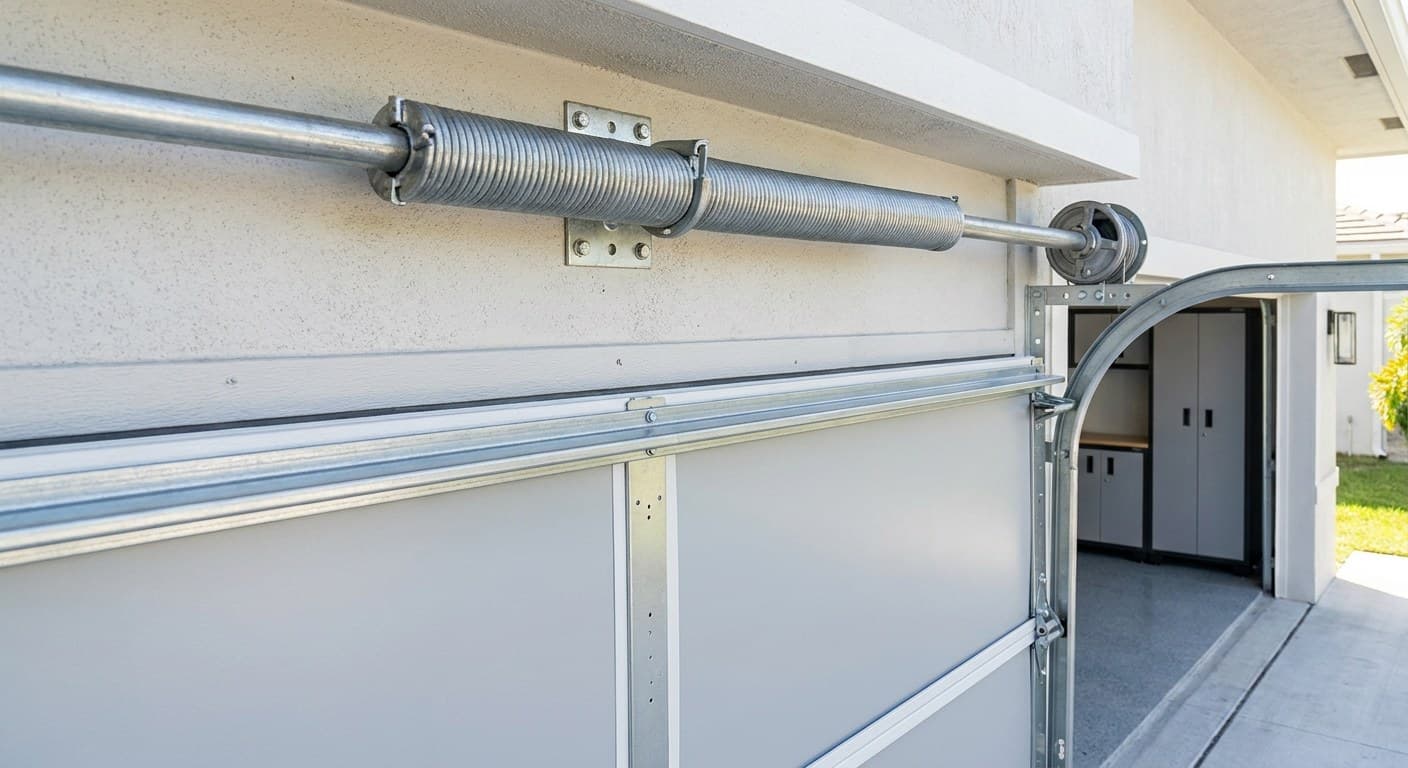
Doing this before a storm, not during one
The moment people need this maneuver is the moment it is hardest to learn: the power is out, it is dark, and there is water coming across the driveway. It is worth running through it once on a calm afternoon, in daylight, so you know where your handle is, how much force the pull takes, and how heavy your particular door feels.
That rehearsal also tells you something useful about the door's condition. A door that is difficult to lift by hand on a calm day has a balance problem that its opener has been quietly compensating for, and that is far better to discover in August before the season than at the point where you actually need to get a vehicle out.
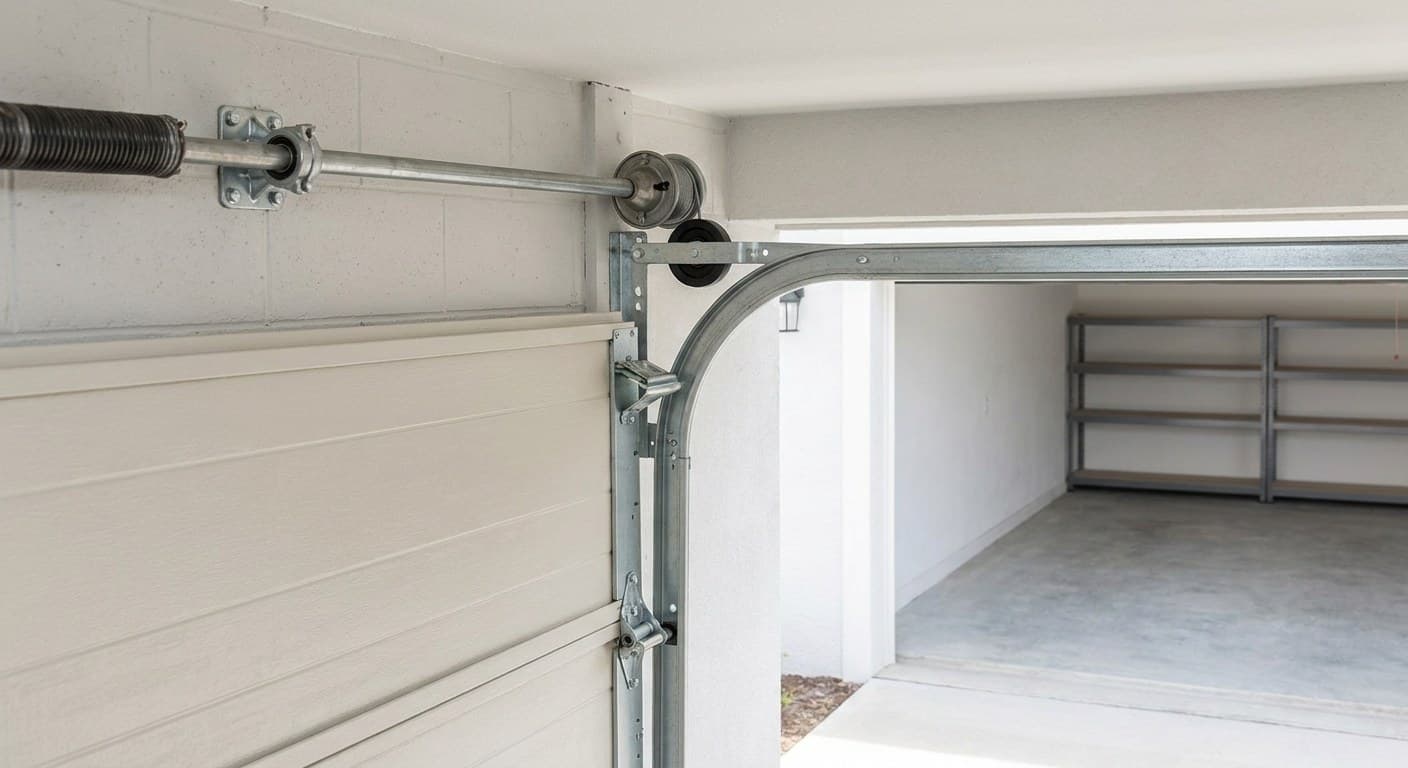
Re-engaging, and securing a door left manual
Reconnecting works in the other direction. Bring the panel all the way down, slide the lever along the rail until you hear the latch drop, and cycle the unit once so the mechanism picks the arm up again. Attempt it with the panel halfway and the latch can end up beyond the arm, leaving a motor that completes its whole journey while nothing above your head moves.
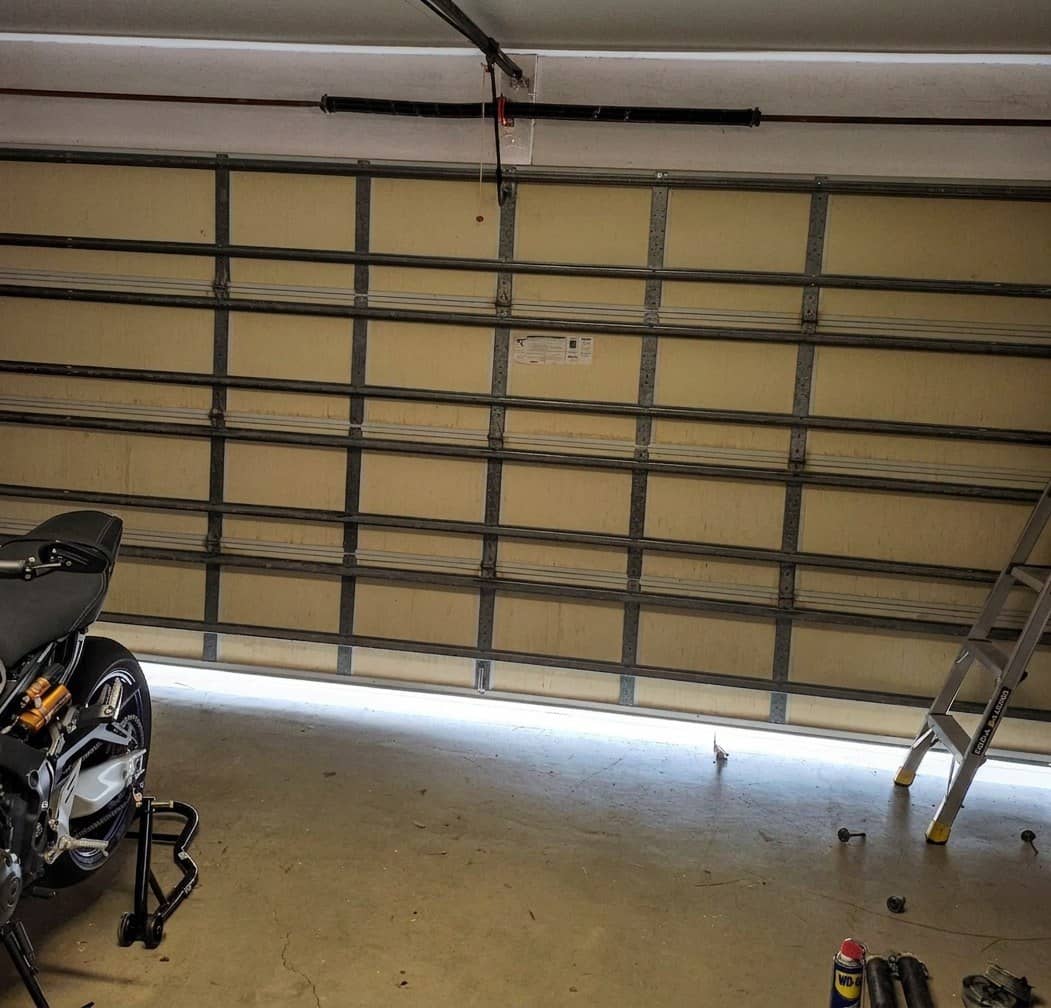
A door left in manual mode has no lock. Disconnected from the opener it can be lifted from outside by anyone, which matters when a house is empty during an evacuation. A clamp or a locking bar on the track holds it closed, and it also stops the door being forced upward by pressure, which is a real concern on an opening this size.
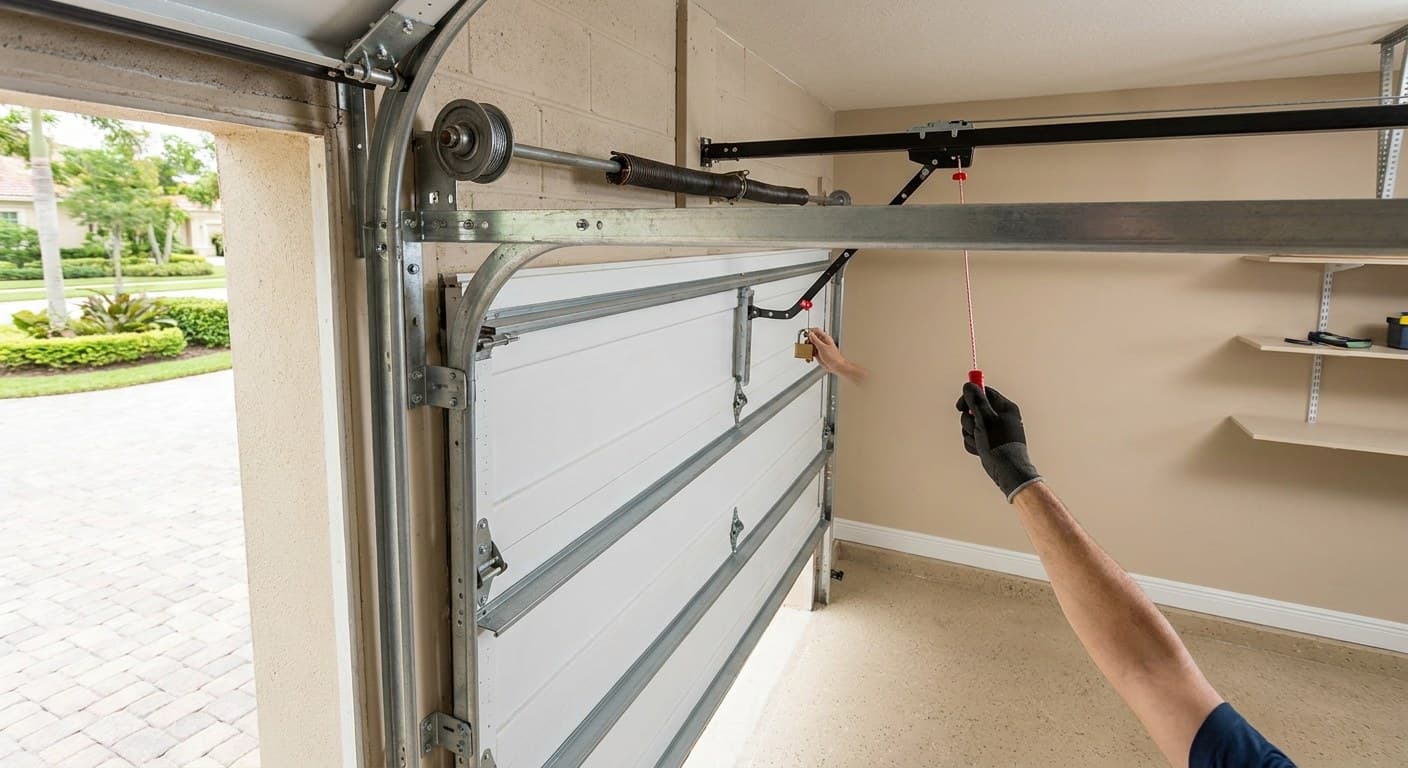
The red release cord: questions before you need it
Where exactly is the garage door emergency release handle?
The release handle hangs from the trolley on the rail that runs from the motor to the top of the garage door, usually a red grip near the middle of the garage.
- A short cord, sometimes shortened further
- Some installers tie it up away from children
- Worth locating before the power goes
Can a garage door emergency release be used from outside?
The release cannot be reached from outside, which is why some homes have an exterior emergency key release fitted through the top panel.
- Worth having where the garage is the only way in
- A closed door plus a power cut leaves no route
- It is a retrofit, not standard equipment
Is it safe to leave a garage door disconnected from the opener for days?
Leaving a garage door disconnected is mechanically fine provided the springs are sound and the door is secured against being lifted.
- A disconnected door is an unlocked door
- Re-engage the trolley as soon as power returns
- Check the safety reverse afterward
Why must the release only be pulled with the garage door closed?
Pulled while the garage door is up, the release hands you the entire weight of the panels with nothing holding them.
- The trolley was the only thing holding it
- A door drops the moment the latch lets go
- Closed first, then pull, without exception
Sources
- U.S. Consumer Product Safety Commission
- National Hurricane Center (NOAA)
Edited by Avidan Benichay · Updated
General information about garage doors in South Florida — not a diagnosis of your door, and not a quote. Code and prices vary by address and change over time. Terms of use
The parts around it
 Garage door won't openMost doors that refuse to open have one of three faults: a snapped torsion spring, a trolley that has been pulled off the opener rail, or simply a dead remote battery.2 ingap in the coil means a broken spring
- Opener not workingAn opener that is not working is really three different faults wearing the same description, and they have almost nothing in common: the drive is disconnected from the door, the internal gear has stripped, or the unit has lost power.3unrelated faults share this one description
- Belt or chain driveThe usual advice is simple — pick a belt drive if a bedroom sits above the garage, a chain drive otherwise.Beltquieter, and the choice under a bedroom
Next step
Not sure which part failed?
Most garage door faults are identifiable from the noise and the way the door moves. Start there — it usually costs less than you expect.
You describe what the door is doing
The noise it makes, how far it travels, whether the opener runs.
We test it on site
Springs, cables, balance, tracks, opener force and the safety reverse.
You get the price before any work starts
Itemized in writing, including the permit when the job needs one.
- 4.9/5 from 300+ local reviews
- Licensed & insured
- Free visit, no obligation