
Doing it right / Miami-Dade
Can I replace a garage door spring myself?
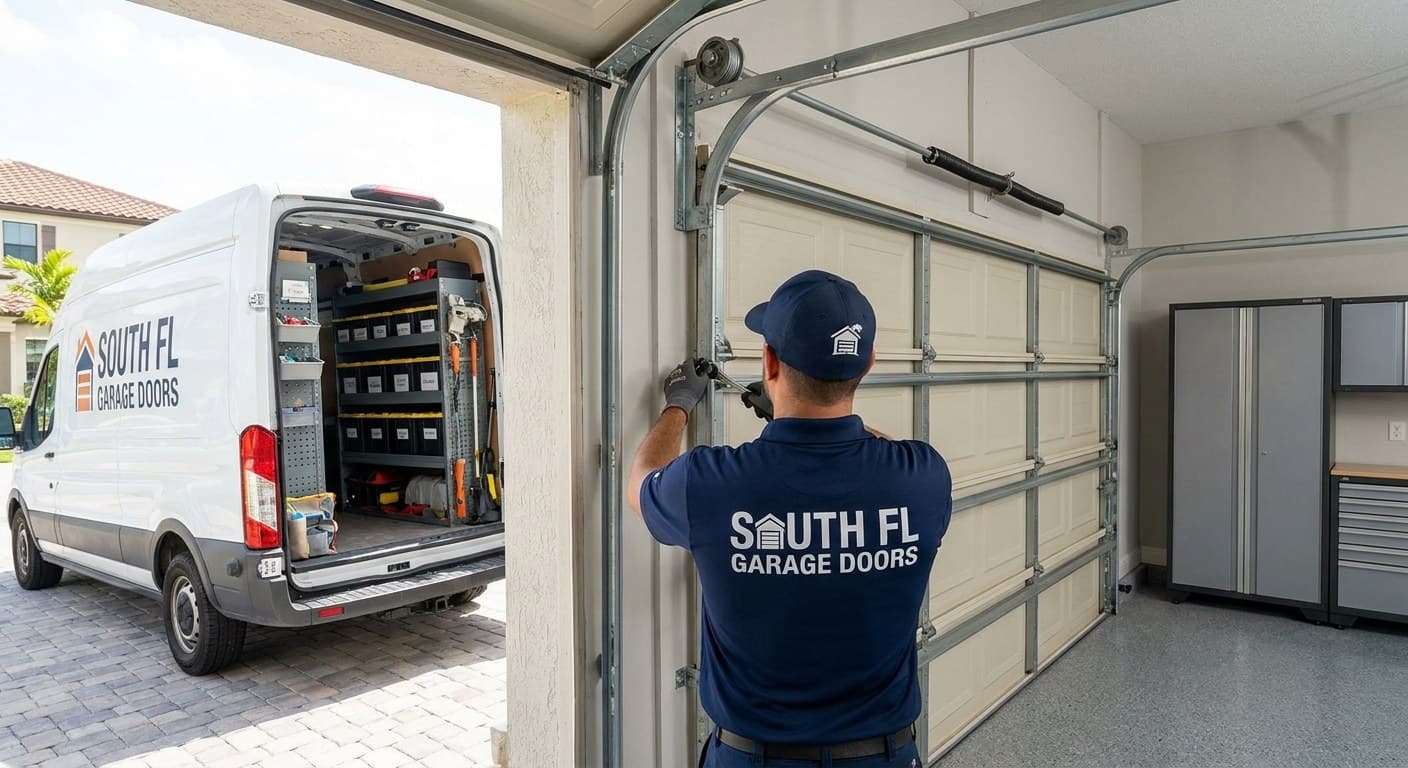
Physically you can, and every year a number of people in this county find out what that costs. A wound torsion spring stores enough energy to break the arm holding it, and it releases all of it in a fraction of a second if the bar slips. The honest answer is that this is the one job on a garage door where the skill being paid for is not knowledge but control of a loaded object.
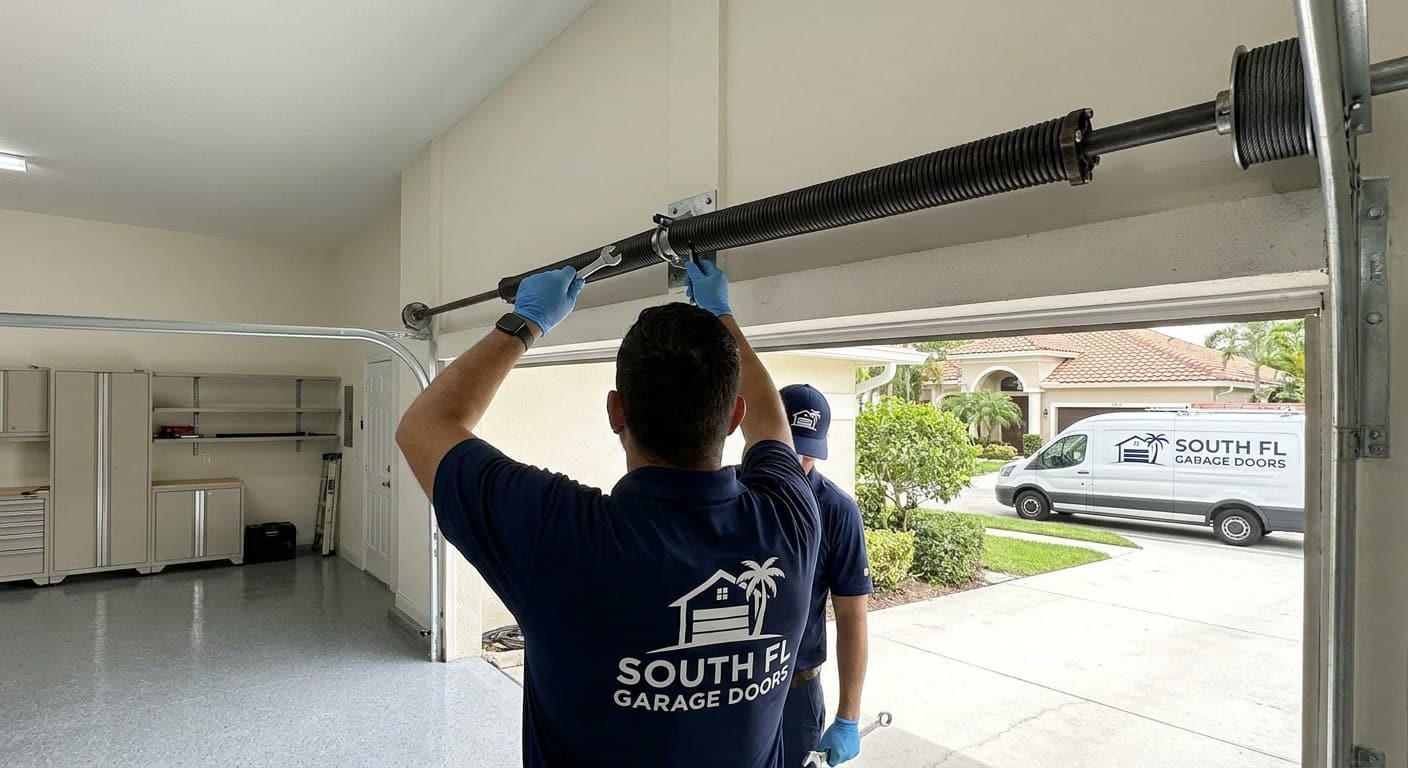
Three things about a wound spring
It stores enormous energy
and releases it in an instant
Winding bars, not screwdrivers
the wrong tool is how people are hurt
Springs are sized to the door
wrong wire is a new failure
What makes spring work different
Stored energy
A wound torsion spring holds hundreds of pounds of force
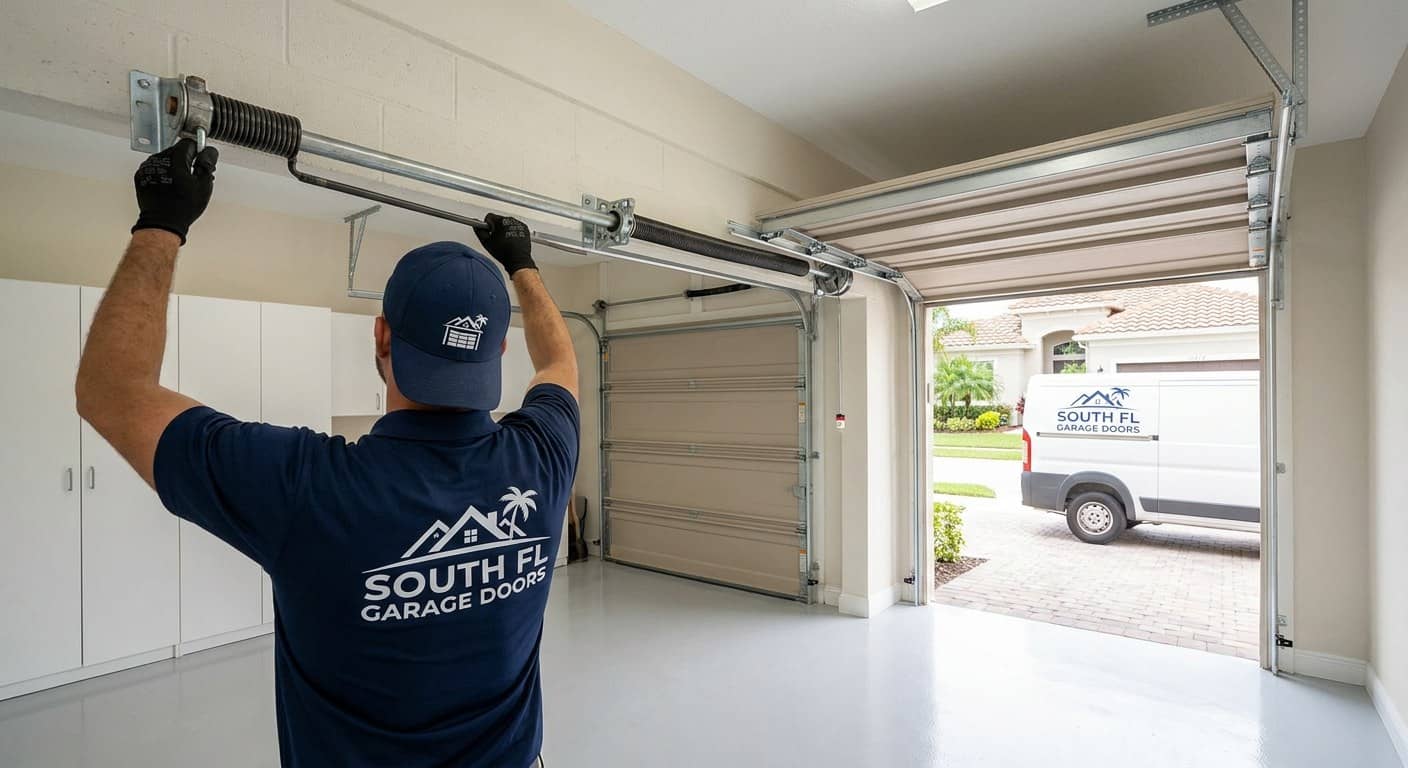
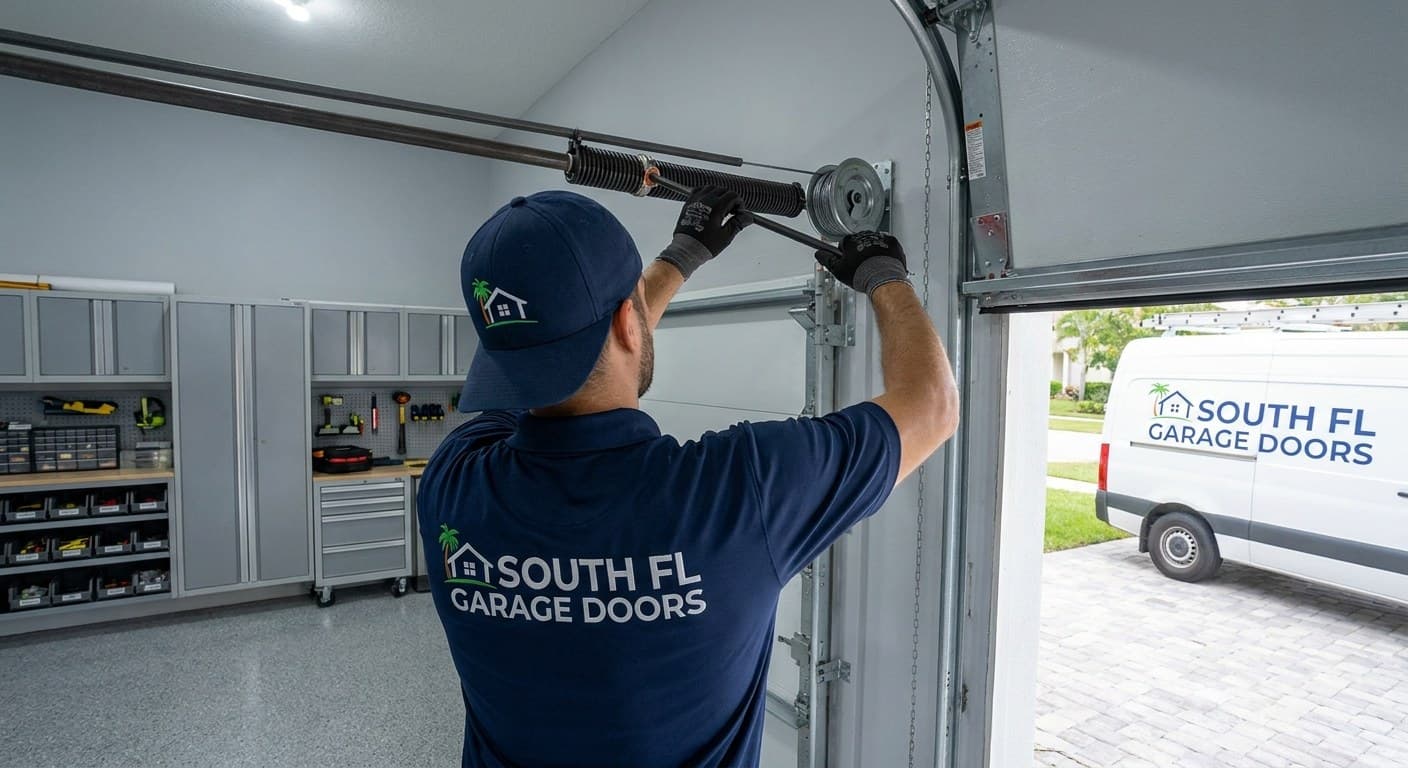
Proper winding bars
Sized steel bars, seated fully, held with two hands
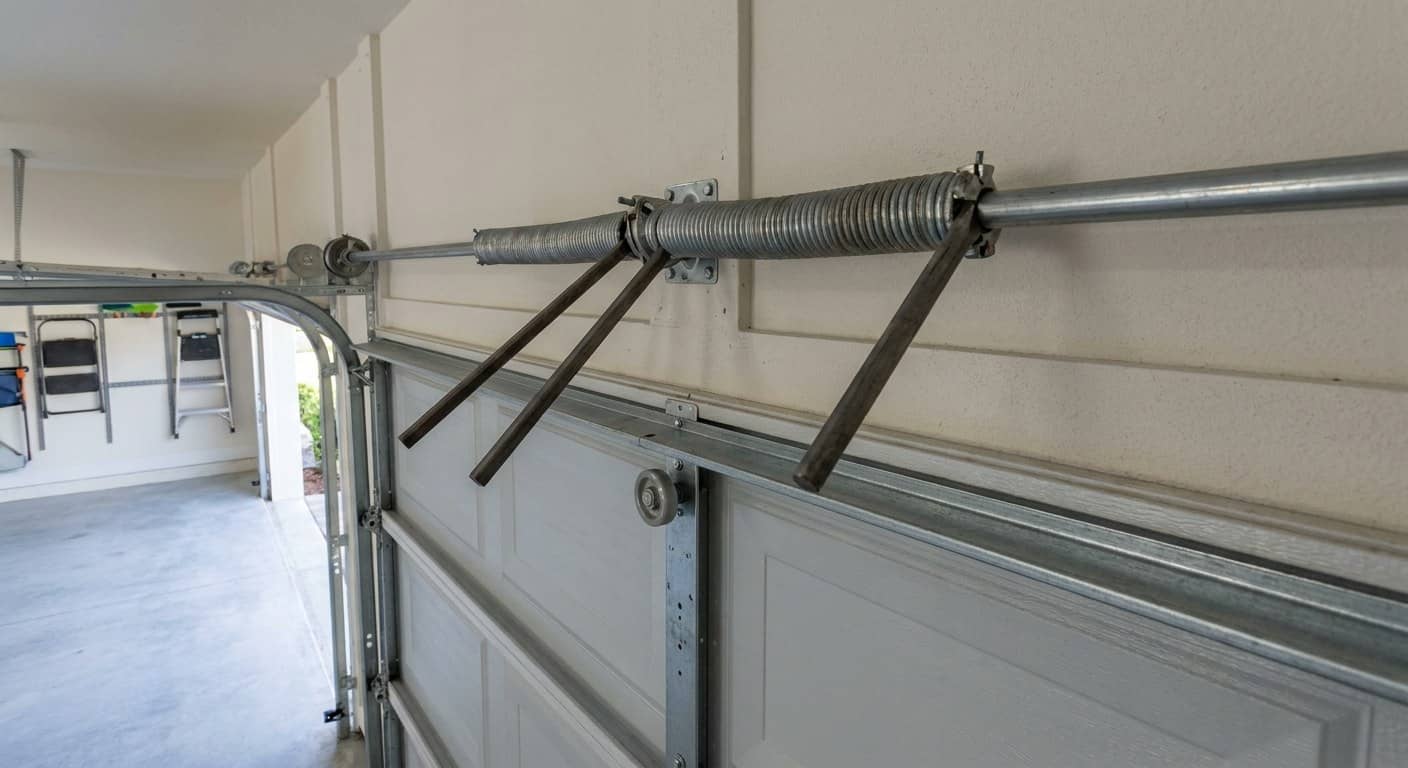
Correct sizing
Wire size, inside diameter and length must match the door
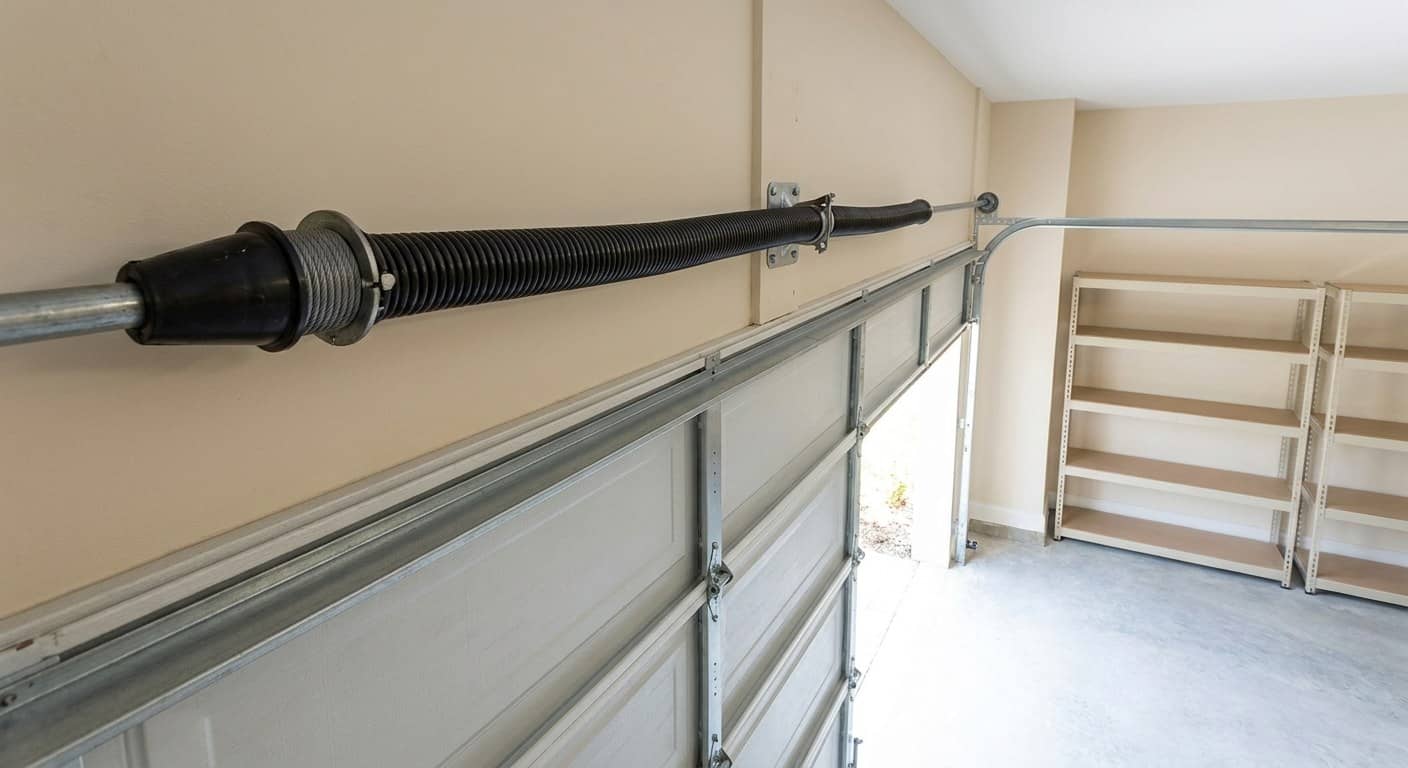
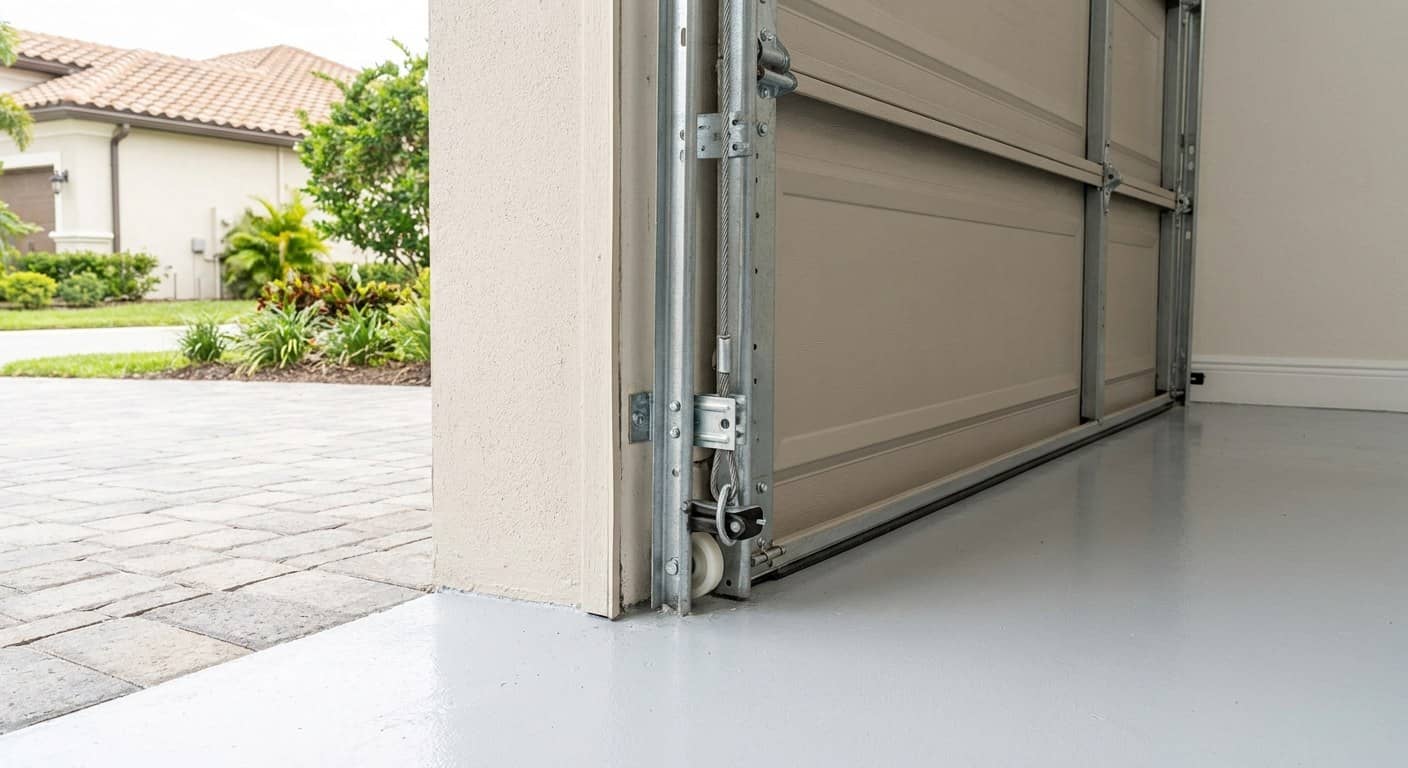
The bottom bracket
Loaded at all times, and never to be loosened
What can go wrong, honestly
| Task | Who can do it | Risk | What we advise |
|---|---|---|---|
| Unwinding under load | Only a trained technician | Severe | This is what causes the injuries |
| Improvised tools | Nobody | Severe | Screwdrivers slip out of the cone |
| Fitting the wrong spring | Technician, after measuring | Moderate | An unbalanced door destroys the opener |
| Loosening the bottom bracket | Nobody without releasing tension | Severe | A common serious injury |
| Resetting cables and drums | Technician | High | Requires the tension off and both sides matched |
| Testing balance afterwards | Technician | Low | Half-open, the door should stay put |
The honest answer about doing it yourself
Never improvise the tools
Winding bars are specific for a reason
Never touch the bottom bracket
It is loaded whether the door is open or closed
This is the real risk
Spring work is the injury category in this trade
Do not attempt…
- Never improvise the tools
- Never touch the bottom bracket
- This is the real risk
2
winding bars the job requires, sized to the cone
pairs
how springs are replaced, even when one broke
5
maintenance tasks that are genuinely yours to do
More detail if you want it
What the spring is actually holding
A torsion spring above the opening is wound to counterbalance the entire weight of the door. On an approved panel in this county that is a substantial number, and every bit of it is held in a coil of hardened steel by nothing but friction and two set screws. Loosen those without the shaft under control and the energy leaves through whatever is nearest, which is your hands.
The tool that makes it survivable is a pair of properly sized winding bars — solid steel rods that fit the cone precisely. Screwdrivers are the classic substitute and the classic cause: a shaft that is slightly too small turns inside the hole, and the moment it turns it becomes a projectile with the whole spring behind it.
Two details that catch competent people
Springs are handed. A left-wound spring on the right-hand side will fit, tension, and fail early — and it is not obvious by eye unless you know to look at the direction of the last coil. Buying by measurement alone, without matching the wind, is the most common ordering mistake made by people who did everything else right.
The second is that springs are replaced in pairs even when one broke. The surviving one has the same cycles on it and will follow within months, and a door running on one new and one tired spring is out of balance from the first day, which transfers the difference straight into the opener.
What you can genuinely do yourself
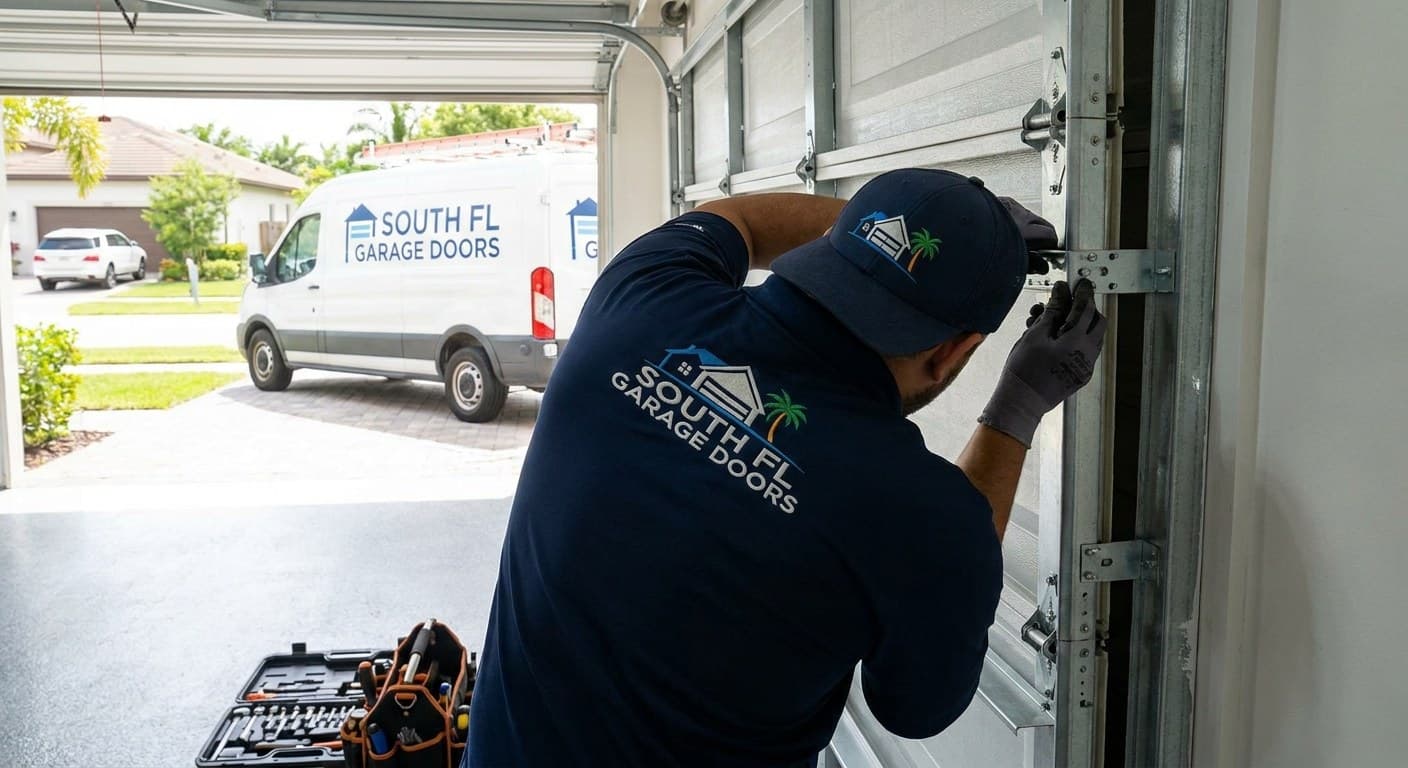
Plenty, and none of it is trivial work. You can run the balance test that tells you whether the springs are still doing their job. You can clean and realign the photo eyes. You can lubricate the hinges, rollers and the spring itself with the right product. You can inspect the lift cables for broken strands where they leave the drum, which is where they always go first. And you can tighten the track brackets, which loosen quietly and cause half the noises people call about.
That list covers most of what keeps a door alive. The line is drawn at anything holding stored energy — the springs, and the cables while they are under load. Everything on the other side of that line is yours.
| Work | Typical range | What moves the price | |
|---|---|---|---|
| Torsion spring replacement (pair) | $250 – $450 | Higher than extension springs: winding bars are required and the job carries real injury risk. Always replaced in pairs. | Book this — Torsion spring replacement (pair) |
| Extension spring replacement | $200 – $330 | Less common on Miami-Dade doors: hurricane-rated panels are heavier and usually call for torsion. | Book this — Extension spring replacement |
Market rates observed, not our quoted prices — surveyed 2026-08-16. HomeBlue / Angi, HomeBlue (Miami), Well Built Florida, Garage Doors FL (Fort Lauderdale), HomeAdvisor, Access Impact, Fort Lauderdale Garage Pros, Angi, OfficeFinder 2026 guide
Doing your own spring work: the honest answers
Are extension springs safer to change than torsion springs?
Extension springs are different rather than safer: they hold their energy stretched along the horizontal track instead of wound in a coil.
- A failed one travels the length of the garage
- The safety cable through the middle exists for that
- A door without one should not be worked on
Where do garage door winding bars come from?
Winding bars are sold as a pair by trade suppliers, sized by cone diameter, and they are not expensive.
- The bars are the cheapest part of doing it right
- The turn count is what the job actually needs
- Holding the shaft while you find out is the skill
If a do-it-yourself spring attempt goes wrong, does the repair cost more?
A failed attempt usually adds a little, and rarely for the reason people fear: nobody charges a penalty for trying.
- A cable jumped off its drum and kinked
- A shaft scored by a tool that slipped
- A door that came down hard and bent a section
The spring itself was going to be replaced either way, so what adds cost is the collateral rather than the spring.
Which garage door maintenance is genuinely safe to do yourself?
Five garage door tasks are genuinely yours, and none of them puts a hand near a loaded spring.
- The balance test that reports on the springs
- Cleaning and realigning the photo eyes
- Lubricating hinges, rollers and the coil itself
- Rinsing salt off the bottom section
Sources
- U.S. Consumer Product Safety Commission
- Florida Department of Business and Professional Regulation
Edited by Avidan Benichay · Updated
General information about garage doors in South Florida — not a diagnosis of your door, and not a quote. Code and prices vary by address and change over time. Terms of use
Worth knowing first
 Can a handyman do it?For anything structural — springs, cables, panels, tracks, or installing a door — no.1dedicated Florida specialty license for garage doors
- How long springs lastA standard torsion spring is rated for about 10,000 open-and-close cycles, which works out to roughly seven years for a household that uses the door four times a day.10,000cycles on a standard torsion spring
 Spring replacement costExpect roughly $250 to $450 for a pair of torsion springs fitted, and $200 to $330 if your door still runs on extension springs.$250–450torsion pair, fitted
- Checking your door is safeFive checks, no tools, about five minutes: reversal on contact, the photo eyes, the balance, the cables, and the emergency release.5 minmonthly routine, no tools required
Next step
Not sure which part failed?
Most garage door faults are identifiable from the noise and the way the door moves. Start there — it usually costs less than you expect.
You describe what the door is doing
The noise it makes, how far it travels, whether the opener runs.
We test it on site
Springs, cables, balance, tracks, opener force and the safety reverse.
You get the price before any work starts
Itemized in writing, including the permit when the job needs one.
- 4.9/5 from 300+ local reviews
- Licensed & insured
- Free visit, no obligation