
Parts and hardware / Miami-Dade
Belt drive or chain drive for a Miami garage?
The usual advice is simple — pick a belt drive if a bedroom sits above the garage, a chain drive otherwise. In this county there is a second variable that changes the answer: an approved hurricane-rated door is substantially heavier than the door it replaces, and weight is exactly what separates these two drive types in service life.
Three facts before you choose
Noise is the real difference
everything else is close
The gap is modest
measured against fifteen years
Both last
if the door is balanced
The four drive types
Belt drive
A reinforced rubber belt: the quiet choice
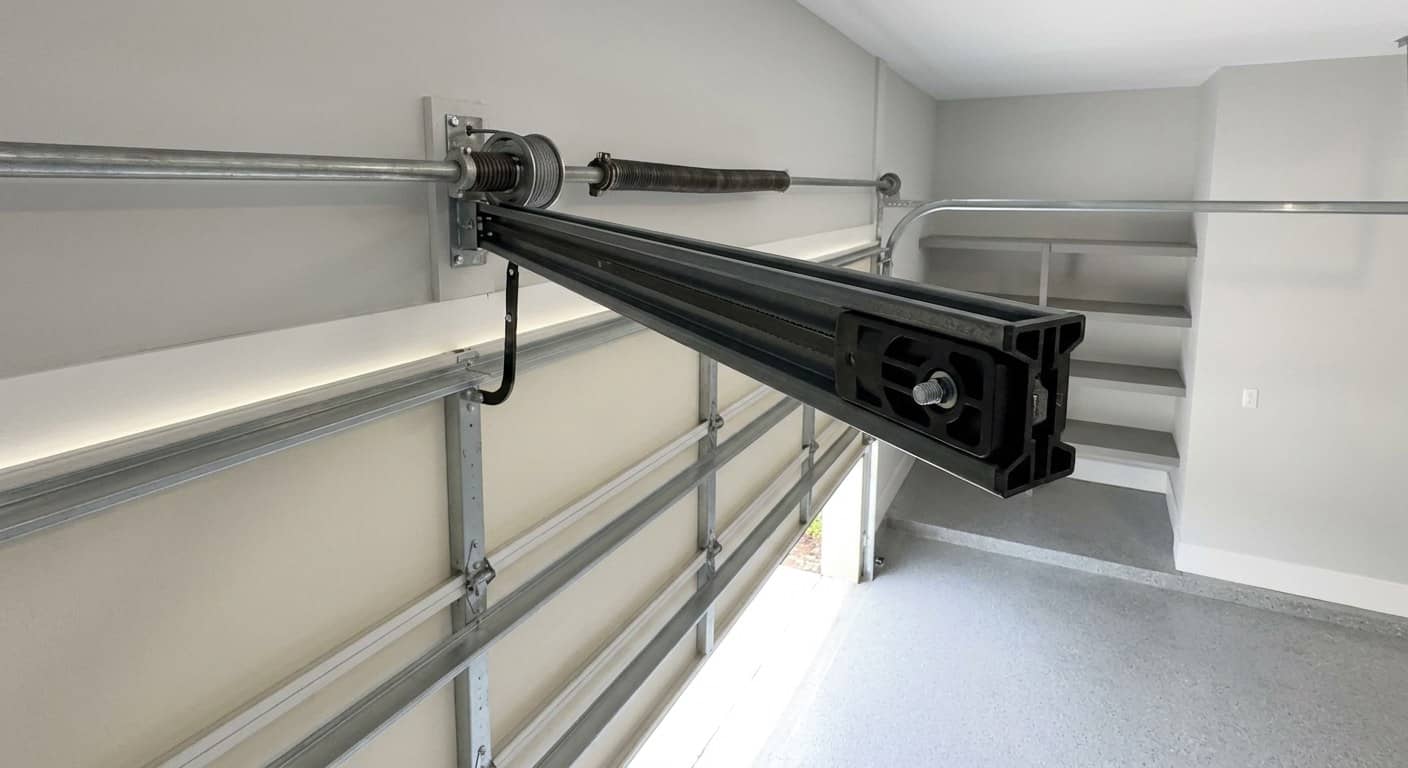
Chain drive
A bicycle chain in effect: cheapest and loudest

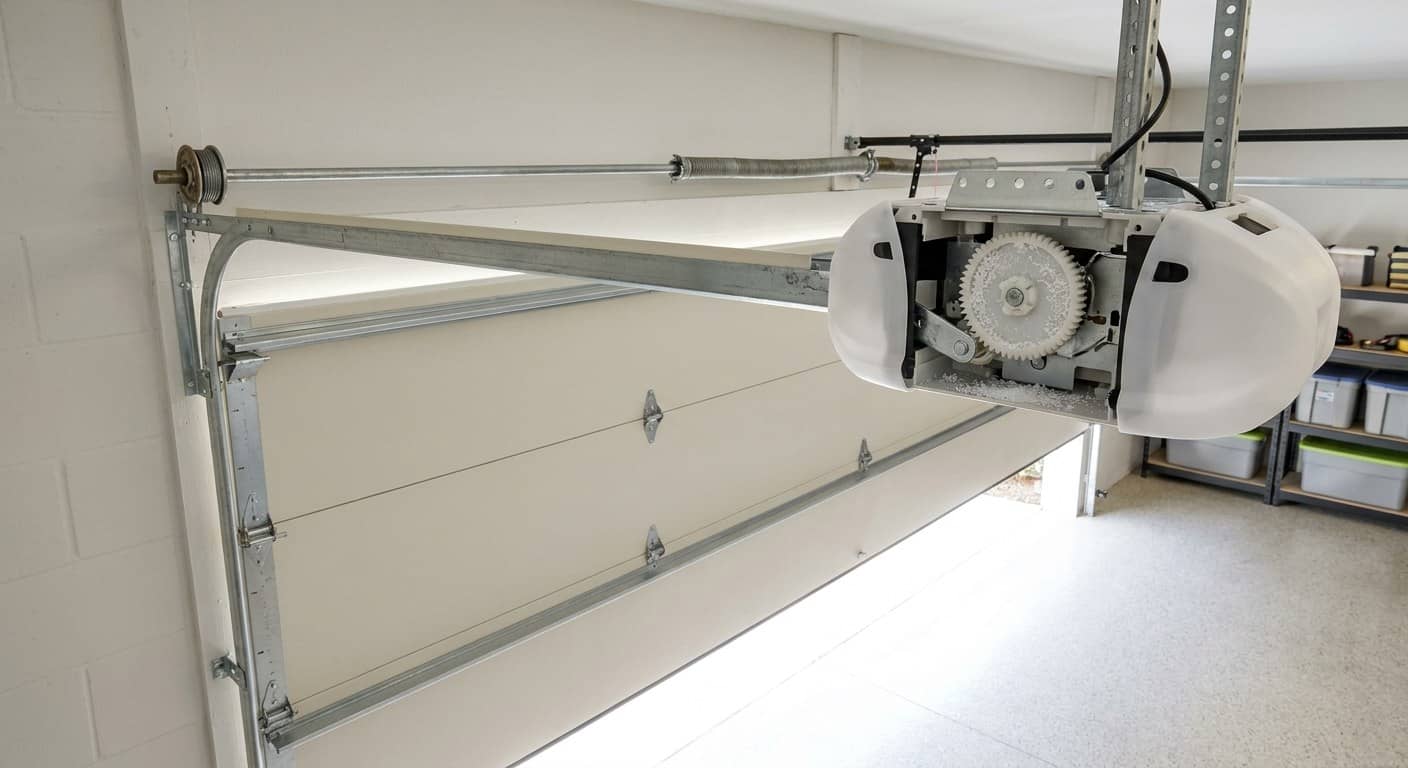
Screw drive
A threaded rod — fewer parts, more sensitive to heat
Wall-mount
No ceiling rail at all, ideal for tall or heavy doors
Belt against chain, point by point
| Symptom | What it means | Urgency | Next step |
|---|---|---|---|
| Noise | A belt is dramatically quieter than a chain | Routine | Decisive under a bedroom |
| Price | The belt costs more up front | Routine | A small share of the total installed cost |
| Maintenance | Chains need occasional tensioning | Routine | Belts are close to hands-off |
| Working life | Both outlive their gears and boards | Routine | The drive is rarely what fails |
| Heavy or rated doors | Weight favors a stronger unit | Routine | Wall-mount handles the heaviest |
| Living space above the garage | This is the whole argument for a belt | Routine | Nobody regrets the quieter unit |
Quiet by design vs. the part that actually fails
Normal
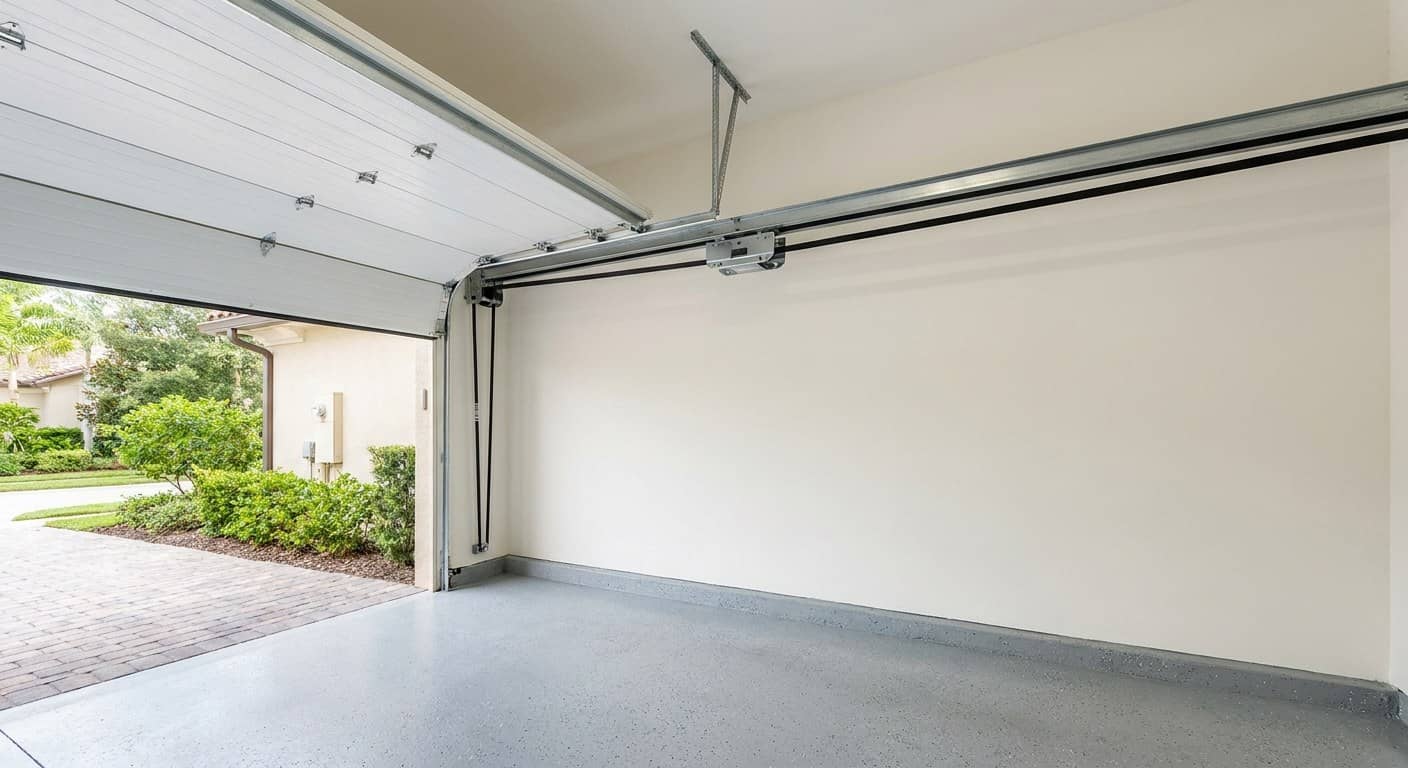
A belt drive
Reinforced rubber, no metal-on-metal, and nothing to tension every year.
Warning
The gear, not the drive
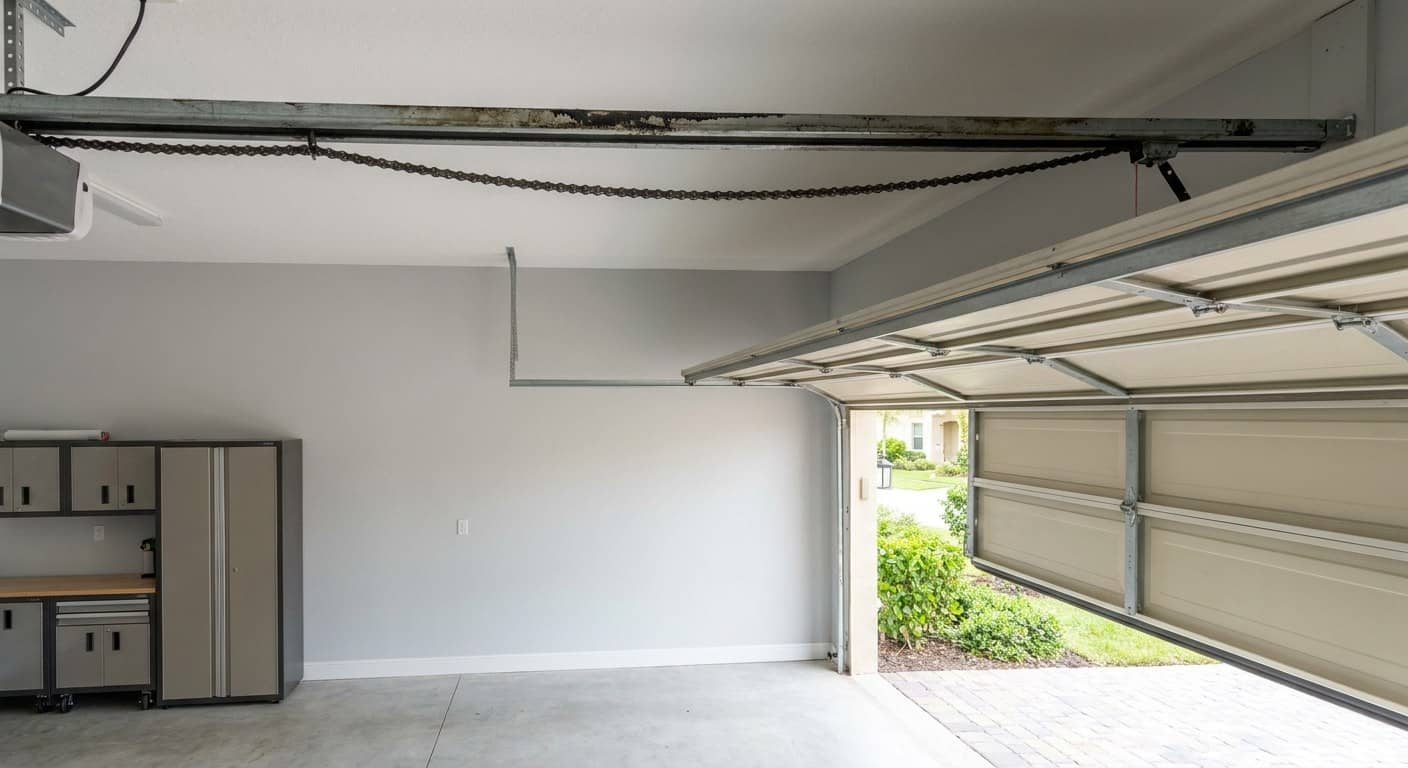
Whichever drive you choose, the plastic gear kit is the designed wear part.
Belt
quieter, and the choice under a bedroom
Chain
tolerates heat and weight with less fuss
Sizing
matters more than drive type
More detail if you want it
What each drive actually is
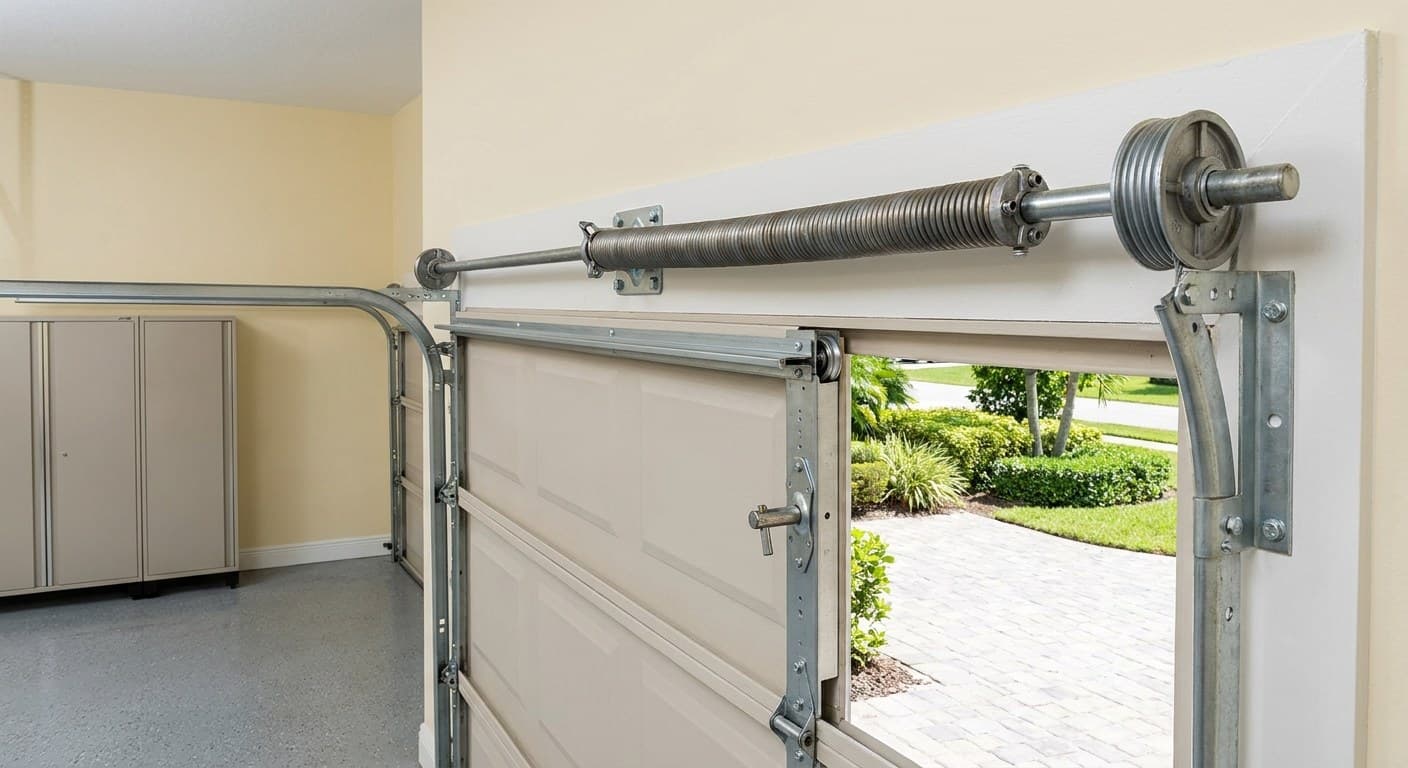
A chain drive pulls the trolley with a steel chain running over a sprocket, which is the same arrangement as a bicycle. A belt drive uses a reinforced rubber belt, usually with steel or fibreglass cords molded into it, running over a pulley. Both move the trolley along the same rail and use the same motor, gearbox and logic board — the difference is entirely in the flexible member.
There is a third type worth naming because it appears in older houses here: the screw drive, where the trolley is driven along a threaded steel rod. They are mechanically simple and tolerate heat well, but they are slow, and replacement parts for discontinued models are increasingly difficult to source.
The noise difference is real, and it is not the whole story
A belt is audibly quieter, and the gap is largest at the start and end of travel where a chain slaps against its guide. If a bedroom or a home office shares a wall or a floor with the garage, that difference is the main thing you will notice day to day, and it justifies the price difference on its own.
But much of the noise people attribute to a chain is not the chain at all. Steel rollers with no bearing, loose track fasteners and a worn shaft bearing all produce more sound than a well-adjusted chain does. Replacing a chain opener with a belt on a door with tired hardware buys a smaller improvement than people expect.
Heat, weight and what that means here
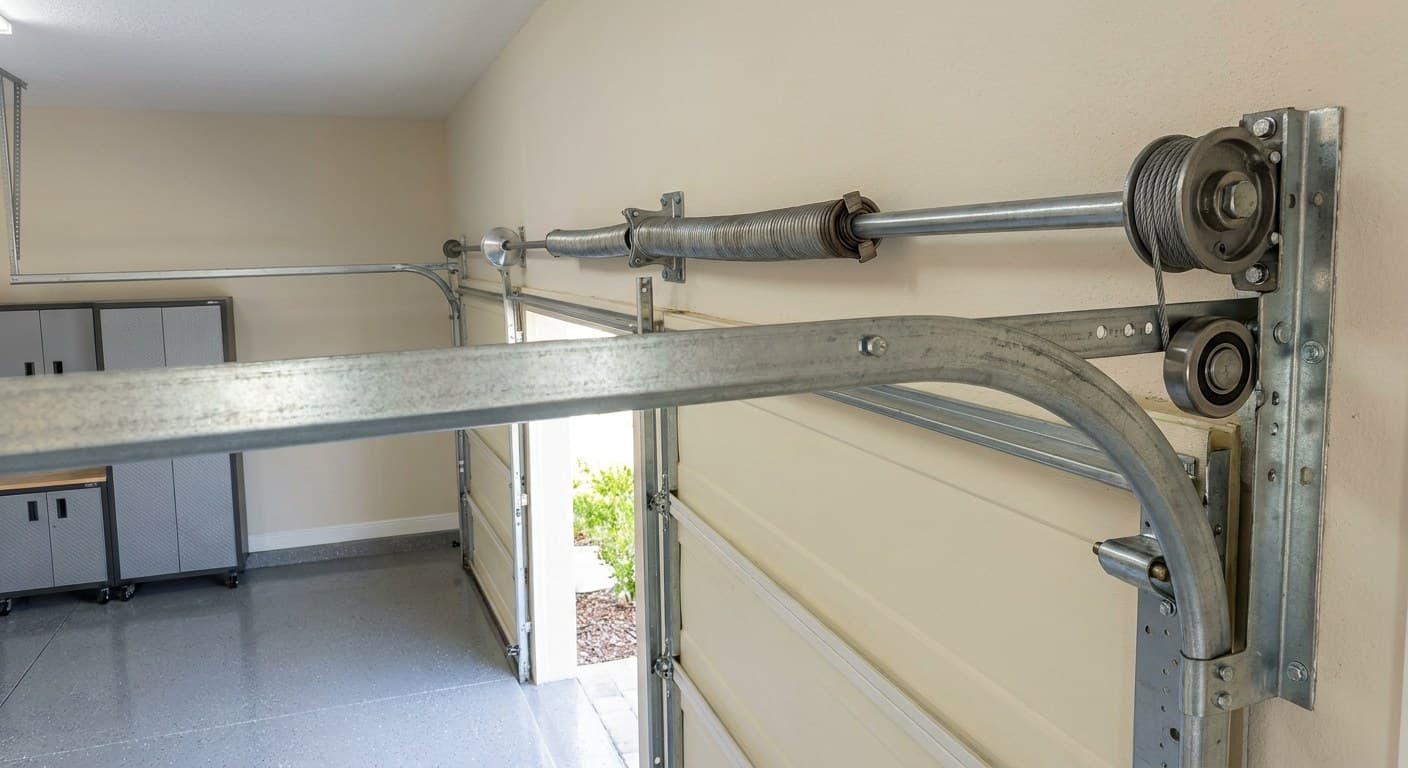
An unconditioned garage in this county spends months of the year well above ambient, and a reinforced rubber belt lives its whole life in that heat. Belts do stretch over time and they are the component that eventually needs tensioning or replacing, whereas a chain tolerates heat almost indifferently. On a very heavy door in a hot garage, a good chain unit often outlasts a mid-range belt one.
The decision that matters more than either is horsepower matched to the actual door. Whichever drive you choose, an opener sized for the lighter door that came off the house will run at the top of its capability every cycle, and that is what strips gears and cooks boards regardless of whether the pull is a chain or a belt.
Belt or chain in a hot garage: what people ask
Can a chain-drive garage door opener be converted to a belt?
On some models the rail assembly can be exchanged, and the part plus the labor usually approaches the price of a new opener with a warranty.
- Worth it only on a genuinely young unit
- Past a few years, replace the whole thing
- The warranty comes with the new head, not the rail
Does a wall-mount garage door opener avoid the belt-or-chain choice?
A jackshaft opener mounts beside the opening and drives the spring shaft directly, with no rail at all.
- Quiet, and it frees up the ceiling
- It suits high-lift installations
- Higher price and a more involved installation
What are the drawbacks of a belt-drive garage door opener?
A belt drive costs more than a chain of equal lift capacity, and its reinforced rubber lives in a garage that spends half the year above ninety degrees.
- Heat ages rubber faster than it ages steel
- Heavy insulated panels are still specified with chain
- Noise is not among the drawbacks
Does the drive type matter for hurricane preparation?
Drive type has nothing to do with a garage door's wind resistance, which comes from the panels, the bracing and the fixings.
- Battery backup is the feature that matters
- A unit with one still opens after an outage
- Independent of belt or chain
Which garage door opener drive type is the most reliable?
Neither drive is more reliable, because openers almost never fail at the drive.
- The logic board gives out first
- Then the capacitor, then the safety eyes
- All three are shared by belt and chain alike
Sources
- U.S. Consumer Product Safety Commission
- Florida Building Commission — Product Approval
Edited by Avidan Benichay · Updated
General information about garage doors in South Florida — not a diagnosis of your door, and not a quote. Code and prices vary by address and change over time. Terms of use
The parts around it
- Opener not workingAn opener that is not working is really three different faults wearing the same description, and they have almost nothing in common: the drive is disconnected from the door, the internal gear has stripped, or the unit has lost power.3unrelated faults share this one description
 Diagnose it by soundA garage door is one of the few machines in a house that tells you exactly what is wrong if you listen to it, because each component fails with its own signature sound.Fixed pointsqueal is rotational, at the shaft
 Opening it by handThe red handle hanging from the opener rail disconnects the door from the motor so you can raise it by hand, and the single most important rule is to pull it only when the door is fully closed.Closedalways: pull the handle with the door down
Next step
Not sure which part failed?
Most garage door faults are identifiable from the noise and the way the door moves. Start there — it usually costs less than you expect.
You describe what the door is doing
The noise it makes, how far it travels, whether the opener runs.
We test it on site
Springs, cables, balance, tracks, opener force and the safety reverse.
You get the price before any work starts
Itemized in writing, including the permit when the job needs one.
- 4.9/5 from 300+ local reviews
- Licensed & insured
- Free visit, no obligation