
Wind load / South Florida
Garage door wind load requirements in Florida
Your requirement is a pair of pressures in pounds per square foot — one positive, one negative — computed for your specific opening, and the door you install has to be approved to at least those two values. They come from the mapped wind speed at the address, how exposed the building is, how high the opening sits and how large it is. No table gives you the answer without those four inputs.
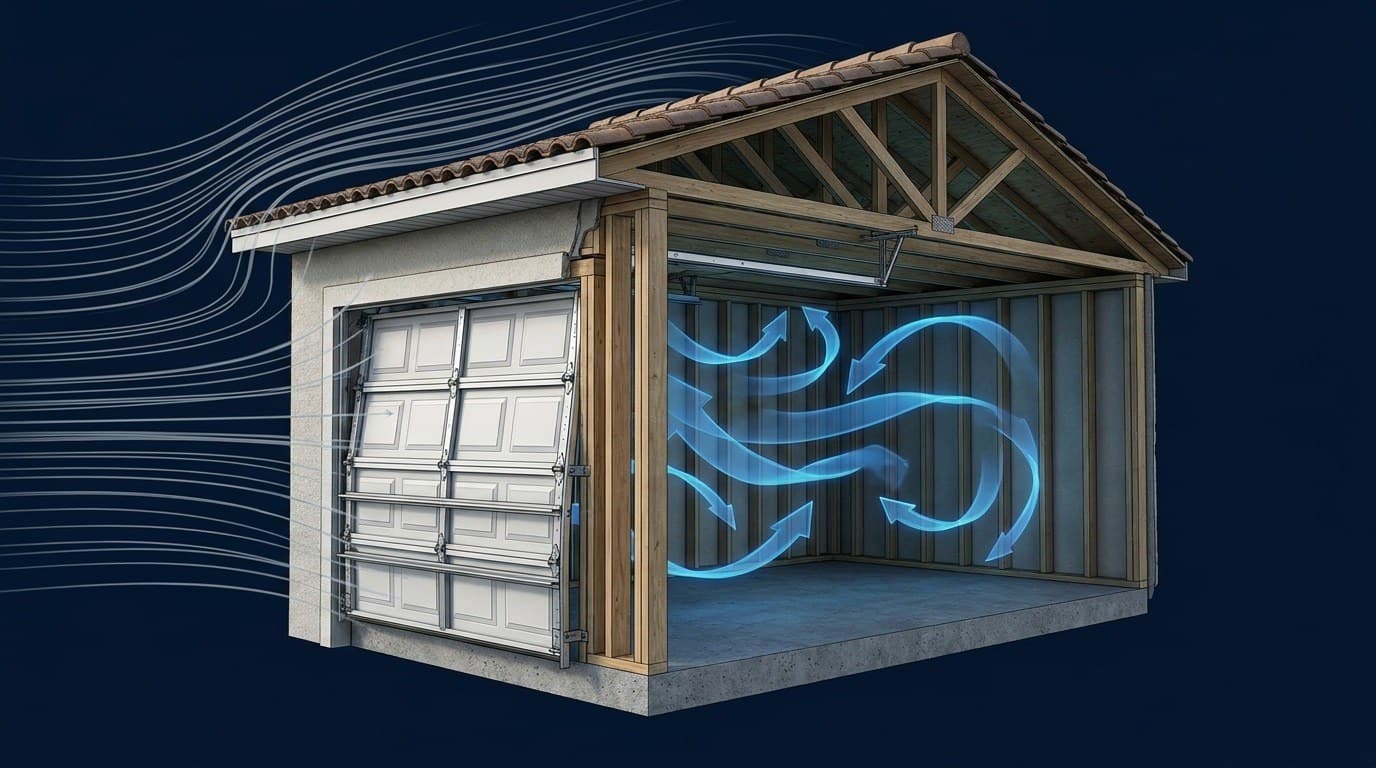
Three things to know first
Suction, not push
the door is pulled outward
Your address decides
not your city, your address
The plans carry the number
ask for it, do not guess it
The forces a garage door has to survive
Positive pressure
Wind pressing directly on the windward face
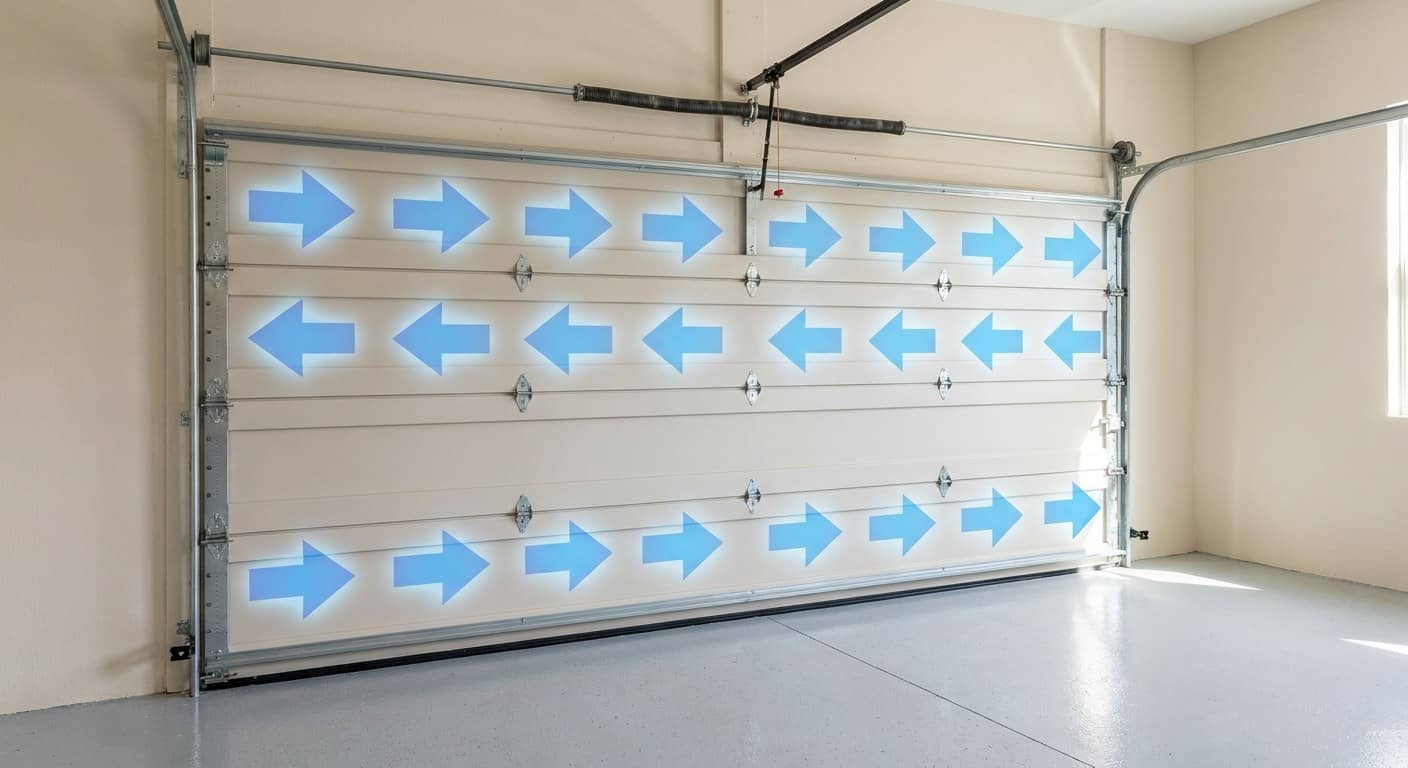
Negative pressure
Low pressure on the sheltered face pulling the door out
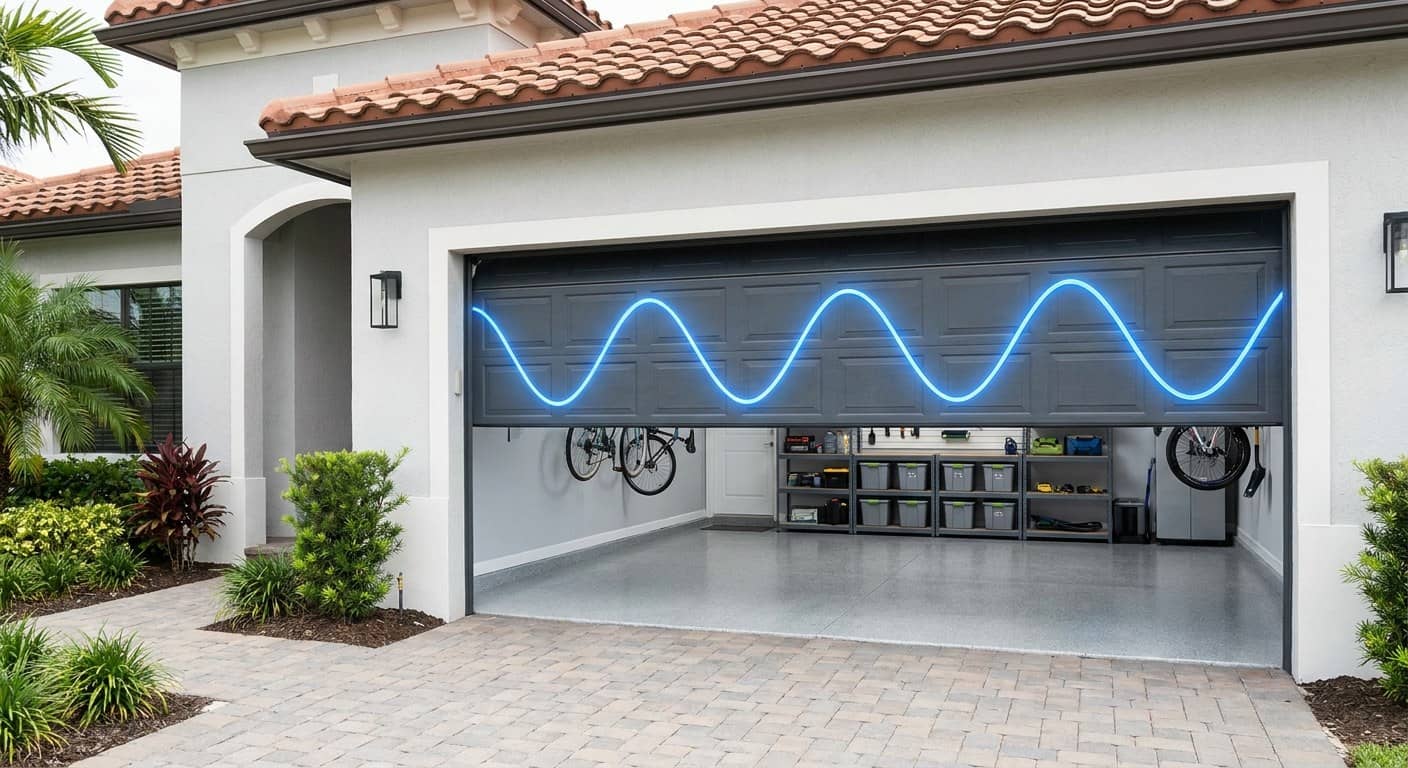
Cyclic load
Hours of reversals rather than one gust
Bracing
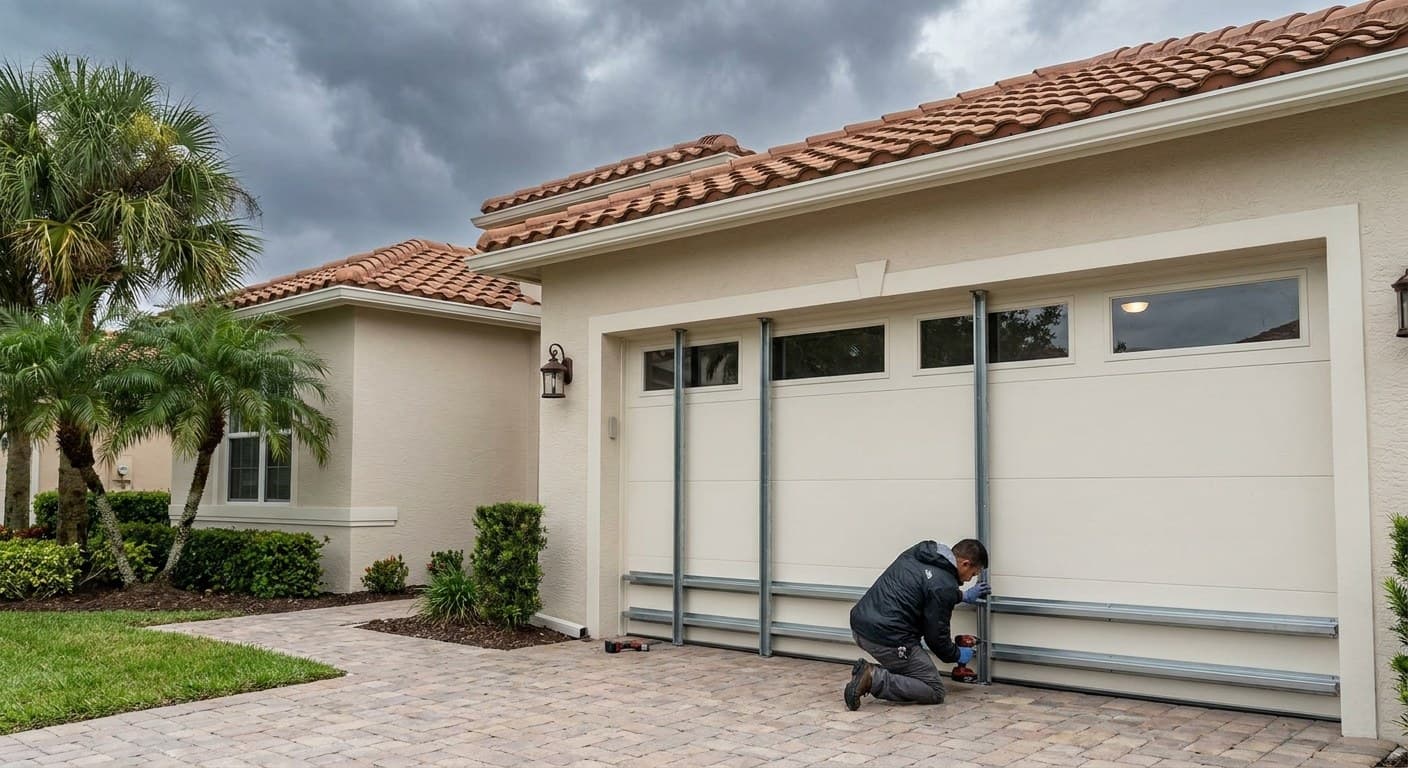
Struts and posts move the load into the structure
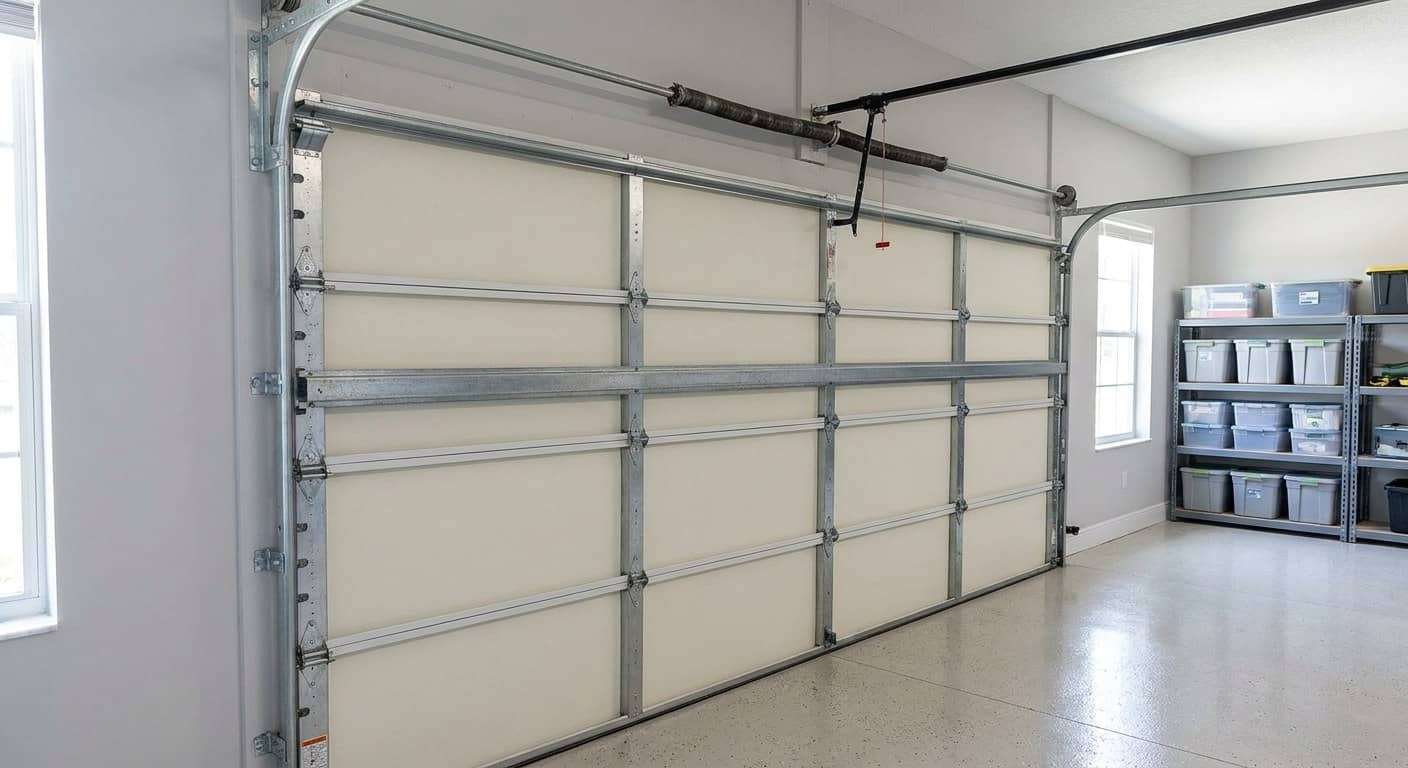
Design wind speeds across the three counties
| Where you are | What the code says | Where the number lives | What it changes |
|---|---|---|---|
| Risk category | Speeds are given per risk category, I through IV | Florida Building Code 2023, section 1620.2 | A house is category II |
| Miami-Dade | 165 to 195 mph, three-second gust, by risk category | Written in the code text | Full HVHZ rules and Miami-Dade approvals |
| Broward | 156 to 185 mph, three-second gust, by risk category | Written in the code text | HVHZ too, with its own speeds |
| Palm Beach | Outside the HVHZ; speeds are read from the maps | Figure 1609.3 wind maps, not the code text | Florida Product Approval, no TAS protocols |
| Your design pressure | Calculated from speed, exposure, height and opening size | The engineer on your permit plans | This is what the door has to be rated for |
| The number for your door | Specific to your address and your opening | Your permit application | Never accept a rating without seeing it |
Why South Florida hardware wears out sooner

170 mph
order of magnitude of the mapped ultimate wind speed for the county
psf
the unit: pounds per square foot, positive and negative
4 inputs
speed, exposure, height and opening size — none optional
More detail if you want it
Positive pushes, negative pulls, and the pull usually wins
Wind arriving at the front of a house presses on that face, and that is the positive figure. As the same air accelerates around the corners and over the roof, it drops the pressure outside the wall while the interior stays where it was, and the difference tries to pull the door out of its opening. On most residential elevations that suction is the larger of the two numbers, which is counter-intuitive to nearly everyone who has never seen the calculation.
It also explains a failure mode people misread. A door found lying in the driveway, bowed outward, did not get blown in and bounce back — it was sucked off its track, and the tracks and end hinges usually show it. Bracing that only resists inward load answers half of the problem.
Where the four inputs come from
The wind speed is read off the map adopted by the building code, and Miami-Dade sits in its highest band — ordinary homes here are designed around an ultimate speed in the region of 170 mph, rising along the coastal strip. Exposure describes what stands between you and open water or open ground: a house behind three streets of similar houses is not loaded like the same house on a bare lot facing the bay.
Height matters because pressure rises with elevation above grade, which is why the third-floor opening of a townhouse block is not governed like a slab-on-grade bay. And the size of the opening itself enters the formula: a wider door averages the gust over more surface, so its pressure per square foot is not the pressure per square foot of a small window on the same wall. Those two effects pull in opposite directions, which is precisely why the figure is calculated rather than remembered.
Reading it on a quote without taking anyone's word
A serious proposal states the pressures required for the opening and the pressures the proposed model is approved for, as two pairs you can compare. If only one pair appears, you are being told what the door can do and not what your wall demands, and the two are unrelated until somebody does the arithmetic. Ask which document the required figures came from; on a permitted job they come from the drawings filed with the application.
Beware the single number, too. A rating written as one value hides whether it describes the push or the pull, and a door comfortably approved in one direction can be short in the other. Two signed values, or the quote is incomplete.
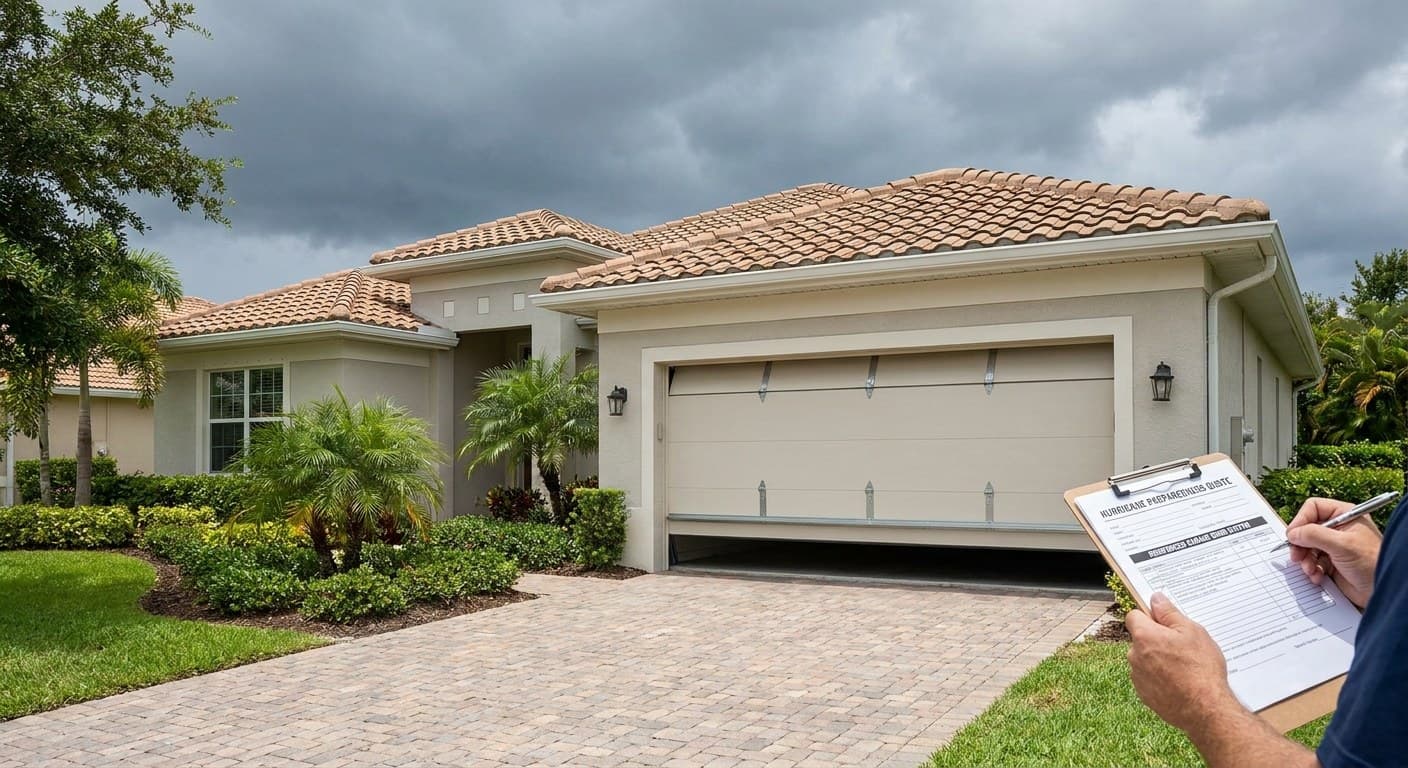
Wind load and design pressure on a garage door
Can you tell me my garage door design pressure over the phone?
Not honestly. We can name the band your address falls in and what typically governs a bay of your width, and that is as far as a phone call goes.
- The binding pair belongs on the filed drawings
- Signed by whoever takes responsibility
Why is my neighbor's garage door requirement different from mine?
Because at least one input differs, and two houses by the same developer can land on different numbers for that reason.
- A corner lot
- A wider opening
- An extra story
- An unobstructed line to open water
Is a higher-rated garage door always better?
It is never worse, but it is often paid for twice — heavier assemblies need matched springs and sometimes a stronger opener.
- Exceeding the requirement is fine
- Two levels above changes little but the invoice
How much wind can a garage door actually withstand?
The code does not answer in miles per hour, which is why the question keeps producing bad answers. It specifies design pressure on the panel, in pounds per square foot.
- Derived from the building height
- From its exposure category
- From where on the wall the opening sits
Two identical doors on two different houses can therefore be governed by two different numbers, which is exactly why a wind speed makes a poor answer.
What does the Florida Building Code require of a garage door?
Three things, and in this order.
- A product approval covering the exact assembly
- Anchoring executed as that approval spells out
- An inspection confirming both
Inside the High-Velocity Hurricane Zone the approval must cover missile impact as well as pressure; outside it, the wind-borne debris region decides whether impact applies at all.
Sources
- Florida Building Code (ICC)
- Florida Building Commission — Product Approval
- Miami-Dade County — Product Control and Permitting
Edited by Avidan Benichay · Updated
General information about garage doors in South Florida — not a diagnosis of your door, and not a quote. Code and prices vary by address and change over time. Terms of use
The rest of the code
- What makes one strongThree things, in this order of importance: an assembly stiff enough to hold the calculated load without racking, a proven resistance to being punctured by flying debris, and an anchoring detail that carries everything into the structure.9 lbtimber missile fired at the panel under TAS 201
 Hurricane-rated doorsYes — in this county a replacement door has to be approved, and approved twice over: once for the pressure the wind exerts on your particular opening, and once for what happens when flying debris hits it.2counties in the High-Velocity Hurricane Zone: Miami-Dade and Broward
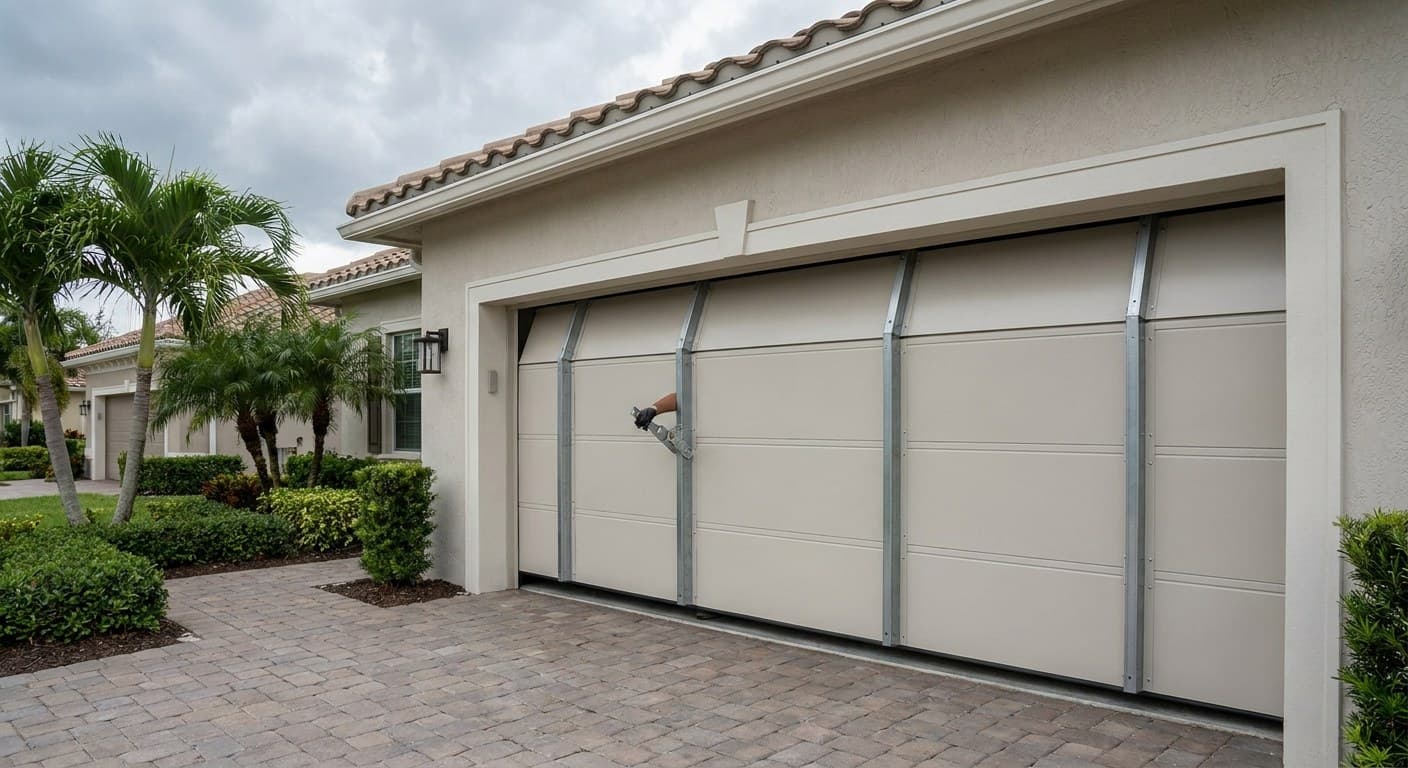
- Bracing a door you keepBracing is a vertical post or a set of horizontal struts fixed to a door already in place, and it addresses one failure only: the panels bending out of their guides under wind pressure.0impact rating gained by adding a brace
Next step
Find out what your address actually requires.
Design pressure depends on your exact wind zone and the geometry of the opening. We check it before quoting anything — no guesswork, no round numbers.
You describe what the door is doing
The noise it makes, how far it travels, whether the opener runs.
We test it on site
Springs, cables, balance, tracks, opener force and the safety reverse.
You get the price before any work starts
Itemized in writing, including the permit when the job needs one.
- 4.9/5 from 300+ local reviews
- Licensed & insured
- Free visit, no obligation