
Service life / Miami-Dade
How long does a garage door opener last?
Ten to fifteen years is the figure the industry quotes, and it holds up reasonably well — but it describes a dry garage in a mild climate hanging a light door. Around here, plan closer to ten. Two local conditions shorten it, and neither of them announces itself until the motor is already tired.
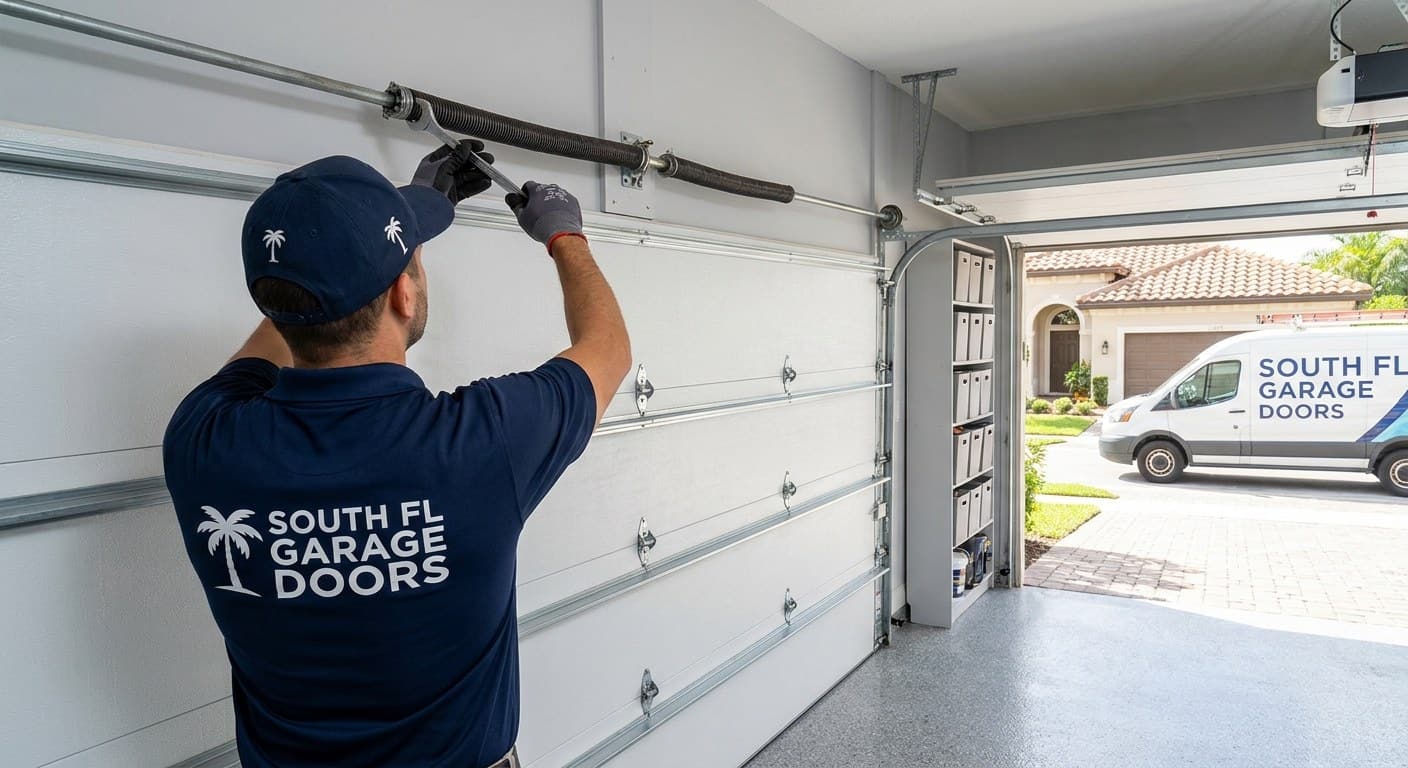
How opener life actually works
Ten to fifteen years
the usual working life
Parts before the whole
gears and boards go first
Safety is the cutoff
no reversing sensors means replace
What ends an opener's life
The drive
Belts stretch, chains slacken, both are serviceable
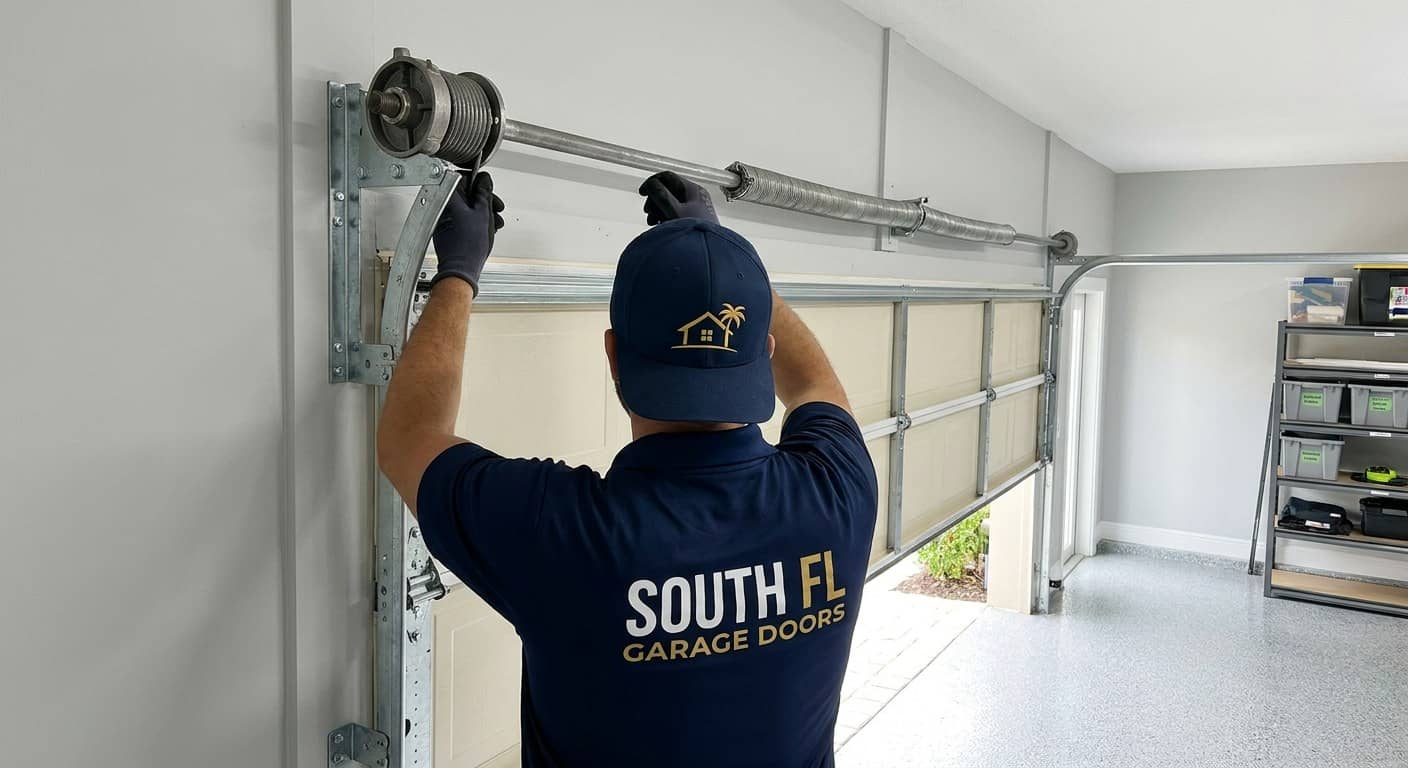
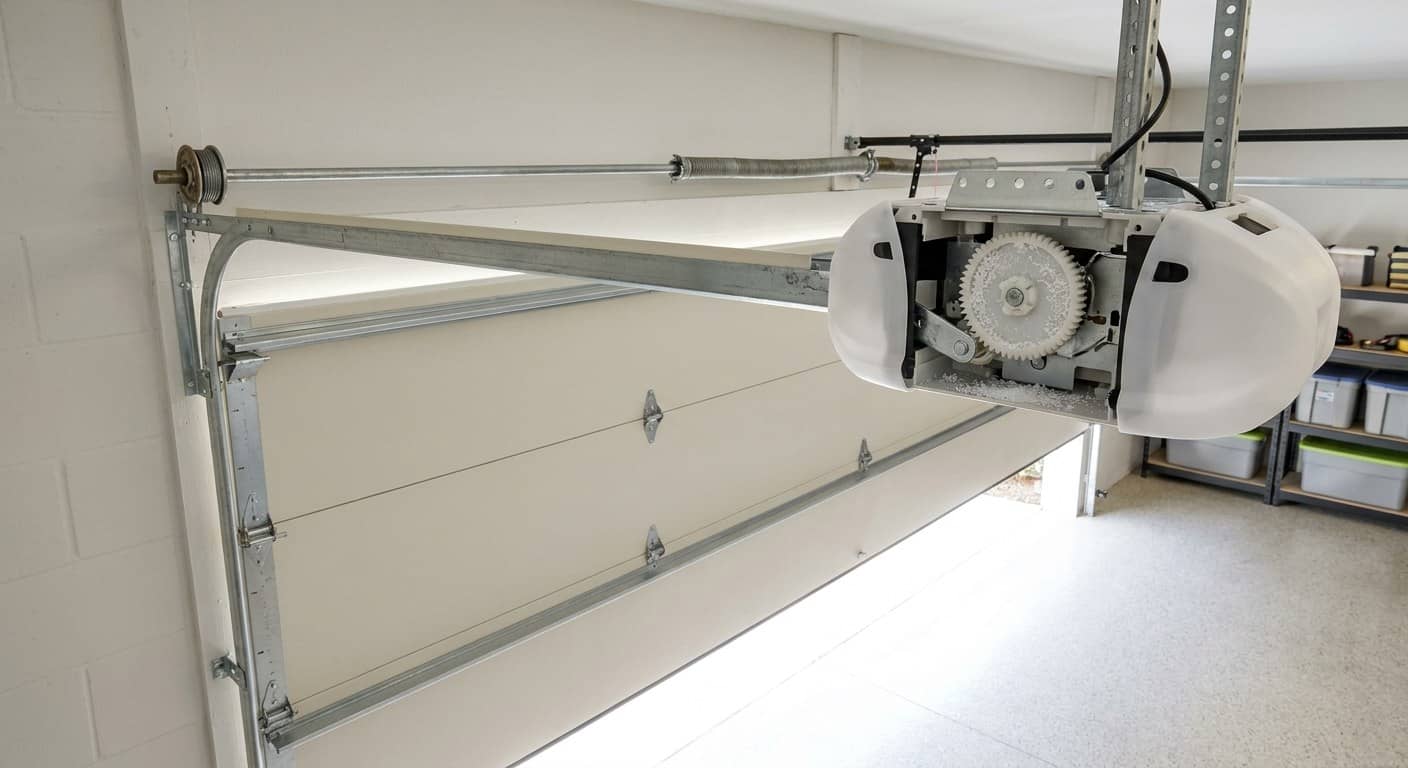
The gear kit
Plastic gears are the designed wear part
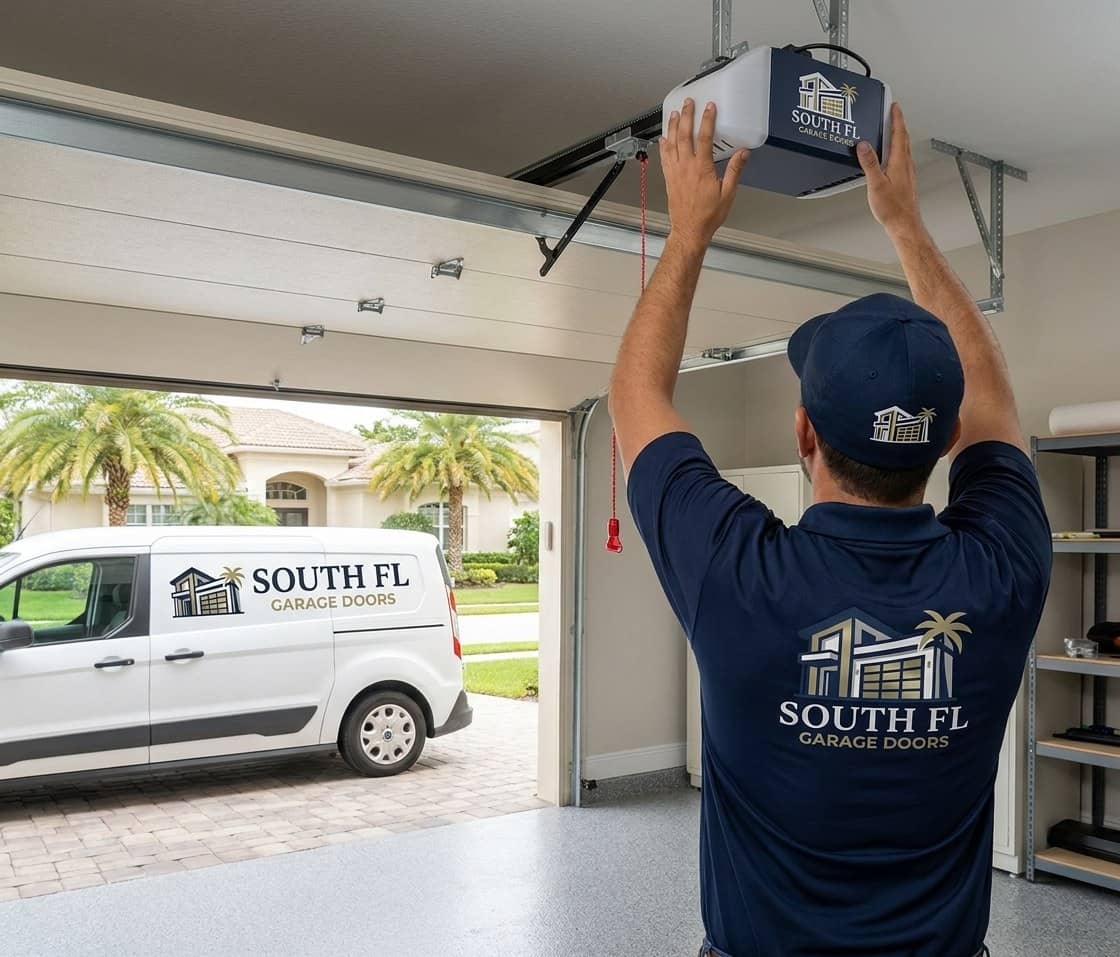
The logic board
Humidity and surges end boards early here
The safety system
An opener without working photo-eyes is not repairable, it is obsolete
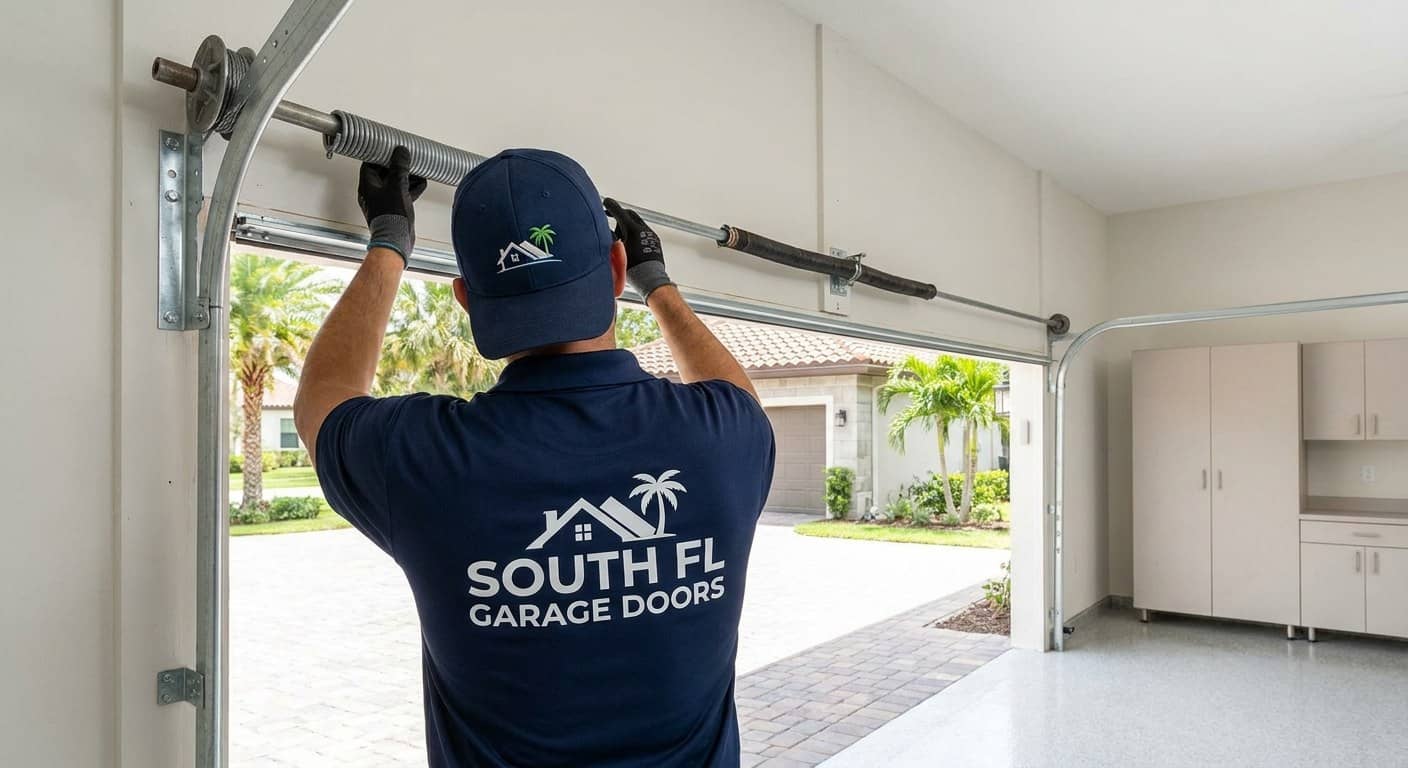
Opener age and what to do about it
| Situation | What it means | Timing | Next step |
|---|---|---|---|
| Under ten years old | Within its designed life | Repair | A gear or belt is a routine fix |
| Ten to fifteen years | The end of the usual band | Repair once, then weigh | A second failure changes the answer |
| Over fifteen years | Past the usual working life | Plan a replacement | Parts availability starts to bite |
| Made before 1993 | Predates the federal reversing requirement | Replace | This is a safety matter, not a preference |
| Second failure within a year | The rest of the unit is the same age | Replace | Repair costs are compounding |
| No battery backup | Florida requires backup on new installations | Replace at the next failure | An outage during a storm is when you need it |
Worth keeping vs. worth replacing
Normal
Serviceable unit
Under fifteen, one failed part, working sensors: repair and keep it.
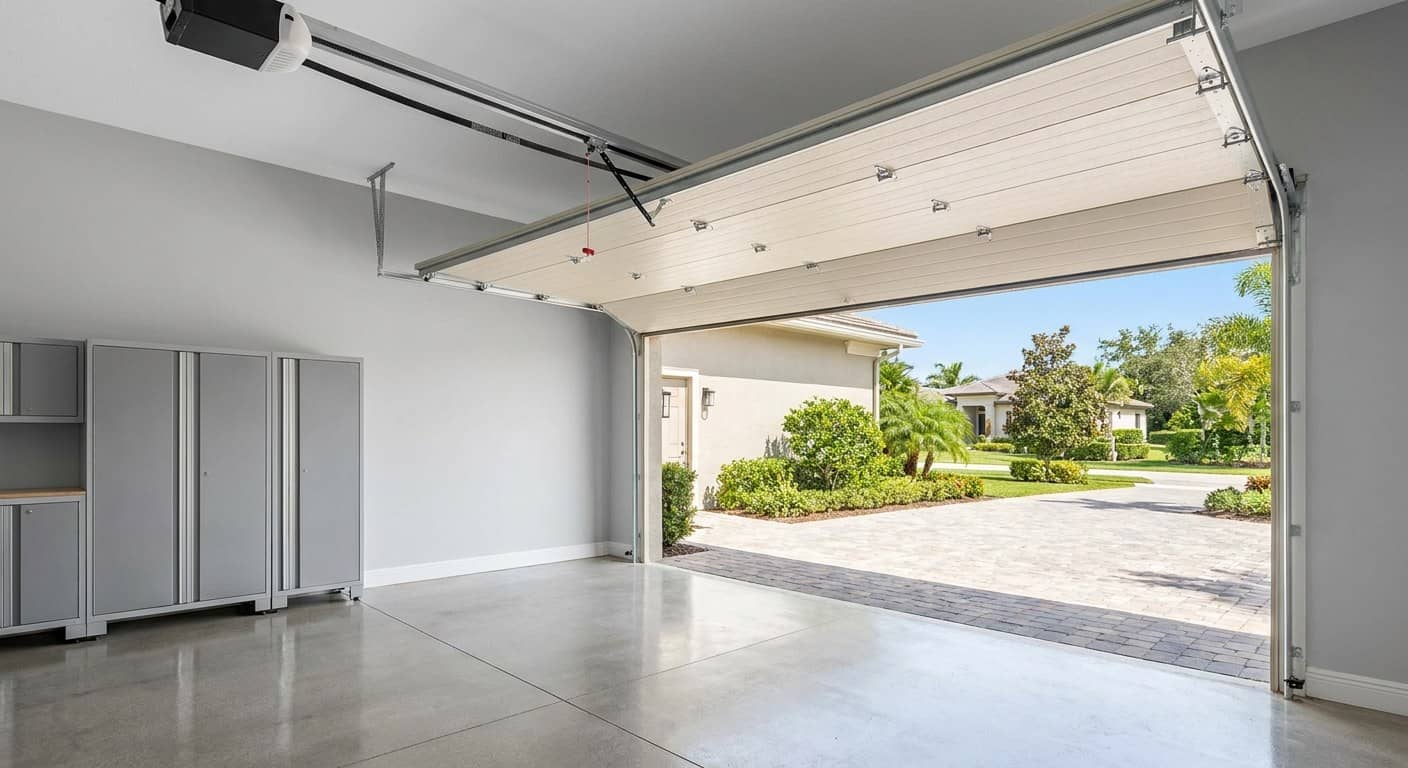
Warning
Past its life
Repeat faults on an older unit are the rest of the machine announcing itself.
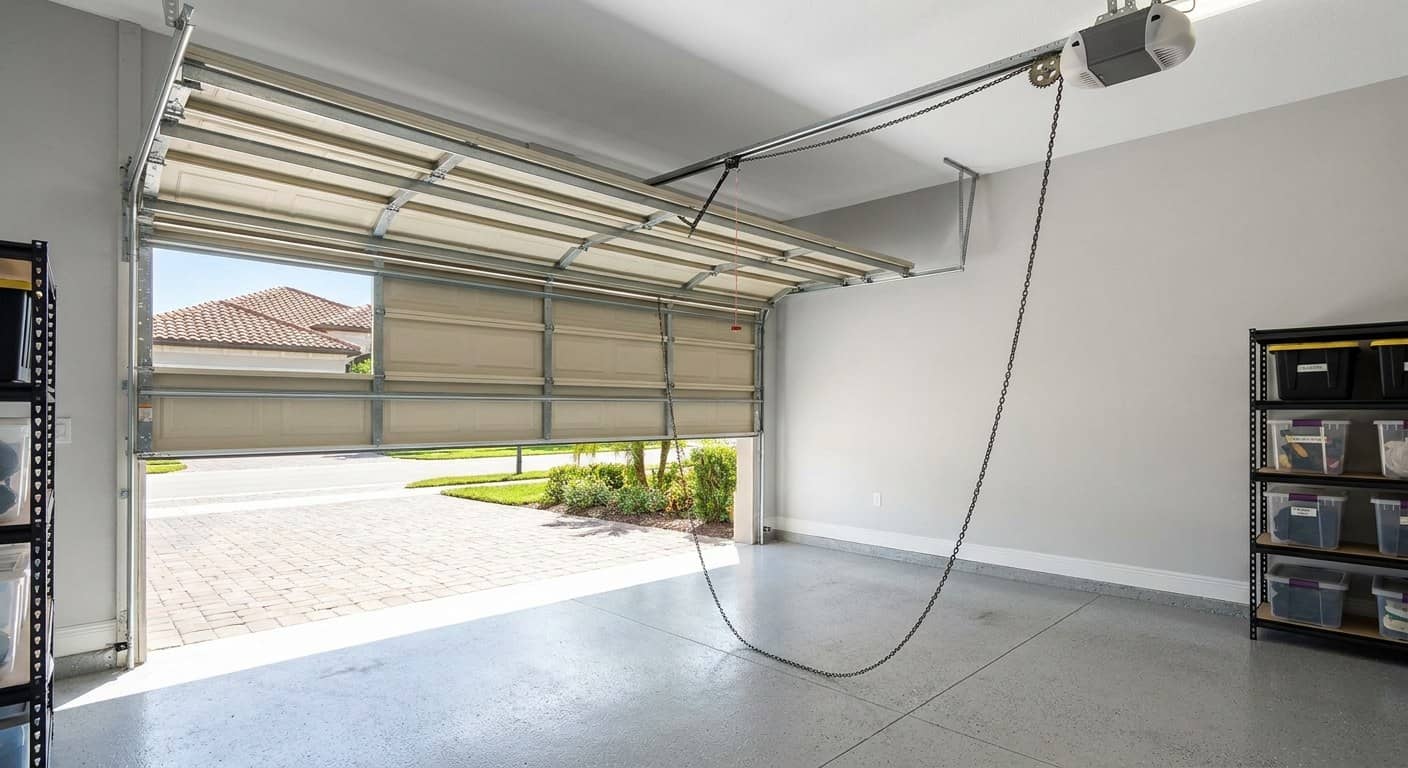
10-15 yr
quoted service life in a mild climate
~10 yr
realistic expectation in this county
1
soft gear designed to strip before the motor burns
More detail if you want it
What actually wears out inside the head unit
Very little of an opener is designed to fail. The motor itself will usually outlast the house. What gives up first is the plastic drive gear that transfers its rotation to the rail — a deliberately soft part, chosen to strip before the motor burns. After that, the logic board, which is a piece of consumer electronics living in an unconditioned room. Neither is a sign of abuse; both are the ordinary end of a service life.
Both failures are gradual, which is why people rarely date them correctly. The gear grinds for weeks before it slips; the board misbehaves intermittently for a season before it stops. If you have been quietly tolerating a quirk, you are further into the decline than you think.
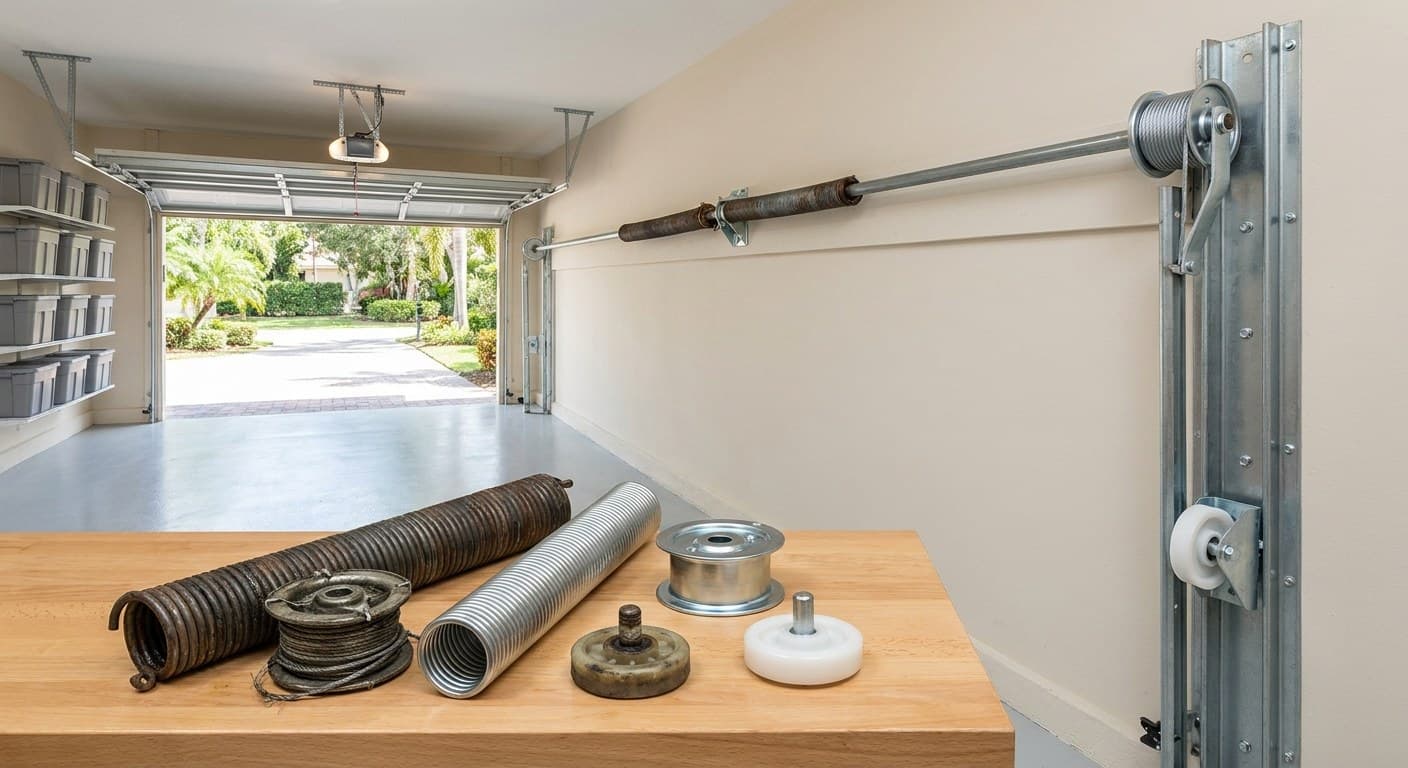
Heat, salt, and a door that got heavier
A closed garage in August behaves like an oven with a car in it. Electrolytic capacitors on the board age faster the hotter they run, and the difference between a conditioned room and a South Florida garage ceiling is not marginal — it is the single biggest reason boards here fail earlier than the manual predicts.
Then there is the door. Every household that has replaced a pre-code panel with an approved one has quietly increased the load its opener pulls, often without changing the opener. The unit still works, so nobody connects the two — but it is now doing more work per cycle than it was built for, and it will reach its gear failure sooner.
How to add years to the one you have
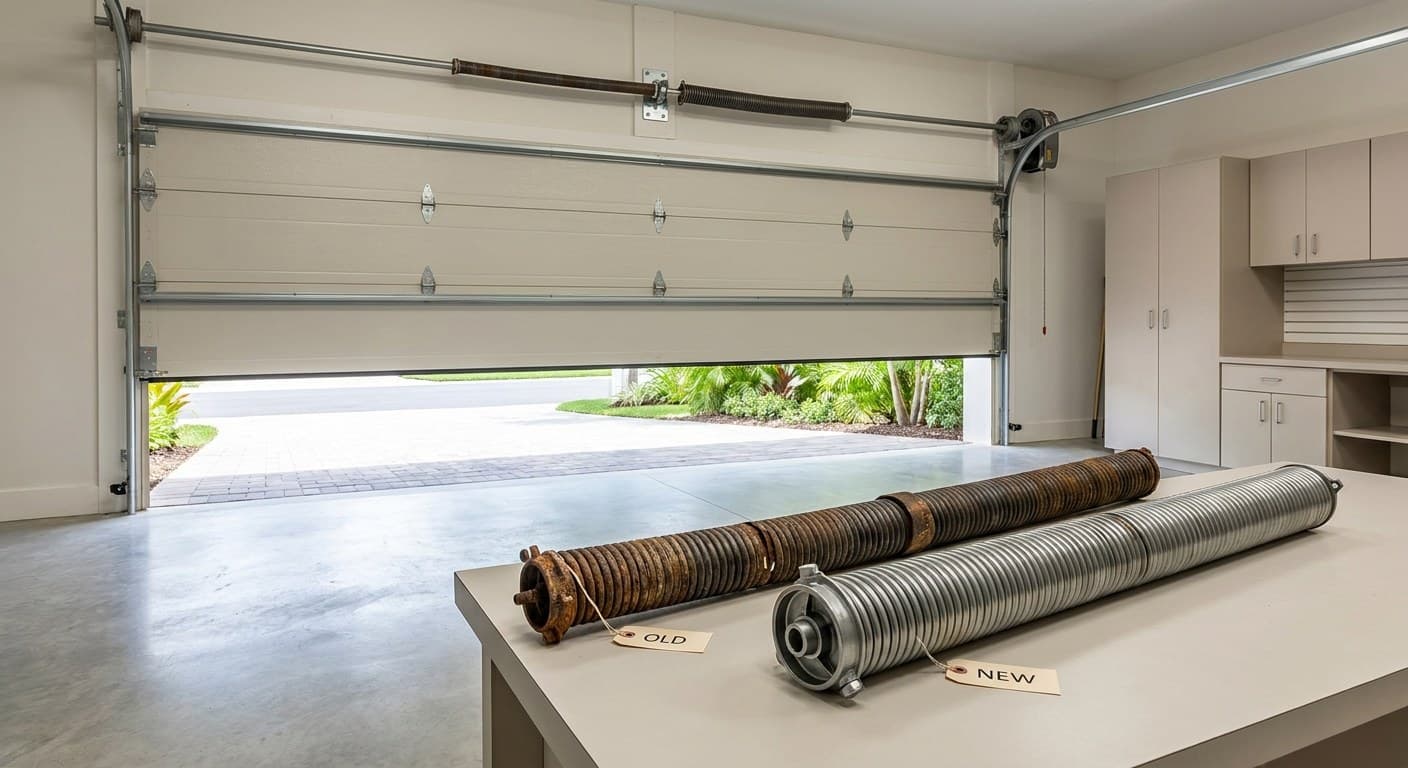
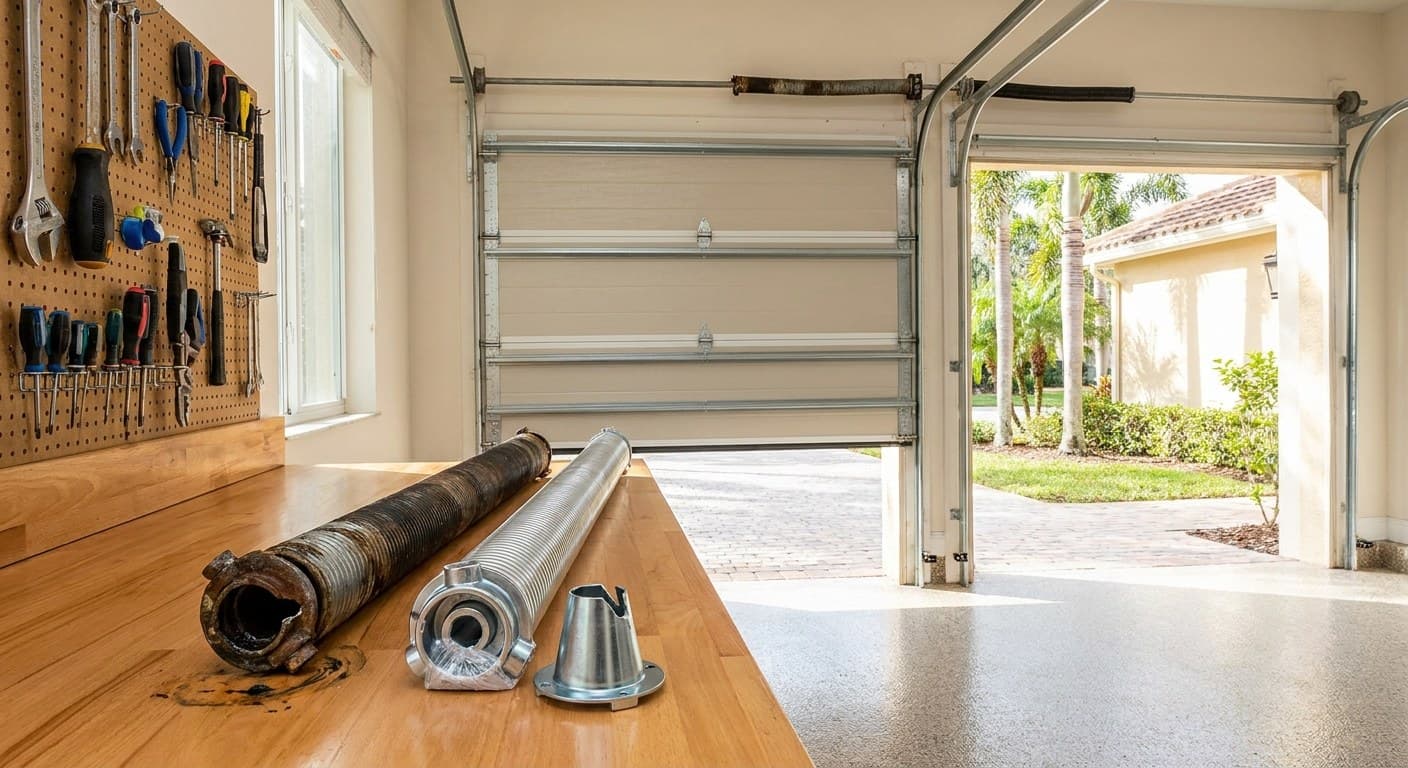
The single most effective thing is not maintenance of the opener at all: it is keeping the door balanced. A door that is properly counterweighted by its springs should hold position halfway up when you release it by hand. If it drops, the springs have weakened and the motor is making up the difference on every cycle — which is the fastest way to kill a drive gear that would otherwise have lasted another five years.
Opener life expectancy: the questions we get asked
What wears out first inside a garage door opener?
The first part to give up in a garage door opener is normally the plastic drive gear, a deliberately soft component chosen to strip before the motor burns.
- The motor itself often outlasts the house
- Board capacitors age with garage heat
- Logic boards fail intermittently before they die
Does frequent use shorten a garage door opener's life?
Frequency shortens a garage door opener's life, though weight and balance shorten it considerably more.
- Two identical households, two different rates
- A heavy or unbalanced door does the damage
- The balance check outranks any usage habit
Can a power surge kill a garage door opener during storm season?
A power surge can take out a garage door opener's board outright, and around here that is a common way for one to die suddenly.
- Nothing protects a head plugged into a bare outlet
- The damage arrives when the grid comes back
- A surge protector costs a fraction of a board
Should a garage door opener be replaced at the same time as the door?
Replacing both at once is usually cheaper than a year apart once the opener is past its first decade, because the second visit is the expensive part.
- Labor, not equipment, drives the difference
- A genuinely young head rated for the new weight
- Nobody honest pushes you off keeping it
Sources
- U.S. Consumer Product Safety Commission
- Florida Building Commission — Product Approval
Edited by Avidan Benichay · Updated
General information about garage doors in South Florida — not a diagnosis of your door, and not a quote. Code and prices vary by address and change over time. Terms of use
Before you decide
- When to replace the openerReplace the opener when the fault is the unit rather than a part of it.1993since when photo-eye sensors are federally required
- Opener replacement costA replacement opener fitted to an existing door generally lands between $450 and $850 in this market, motor and labor together.$450-850fitted replacement, motor and labor
- Opener not workingAn opener that is not working is really three different faults wearing the same description, and they have almost nothing in common: the drive is disconnected from the door, the internal gear has stripped, or the unit has lost power.3unrelated faults share this one description
- How long springs lastA standard torsion spring is rated for about 10,000 open-and-close cycles, which works out to roughly seven years for a household that uses the door four times a day.10,000cycles on a standard torsion spring
Next step
Not sure which part failed?
Most garage door faults are identifiable from the noise and the way the door moves. Start there — it usually costs less than you expect.
You describe what the door is doing
The noise it makes, how far it travels, whether the opener runs.
We test it on site
Springs, cables, balance, tracks, opener force and the safety reverse.
You get the price before any work starts
Itemized in writing, including the permit when the job needs one.
- 4.9/5 from 300+ local reviews
- Licensed & insured
- Free visit, no obligation