
Door will not close
Door closes then goes back up? We find what is stopping it.
If the door reverses on its way down, stops short of the floor, or refuses to seal, the opener is reacting to something. Yes, we handle this problem.
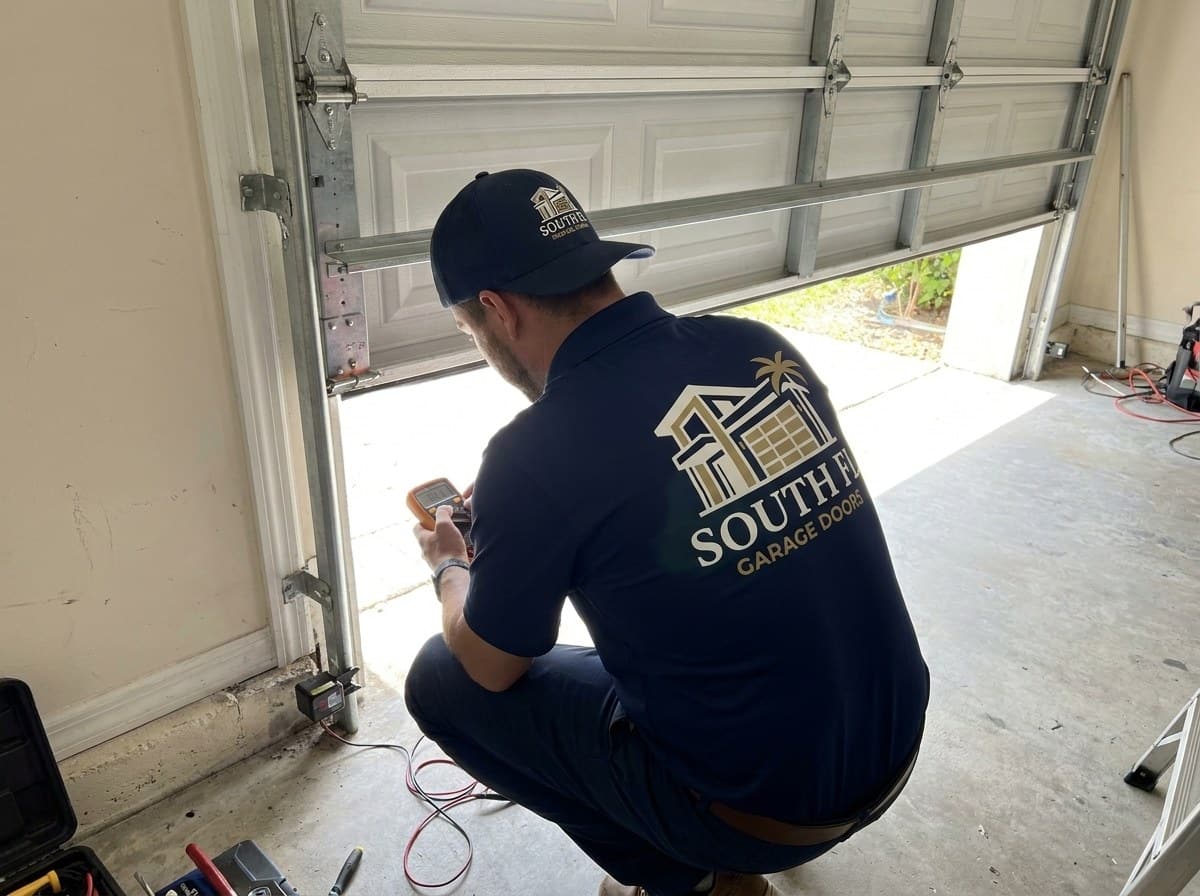
A door that will not stay down usually comes from the safety sensors, an obstruction at the bottom, the travel and force settings, or a door that has started to bind in its track. We test the system on site, show you what triggered the reversal, and give you the price before approved work begins.
Do not disable the safety sensors.
They are the only thing that stops the door on a child or a pet. A door that reverses is doing its job badly, not doing the wrong job.
Common issue
Sensors, obstruction or settings
Handled on site
We reproduce the reversal first
Clear pricing
Before approved work starts
Three counties
Miami-Dade · Broward · Palm Beach
Quick answer
Why does a garage door close and then reverse?
A door that reverses on the way down is almost always obeying a signal — the question is which one, and whether the signal is right.
The most common causes we see
When a door starts closing and then comes back up, the opener is often reacting to something it sees, feels, or has been incorrectly programmed to expect.
Safety sensors
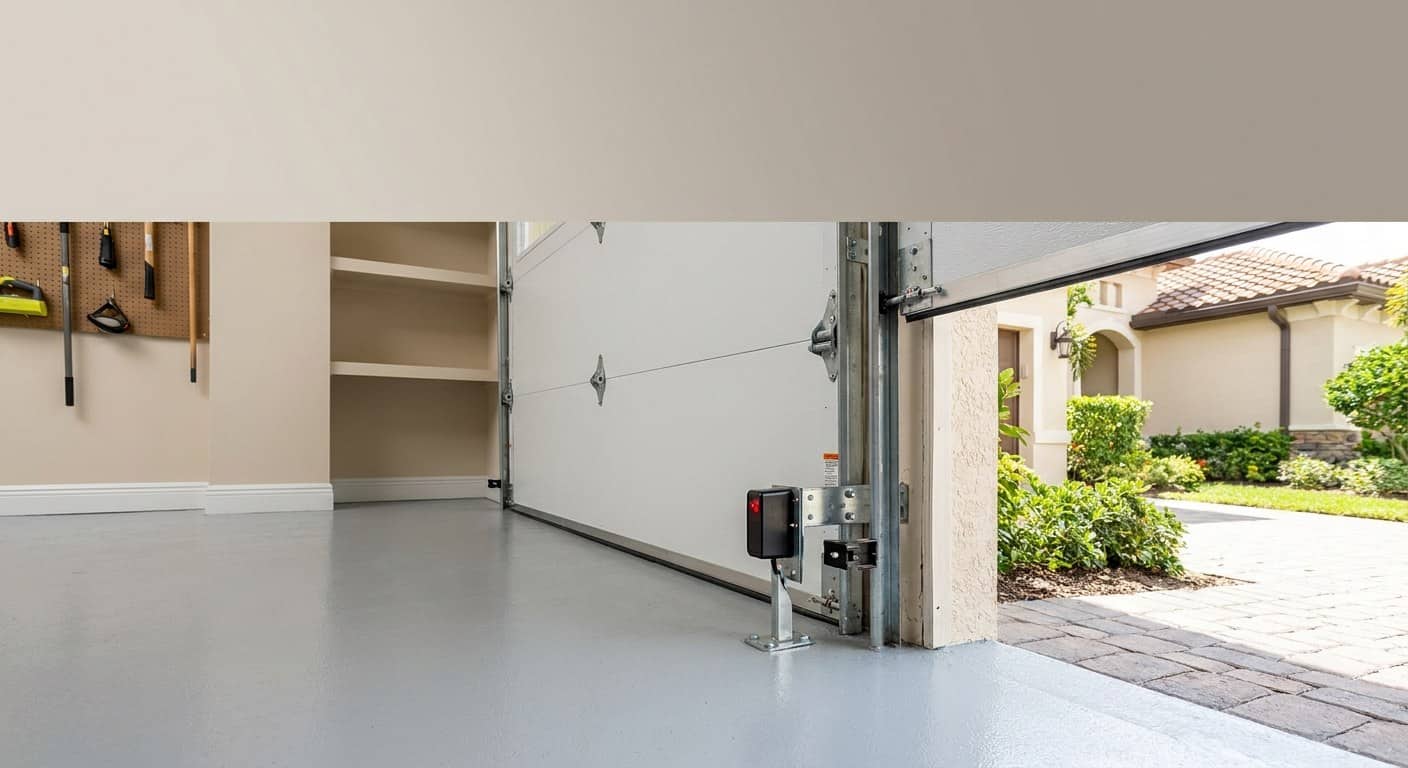
Dirty, misaligned, damaged or poorly wired photo eyes can tell the opener that something is in the doorway.
Obstruction or bottom contact
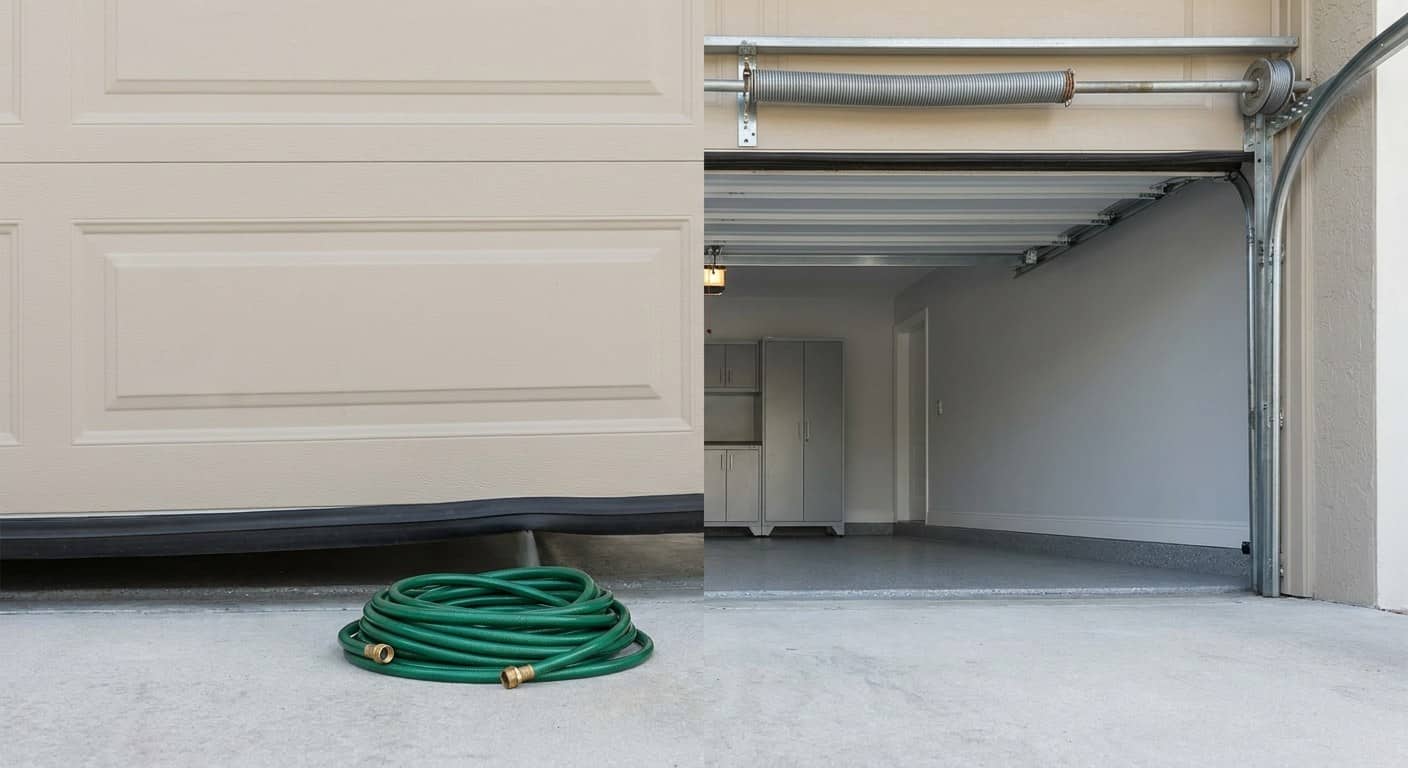
An object, a swollen seal, uneven floor contact or binding near the bottom can trigger the reversal.
Travel or force settings
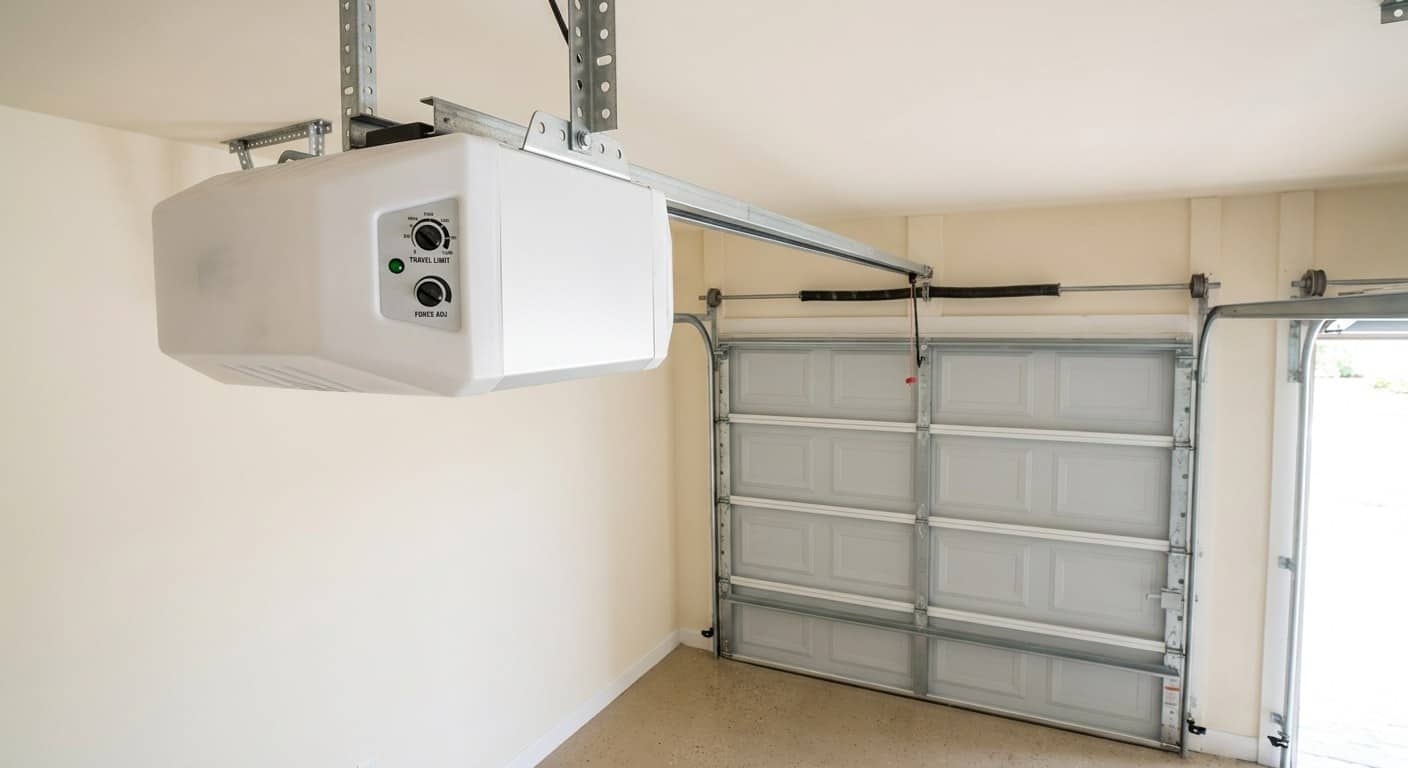
If the opener thinks the floor is higher or lower than it really is, it can stop or reverse at the wrong point.
Track, roller or balance problem
If the door binds or becomes harder to move, the opener may reverse instead of forcing it through the problem.
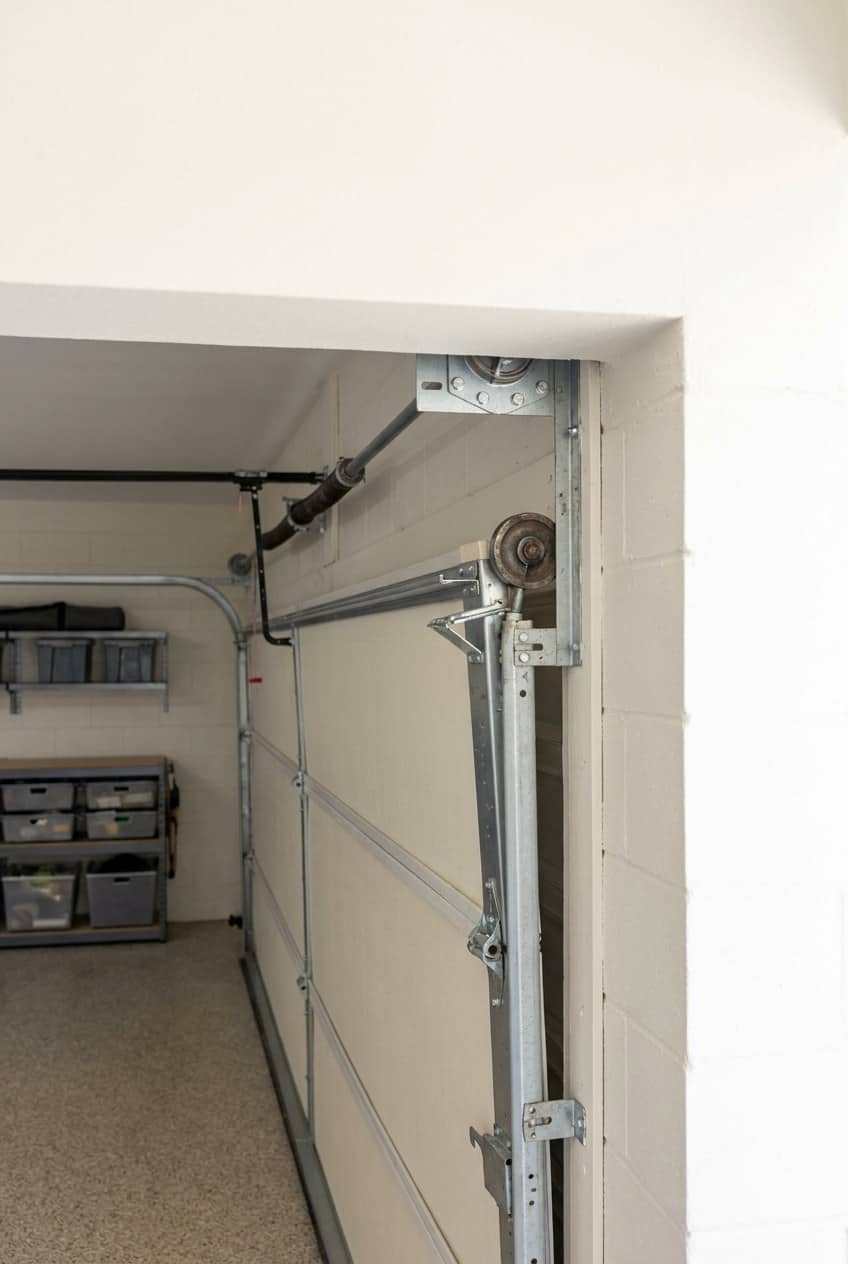
What the problem looks like
Customers usually describe it one of these ways.
These are some of the most common ways homeowners describe the problem.
It touches the floor then reopens
Usually the down-limit is set past the floor, or the bottom seal is meeting the ground early.
It reverses a foot from the ground
That height is where most photo eyes sit, and a beam broken at that point stops the door.
The opener light blinks and it stops
A blinking work light is the opener reporting a sensor fault, not a bulb problem.
It closes but never seals
A gap left along the bottom points at travel settings, a worn seal, or a floor that is not level.
What we check on site
Reproduce it first. Then fix the cause.
A reversal that cannot be reproduced cannot be diagnosed. We make the door do it again before touching anything.
Photo eyes and wiring
Alignment, lens condition, indicator lights and the low-voltage run back to the opener.
Bottom seal and floor
Whether the seal still compresses, and whether the slab is level where the door lands.
Travel and force settings
Where the opener believes the floor is, and how hard it is allowed to push before it gives up.
Rollers and track
Binding, worn rollers and bent sections that make the door harder to move on the way down.
Balance
A door that is out of balance loads the opener differently on the way down than on the way up.
Cables and drums
Uneven cable tension pulls one side down first, and the opener reads that as an obstruction.
Garage door still won't stay down?
Book a diagnostic visit or call now and we'll take it from there.
Likely repair paths
What the fix often turns out to be.
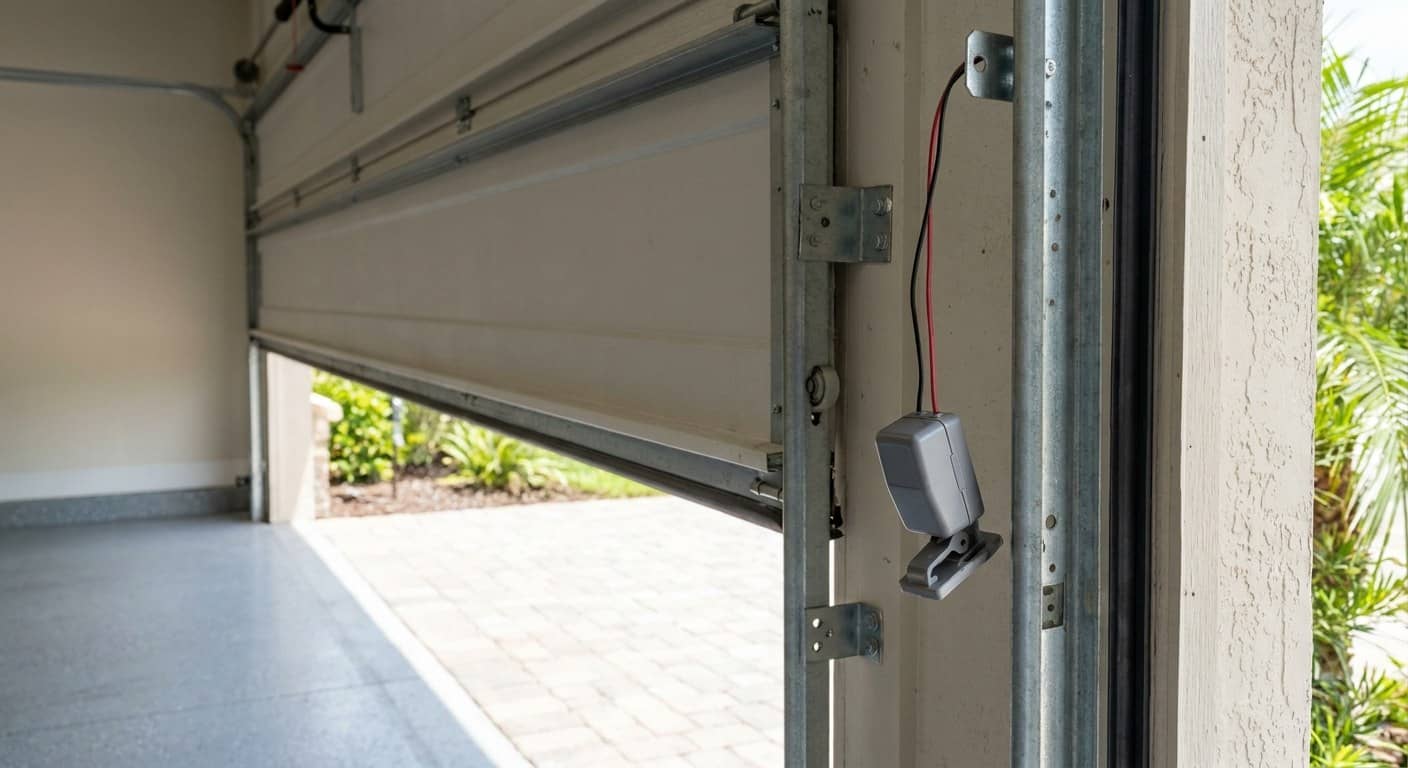
Safety sensor service
The most common cause of a door that reverses, and usually the least expensive to put right.
What sensor service can include
- Photo-eye realignment and bracket repair
- Lens cleaning and sun-glare assessment
- Low-voltage wiring repair or replacement
- Safety reverse test after the repair
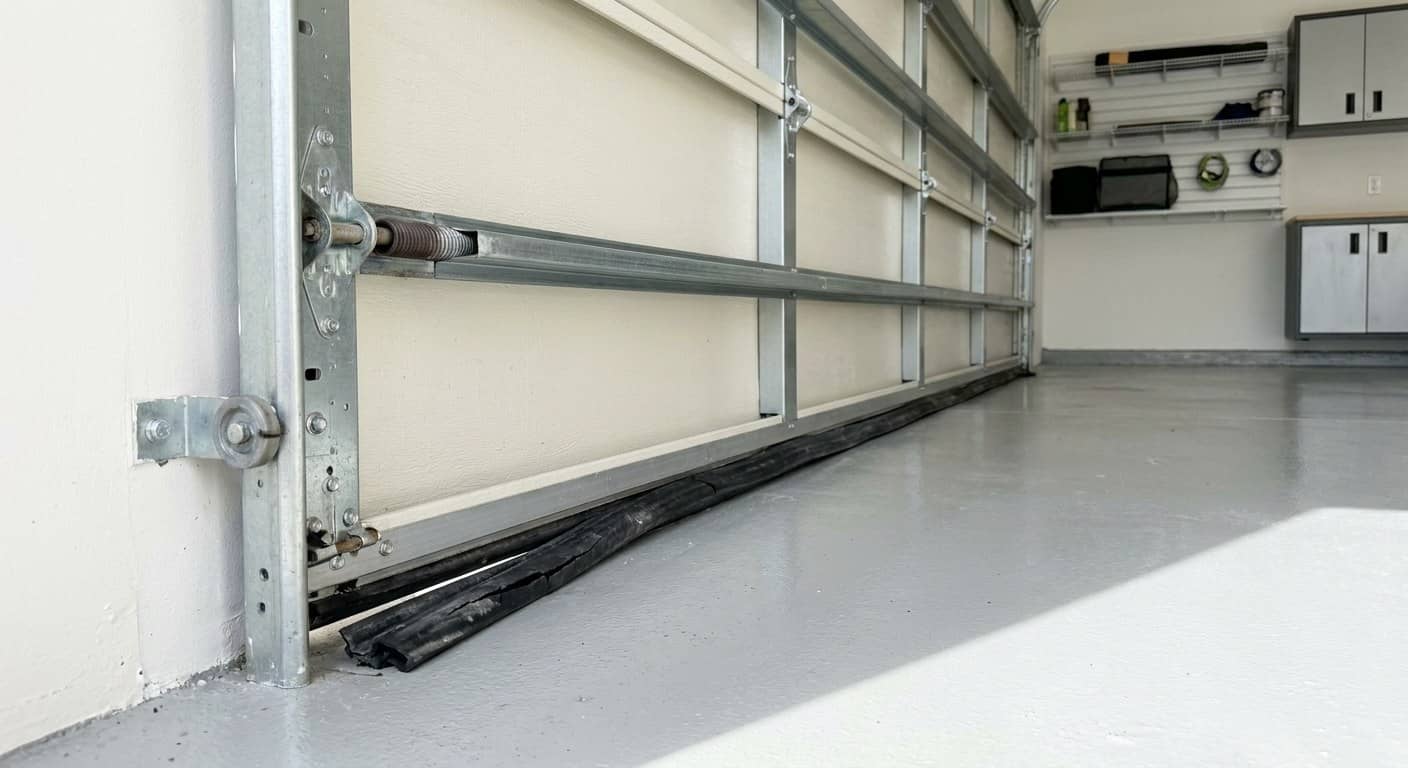
Bottom seal and threshold work
When the door meets the ground before the opener expects it, the seal or the slab is usually why.
What seal service can include
- Bottom seal replacement in the retainer
- Retainer inspection and repair
- Threshold assessment where the slab is uneven
- Close-position reset after the change
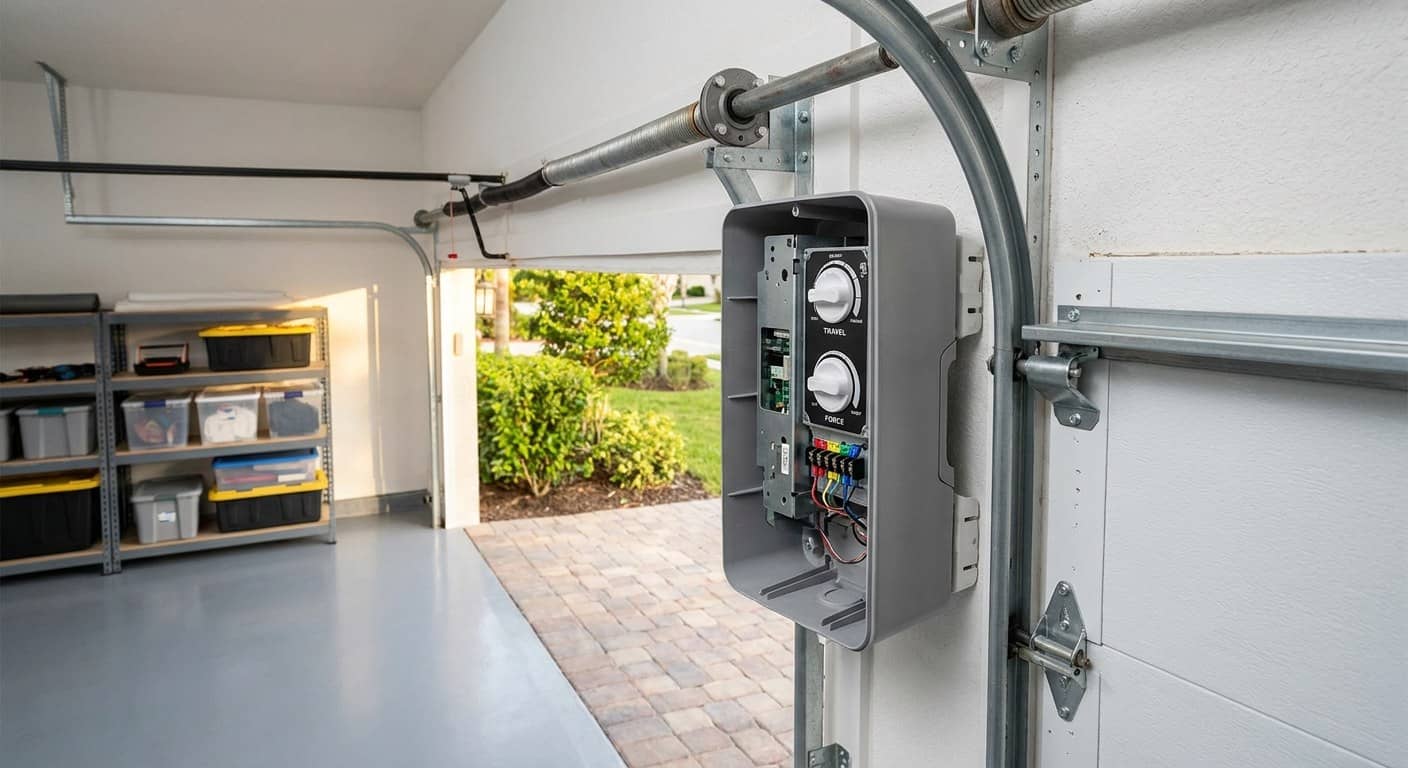
Travel and force adjustment
The opener is set against the door as it is today, not as it was the day it was installed.
What adjustment can include
- Down-limit and up-limit reset
- Closing-force calibration
- Balance check before any setting is changed
- Safety reverse verification
No surprises
How the visit goes
Simple process, clear diagnosis, and no surprises before work starts.
- 01
You tell us the door won't open
Describe what the door is doing. You do not need to know the technical name of the failure.
- 02
We inspect and identify the cause
We test the system on site and show you the component or condition that is actually stopping the door.
- 03
You get the price before work starts
If you approve the work, we proceed. If not, you still have a clear diagnosis and next step.
Why South FL Garage Doors
Local, licensed, and ready to help.
Local, licensed, and used to this problem.
We have been serving South Florida homeowners since 2014 with repair, opener, spring, track, and emergency garage door service.
Since 2014
Serving South Florida homeowners
FL License 25BS00124
Licensed & insured
3 counties
Miami-Dade · Broward · Palm Beach
Free diagnostic visit
No obligation
Typical repair ranges
What the price often depends on
The exact price depends on the failed component, the condition of the door, and the repair required.
- Rollers or track repair$75–$350
- Off-track realignment$200–$350
- Opener repair (board or capacitor)$175–$300
- Lift cable replacement (pair)$225–$375
These are published market ranges for South Florida, not a quote. The failed component and the condition of the door decide the final price.
6 in
height of the safety eyes above the floor
1993
year photo-eyes became mandatory in the US
4
causes account for nearly every case
More detail if you want it
Reverses immediately, or reverses near the floor?
This single distinction splits the diagnosis in half. A door that starts down and bounces straight back up has almost certainly lost the beam between its two safety eyes. A door that travels all the way down, touches the floor and then rises again has completed its path — so the beam is fine, and the opener decided it met resistance at the end of the run.
The second case is usually the down-limit or the close force being out of adjustment. The opener thinks the floor is lower than it is, keeps pushing after the panel has landed, reads that resistance as an obstacle and reverses. Concrete slabs in older west Miami-Dade homes move enough over the years to bring this on by themselves.
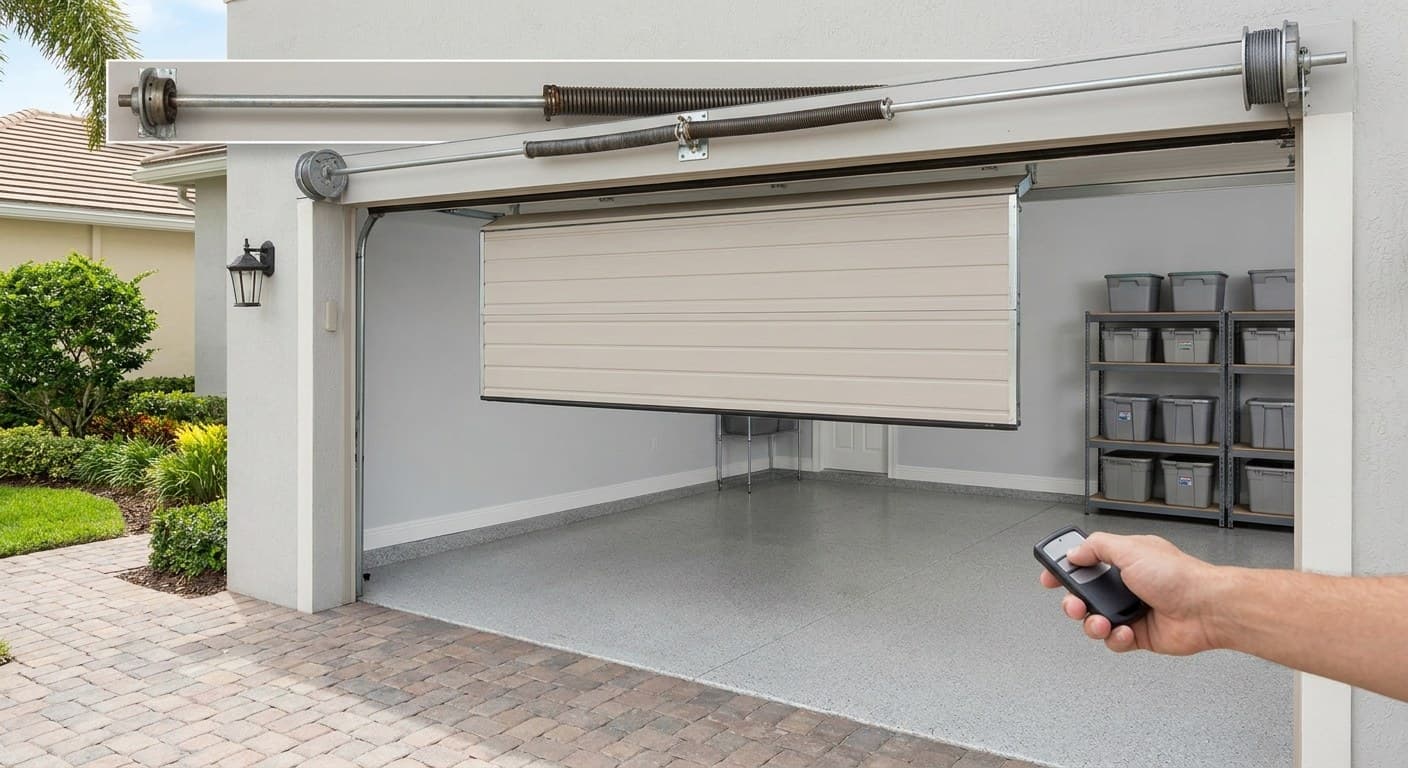
What blocks the beam that you will not notice
The two eyes sit about six inches off the floor on either side of the opening, and they need a clear line between them. A rubbish bin nudged sideways, a coiled hose, a bicycle wheel, a leaf blown against the bracket during a summer storm — any of them will do it. So will a cobweb across the lens, which is why the fault often shows up after a few quiet weeks rather than after anything obvious.
Low sun is the seasonal version of the same problem. In the months when the afternoon light comes straight up a west-facing driveway, direct glare into the receiving eye can wash out the beam for an hour a day. If your door refuses to close only in the late afternoon, you have almost certainly found the reason.
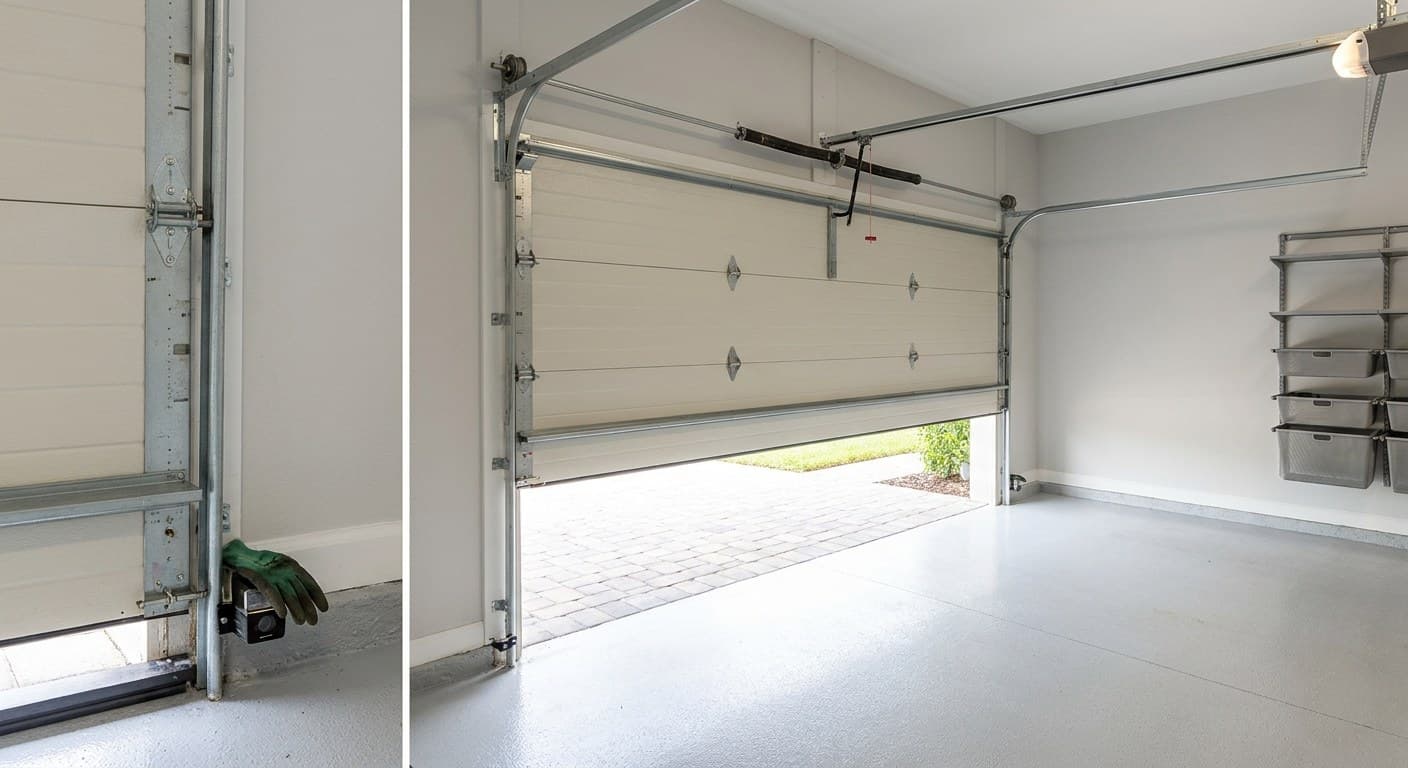
When it is the door, not the electronics
If the beam is clear and the limits are right, look at how the panel moves on the way down. A door that hesitates at the same height every time is catching on something physical: a roller with a flat-spotted wheel, a hinge that has torn its screws loose, or a track that has been knocked out of alignment by a vehicle bumper. The stopping point tells you where to look — the fault is at that height on one side or the other.
One cause deserves separating out because the fix is different in kind: a door that will not seat because the bottom seal has hardened and no longer compresses. In this climate the rubber goes brittle from ultraviolet and heat long before it wears through, and a stiff seal reads to the opener exactly like an obstruction.
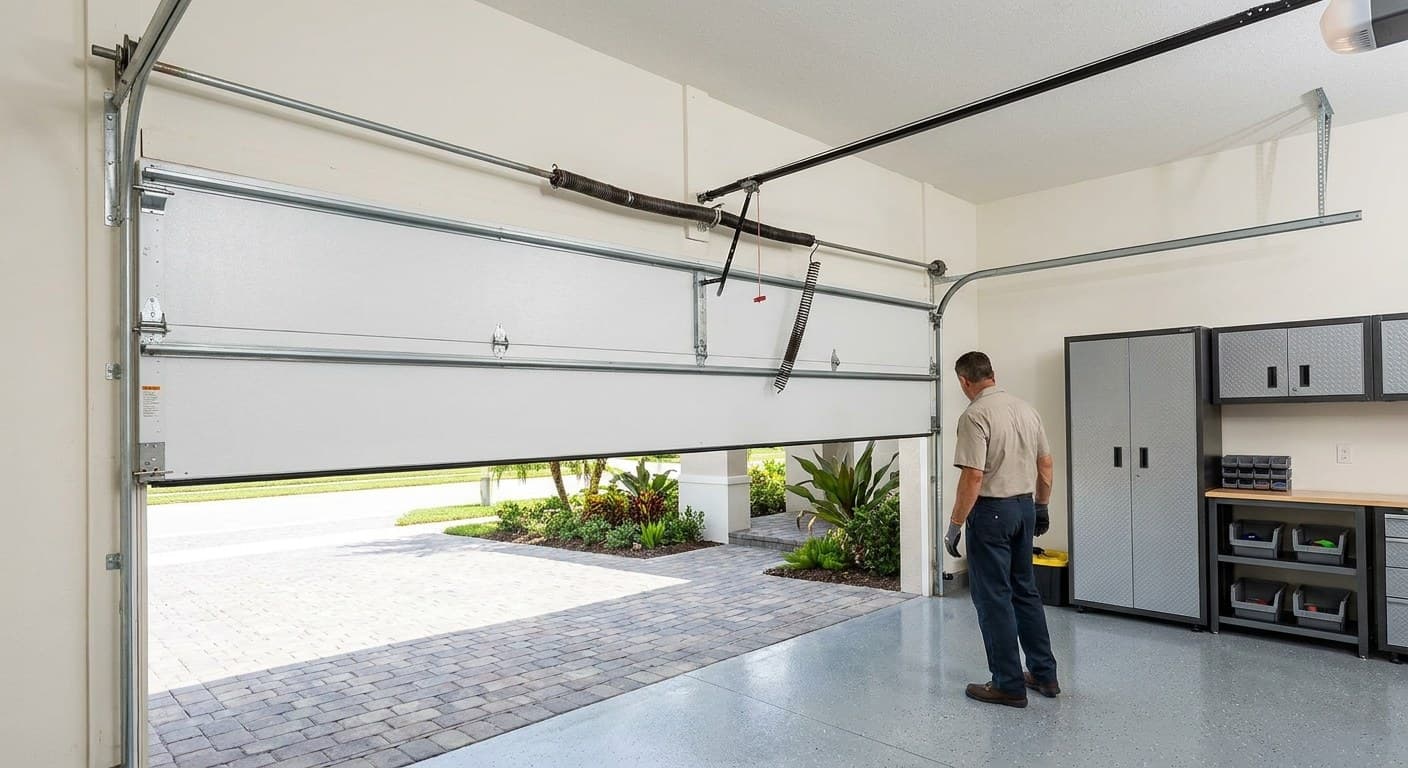
Garage door reverses on the way down: common questions
Can the safety sensors on a garage door opener be disabled?
Garage door safety eyes cannot lawfully be disabled: they have been required by federal rule on every opener sold in the United States since 1993.
- The only device that stops a closing door on a child
- An opener wired to ignore them is out of compliance
- Aiming faults and wiring faults look identical
Does holding the wall button to force a garage door closed count as a repair?
Holding the wall button is the opener's constant-pressure override, which is a diagnostic tool and not a repair.
- It proves the door can still close mechanically
- It moves the fault onto the safety circuit
- Using it daily means running with no safety system
Use it once to learn what you have, then treat the eyes as the job.
Why does a garage door close on some days and not on others?
Intermittent closing usually means a marginal sensor alignment or a loose low-voltage wire rather than a failed part.
- A bracket knocked slightly out of plane
- A staple driven through the bell wire
- Heat and vibration moving the last fraction
That is why the fault can follow the time of day or the weather instead of the door.
Can a broken garage door spring stop the door closing?
A broken spring more often stops a garage door opening, but a badly unbalanced door can drop fast enough to trip the opener's obstruction logic.
- Heavy to lift by hand: balance is the real fault
- It will not hold the height you leave it at
- The closing behavior is then only a symptom
Sources
- U.S. Consumer Product Safety Commission
- Florida Building Code (ICC)
Edited by Avidan Benichay · Updated
General information about garage doors in South Florida — not a diagnosis of your door, and not a quote. Code and prices vary by address and change over time. Terms of use