
Parts and hardware / Miami-Dade
Side and header seals: the gap you only notice in a storm
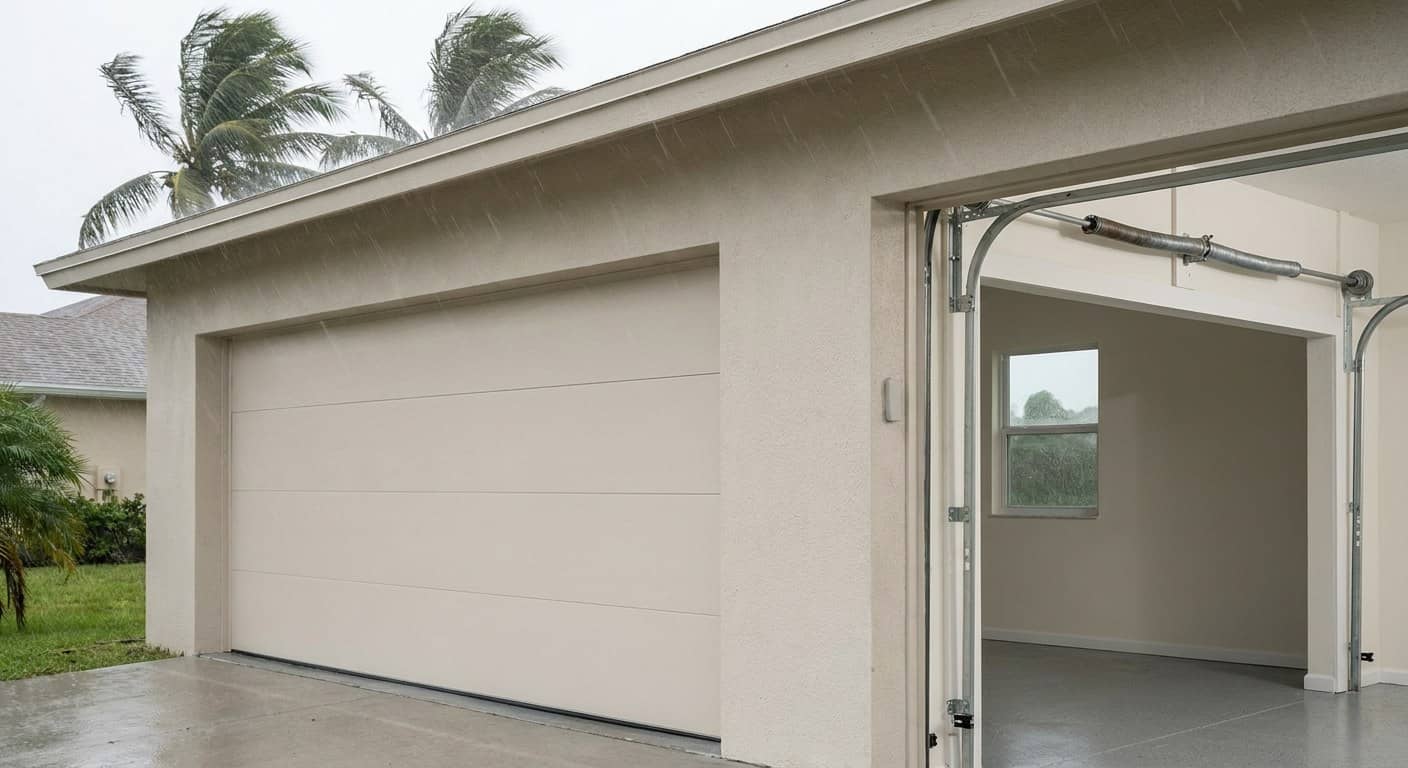
The flexible flap nailed to the jambs and header of the opening does a different job from the strip under the door: it closes the vertical gap between the panel face and the frame, and it is the seal that decides whether wind-driven rain gets past the edges of a closed door during a squall.
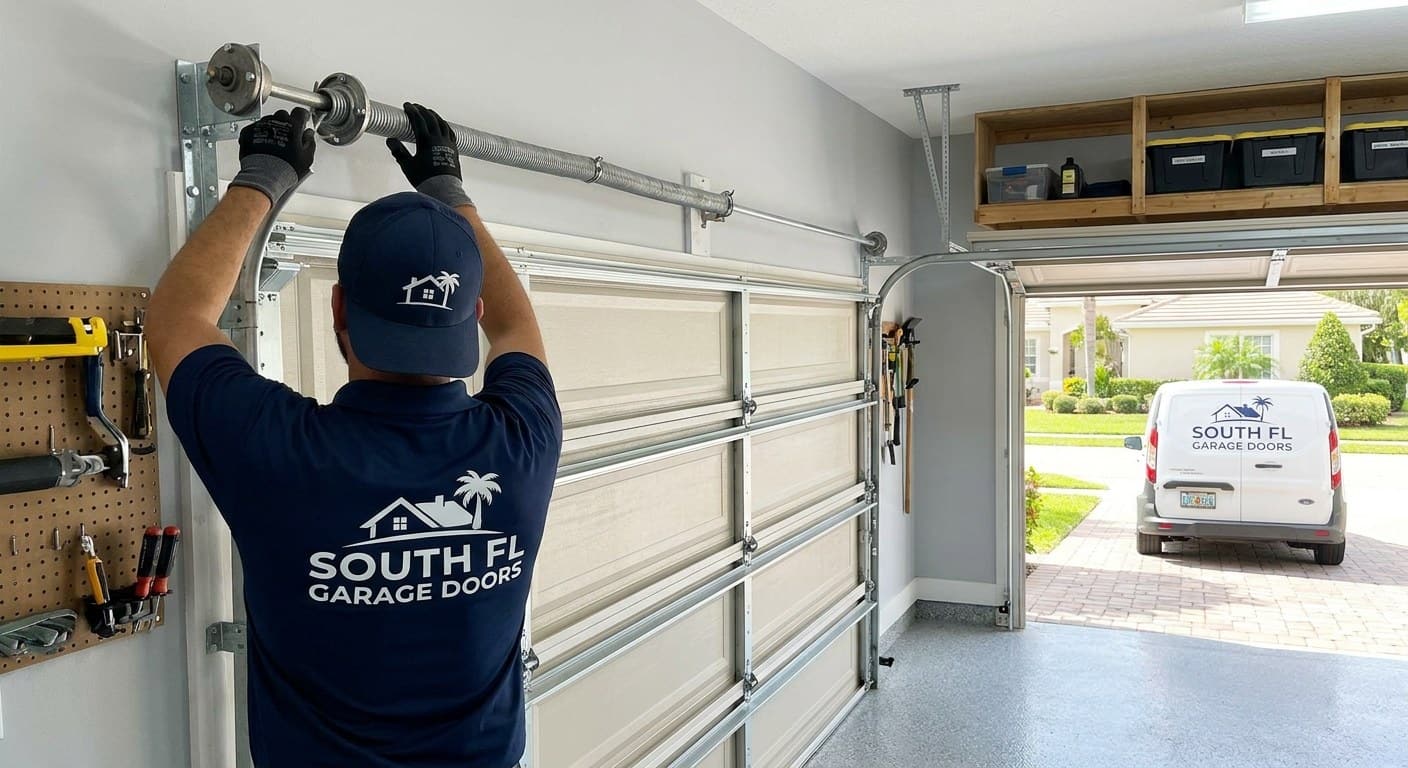
Three facts about weatherstripping
It seals the perimeter
jambs and header, not just the floor
UV is the enemy
Florida sun sets the replacement clock
It changes the garage
heat, noise and driven rain
The weatherseals on a door
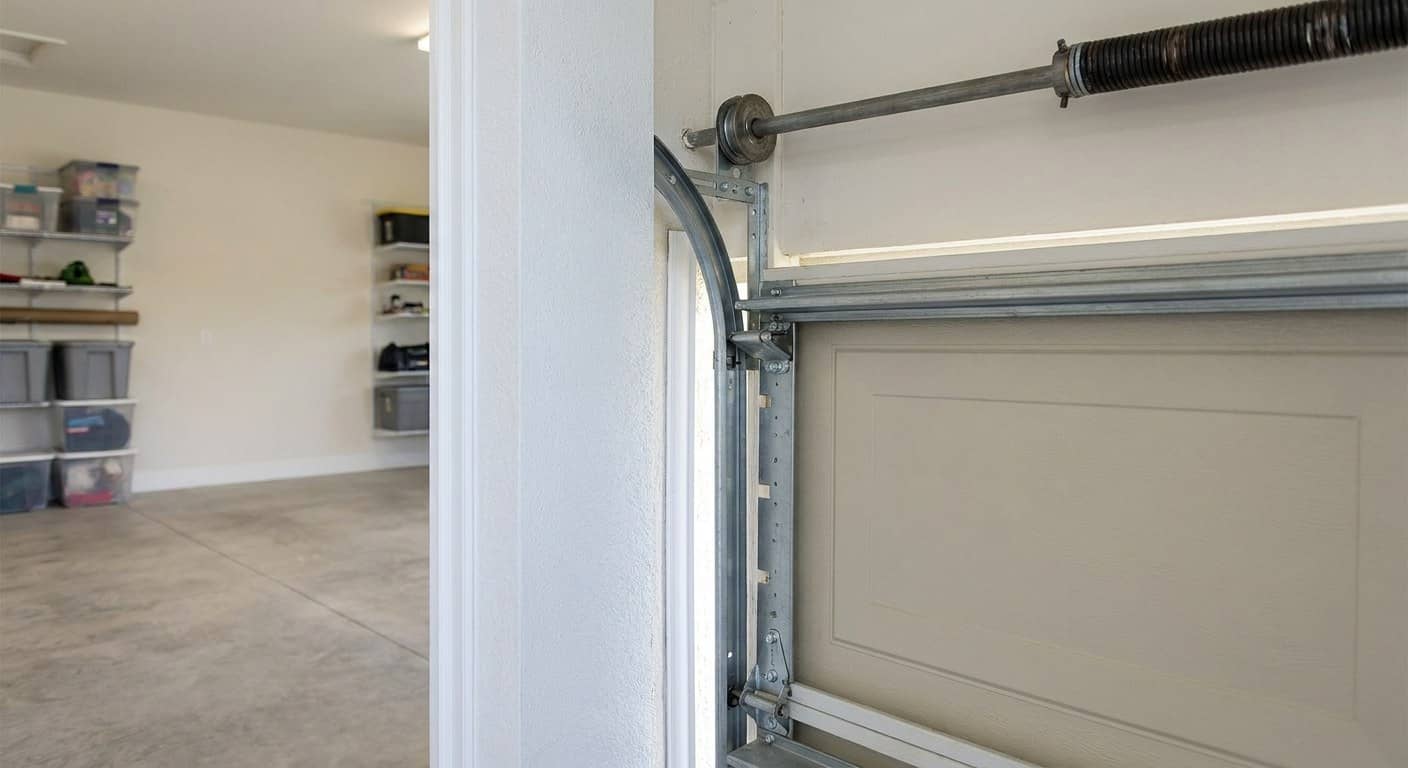
Jamb seal
The vinyl stop along both sides of the opening
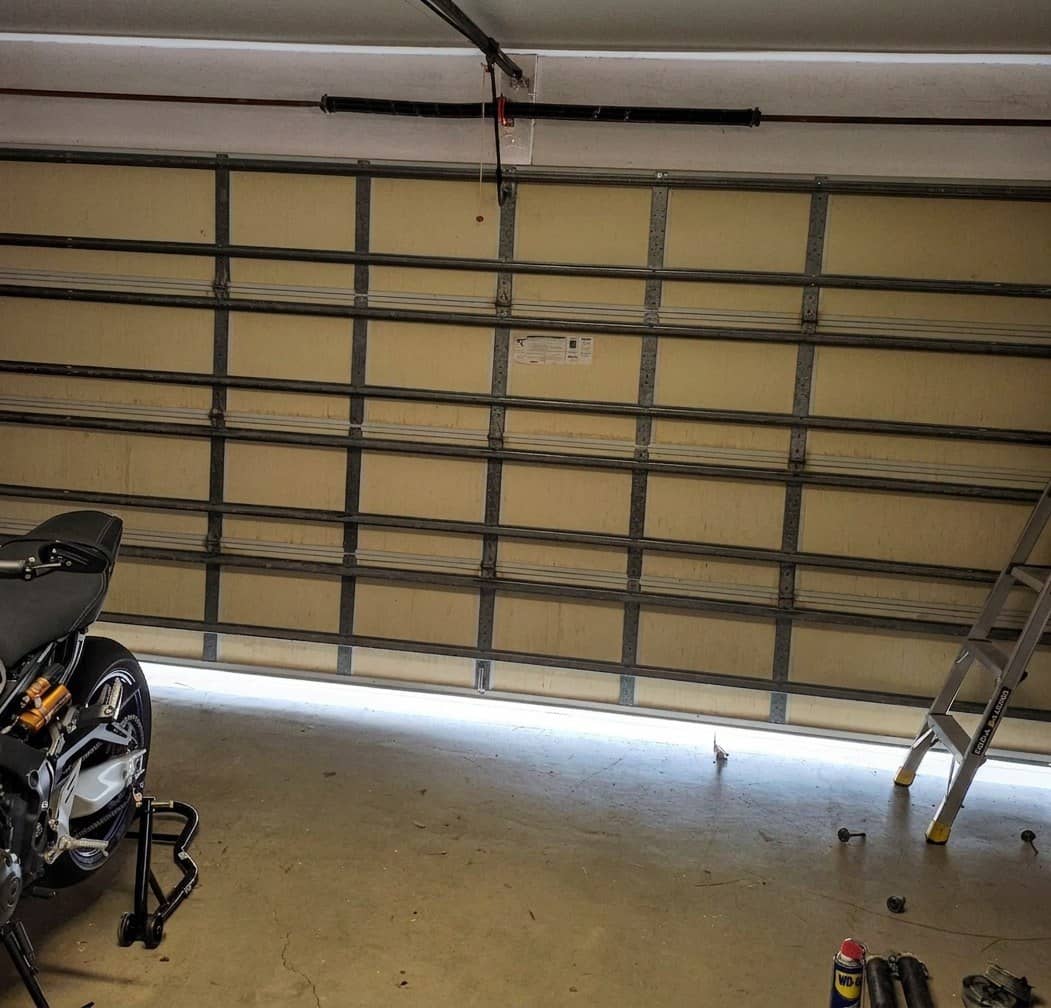
Header seal
The strip across the top, often forgotten
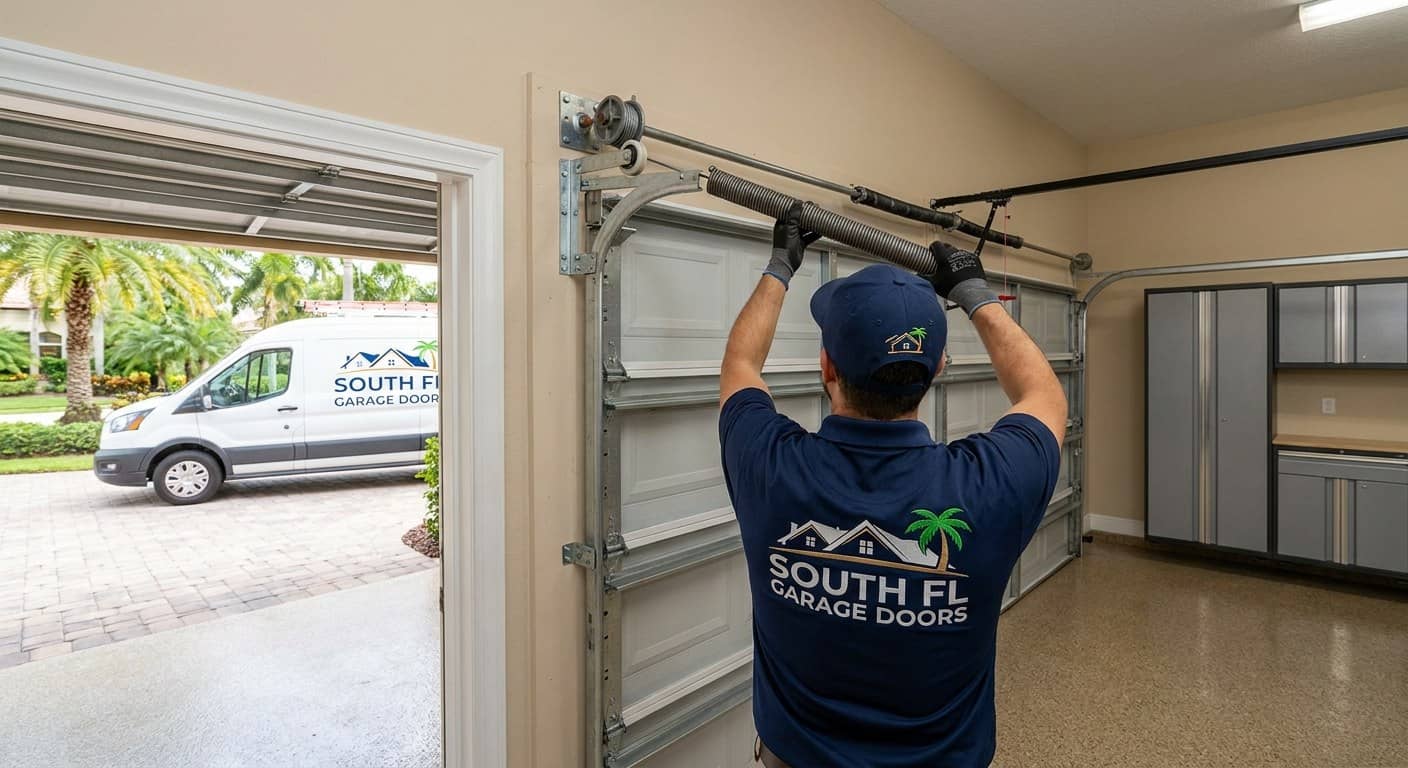
Section joints
Where insulated doors carry their own seals
Sun damage
South-facing openings age fastest
Weatherstripping symptoms
| Symptom | What it means | Urgency | Next step |
|---|---|---|---|
| Light around the sides | Jamb seal shrunk or torn | Routine | Replace the perimeter set |
| Rain blowing in around the edges | Seal no longer touching the panel | Soon | Replace before the season |
| Vinyl hard and cracking | UV exposure | Routine | Plan on a few-year cycle here |
| Strip pulling away from the jamb | Fasteners loose or wood soft | Routine | Check the jamb while replacing |
| Insulated door, cold air still moving | Section joint seals are worn | Routine | Ask about section seals too |
| How often to expect it | Sun, not use, decides | Routine | Inspect every hurricane-season check |
Why South Florida hardware wears out sooner

Frame
is where stop molding is fixed
Curl
away from the panel is the local failure
Bulb
profile tolerates an uneven gap better
More detail if you want it
Two components people confuse
Stop molding runs vertically up each side of the opening and across the top, fixed to the frame rather than to the door, with a flexible lip that presses against the outer face of the closed panel. The bottom strip is fixed to the door itself and compresses against the slab. Different fixings, different failure modes, and a supplier asking which one you need is asking a real question.
There is a third item on many doors that is easy to overlook: a thin flap between each pair of sections, meant to close the horizontal joints as the panels straighten. On a door exposed to a lot of sun those inter-panel seals often perish before anything on the perimeter does.
How it fails here: curling, not tearing
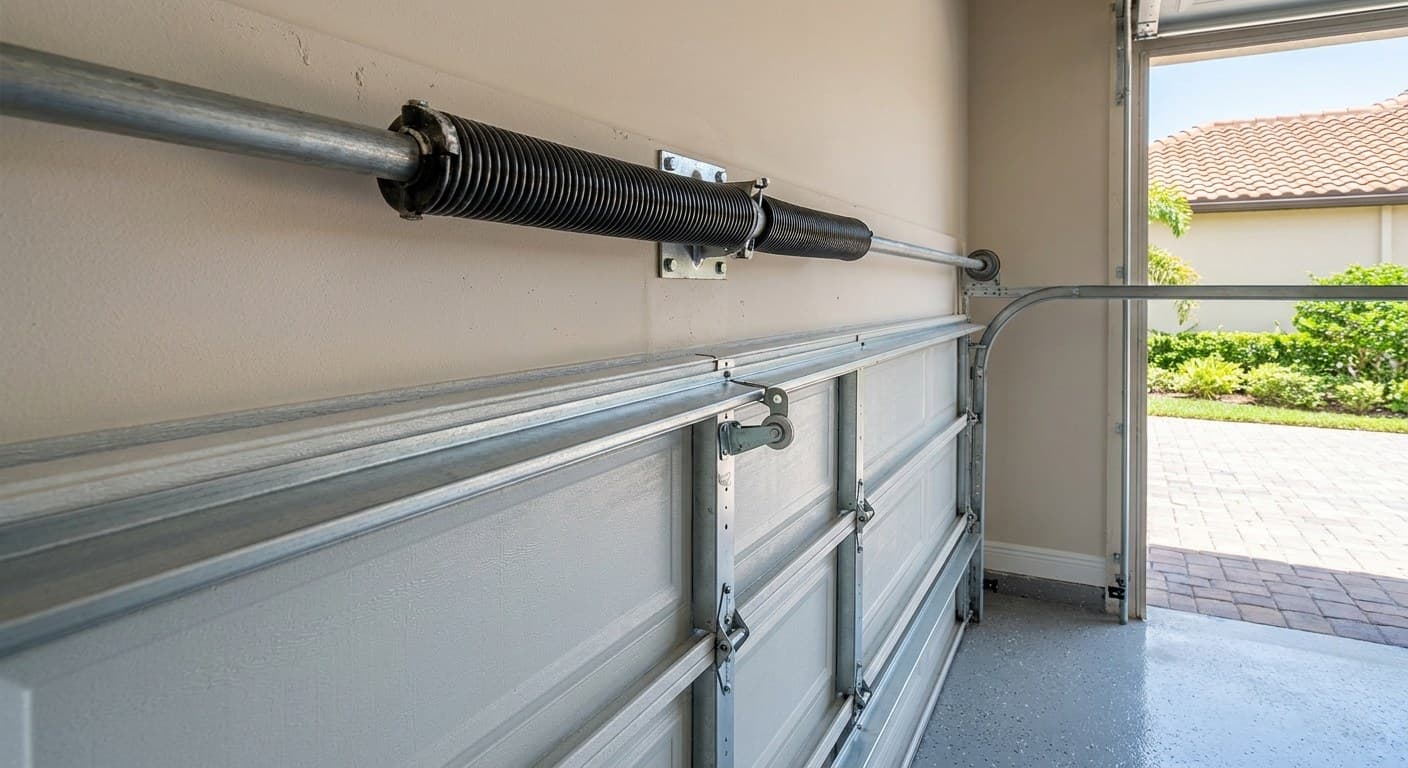
The characteristic local failure is the lip curling permanently away from the door. Heat softens the vinyl, the lip takes a set in whatever position it spent the afternoon, and after a few seasons it no longer returns to touch the panel. You can see it from outside as a shadow line down the edge of a closed door.
The second failure is at the fixings. Stop molding is nailed or screwed into the jamb, and on a wood-framed opening those fixings work loose as the timber cycles between humid and dry. On a masonry opening the fasteners hold but the molding itself can crack along the nail line, which produces the same gap by a different route.
What to specify on a replacement
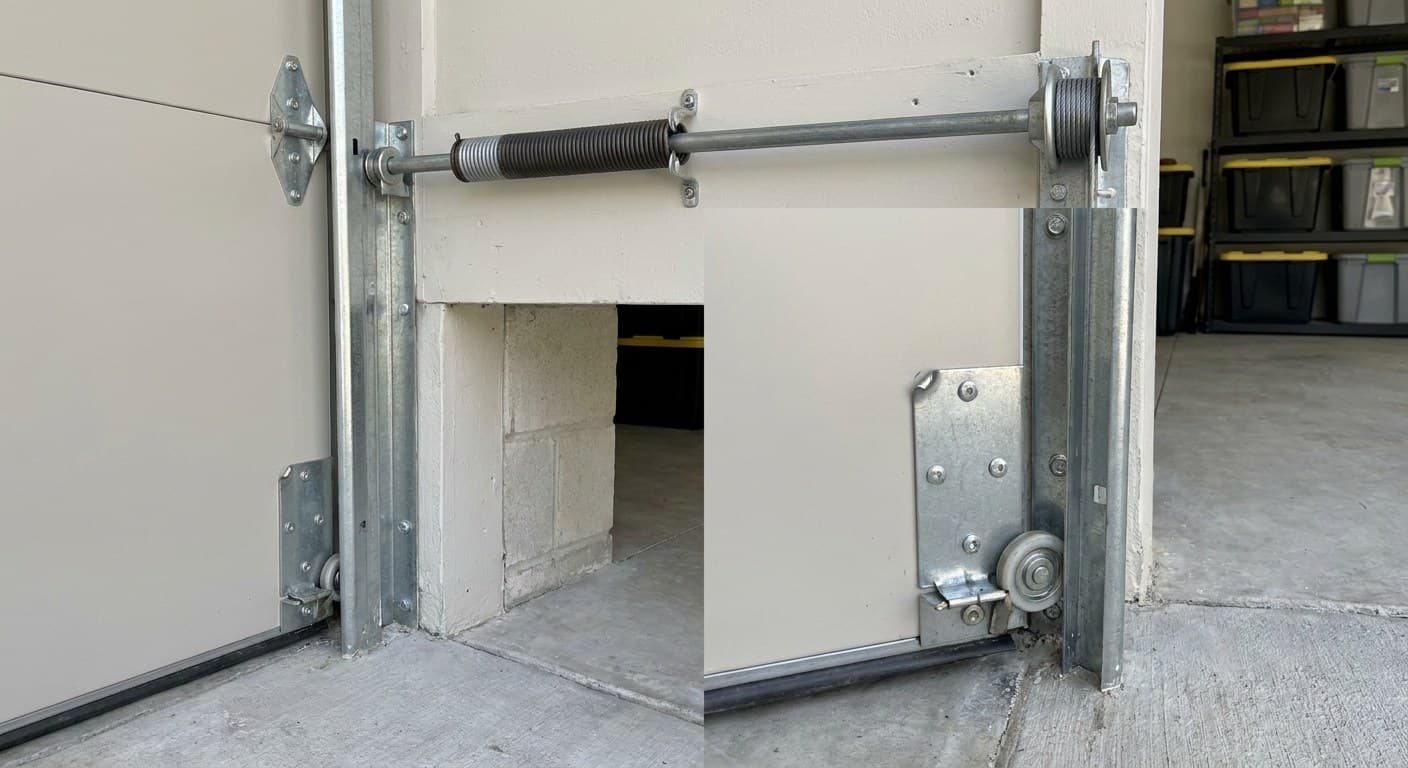
Ask for a profile rated for ultraviolet exposure rather than the cheapest vinyl on the shelf, and prefer a section with a hollow bulb over a solid flap where the gap is uneven — a bulb accommodates more variation before it stops sealing. On an opening that has been re-rendered or re-tiled, check the jamb is still flat enough for the molding to sit against before ordering.
One caution specific to approved doors: on an assembly installed under a county approval, the perimeter detail is often part of what was tested, including the fixing pattern into the structure. Swapping a decorative molding is harmless; changing the fixings that hold the frame detail is not the same thing, and it is worth asking which you are dealing with.
Perimeter seals: the questions we get on site
How is a garage door perimeter checked without waiting for rain?
Close the garage door and look along the edges from inside in full daylight: any line of visible light is a gap.
- Its position names the culprit
- Along the jamb, the strip has curled away
- Along the header, the frame has moved
- Diagonal light means the door sits off-square
Midday on a bright day shows up gaps that a hose test misses entirely.
Can new stop molding be nailed over the old on a garage door?
Layering stop molding pushes the sealing lip further from the panel, which is the opposite of what the seal needs.
- It hides the condition of the jamb underneath
- Removing the old length exposes the frame
- Rot and failed fixings show up there first
Does sealing around a garage door help with cooling costs?
Perimeter sealing helps cooling costs marginally, and only where the garage is conditioned or shares a wall with a room that is.
- The real gain is water and insects kept out
- A garage usually holds a washer and a water heater
- Stored belongings sit at floor level
Which garage door seal profile copes with an uneven gap?
A bulb profile tolerates an uneven gap better than a flat flap, because it compresses over a range instead of at one thickness.
- Older frames are rarely straight end to end
- A flat flap seals where it touches and nowhere else
- Curl away from the panel is the local failure
Sources
- Florida Building Commission — Product Approval
- Miami-Dade County — Product Control and Permitting
Edited by Avidan Benichay · Updated
General information about garage doors in South Florida — not a diagnosis of your door, and not a quote. Code and prices vary by address and change over time. Terms of use
The parts around it
- Bottom sealEverywhere else the strip along the bottom of a garage door is sold as a draft excluder.3–5 yrrealistic seal life in this heat
 Cracked hingesEvery hinge on a sectional door carries a stamped digit, and that digit is not a part number in the ordinary sense — it sets how far the roller stem stands off the face of the panel, which is what keeps the door tracking correctly as it bends through the curve.1 to 5stamped numbers rising up the door
- Garage door won't closeWhen a door opens normally but reverses partway down, the opener is not broken — it is doing exactly what it was built to do, because something told it the path was blocked.6 inheight of the safety eyes above the floor
Next step
Not sure which part failed?
Most garage door faults are identifiable from the noise and the way the door moves. Start there — it usually costs less than you expect.
You describe what the door is doing
The noise it makes, how far it travels, whether the opener runs.
We test it on site
Springs, cables, balance, tracks, opener force and the safety reverse.
You get the price before any work starts
Itemized in writing, including the permit when the job needs one.
- 4.9/5 from 300+ local reviews
- Licensed & insured
- Free visit, no obligation