
Parts and hardware / Miami-Dade
Pulleys, and the extension-spring doors that still use them
Pulleys appear on the older extension-spring layout, where a spring runs horizontally alongside each track and a cable turns through a sheave at each end. Plenty of houses built here before the nineties still have exactly that arrangement, and the pulley is usually the first thing on it to seize.
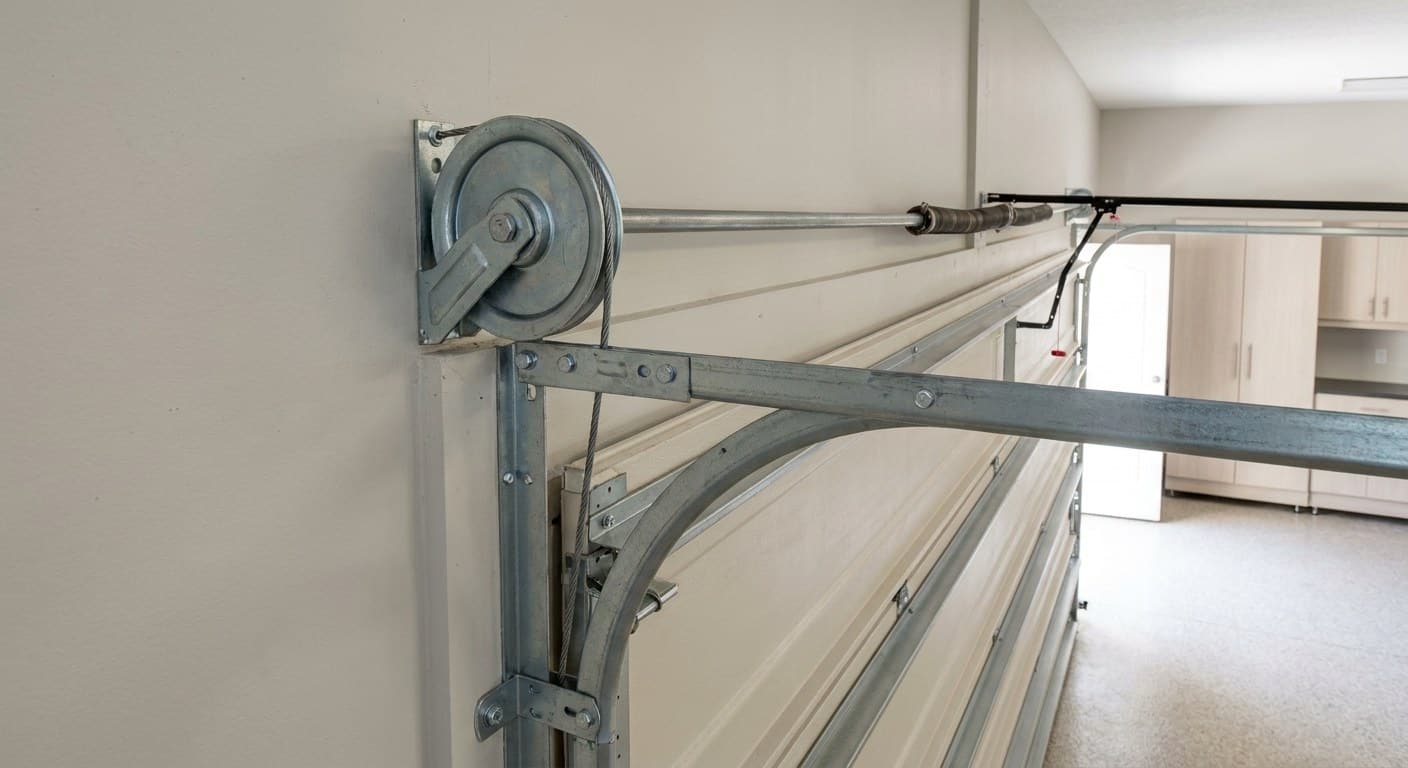
Three facts about pulleys
Only on extension systems
torsion doors have drums instead
They wear silently
until the cable frays through
They need containment cables
without them a spring becomes a projectile
How pulleys fail
The pulley wheel
A seized wheel saws through the cable riding on it
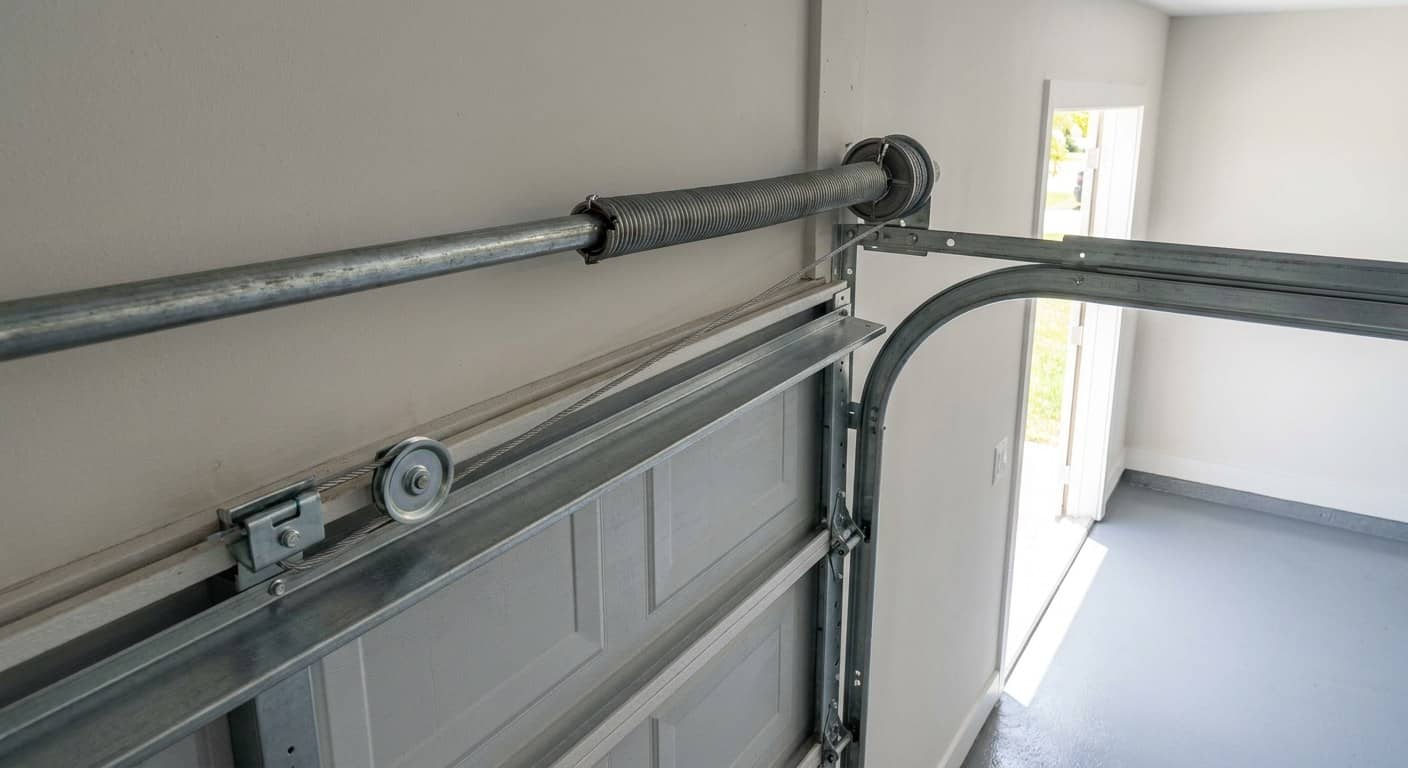
The cable at the pulley
This is where fraying starts on extension systems

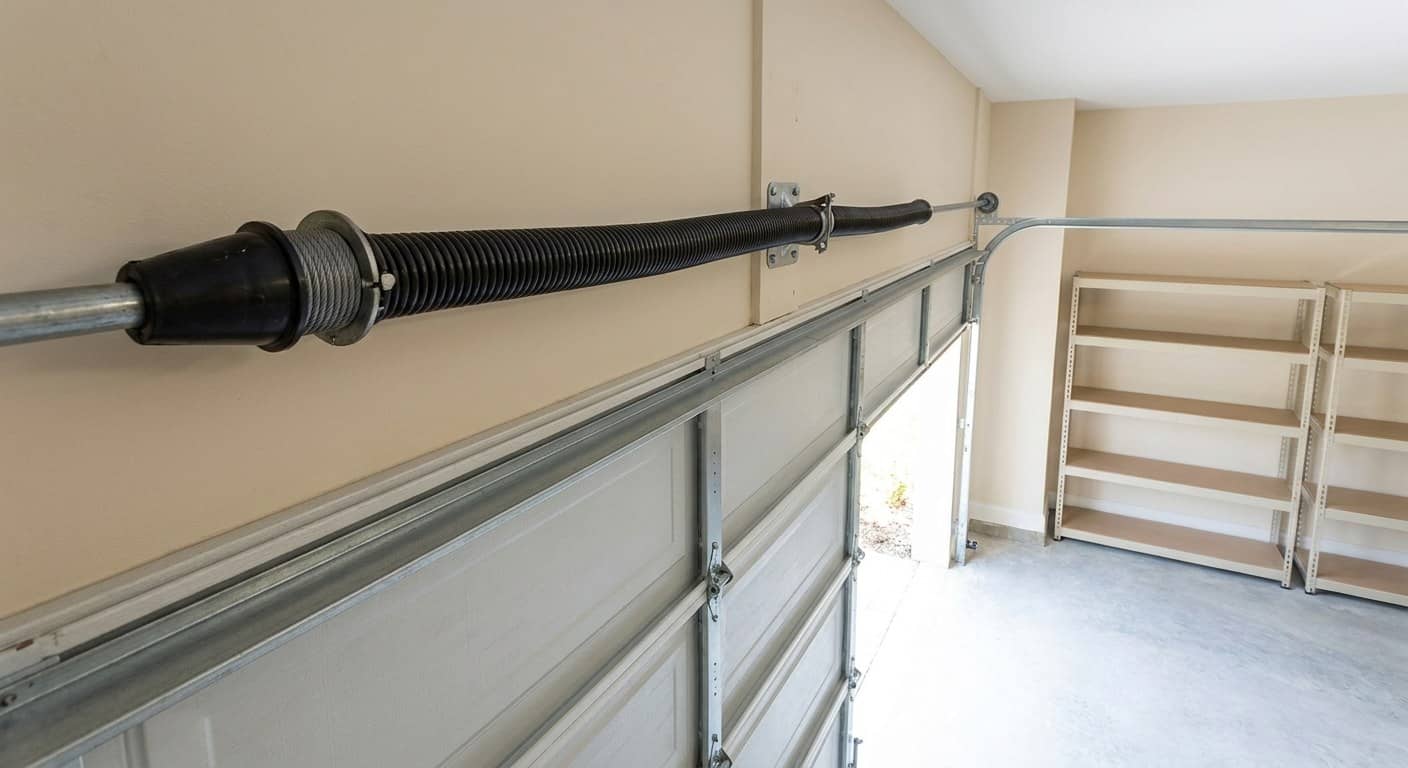
Containment cables
The safety cable through the spring, often missing
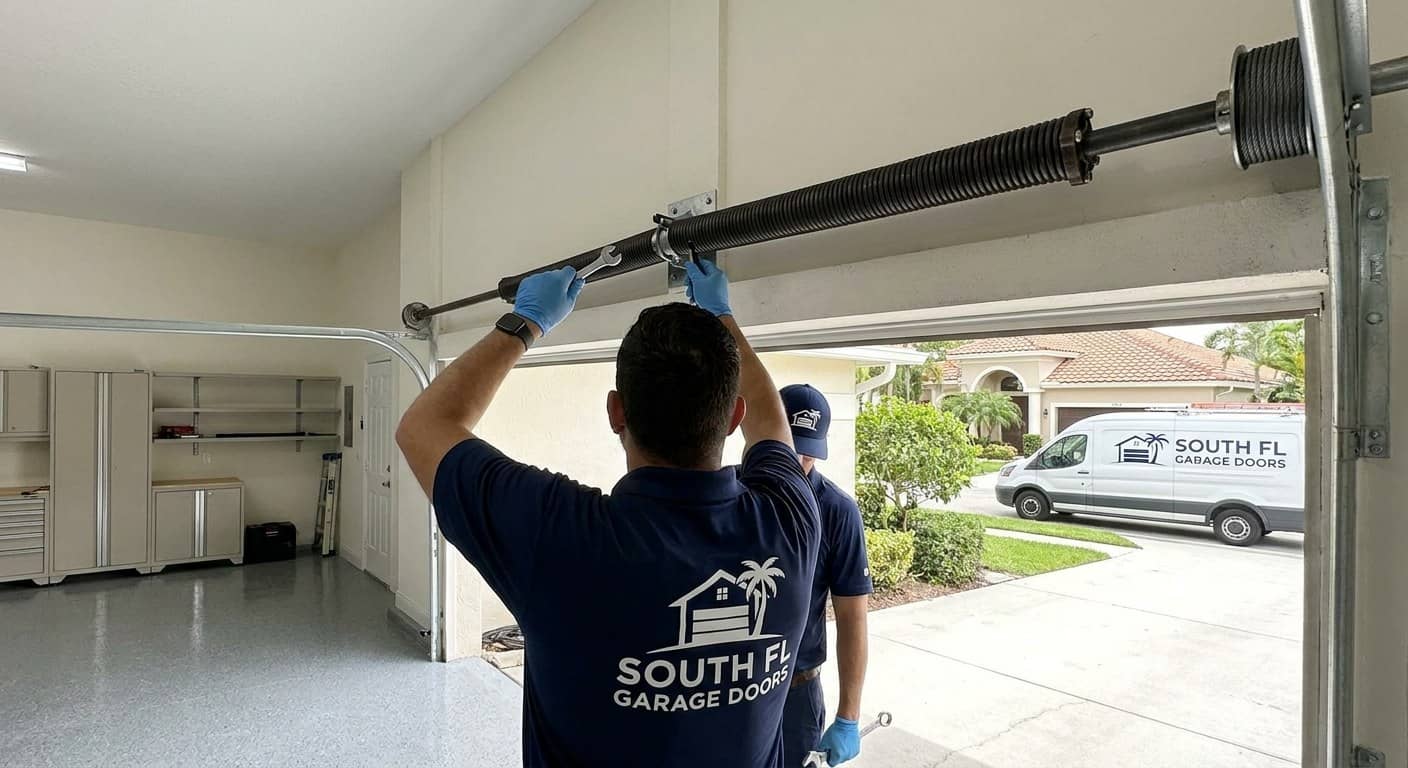
Torsion instead
Most rated doors here use torsion, not extension
Pulley symptoms and what they mean
| Symptom | What it means | Urgency | Next step |
|---|---|---|---|
| Squeal or grinding at the side track | A seized pulley bearing | Soon | Replace the pulley and inspect the cable |
| Frayed cable at the pulley | The wheel has stopped turning | Urgent | Stop using the door |
| No cable through the spring | No containment if the spring breaks | Urgent | Have containment cables fitted |
| Grinding as the door moves | Dry or damaged pulley | Soon | Book a service visit |
| An older extension system | Common on doors from the seventies and eighties | Routine | Ask about converting to torsion |
| Replacing the door anyway | Torsion is the modern standard here | Routine | Convert during the replacement |
The safety detail extension systems must have
Containment cables
A cable through the spring keeps the pieces captive if it breaks
Why it matters
A failing extension spring travels across the garage
Inspect yearly
Pulleys and their cables wear where you cannot see them
Pre-90s
housing stock where this system is common
1
safety cable through each extension spring
Pair
sheave and cable replaced together
More detail if you want it
How to tell which system you have
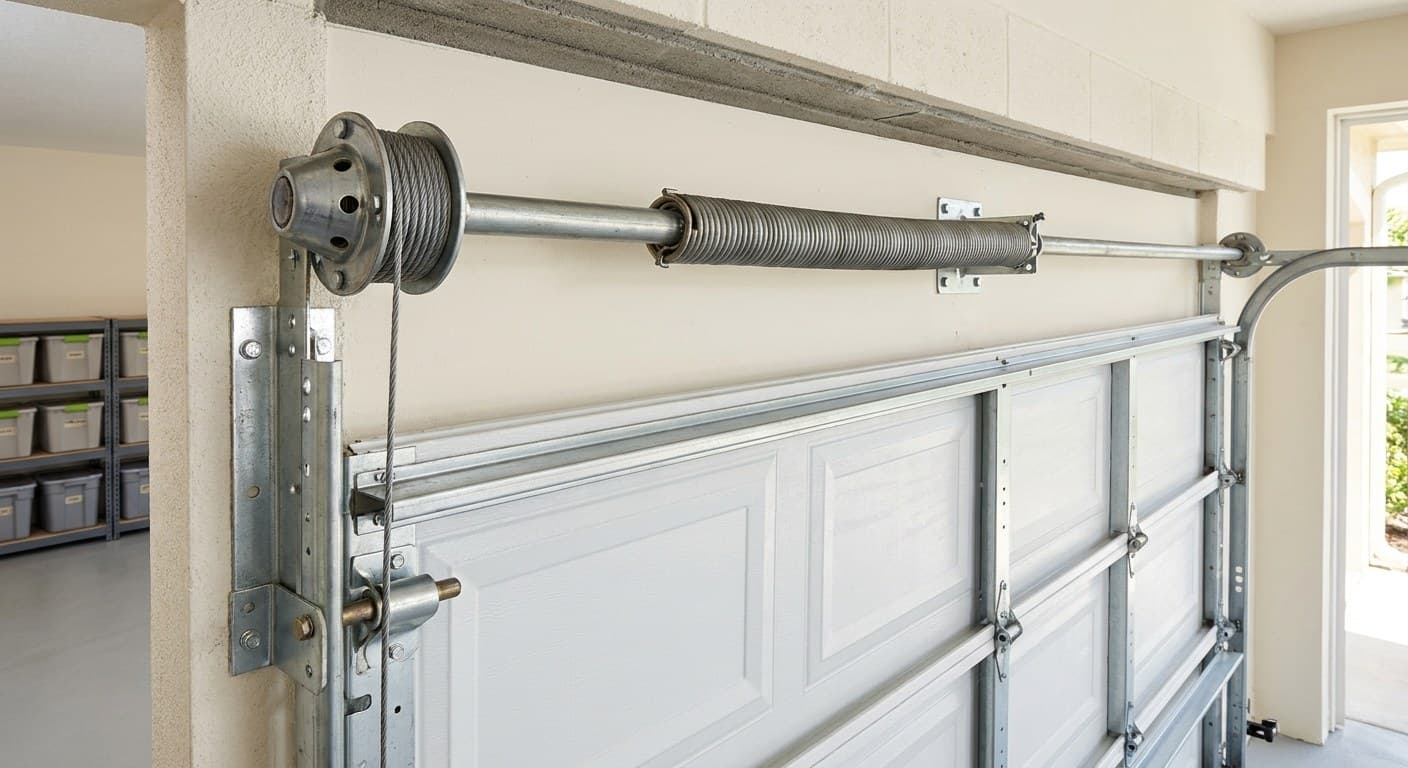
Stand inside and look up. A single fat spring wound on a shaft directly above the opening is a torsion system, and it has no pulleys at all. Two long thin springs stretched horizontally above the side tracks, each with a cable running through a small wheel, is an extension system. The distinction decides everything about how the door is serviced.
Extension hardware is not obsolete in the sense of being unavailable, but it has fallen out of favor on new installations because it holds its energy in a stretched spring rather than a wound one. When an extension spring fails it releases along the line of the track, which is why the safety cable through its center is not optional.
The safety cable, and how often it is missing
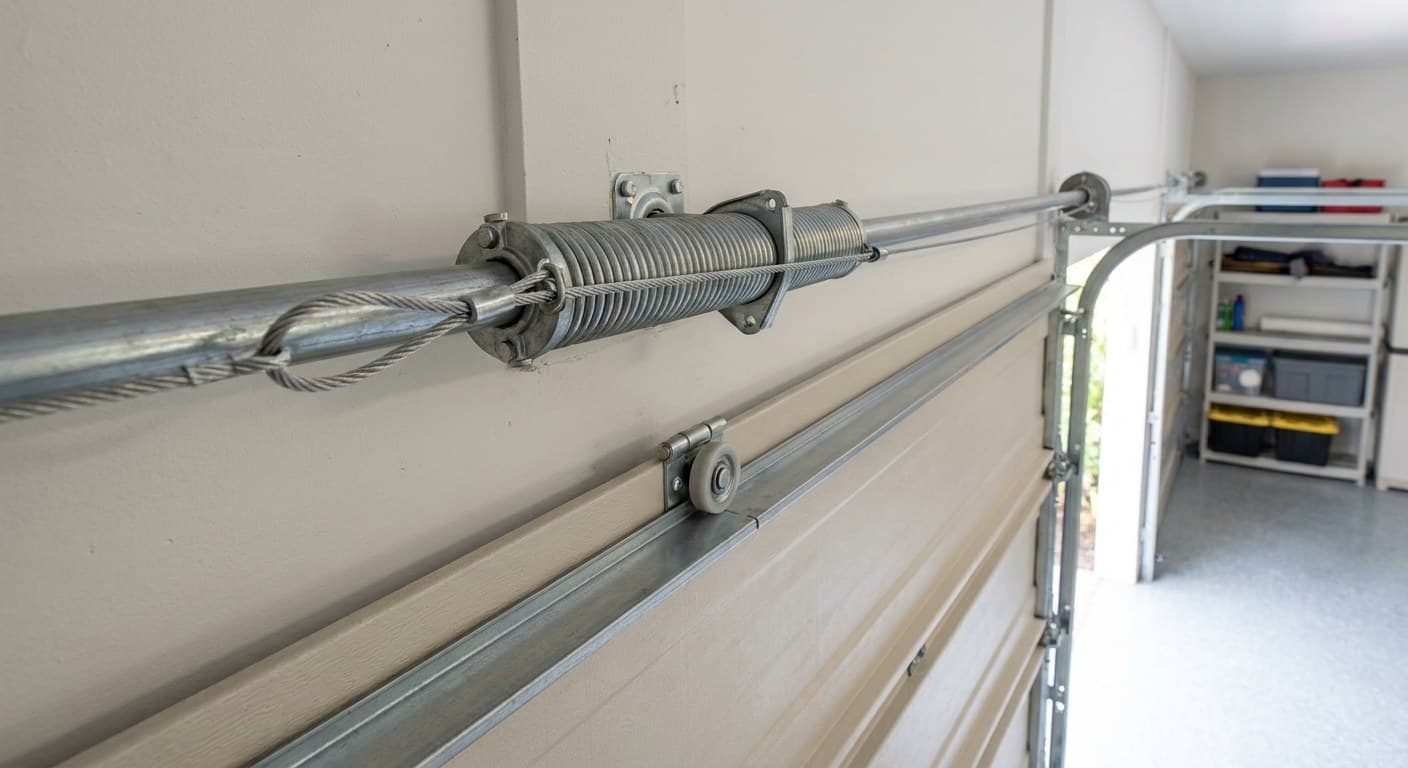
A correctly fitted extension spring has a length of aircraft cable threaded down its middle and anchored at both ends. Its job is to contain the spring if it breaks, turning a whipping length of steel into a spring hanging harmlessly on a wire. On doors of this age it is missing surprisingly often, either never fitted or removed during a past repair.
If yours has no safety cable, that is worth correcting regardless of anything else on this page. It is an inexpensive part, it does not require unwinding anything, and it addresses the one failure mode of this system that puts people in hospital.
Seizure, and the cable damage it hides
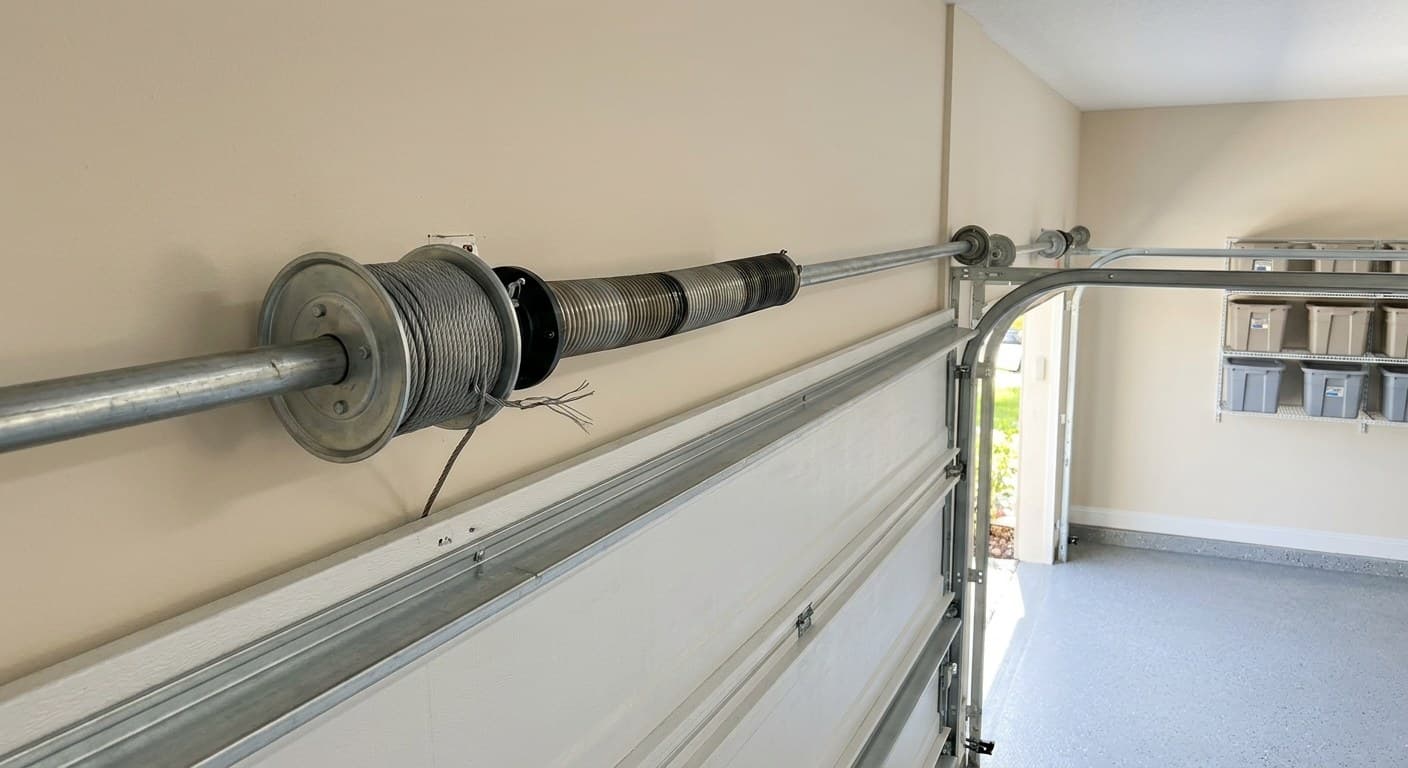
A pulley that no longer spins does not announce itself loudly. The cable simply drags across a stationary sheave instead of rolling over a turning one, and that dragging saws through the strands from the outside. By the time anyone notices the door pulling unevenly, the cable is often more worn than the pulley.
That is why a seized pulley is treated as a pair of parts. Fitting a new sheave and reusing a cable that has been abraded against the old one puts the weakened cable straight back into service, and it will part somewhere in the following months.
Extension-spring doors and their pulleys
Should an extension-spring garage door be converted to torsion?
Converting an extension-spring door to torsion generally improves balance, longevity and safety, and it is not a parts swap.
- Headroom above the opening has to exist
- A shaft, bearing plates and correct spring sizing
- Measuring the space decides it, not preference
Can a stiff garage door pulley be oiled instead of changed?
A sheave that is merely stiff can sometimes be recovered, and the question that decides it is what the cable running over it looks like.
- Abrasion on the wire ends the discussion
- Broken strands mean the pair gets renewed
- A seized sheave saws rather than turns
Are extension springs allowed on a hurricane-rated garage door?
The counterbalance system is part of the assembly a manufacturer submits for approval, so what is permitted is whatever that particular approval documents.
- Approved doors here arrive with torsion counterbalance
- Fitting extension hardware departs from the test
- The approval document is the only authority
Why does an extension-spring garage door need a safety cable?
A safety cable runs through each extension spring so that a spring which lets go cannot travel the length of the garage.
- One cable per spring, anchored at both ends
- Plenty of pre-nineties doors here never had them
- No work should start on a door missing one
Sources
- U.S. Consumer Product Safety Commission
- Miami-Dade County — Product Control and Permitting
Edited by Avidan Benichay · Updated
General information about garage doors in South Florida — not a diagnosis of your door, and not a quote. Code and prices vary by address and change over time. Terms of use
The parts around it
- Broken lift cableTwo steel cables carry the entire weight of the door from the bottom brackets up to the drums on the spring shaft.2cables, always replaced as a set
- Cable drumsA cable drum is the grooved aluminum wheel at each end of the spring shaft that winds the lift cable as the spring unwinds.2drums wound to the same point, or it hangs crooked
- How long springs lastA standard torsion spring is rated for about 10,000 open-and-close cycles, which works out to roughly seven years for a household that uses the door four times a day.10,000cycles on a standard torsion spring
Next step
Not sure which part failed?
Most garage door faults are identifiable from the noise and the way the door moves. Start there — it usually costs less than you expect.
You describe what the door is doing
The noise it makes, how far it travels, whether the opener runs.
We test it on site
Springs, cables, balance, tracks, opener force and the safety reverse.
You get the price before any work starts
Itemized in writing, including the permit when the job needs one.
- 4.9/5 from 300+ local reviews
- Licensed & insured
- Free visit, no obligation