
Permits / Miami-Dade
Garage door permit in Miami-Dade County
Changing the door itself requires a building permit, filed with the approval number of the exact product going in and closed out by an inspection; repairing what is already there — springs, cables, rollers, hinges, an opener — does not. The distinction is the door as an opening protection element, not the size of the invoice.
Three facts about permits here
The contractor files
under their license, not yours
Product and anchorage
the approval is part of the file
It ends with an inspection
an open permit is a problem later
What a garage door permit involves
The application
Product approval, plans and the contractor's license
The approved product
Reviewed against your opening and pressures
The anchorage
What the inspector actually looks at
The closeout
The inspection that finishes the file
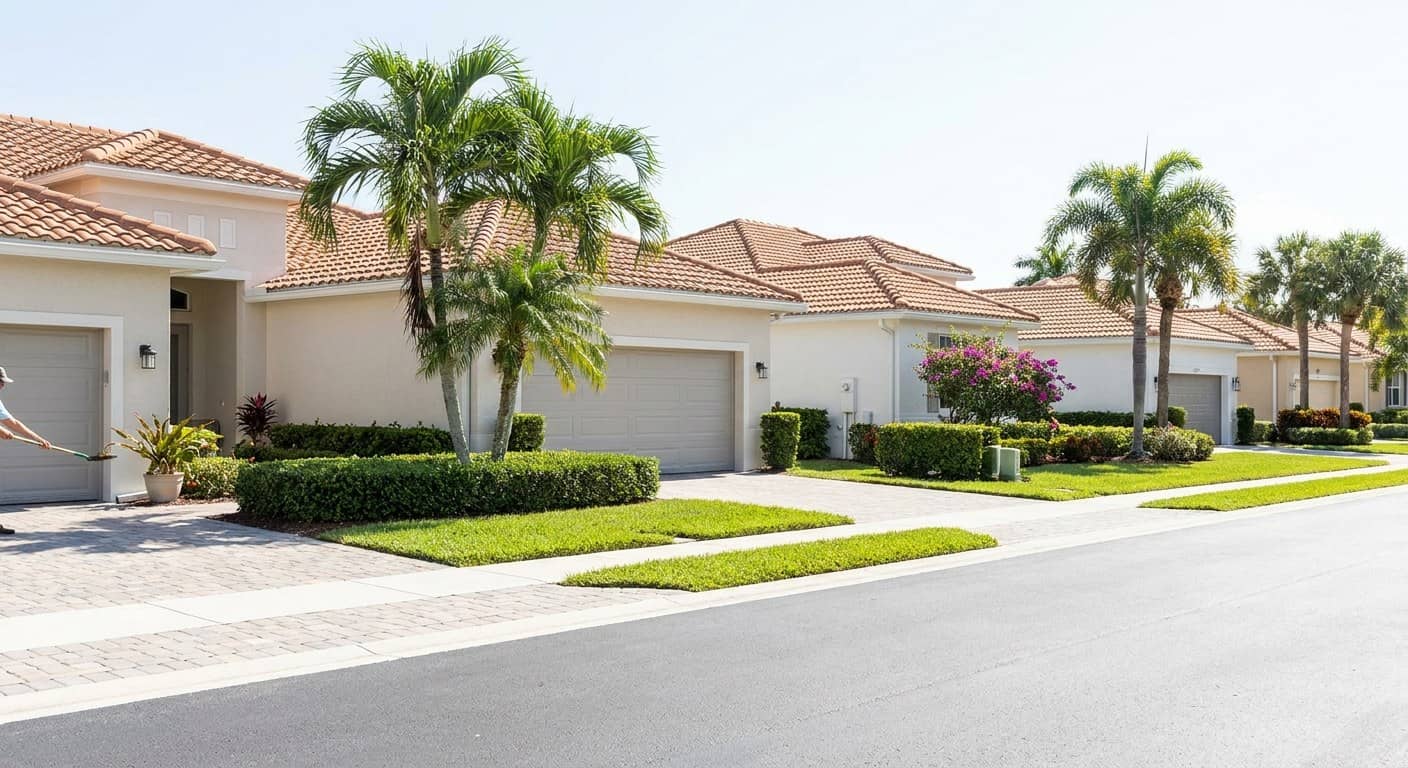
The permit process, step by step
| Step | What happens | Who does it | What you keep |
|---|---|---|---|
| When a permit is required | Any door replacement, and most structural repairs | Set by the county and your municipality | The permit number |
| Who pulls it | A licensed contractor, under their own license | Never the homeowner on a contractor's job | A copy of the license and the permit |
| What goes in the file | Product approval, sizes, pressures and anchorage detail | The contractor prepares it | The approval document |
| The inspection | An inspector checks the install against the approval | Your building department | The passed inspection record |
| Skipping the permit | Unpermitted work surfaces at resale, at a claim or at the next permit | The risk sits with the owner | Nothing — that is the problem |
| At resale | Buyers and insurers ask for the paperwork | Title and insurance companies | The closed permit is the proof |
Replacement
the trigger — repairs to existing hardware are not
1 inspection
closes the permit; until then it stays open on the property
Contractor
should be the applicant, not the homeowner
More detail if you want it
What triggers one, and what genuinely does not
A full replacement always does, and so does a new opening cut into a wall. Restoring a door to working order does not: a broken spring, a frayed cable, a bearing, a set of rollers, a motor swapped for another motor are maintenance of an existing assembly. The gray area is sectional replacement — putting a new section into an existing approved door is usually treated as repair, while rebuilding a door out of parts from several products is not repair at all.
Municipality matters as well. Several cities inside the county run their own building department with their own counter, fee schedule and inspection queue, so the same job is filed in different places depending on which side of a street the house sits. A contractor who works the whole county knows which door to knock on; one who does not will discover it after your deposit is paid.
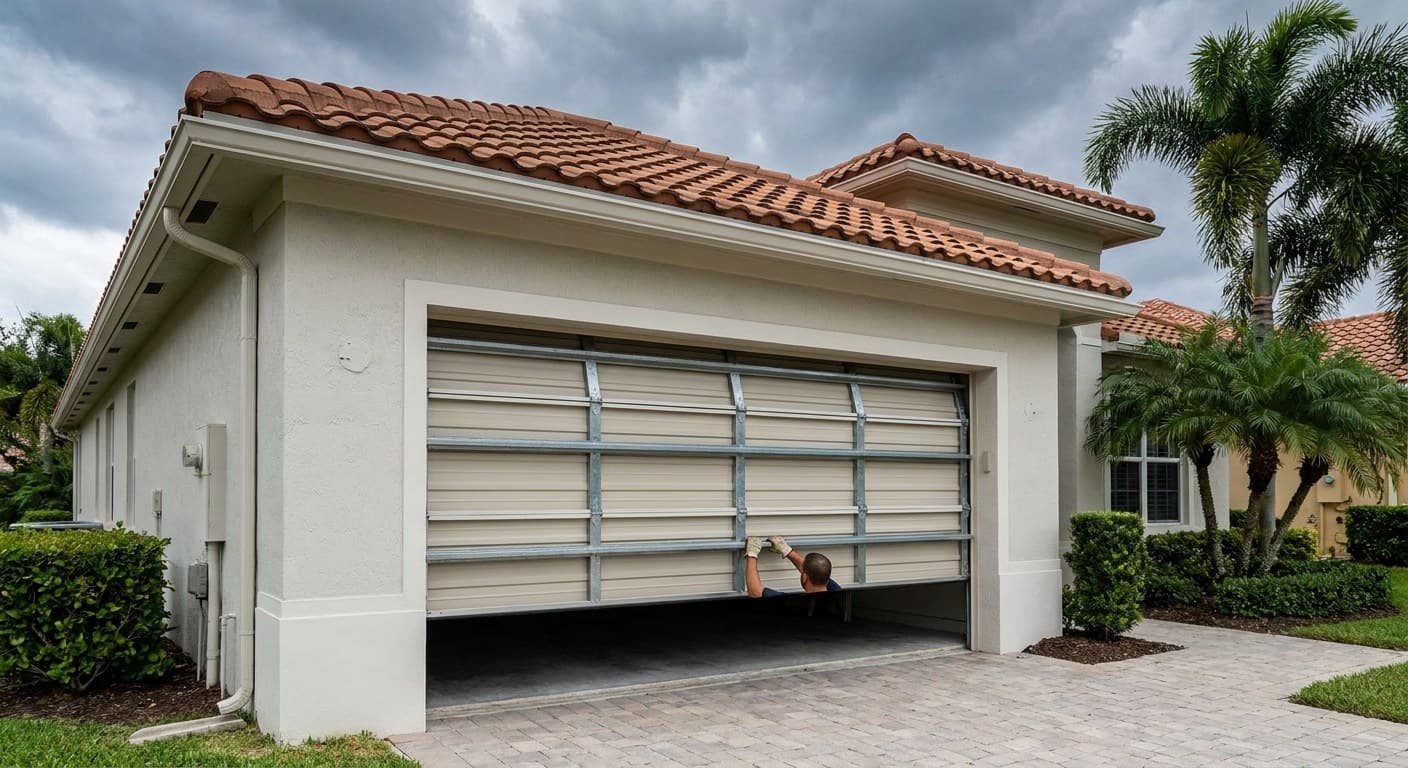
Who files it, and why it should not be you
A licensed contractor pulls the permit under their own license, and in doing so accepts responsibility for the installation in front of the building department. Florida also allows an owner to pull one for their own home, which sounds like a saving and transfers that responsibility onto the homeowner: it is your name on the application, your obligation if the work fails inspection, and your problem if the installer disappears between the deposit and the correction notice.
There is a second reason it matters. An unlicensed installer cannot file at all, so a proposal that quietly leaves the permit to the owner is often not a cost-saving arrangement but the only arrangement available to whoever is standing in your driveway.
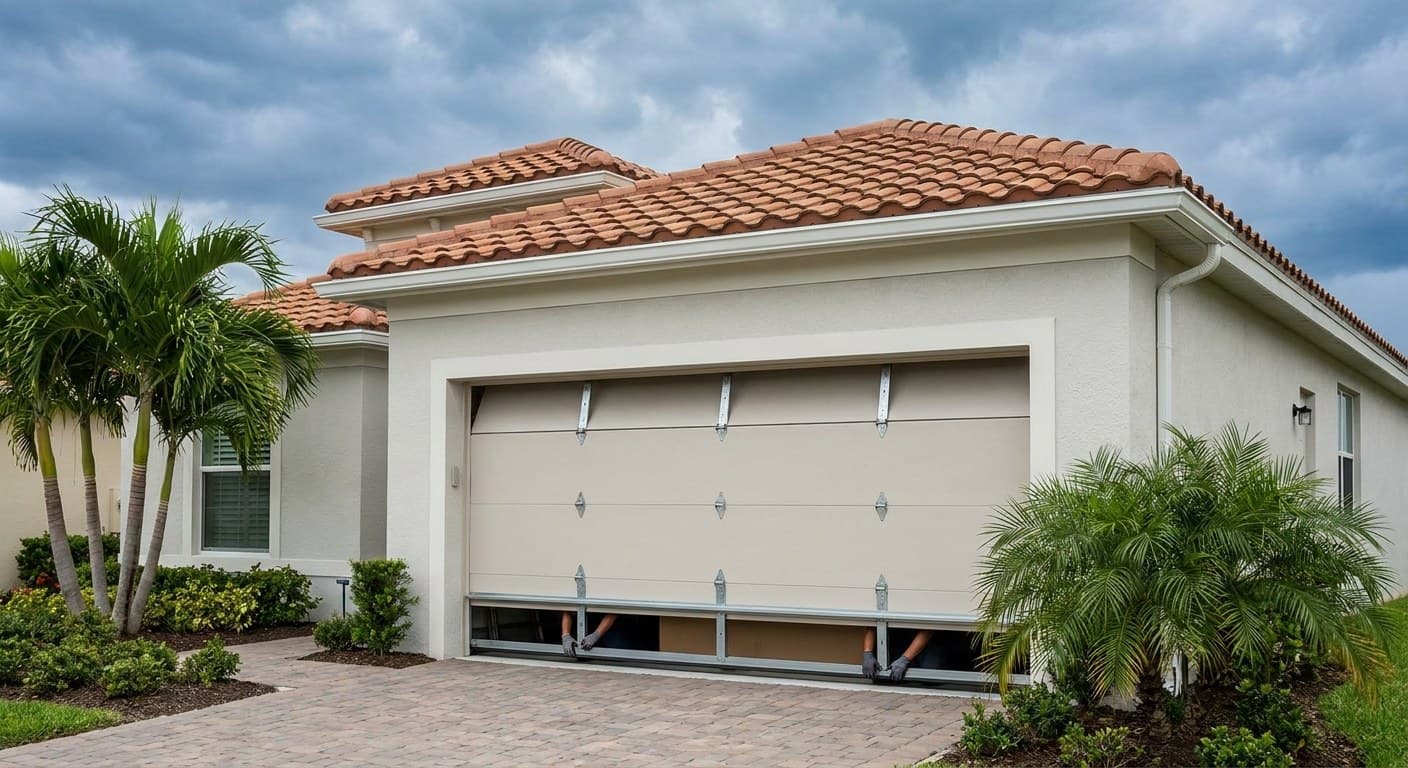
What the inspector is looking at
Three things, quickly. That the label on the installed product matches the approval quoted on the application. That the opening falls inside the dimensions that approval covers. And that the fixings follow the drawing — right type, right embedment, right spacing, right distance from the edge of the masonry. It is a short visit when the installation was done properly and a long correspondence when it was not.
Until that visit is signed off, the permit stays open. An open permit on a property is its own headache years later, because it surfaces in title work and has to be resolved by whoever is trying to sell — often long after the company that opened it has changed its name.
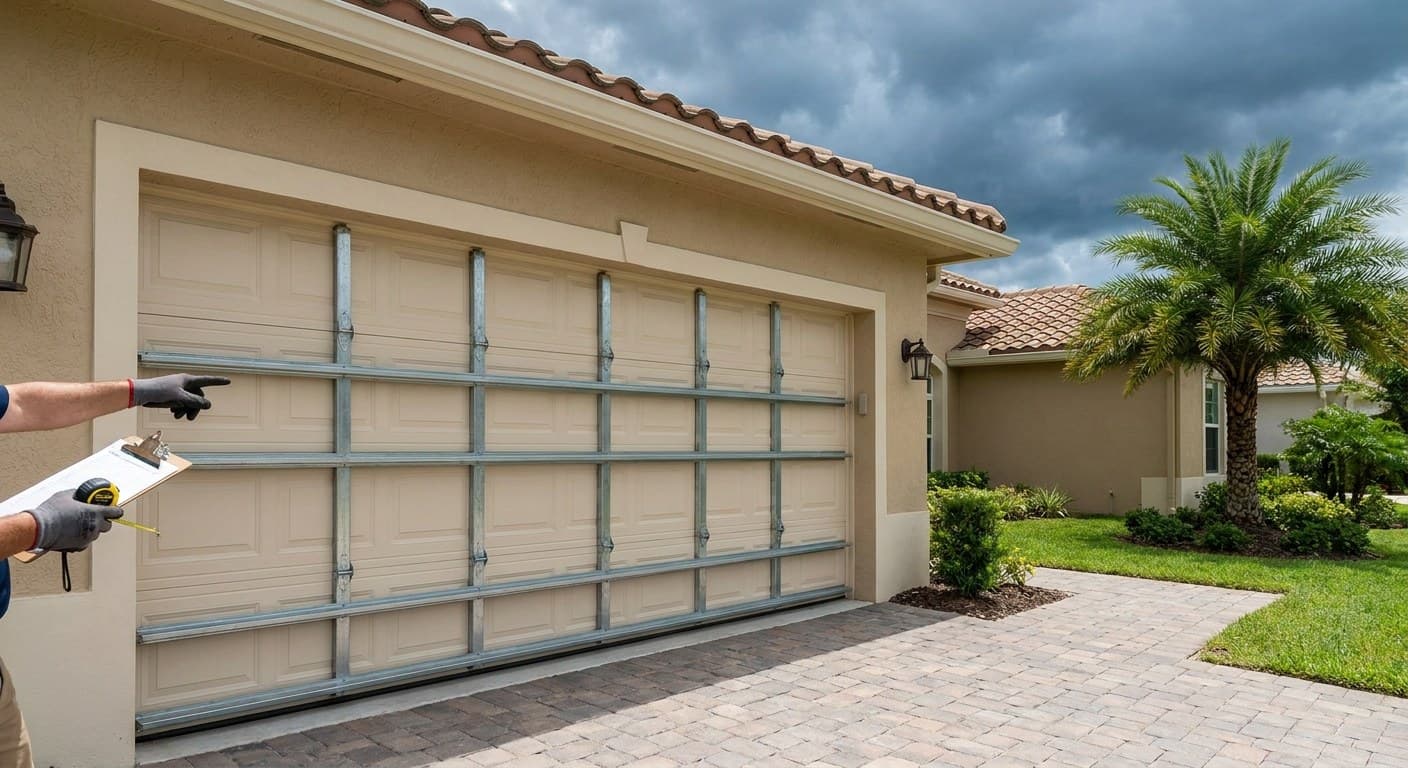
The cost of skipping it, deferred
Nothing happens on the day. It happens at a closing, when a buyer's inspector asks for the record of a door that has none; at a claim, when an adjuster looks for evidence the opening was protected; or at a wind mitigation survey, where an undocumented door quietly costs a credit every year it stays undocumented. The retroactive route exists, and it is the same work plus fees plus opening a wall that is already finished.
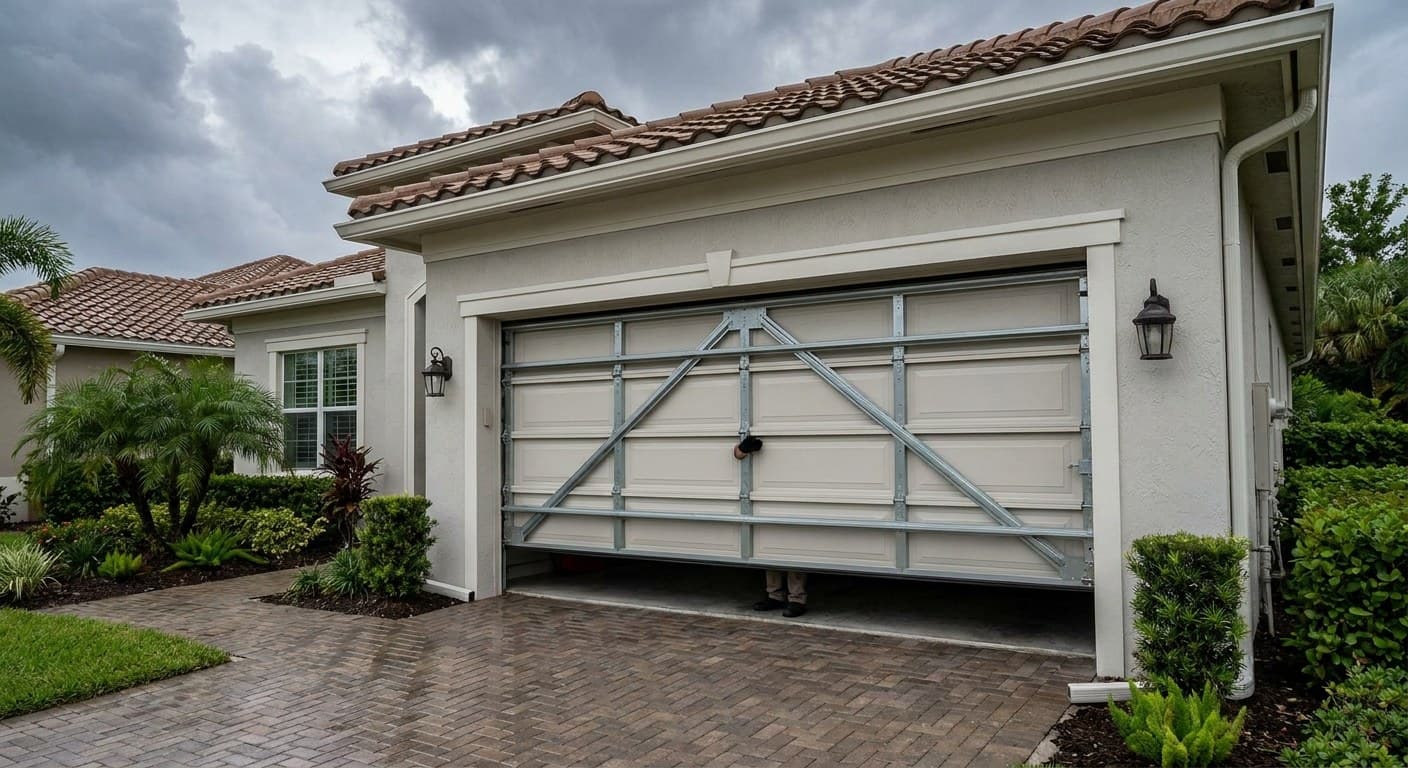
Garage door permits in Florida: where the line falls
Do I need a permit to replace only the garage door opener?
Swapping one garage door opener for another is usually handled as servicing equipment that is already installed, not as altering the opening, but the office reviewing the job is what settles that.
- Adding an electrical circuit is another matter
- That belongs to a licensed electrician
How long does a garage door permit take to be approved?
Garage door permit review times vary with the project, the documents submitted and the reviewing office's current workload, so no single figure describes them.
- Inspection comes after installation
- Incomplete filings create the horror stories
- Usually a missing or expired approval reference
My installer says nobody permits garage doors here. Is that true?
Plenty of doors do go up without one, which is not the same claim as saying none is required.
- The permit record for a property is public
- The gap surfaces at sale
What exists on the wall and what exists on file are two different things, and only one of them is what a buyer's agent reads.
Can a garage door permit be pulled after the door is installed?
Yes, as an after-the-fact application, and it costs more than filing first.
- The inspector still has to see the anchoring
- On a finished job that can mean removing trim
- Or drilling to verify what is behind it
Is a garage door permit required everywhere in Florida?
For a replacement, yes, in every county — the door is part of the building envelope and the way it is anchored is structural work.
- What changes is the office you file with
- And which approval document it accepts
- Never whether the permit exists at all
What garage door work is exempt from a permit in Miami-Dade?
Miami-Dade publishes a permit exemption list for unincorporated areas, and the distinction it draws is between minor repair and work on the structure.
- The list does not name garage door components
- Structural work always needs a permit
- Doors are named as structural work
- Even under the new under-$7,500 exemption
Since 1 July 2026, Florida House Bill 803 exempts some home improvement work under $7,500 on single-family homes, duplexes and townhouses — but the county states that structural work including doors still requires a permit. Where a specific job sits, ask the office that will review it.
Sources
- Miami-Dade County — Product Control and Permitting
- Florida Department of Business and Professional Regulation
Edited by Avidan Benichay · Updated
General information about garage doors in South Florida — not a diagnosis of your door, and not a quote. Code and prices vary by address and change over time. Terms of use
The rest of the code
- Permits in BrowardBroward and Miami-Dade are the only two counties the Florida Building Code places in the High-Velocity Hurricane Zone, so the level of scrutiny is the same.170mph three-second gust for a house, written into the code for this county
- Permits in Palm BeachTwo Florida counties are designated high-velocity, and this is not one of them, so a contractor who arrives quoting Miami-Dade acceptance numbers and county test protocols is quoting the wrong rulebook.0of this county lies inside the High-Velocity Hurricane Zone
 Hurricane-rated doorsYes — in this county a replacement door has to be approved, and approved twice over: once for the pressure the wind exerts on your particular opening, and once for what happens when flying debris hits it.2counties in the High-Velocity Hurricane Zone: Miami-Dade and Broward
- NOA, explainedA Notice of Acceptance is the county's own product approval: it names one manufacturer's model, the maximum dimensions it was tested at, the pressures it withstood, whether it is impact-rated, and the exact fastening drawing it must be installed to.1 modelper approval — never a brand, never a range
 Can a handyman do it?For anything structural — springs, cables, panels, tracks, or installing a door — no.1dedicated Florida specialty license for garage doors
- Rated door costInstalled and permitted in this county, a single-bay approved door generally lands between $4,500 and $7,500, and a double between $5,500 and $9,500.15–25%premium of an approved door over a standard impact door
 DoralWe repair and replace garage doors across Doral, and the first thing worth knowing is that Doral is not the county.HVHZDoral is inside the high-velocity zone
 Miami LakesMiami Lakes was planned as a single community, and its permitting reflects that: the town's own checklist puts windows, doors and garages in one named category, quotes a review of three to five business days, and asks for an association affidavit as part of the packet rather than as something you sort out privately on the side.3–5business days quoted for a door application
Next step
Find out what your address actually requires.
Design pressure depends on your exact wind zone and the geometry of the opening. We check it before quoting anything — no guesswork, no round numbers.
You describe what the door is doing
The noise it makes, how far it travels, whether the opener runs.
We test it on site
Springs, cables, balance, tracks, opener force and the safety reverse.
You get the price before any work starts
Itemized in writing, including the permit when the job needs one.
- 4.9/5 from 300+ local reviews
- Licensed & insured
- Free visit, no obligation