
Opener installation
Garage Door Opener Installation in Miami-Dade
An opener is sized to the weight of the door, not the width of the opening.
Belt, chain or wall-mounted: which one fits is decided by your door, your headroom and where the garage sits in the house.
If the springs are tired, the opener is not the fix — and we say so before quoting one.
- Serving South Florida since 2014
- Licensed & insured · FL Lic. 25BS00124
- Free diagnostic visit
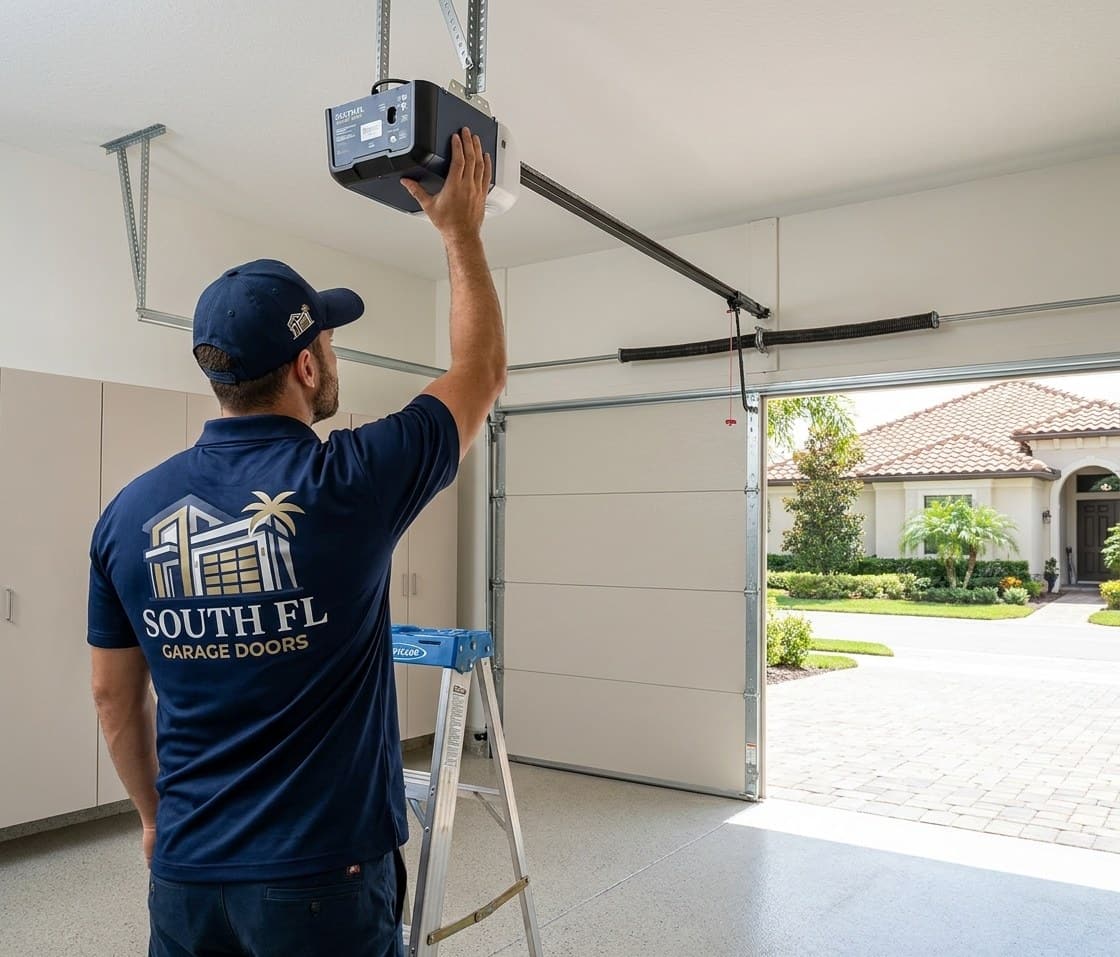
What you get
The right size, the right drive, the right safety devices.
Three decisions, and the cheapest one is usually the one people get wrong.
Sized to the finished weight
An insulated door weighs more. The opener is chosen against what your door actually weighs.
Drive chosen for the room above
A belt where a bedroom sits above the garage; a chain where nothing does; a jackshaft where there is no headroom.
Safety devices are part of it
Photo eyes and contact reverse fitted and tested, not sold as an upgrade.
The first visit
What decides which opener you can have.
Four of these are measurements. None can be taken over the phone.
- The headroom between the door and the ceiling
- The finished weight of the door, insulated or not
- Whether the springs still carry that weight
- Whether a room sits above the garage
- Where the power comes from, and whether it is grounded
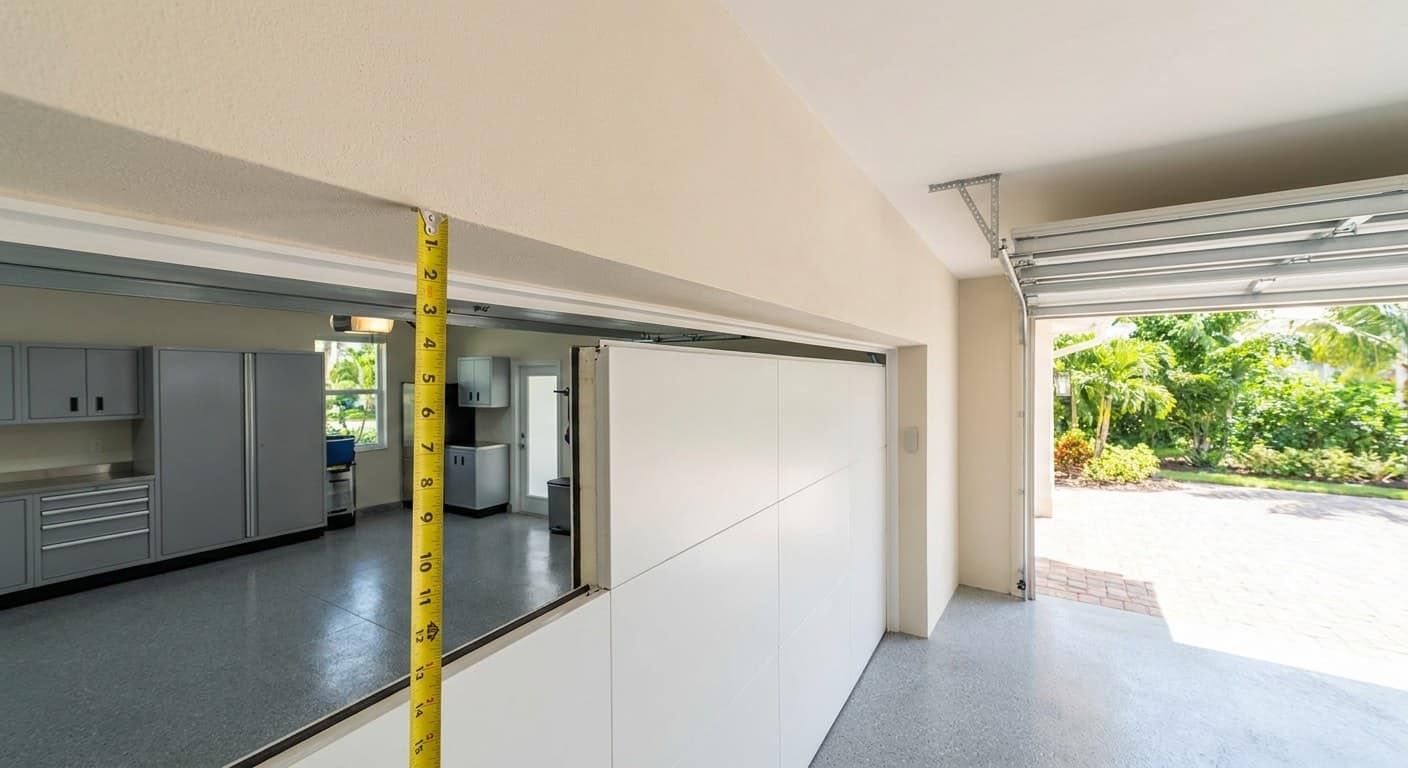
How it is installed
Fitted to the door it has to move.
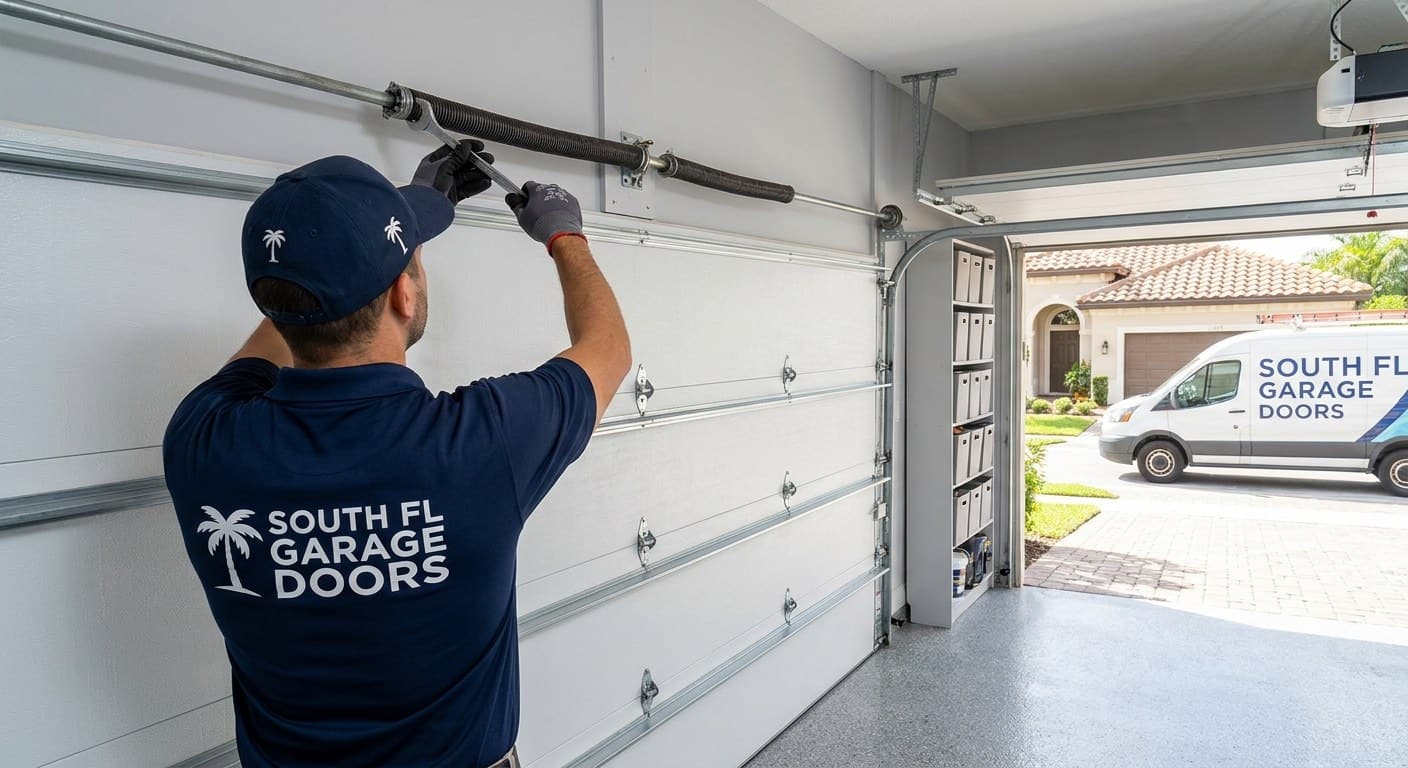
An opener that is asked to do the springs' work fails early, and it fails looking like an opener fault.
The balance is checked first
Half the openers we are called to replace are healthy openers on an unbalanced door.
Travel and force are set to the door
Not to a factory default, and re-checked after any change to the door.
The safety reverse is tested with an object
Never with a hand, and it is tested before we leave.
What it can look like
Three drives, three reasons.
The choice is rarely about price; it is about what sits above the garage and how much room the rail has.
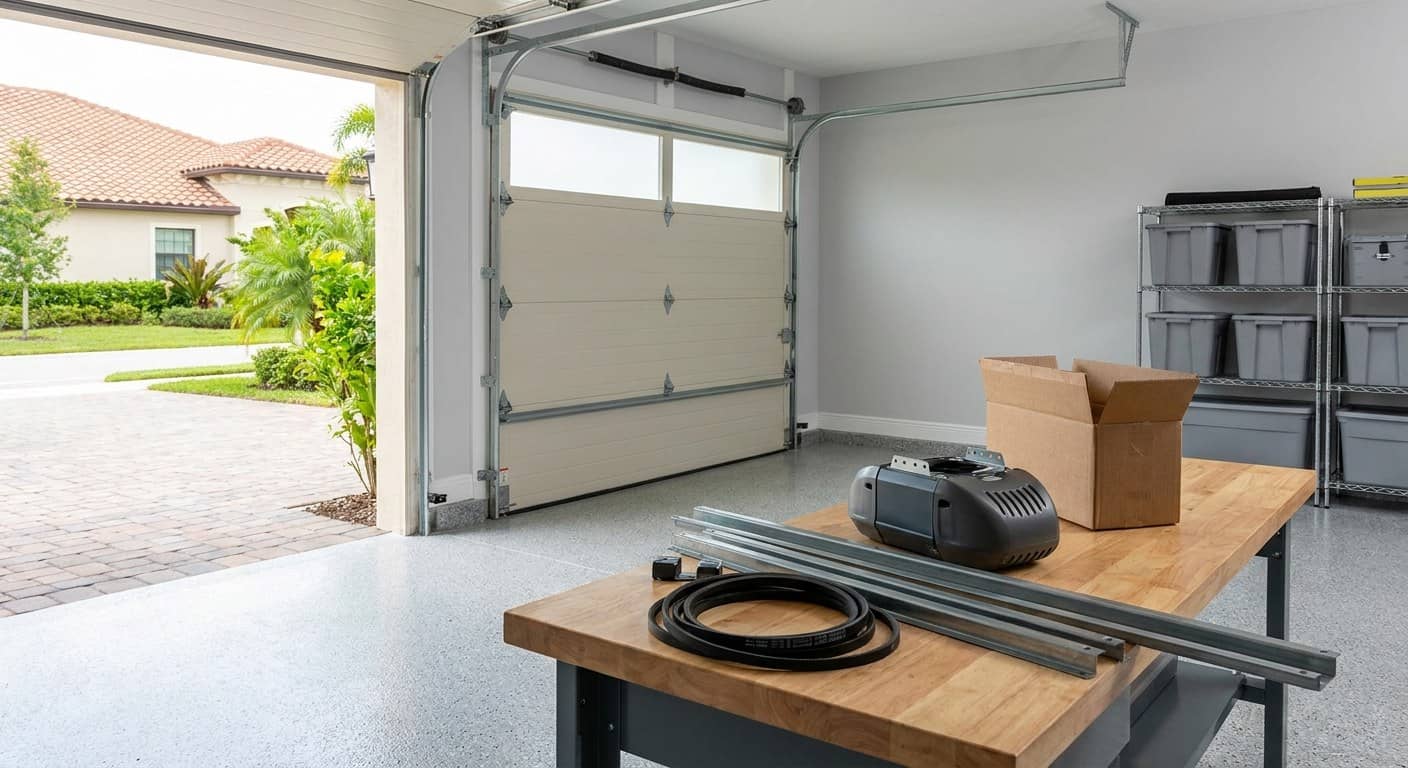
Belt drive
Quieter than a chain, and the usual answer when a bedroom sits above.
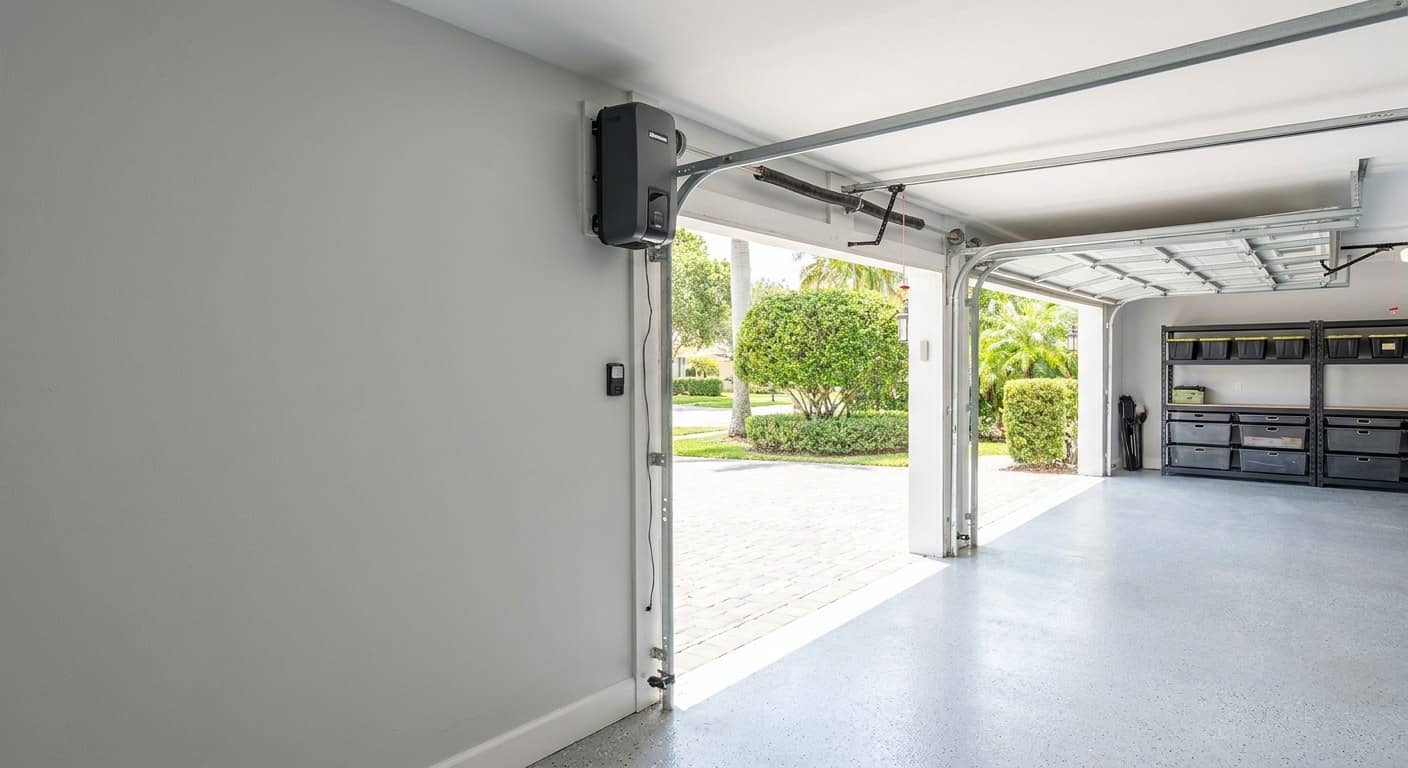
Wall-mounted jackshaft
Frees the ceiling entirely, which is the answer when there is no headroom for a rail.
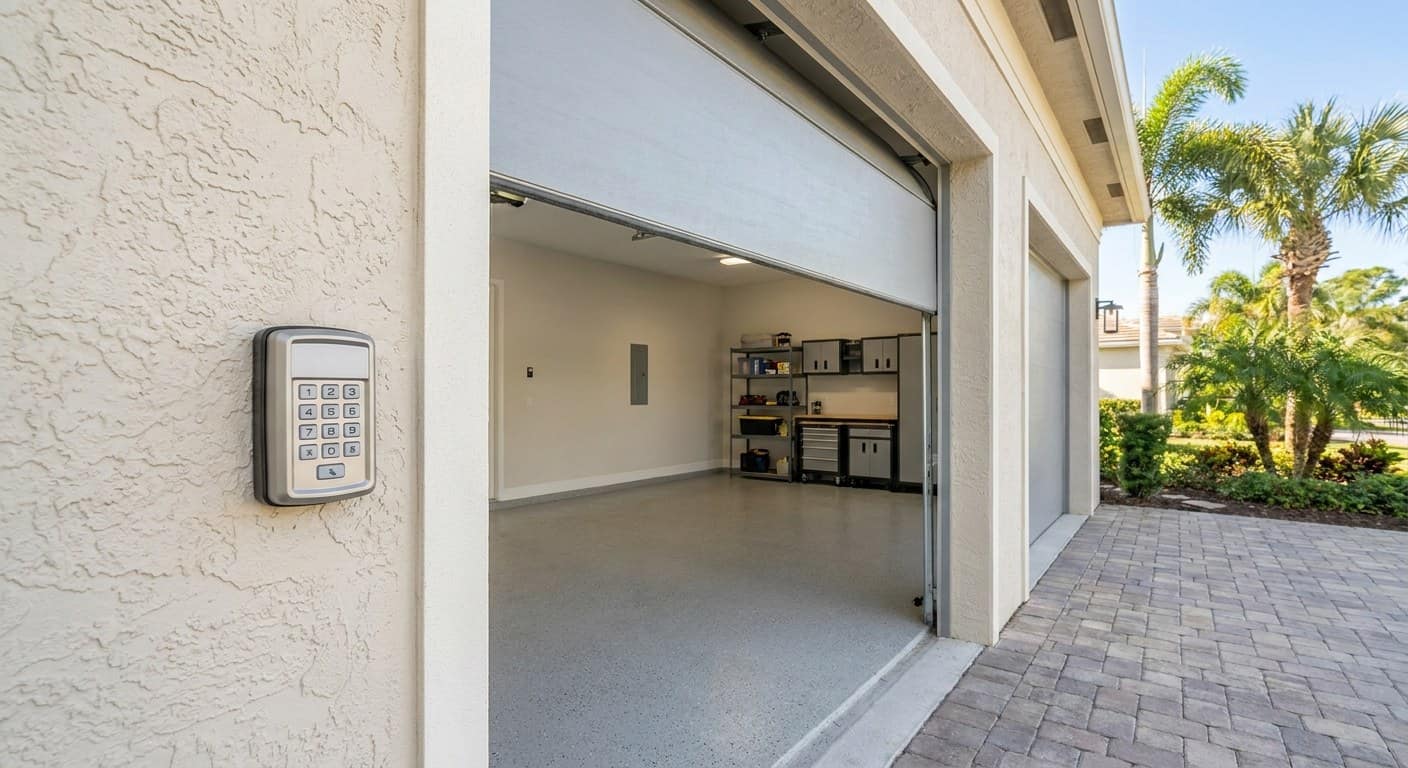
Outdoor keypad
Useful, and it lives a shorter life here than the manufacturer assumed.
Horsepower is the specification most often quoted and least often useful: a correctly balanced door needs very little of it, and an unbalanced one is not fixed by more.
More detail if you want it
How we think about this job.
Three things decide whether an opener lasts.
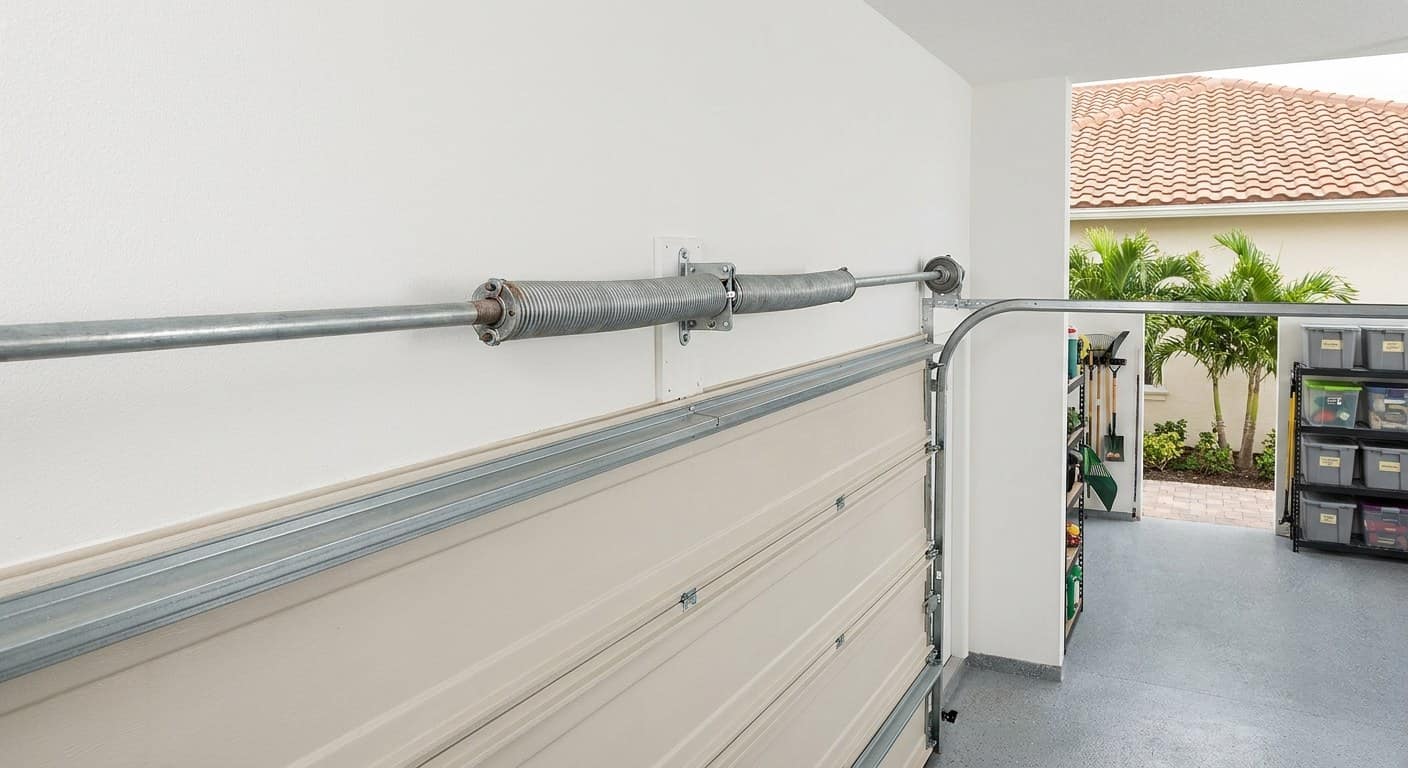
1.The springs lift the door, not the opener
An opener pushes what the springs have already balanced. If the balance is gone, the motor is doing work it was never sized for, and it will fail in a way that looks exactly like an opener fault. That is why the balance test comes before any quote for a new unit.
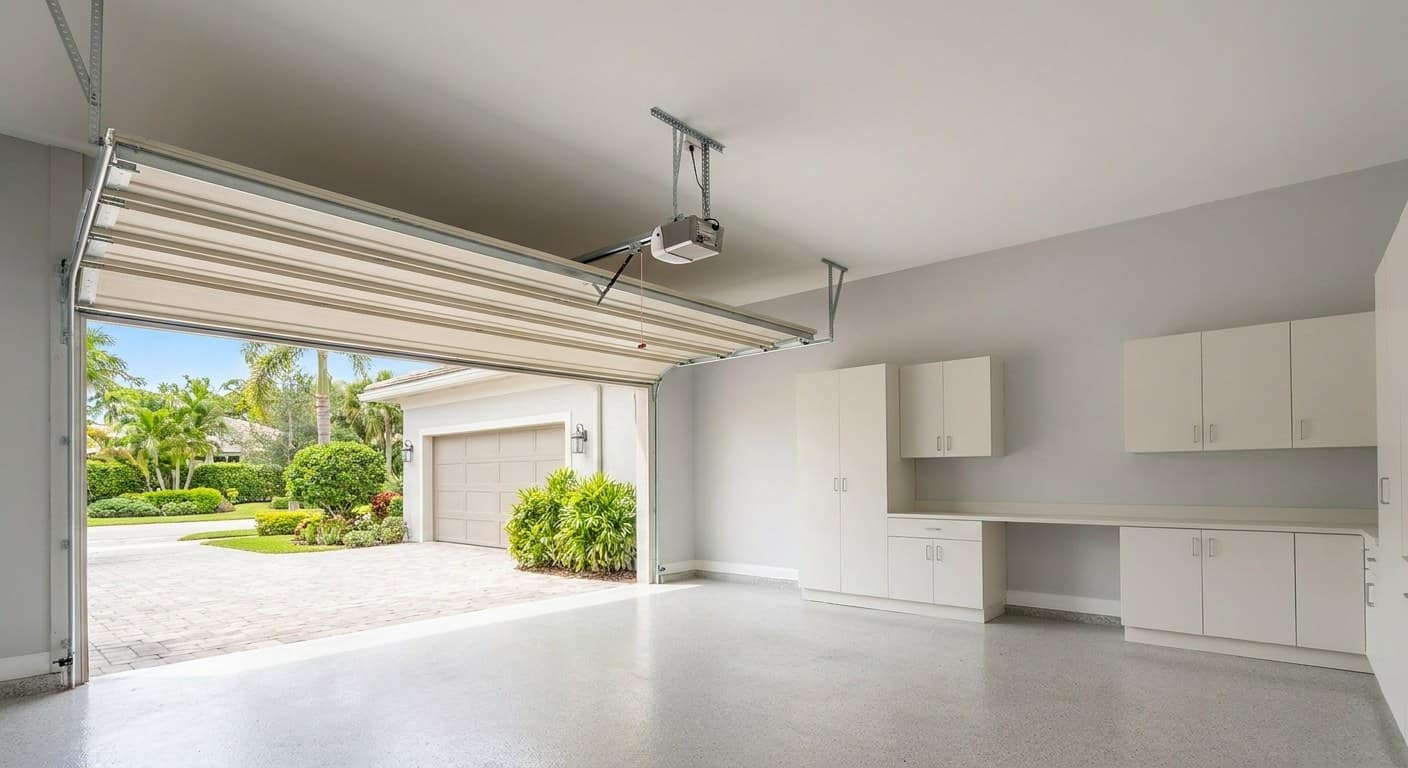
2.Headroom and power get checked before ordering
A rail needs clearance above the door, and a jackshaft needs a torsion shaft it can grip. Both are measured at the visit, because discovering either afterwards means a second delivery and a second appointment.
3.The safety devices are part of the installation
Photo eyes and contact reverse are fitted, aligned and tested with an object rather than a hand. They are not an upgrade, and an installation that leaves them for later is not finished.
How it goes
How an opener installation goes.
Four steps, and the balance test decides the second one.
- 01
We test the balance
Before anything else, because it decides whether you need an opener at all.
- 02
We measure and choose
Headroom, weight, and what sits above the garage.
- 03
We fit and set
Rail, head, arm, and travel and force set against your door.
- 04
We test the safety devices
Photo eyes aligned, contact reverse tested with an object, before we leave.
Typical ranges
Useful numbers — after you understand what changes them.
What moves these is the drive type and whether the springs need attention at the same time.
- Garage door opener, supplied and installed$380–$1,400
- Opener repair (board or capacitor)$175–$300
- Torsion spring replacement (pair)$250–$450
- Annual tune-up and safety check$100–$240
These are published market ranges for South Florida, not a quote. The failed component and the condition of the door decide the final price.
More detail if you want it
Why a noisy opener is usually not a new opener
A chain that has stretched slaps the rail on every pass, and the sound arrives from the ceiling rather than from the door. It is a tension adjustment measured in minutes. The same is true of a dry rail and of a trolley that has never been lubricated. Replacing the unit fixes all three, at roughly twenty times the cost of fixing the one that was actually wrong.
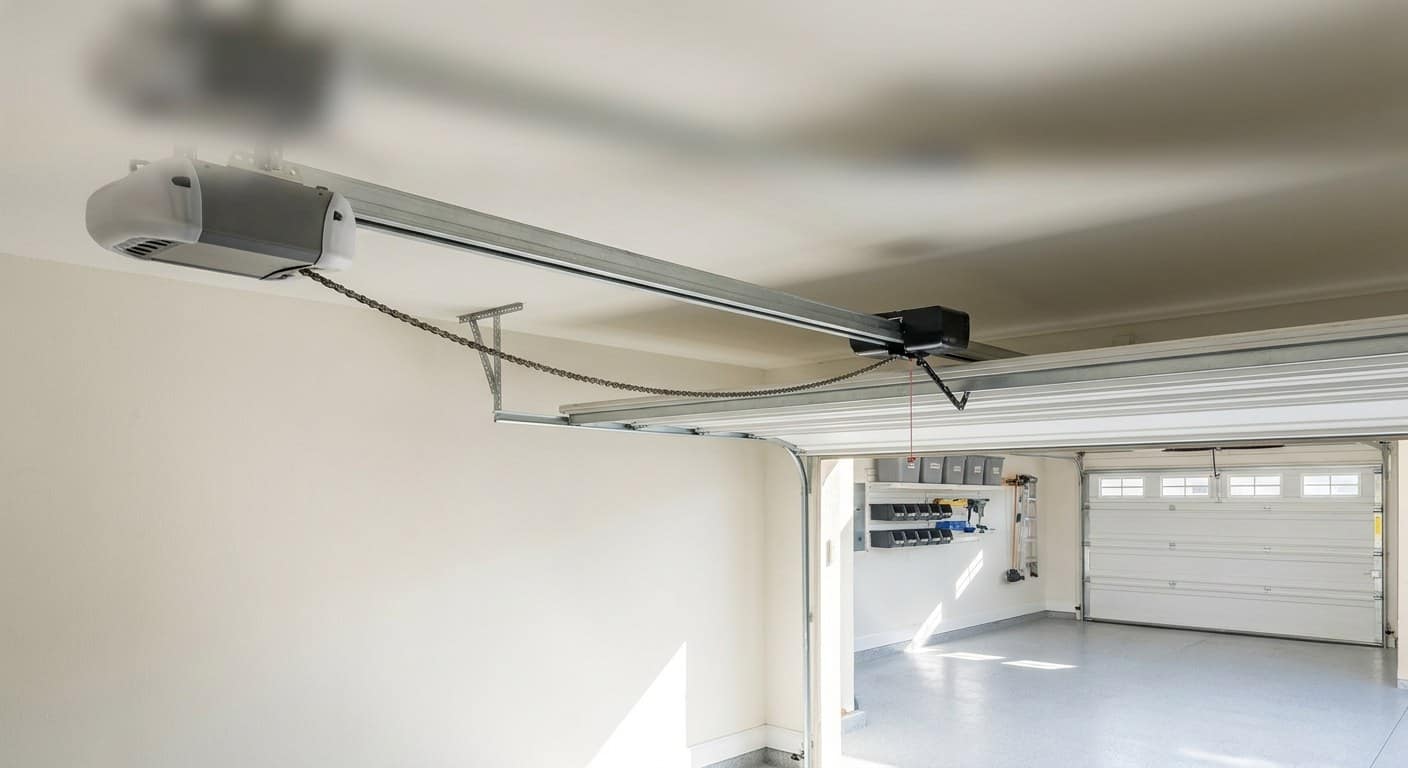
What to do when there is no headroom
A standard rail needs clearance above the door that some garages simply do not have — a low ceiling, ductwork, or a door already fitted with a low-headroom track. The answer is a wall-mounted jackshaft driving the torsion shaft directly, which frees the ceiling entirely. It costs more and it is often the only thing that fits.
Before you choose
What people ask before choosing an opener.
The questions that come up on almost every visit.
Belt or chain?
A belt if a bedroom or living space sits above the garage; a chain is perfectly good where nothing does. The difference is noise, not lifting power.
Do I need more horsepower?
Almost never. A balanced door needs very little, and an unbalanced door is not fixed by a bigger motor — it is fixed by springs.
Can you reuse my old rail?
Rarely, and it is usually a false economy. The rail, trolley and head are matched, and mixing generations is where intermittent faults come from.
What if my ceiling is too low?
A wall-mounted jackshaft drives the torsion shaft directly and needs no ceiling rail at all. We measure at the visit rather than discovering it on the day.
2
independent safety systems required by federal law
1
dedicated grounded outlet, never an extension lead
0
permits: an opener is equipment, not opening protection
More detail if you want it
The safety devices are not a trim level
Every residential opener sold in the United States since the early nineteen-nineties has to reverse when the door meets an obstruction, and it has to carry a second, independent system that stops a closing door without touching anything — in practice, the pair of photo eyes near the floor. That is federal law rather than a manufacturer's feature, and it is the reason an opener with a disconnected sensor is not a working opener with a minor fault.
We demonstrate both before leaving, with you watching, because a setting is not a proof. The contact reversal is checked against an obstruction on the floor and the beam is broken by hand mid-travel. If either fails, nothing else on that invoice is worth discussing — and if an installer has never offered to show you, that is worth noticing about the installer.
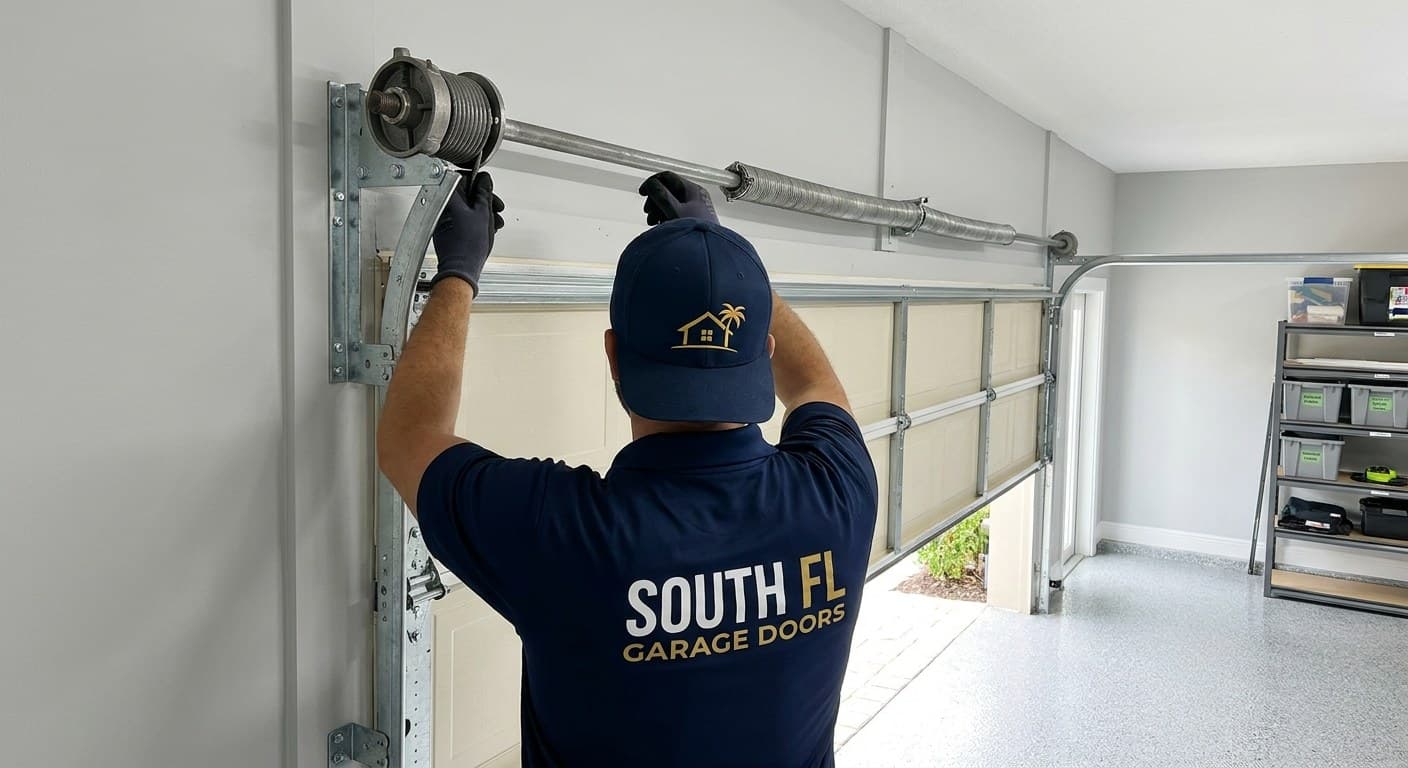
Headroom, power and the two questions nobody asks
A ceiling-mounted unit needs a rail the length of the door plus clearance behind it, and in a garage where a torsion conversion has already taken the space above the opening, that room may no longer exist. A wall-mounted unit sits beside the shaft instead and frees the ceiling entirely, which is often the answer in a low garage, and occasionally the only one. It is a measurement, so it is settled before anything is ordered rather than discovered on a ladder.
The second question is the outlet. An opener needs a dedicated grounded receptacle within reach of its cord, and a garage that has never had one needs a circuit run — which is electrical work, belonging to a licensed electrician and not to us. Saying so costs a sale occasionally and it is still the right answer: an extension lead into a ceiling motor is how garage fires start.
| Work | Typical range | What moves the price | |
|---|---|---|---|
| Garage door opener, supplied and installed | $380 – $1,400 | Unit $180–700, labor $150–450. Wall-mount units sit at the top of the range; chain drives at the bottom. | Book this — Garage door opener, supplied and installed |
Market rates observed, not our quoted prices — surveyed 2026-08-16. HomeBlue / Angi, HomeBlue (Miami), Well Built Florida, Garage Doors FL (Fort Lauderdale), HomeAdvisor, Access Impact, Fort Lauderdale Garage Pros, Angi, OfficeFinder 2026 guide
Choosing a garage door opener in South Florida
Does a heavier garage door need a stronger opener?
Very often yes. An approved insulated section carries noticeably more mass than the hollow panel it replaced, so a unit specified against the old figure strains near its ceiling for years.
- Weigh the panel, do not guess from width
- Read the manufacturer's lift rating
- Compare against what the door actually weighs
We will also tell you when the unit you already own is fine — replacing one that would have coped is waste dressed up as caution.
Can you install a garage door opener I bought myself?
We would rather look at it than refuse outright, and the risk is the match rather than the brand.
- Chosen from a box, for a door nobody measured
- Frequently under-rated for the panel it must lift
- Fitting it well does not make it the right unit
Where it does match the door, there is no reason at all not to fit it.
Is a smart garage door opener worth it in a storm county?
The connected features are pleasant and they are not what should decide the purchase — battery backup is.
- Drive type: belt runs quieter than chain
- Lift rating matched to the panel
- Battery backup for outage season
In a county that loses power every storm season, a door you cannot raise during an outage is a car you cannot move.
Do I need a permit to replace a garage door opener?
No. Replacing a garage door opener is normally treated as maintenance of existing equipment rather than as work on the opening, though the requirement is set by the jurisdiction reviewing the job.
- Exception: adding a circuit or receptacle
- That is electrical work, and another trade
Sources
- U.S. Consumer Product Safety Commission
- Miami-Dade County — Product Control and Permitting
- Florida Building Commission — Product Approval
Edited by Avidan Benichay · Updated
General information about garage doors in South Florida — not a diagnosis of your door, and not a quote. Code and prices vary by address and change over time. Terms of use
Since 2014Licensed & insuredFL Lic. 25BS00124
Start with the balance, not the catalog.
The visit is free, and it tells you whether you need an opener or a spring before anyone quotes either.