
Maintenance
Garage Door Maintenance and Tune-Up in Miami-Dade
One measurement predicts the rest.
A tune-up is not a cleaning. It is a balance test, a set of measurements, and the small parts changed while they are still only worn.
On this coast the interval is shorter than the manual says, and we will tell you honestly which one applies to your door.
- Serving South Florida since 2014
- Licensed & insured · FL Lic. 25BS00124
- Free diagnostic visit
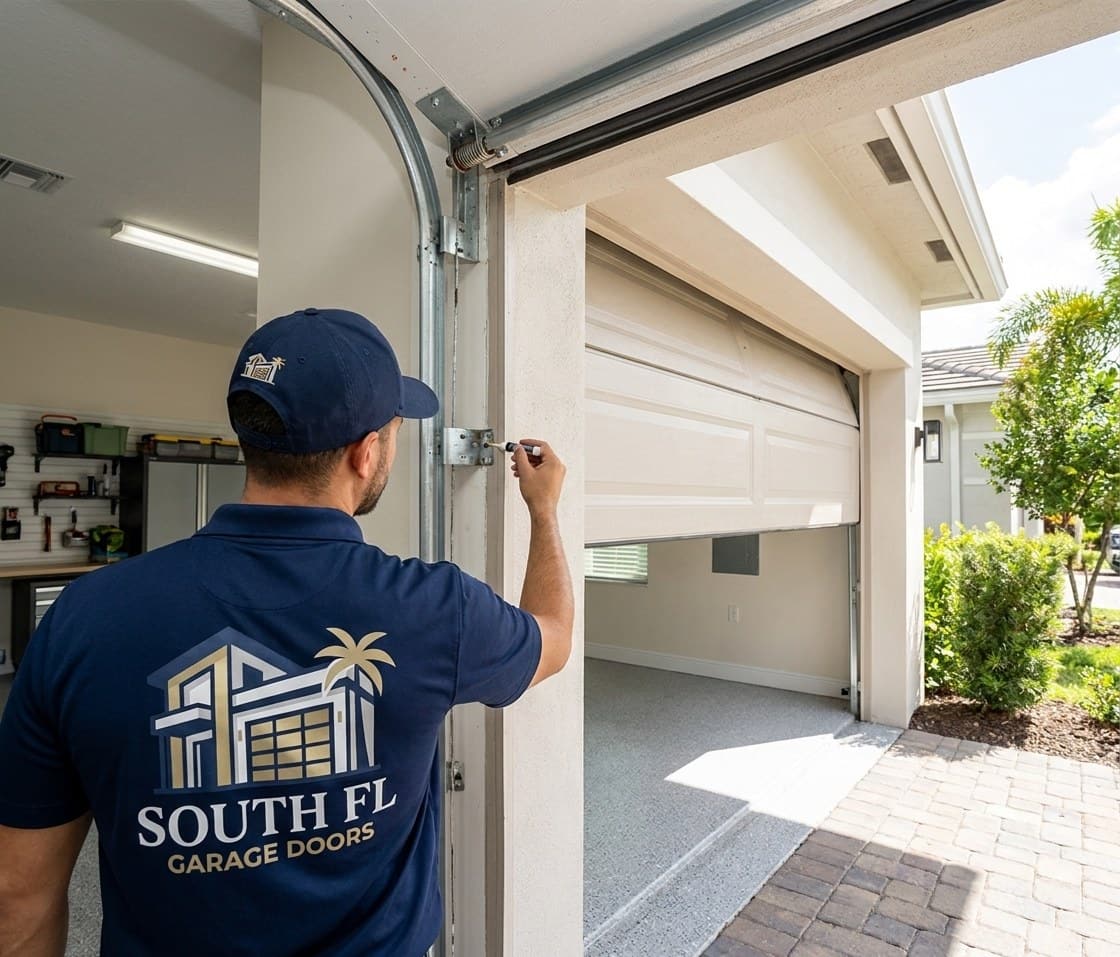
What you get
Measured, adjusted, and told plainly what is next.
The value of a tune-up is not the lubricant. It is knowing which part will fail first, before it does.
The balance is the headline number
Held at waist height, a door should neither rise nor fall. Everything else follows from that.
The safety reverse is tested every visit
With an object, never a hand, because it is the one device that protects a child.
You are told what can wait
And what cannot, with the difference explained rather than implied.
The first visit
What a tune-up actually measures.
Five checks, in this order, because each one narrows the next.
- Balance at the halfway point, with the opener disengaged
- Cable condition where it wraps the drum
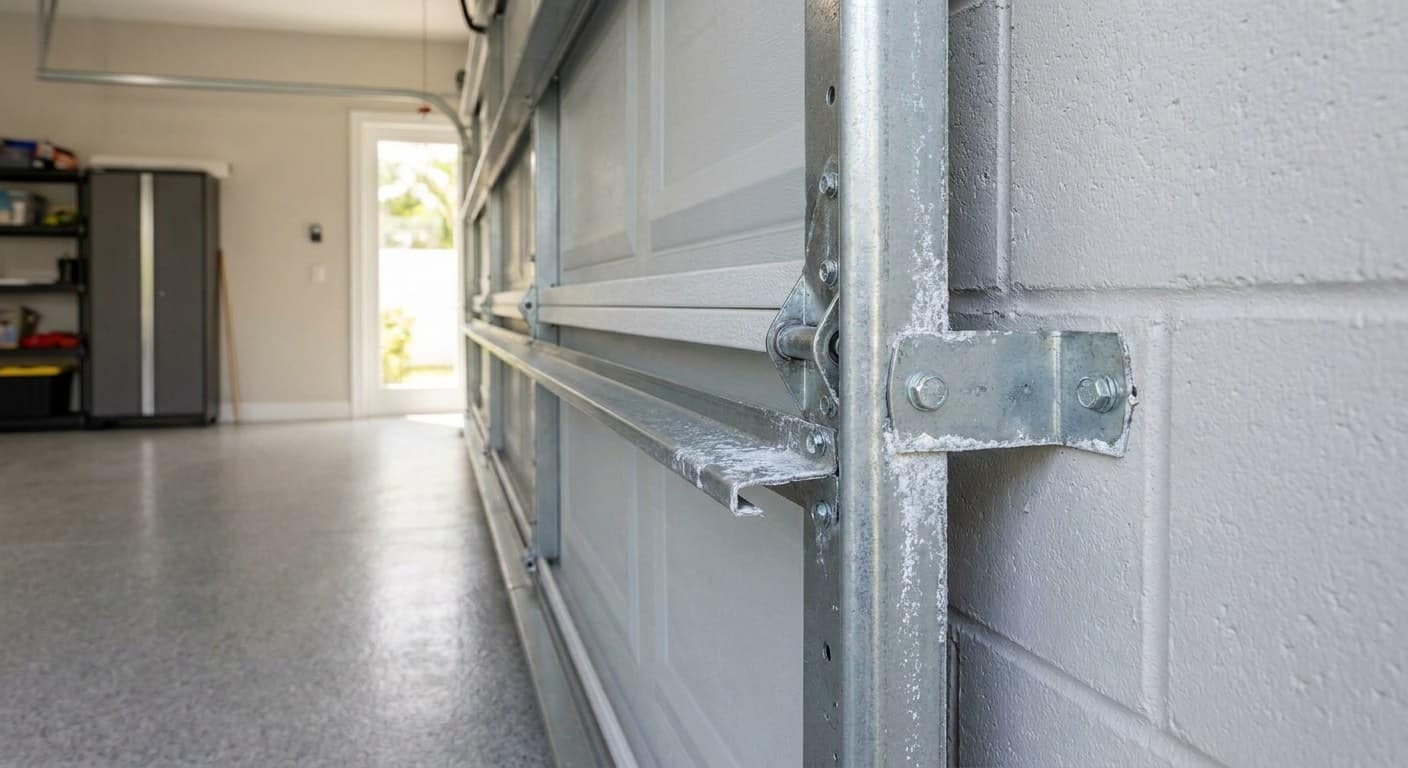
- Rollers, hinges and bearing plates for play and wear
- Track alignment and the tightness of every bracket
- Opener force, travel limits and the safety reverse
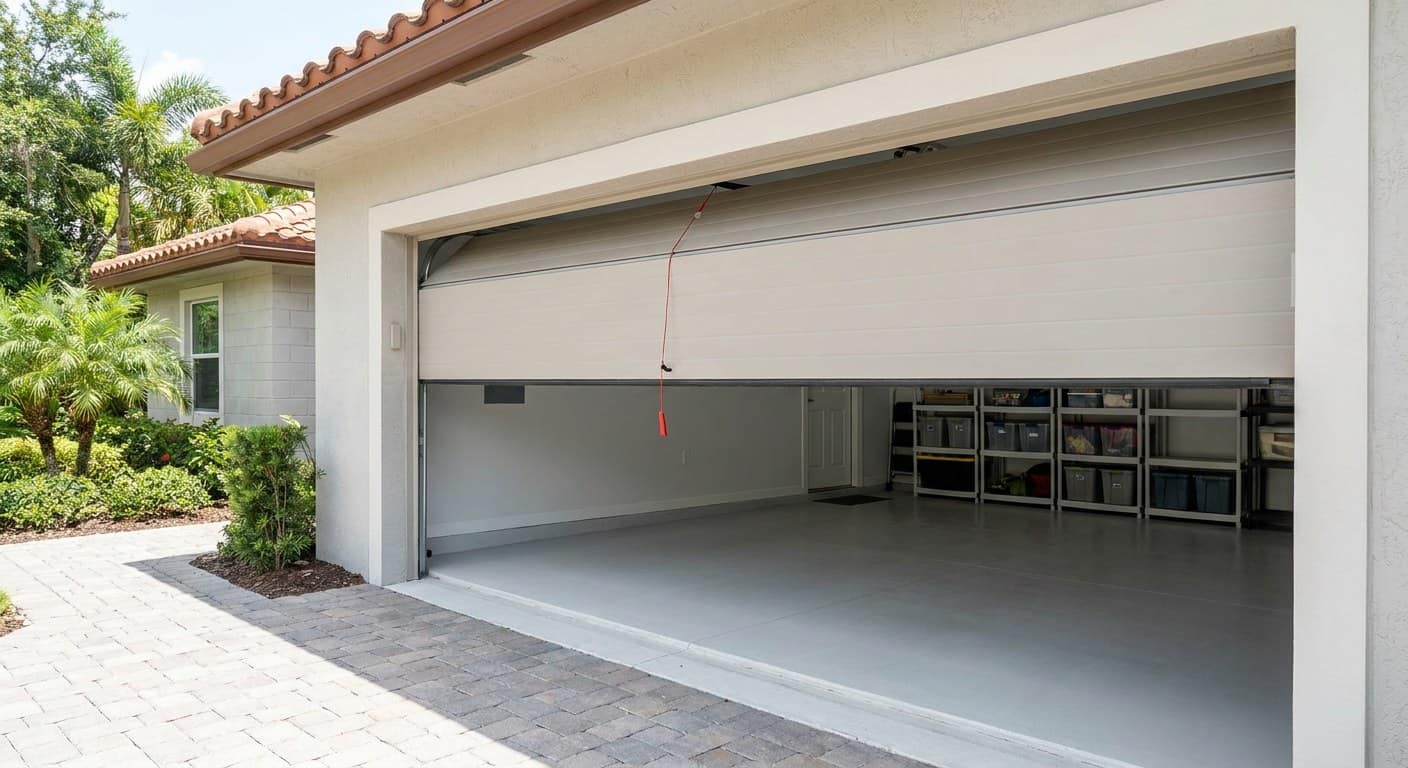
How it is installed
Lubricant goes on the pivots, never in the track.
It is the most common piece of bad advice on the internet, and it is the reason half the noisy doors we see are noisy.
Grease in a track collects grit
And the grit grinds the roller and the track together, faster than no lubricant at all.
Pivots and bearings take it
Hinge pins, roller stems, bearing races and the spring itself, sparingly.
The track gets cleaned, not oiled
Wiped dry, and the rollers are what move quietly if they are the right ones.
What it can look like
What the visit looks like.
Three gestures that account for most of the difference a tune-up makes.
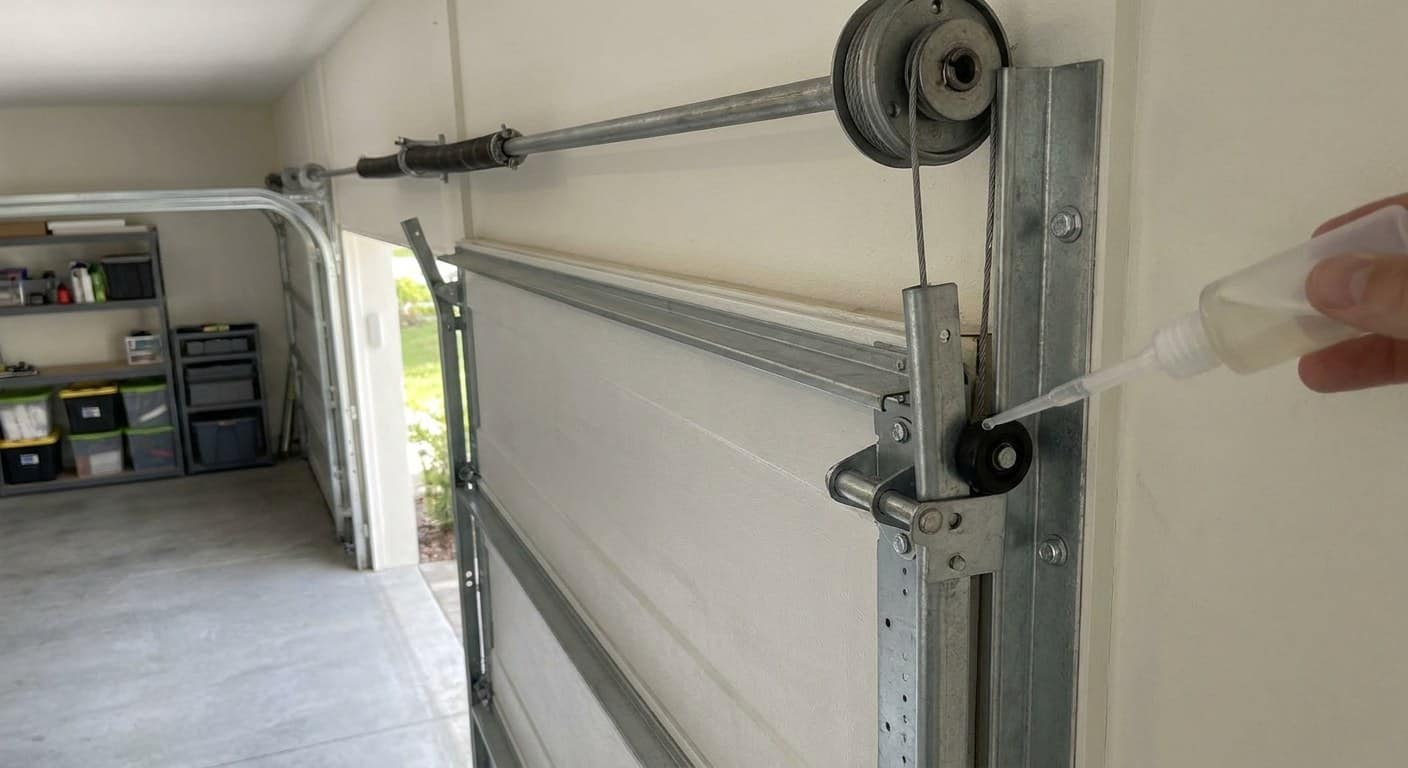
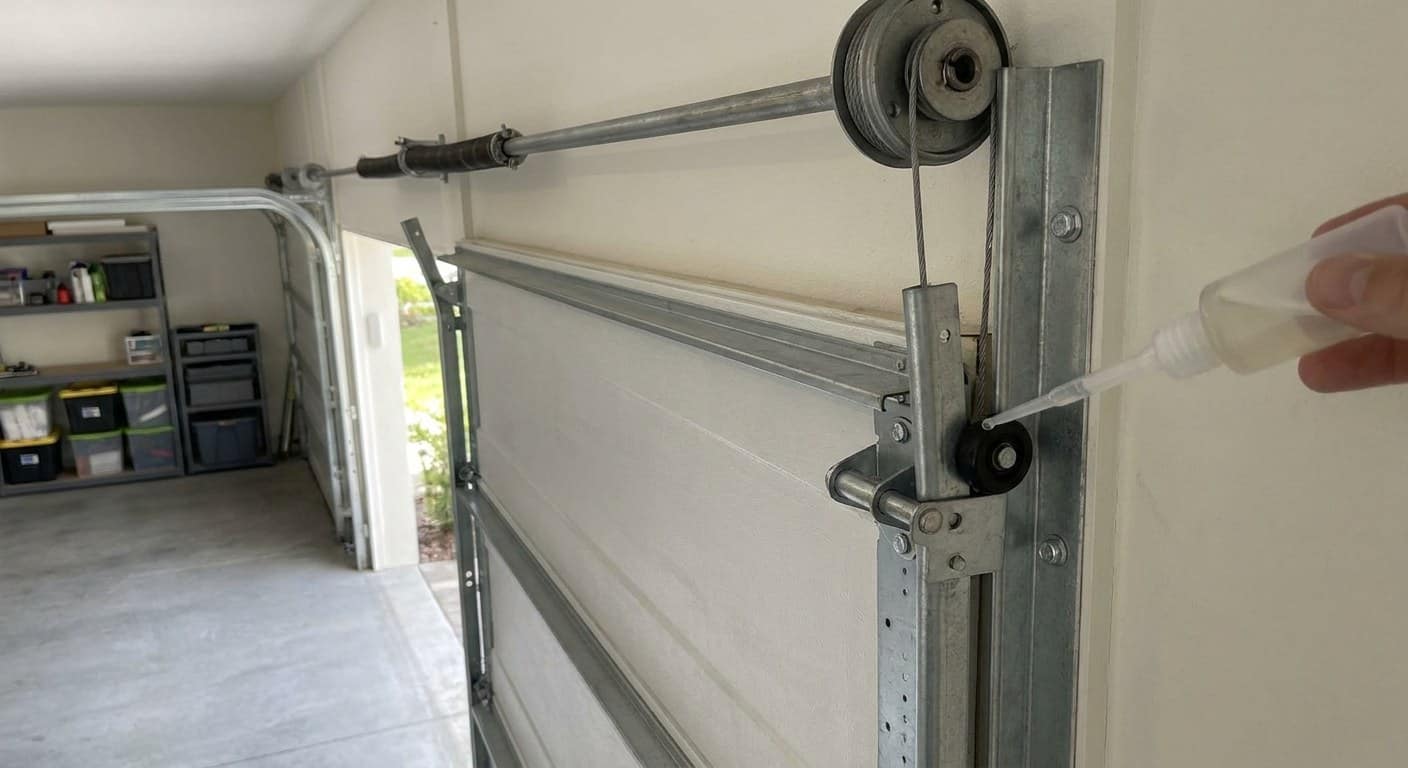
Lubricant where it belongs
On the pin, not in the track, and in the quantity a hinge actually holds.

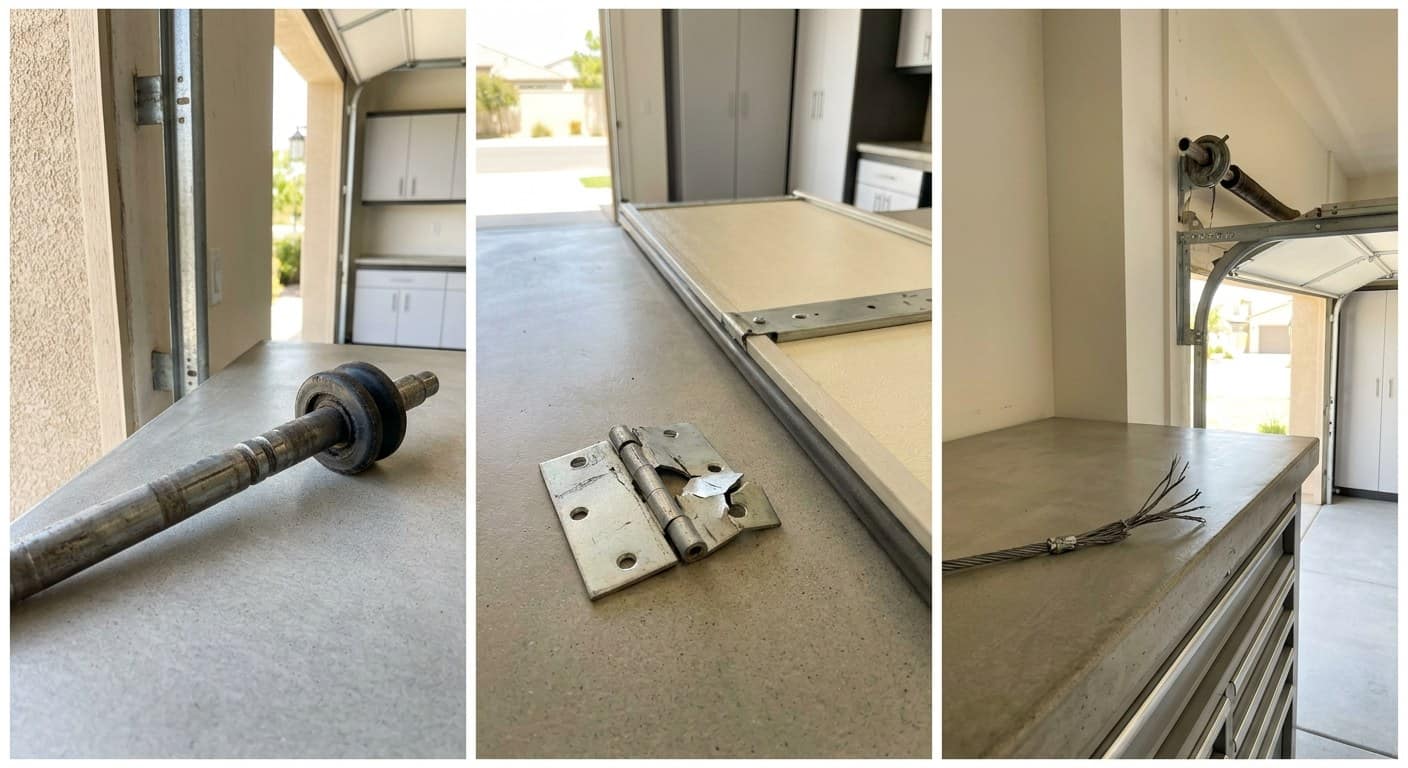
The cable read at the drum
Where it frays first, months before it lets go anywhere else.
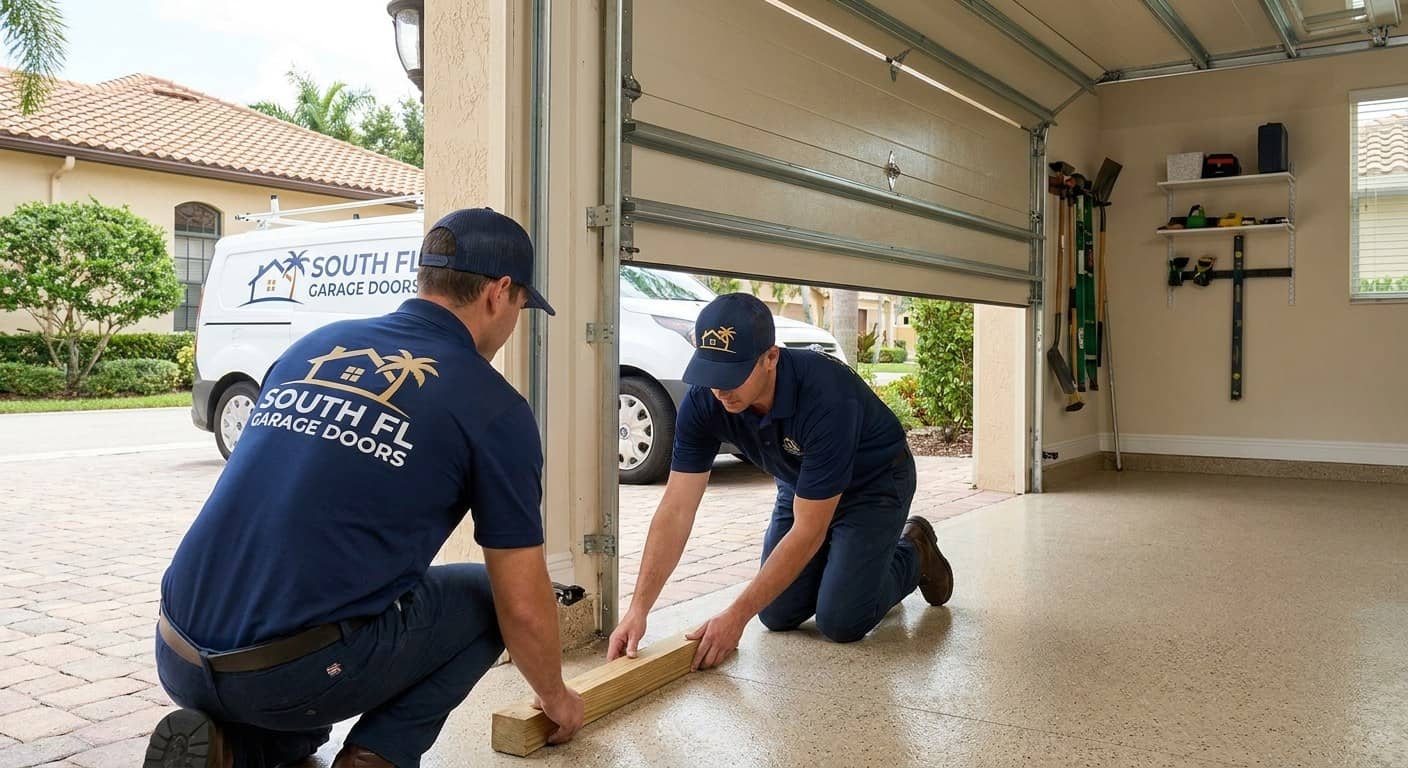
The reverse tested with an object
Because the device exists for the moment when the object is not an object.
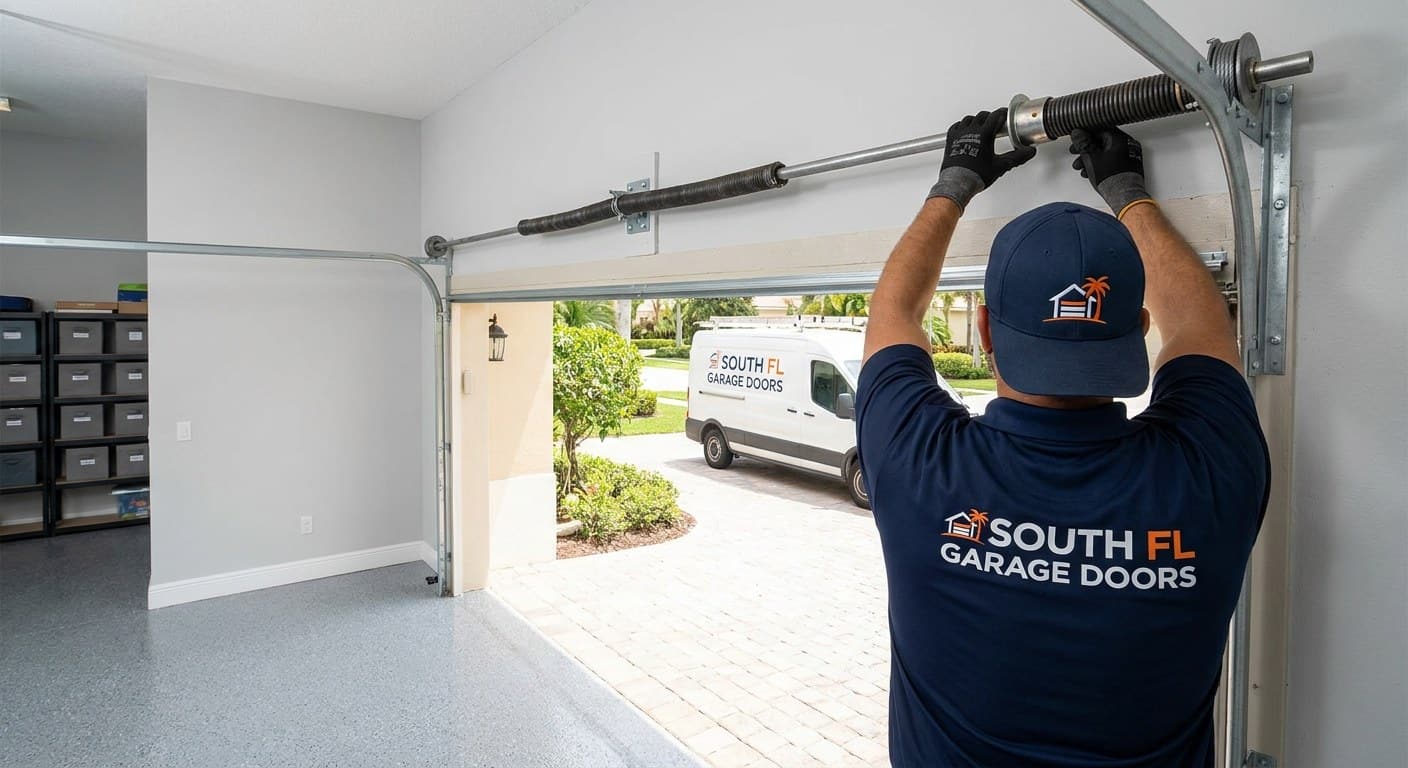
A tune-up does not extend the life of a spring. Nothing does — a spring has a cycle count and it spends it. What a tune-up extends is everything the spring drags with it when it goes.
More detail if you want it
How we think about this job.
Three things a tune-up is honest about.
1.One measurement predicts the rest
A door held at waist height that neither rises nor falls is balanced, and a balanced door wears evenly. One that drifts is already loading its rollers, its hinges and its opener unevenly, and every other finding on the sheet follows from that single number.
2.Lubricant goes on the pivots, never the track
Grease in a track collects the grit that then grinds the roller and the track together. It is the most repeated piece of bad advice about garage doors, and undoing it is a routine part of a first visit.
3.The coast shortens the interval, honestly
Manuals are written for a national average. Here, cables and bearings give out earlier than the printed cycle count suggests, and pretending otherwise sells one more year of service and one fewer of door.
How it goes
How a tune-up goes.
Four steps, and the first one decides how long the rest takes.
- 01
We disengage and weigh it
The opener comes off the door, and the door is asked to hold its own weight.
- 02
We inspect what moves
Cables, rollers, hinges, bearings, track and brackets, in that order.
- 03
We adjust and lubricate
Pivots oiled, track wiped, brackets tightened, opener force reset.
- 04
We test and report
Safety reverse with an object, and a written note of what is next.
Typical ranges
Useful numbers — after you understand what changes them.
A tune-up is a fixed price. What varies is what it finds, and that is quoted separately.
- Annual tune-up and safety check$100–$240
- Rollers or track repair$75–$350
- Lift cable replacement (pair)$225–$375
- Torsion spring replacement (pair)$250–$450
These are published market ranges for South Florida, not a quote. The failed component and the condition of the door decide the final price.
More detail if you want it
What a tune-up prevents, and what it does not
It does not extend the life of a spring: a spring has a cycle count and it spends it whatever anyone does. What a tune-up prevents is the damage a failing part does to the parts around it — a seized roller wearing a flat into a track, a cracked hinge elongating its bolt holes, a frayed cable scoring the drum it wraps. Those are the repairs that cost several times what the worn part would have.
How often, really
A household that opens the door four times a day runs about fourteen hundred cycles a year. Inland, that is an annual visit. Within a mile of the water, where salt reaches the bearings before it reaches anything visible from the driveway, it is closer to twice a year — and the honest version of that advice costs us nothing to give and is worth saying plainly.
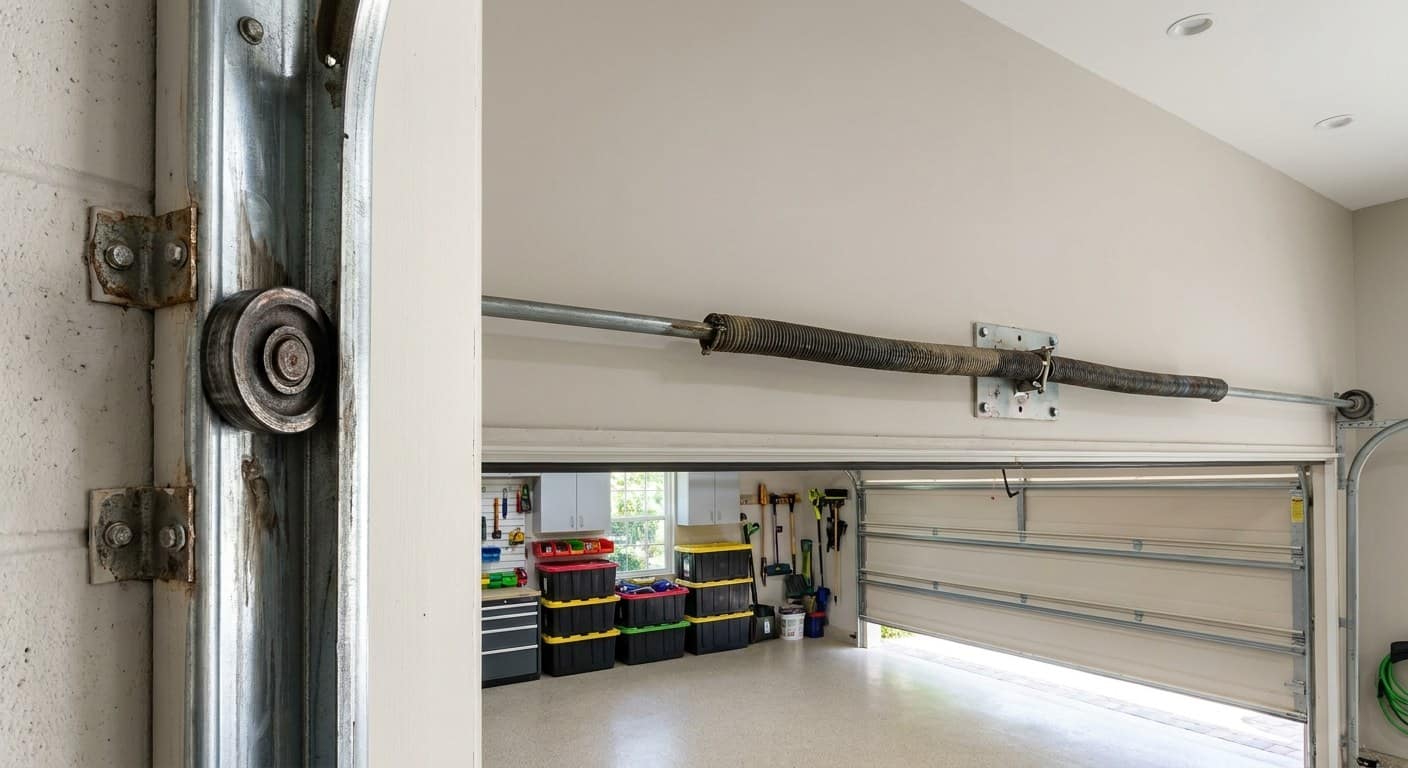
Before you choose
What people ask about maintenance.
The questions that come up on almost every visit.
How often should a garage door be serviced?
About once a year for a typical household inland, and closer to twice within a mile of the water. Salt reaches the bearings long before anything shows from the driveway.
Can I lubricate it myself?
Yes, on the pivots — hinge pins and roller stems — and sparingly. Not in the track: grease there collects grit and grinds both the roller and the track.
Will a tune-up make my springs last longer?
No. A spring has a cycle count and spends it regardless. What a tune-up prevents is the damage a failing part does to everything around it.
What if you find something?
You get told what it is, what it costs, and whether it can safely wait. Nothing is done beyond the tune-up without you approving it first.
5
settings adjusted on a visit, before any part is sold
×2
how much more often coastal hardware needs attention
0
grease on a cable before the strands have been read
More detail if you want it
The interval here is not the one in the manual
Manufacturers write their service schedules for a continental average, and this is not one. Within a few miles of open water, airborne chloride settles on bare steel and pits it from the surface inwards; add an enclosure that spends most of the year in the nineties and a wet season that keeps the air at saturation, and hardware runs on a clock of its own. A door on the coast wants attention roughly twice as often as the same door inland, and the parts that show it first are the cables and the bearings.
That is also why we look before we lubricate. Grease on a corroded cable hides the strands that have already gone, and a cable that fails is not a maintenance item — it is a door landing on whatever is underneath it. What we inspect is the wire itself, strand by strand at the drum and the bottom bracket, and the answer there decides whether this visit is an adjustment or a repair.
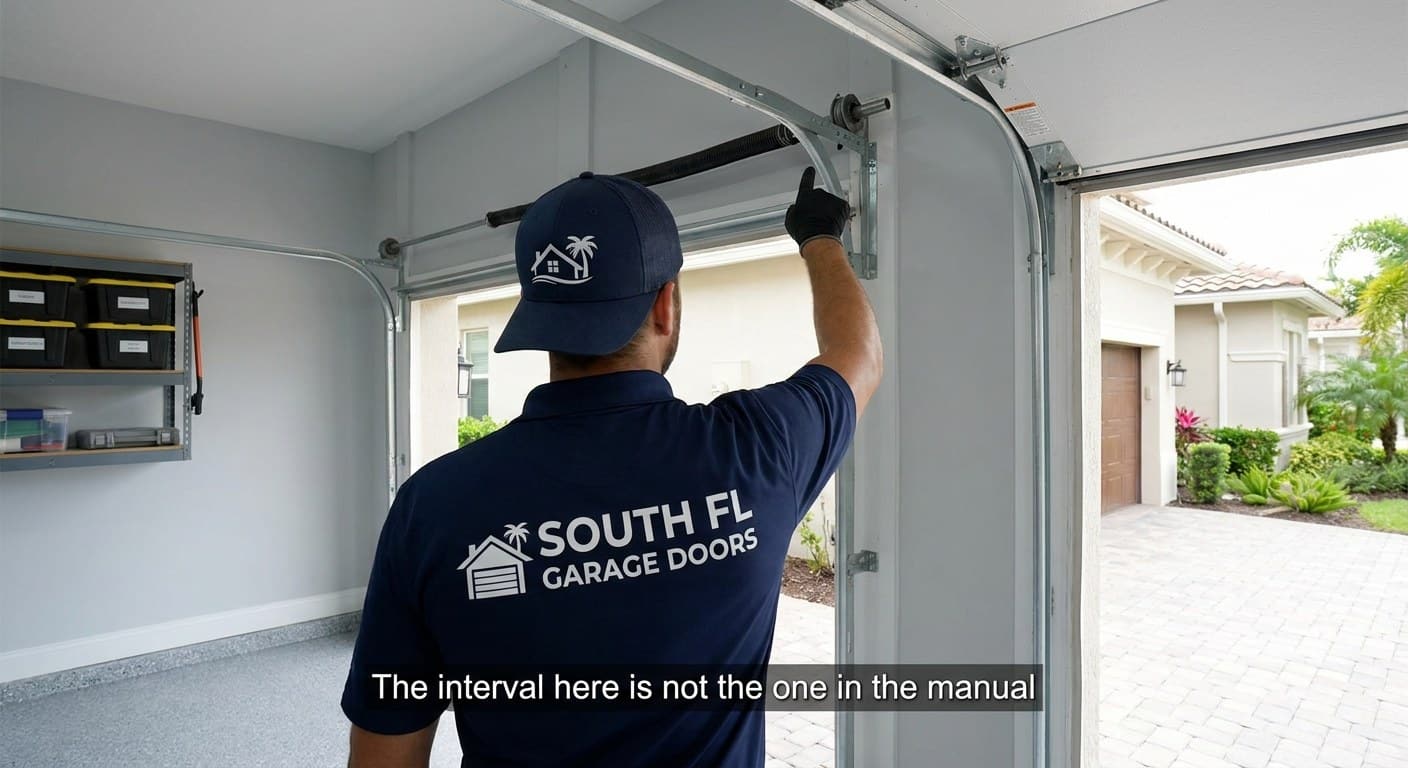
Five settings, and none of them is a part
Spring tension comes first, because it is what balance depends on. Then the travel limits, so the door stops where it should instead of pressing itself into the floor or leaving a gap at the top. Then the force settings, which decide how hard the motor is allowed to push before it gives up — set too high, they turn the safety reversal into a suggestion. Then the sensor alignment. Then the tracks, checked for plumb rather than assumed.
None of those five is a part, and all five are free to correct once someone is on the ladder. That is the honest case for a tune-up in this climate: not that it delays a purchase, but that most of what shortens a door's life here is a setting drifting quietly out of range, and settings do not announce themselves the way a broken spring does.
What you keep is the written findings — what is fine, what is wearing, what will not see out the season, with the parts named. It is deliberately something you can act on without us, and it is the same document either way.
| Work | Typical range | What moves the price | |
|---|---|---|---|
| Annual tune-up and safety check | $100 – $240 | No local company publishes this one, so the figure is national. Twice a year is the right interval within sight of salt water. | Book this — Annual tune-up and safety check |
| Rollers or track repair | $75 – $350 | Per visit. Often bundled with a spring or cable job rather than billed alone. | Book this — Rollers or track repair |
| Garage door opener, supplied and installed | $380 – $1,400 | Unit $180–700, labor $150–450. Wall-mount units sit at the top of the range; chain drives at the bottom. | Book this — Garage door opener, supplied and installed |
Market rates observed, not our quoted prices — surveyed 2026-08-16. HomeBlue / Angi, HomeBlue (Miami), Well Built Florida, Garage Doors FL (Fort Lauderdale), HomeAdvisor, Access Impact, Fort Lauderdale Garage Pros, Angi, OfficeFinder 2026 guide
Garage door maintenance questions for coastal homes
How often should a garage door be serviced in South Florida?
Once a year a few miles inland; twice a year near the water, or on any door a family uses as its front entrance.
- Cycles matter more than the calendar
- Salt exposure shortens every interval
- Four teenagers is not one commuter
A rental with one car and a house with four drivers are not on the same schedule, even on the same street.
Can I do garage door maintenance myself?
Most of it, and we would rather you did. The line is the spring, and it is not a soft line.
- Yours: cleaning the tracks
- Yours: checking rollers for play
- Yours: testing the safety reversal
- Ours: anything that adjusts spring tension
Winding a spring means handling a part that holds enough stored force to take a hand off, with bars made for it. No version of that is a reasonable Saturday.
Does a garage door tune-up protect my warranty?
It protects the conversation. Any argument after a premature failure turns on whether the door was left in a state the part could survive.
- Two years out of balance is one case
- A written service record is another
Ours is written down for that reason as much as for yours.
Is a tune-up the same as a hurricane season inspection?
No. A tune-up asks what daily use is wearing out; the pre-season check asks what a storm would find.
- Pre-season: the anchors into the wall
- Pre-season: the bracing, if fitted
- Pre-season: seals and the approval label
One follows how much the door is used, the other follows a date on the calendar.
Sources
- U.S. Consumer Product Safety Commission
- noaa.gov
- Florida Building Commission — Product Approval
Edited by Avidan Benichay · Updated
General information about garage doors in South Florida — not a diagnosis of your door, and not a quote. Code and prices vary by address and change over time. Terms of use
Since 2014Licensed & insuredFL Lic. 25BS00124
Book the tune-up before the part decides for you.
The visit measures the balance, tests the safety reverse, and tells you plainly what is next.