
Parts and hardware / Miami-Dade
Cable drums: the part that decides if your door hangs level
A cable drum is the grooved aluminum wheel at each end of the spring shaft that winds the lift cable as the spring unwinds. It is the component that translates spring torque into lift, and if the two drums are not wound to exactly the same point, the door hangs crooked no matter what else is adjusted.
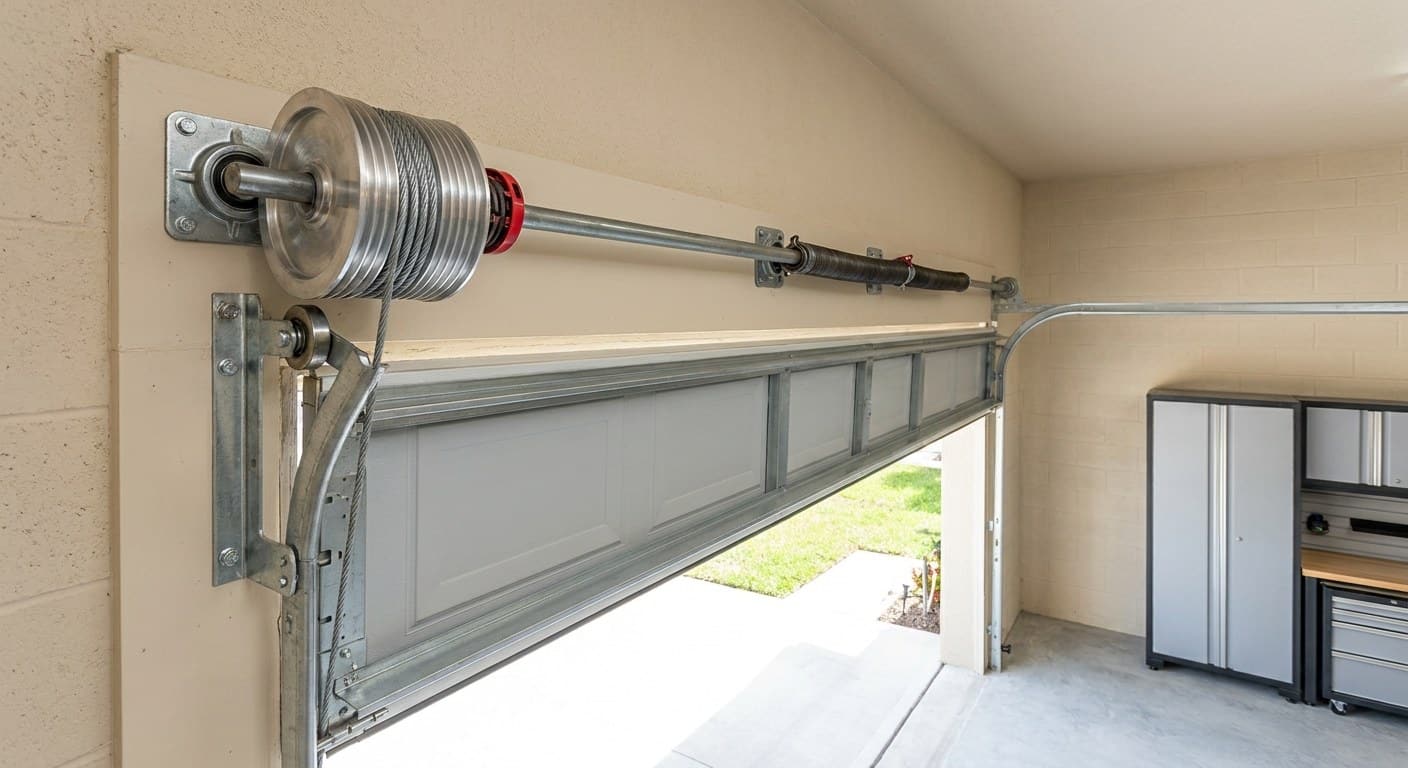
Three facts about cable drums
They meter the cable
groove by groove
Left and right differ
they are a handed pair
They keep the door level
a slipped drum racks it
How drums cause trouble
Worn grooves
A rounded groove lets the cable climb and jump
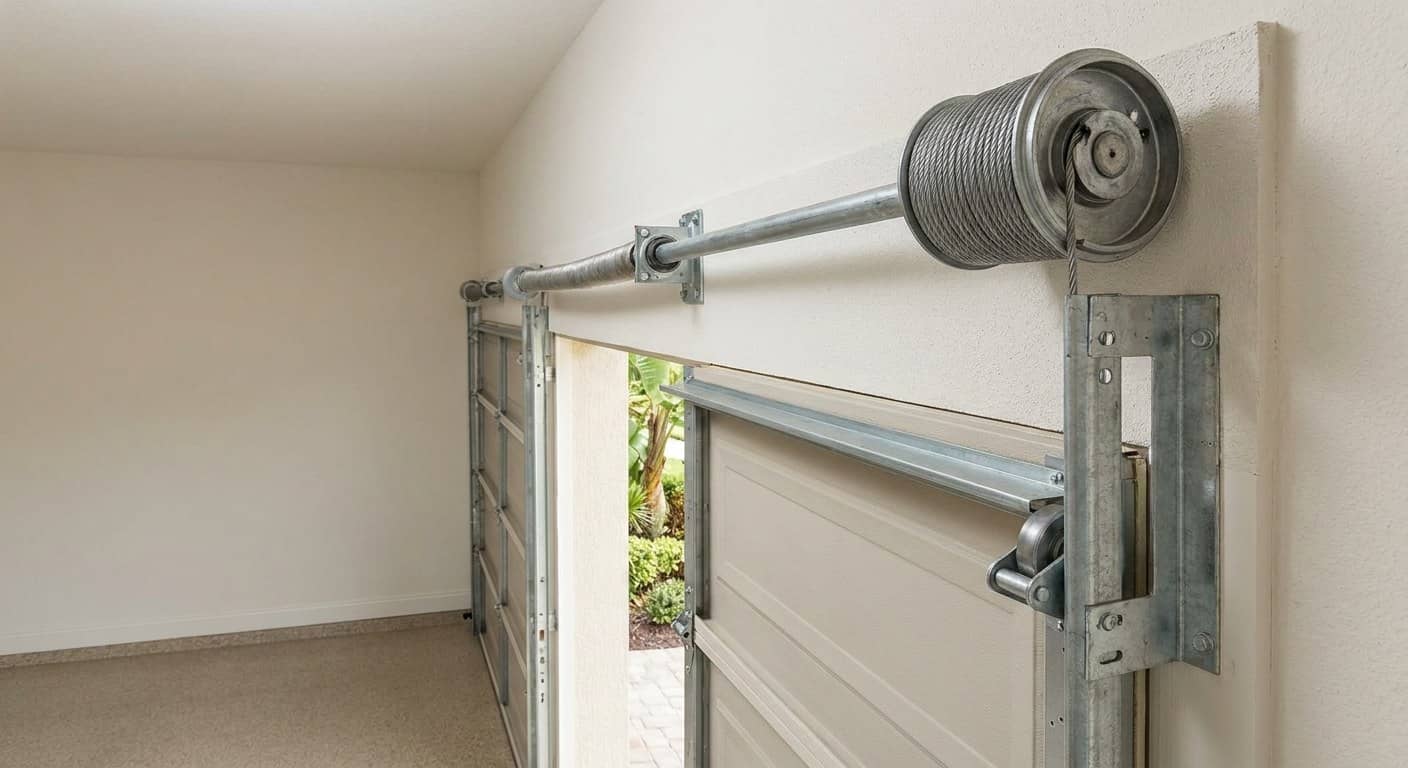
Slipping set screws
The drum turns on the shaft instead of with it
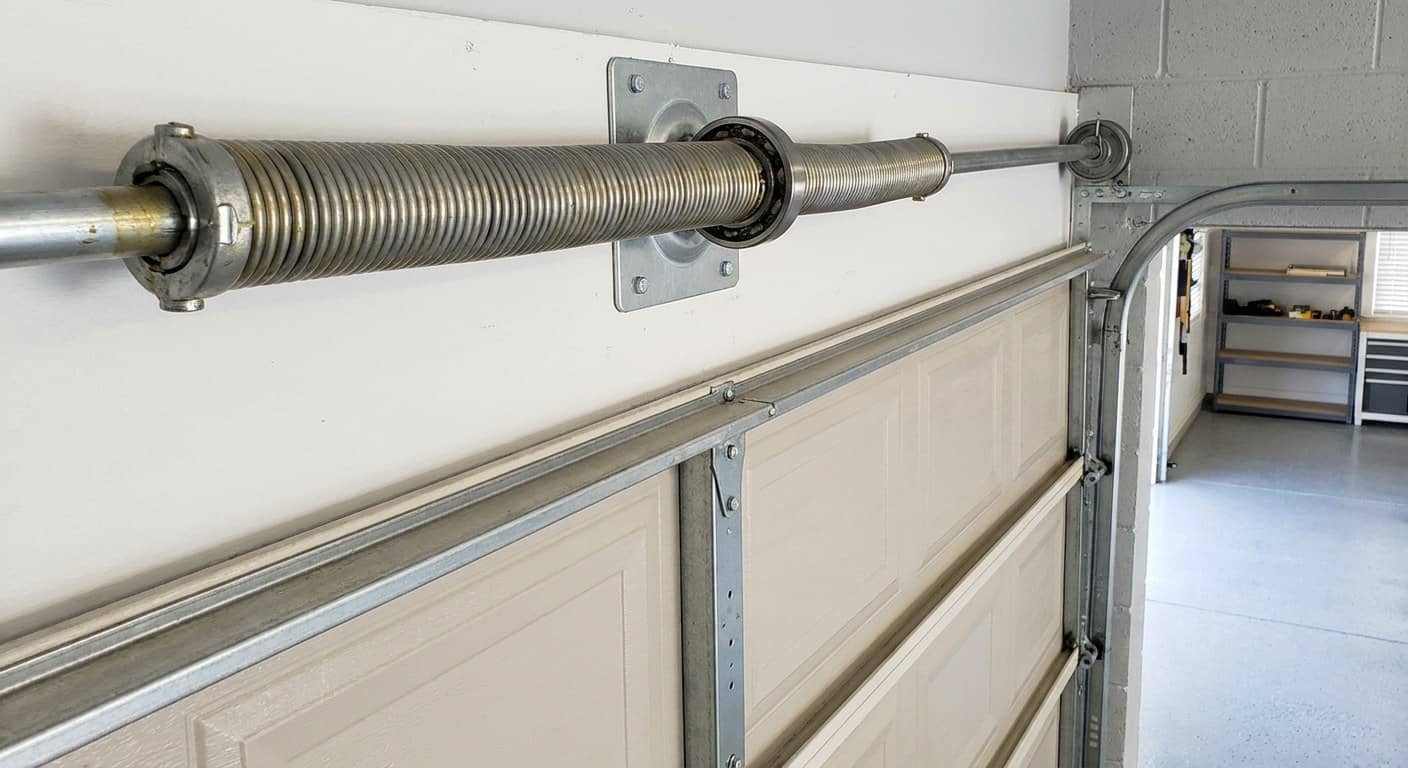
Door out of level
One drum has let out more cable than the other
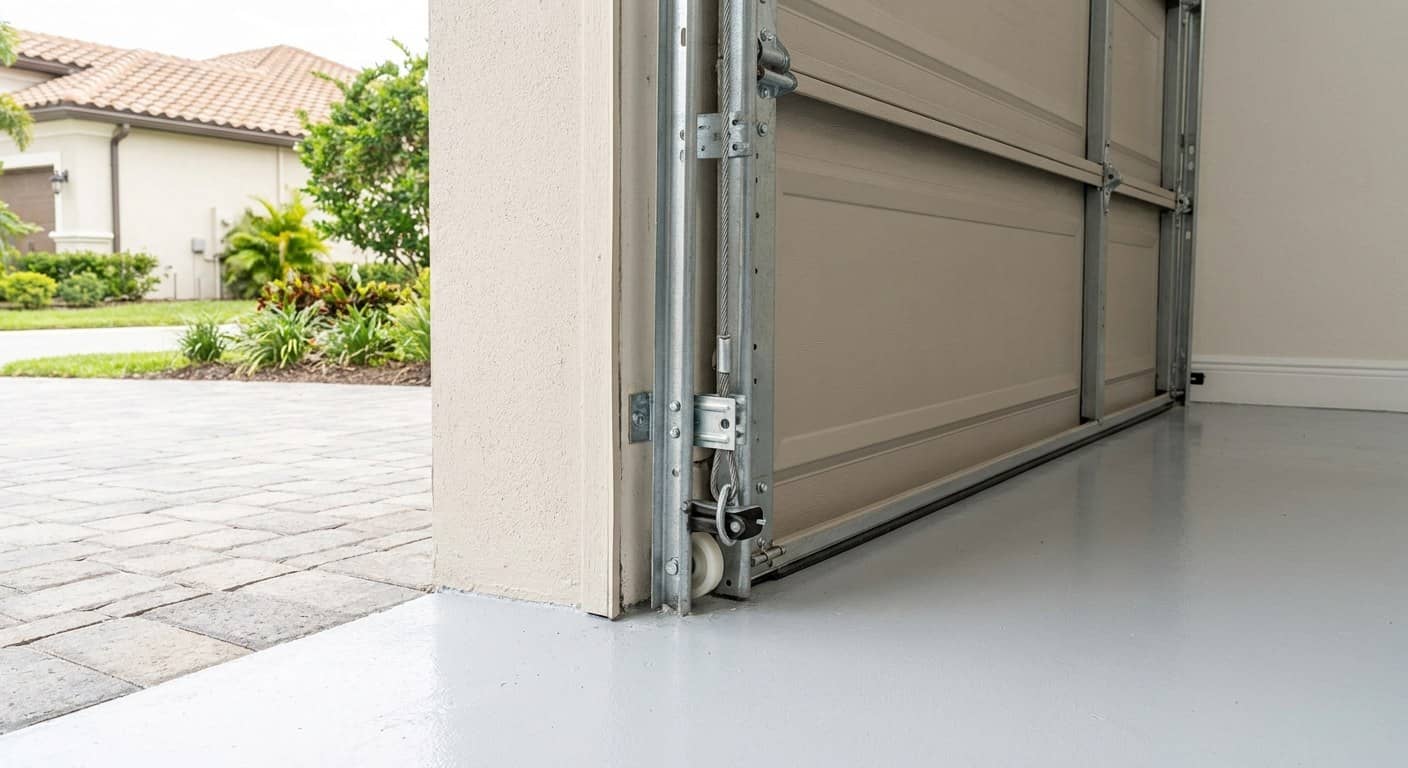
Wrong drum size
Standard, high-lift and vertical-lift drums are not interchangeable
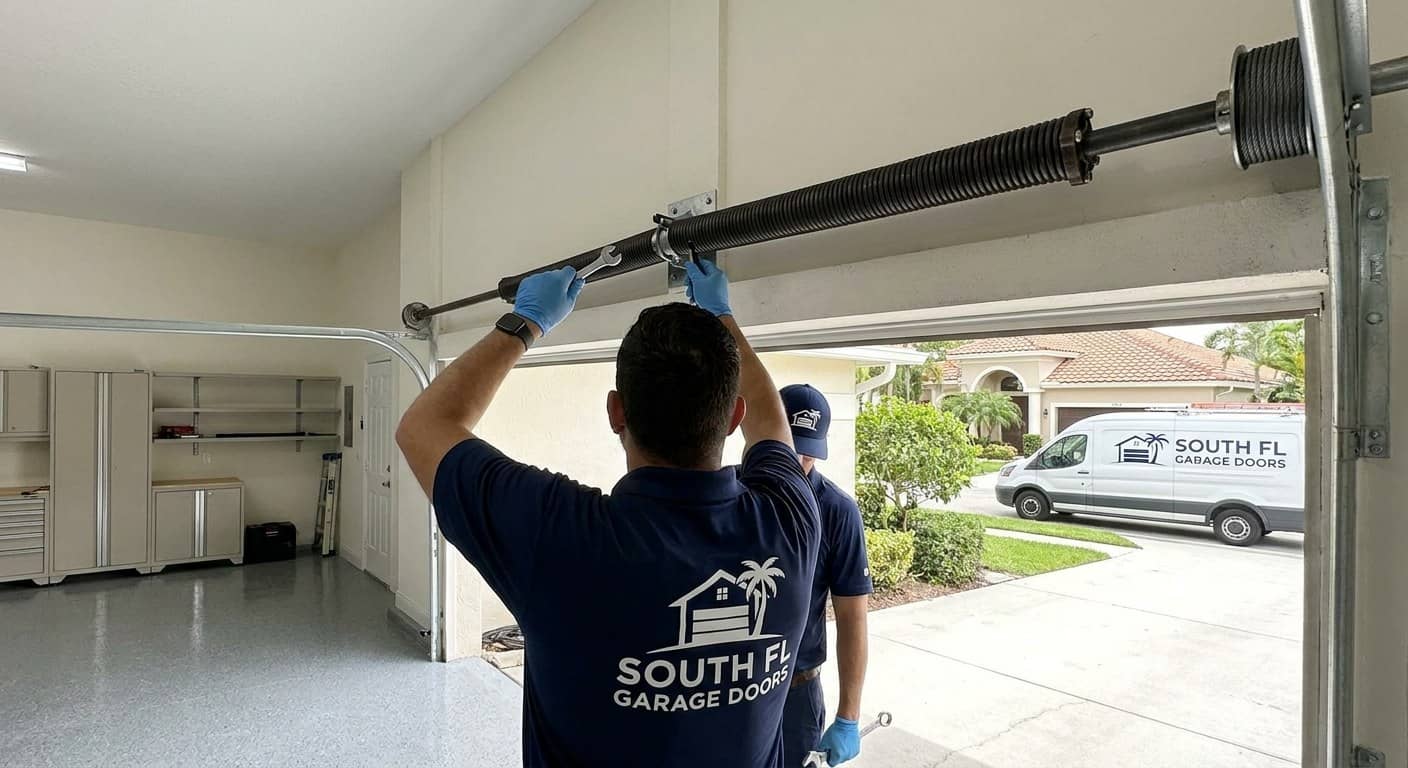
Drum symptoms and what they mean
| Symptom | What it means | Urgency | Next step |
|---|---|---|---|
| Door sits low on one side | A drum has let out extra cable | Urgent | Do not run the door |
| Cable riding over its groove | Worn groove or loose drum | Urgent | Stop and call |
| Grooves look rounded off | Years of loaded cable | Soon | Replace the pair with the cables |
| Clicking near the shaft under load | Set screws slipping on the shaft | Soon | Have the tension released and reset |
| Door binds at the top of travel | Wrong drum for the lift type | Routine | Match the drum to the track |
| Converting to high-lift | Track, drums and cables all change together | Routine | Never change one alone |
Why drums are never adjusted under tension
The spring is wound
Nothing on the shaft can be loosened until the tension is off
A slipping drum releases suddenly
When it lets go it takes the cable with it
Drums are handed
A left drum on the right side unwinds the wrong way
Do not do this…
- The spring is wound
- A slipping drum releases suddenly
- Drums are handed
2
drums wound to the same point, or it hangs crooked
Stamped
code gives diameter and cable capacity
Set screw
loosened only after the spring is unwound
More detail if you want it
Sized to the door, not chosen from a shelf
Drums carry a stamped code that encodes their diameter and the length of cable they will accept — a standard residential lift, a high-lift arrangement where the horizontal track sits well above the opening, or a vertical-lift setup in a warehouse. Fitting a drum with the wrong flute profile means the cable either runs out of groove before the door reaches the floor, or piles on top of itself and jams.
The drum, the spring and the door weight form one calculation. Change the door for a heavier approved assembly and keep the original drums, and the geometry no longer matches the load — a mismatch that shows up as a door which feels fine at the top of its travel and heavy near the floor.
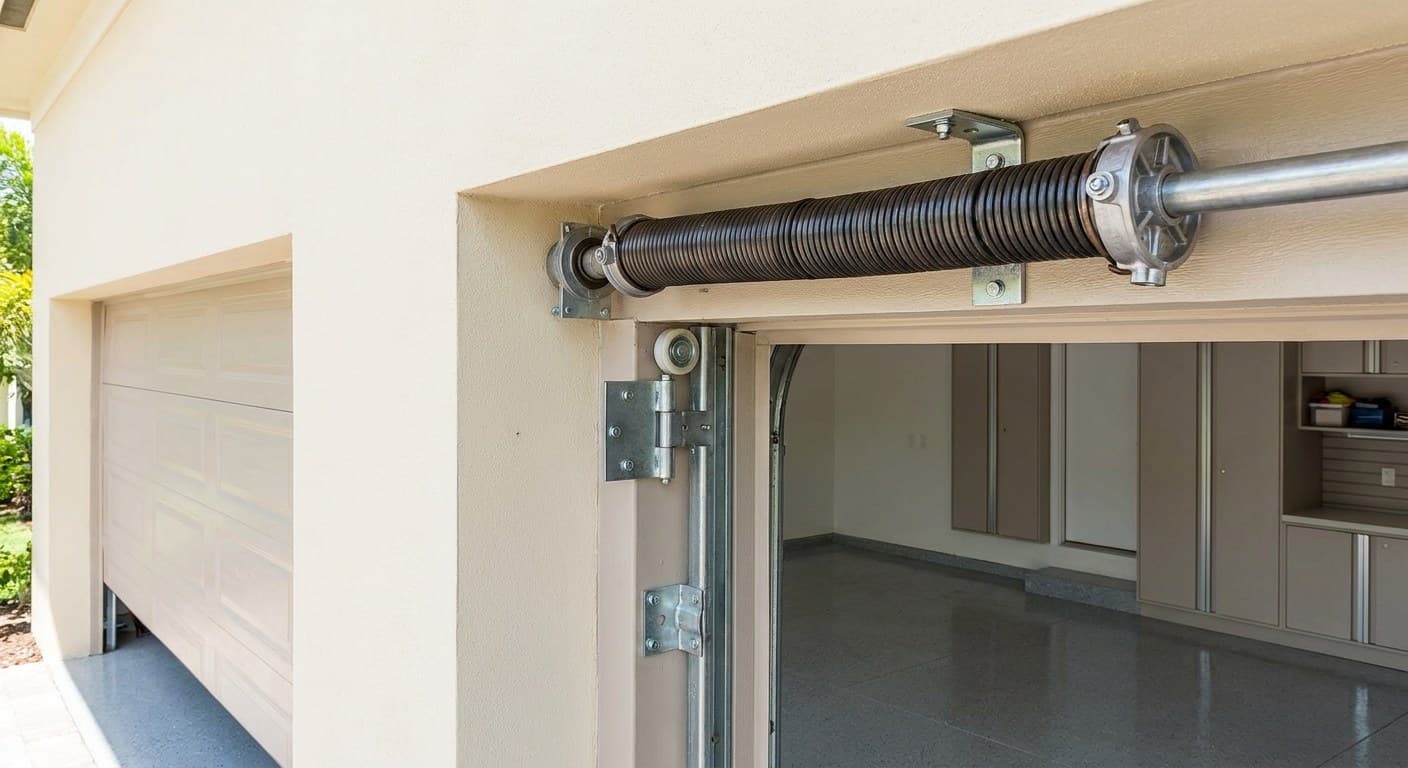
The symptoms of a drum problem
One side reaching the floor before the other is the classic sign, and it means the cable has slipped a groove or the set screws have crept on the shaft. A cable that has jumped off the drum entirely leaves that side slack while the opposite cable carries everything, which is how a door ends up wedged diagonally in the opening.
Grooves wear too. A drum that has been running a corroded cable develops a scored channel with a sharp edge, and that edge then destroys the new cable you just fitted. Any cable replacement worth paying for includes running a finger around the drum groove before the new cable goes on.
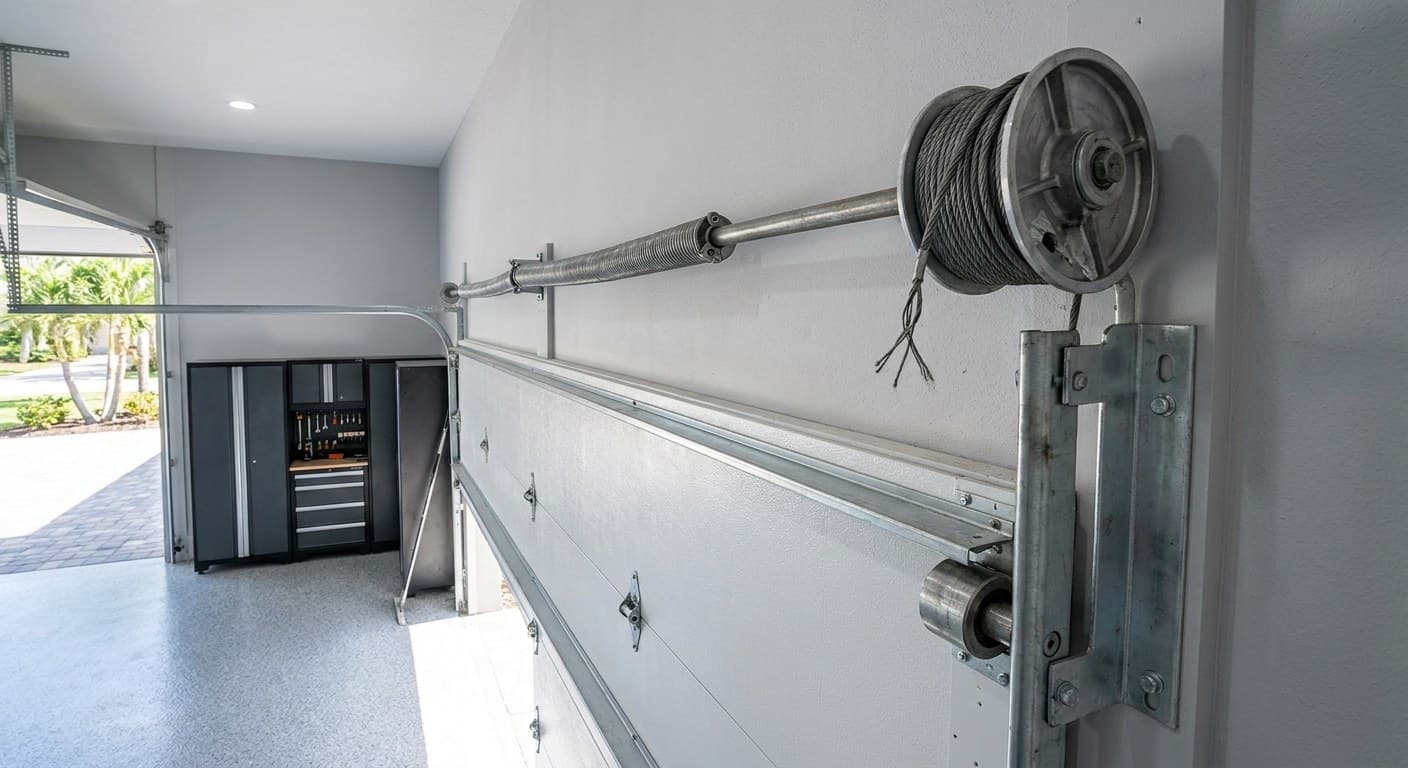
Why setting them is a tensioned job
Drums are locked to the shaft with set screws, and loosening those screws while the spring is wound releases stored torque through the shaft. The correct sequence is to unwind the spring in controlled increments with winding bars, set both drums against a taut cable, then wind back to the calculated turn count and check the balance by hand at several heights.
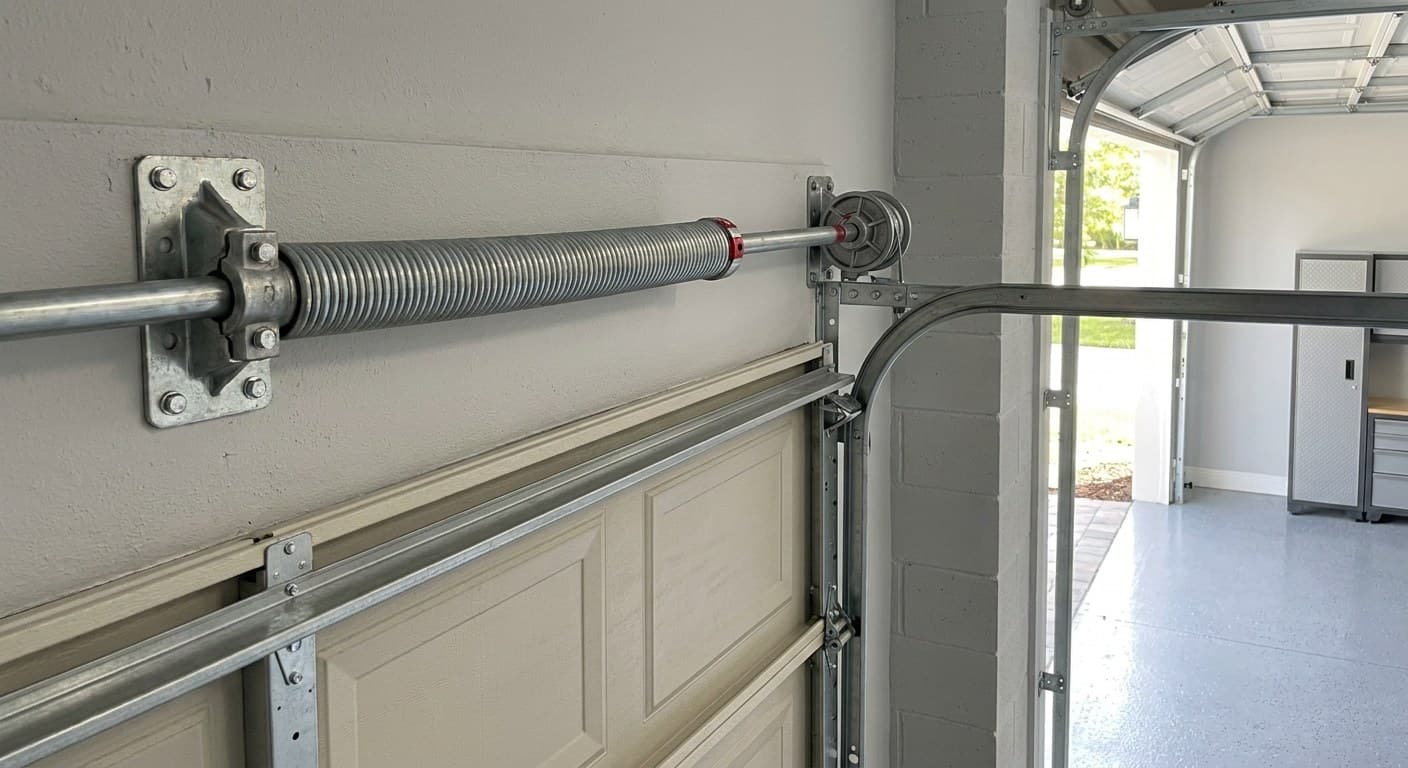
Cable drums and a door that hangs crooked
Can a garage door cable drum be reused when the cable is replaced?
A cable drum can usually be reused provided the groove is smooth and the flanges are undamaged.
- A scored or burred groove cuts fresh cable
- It shows within months, not years
- Then the labor gets paid twice
The garage door closes evenly but opens crooked. Is that the drums?
A door that closes level and opens crooked often is the drums, because two drums are only truly matched at one point in their travel.
- A vertical track out of plumb on one side
- A worn roller binding at one height
- Cable tension read at several door heights
Are cable drums specific to hurricane-rated garage doors?
Cable drums are standard hardware, and the sizing calculation behind them is not.
- A heavier approved door changes the torque needed
- Cable length changes with it
- The right drum may differ from the one removed
What does the code stamped on a garage door drum mean?
The code stamped into a cable drum gives its diameter and the cable capacity it was made for.
- It is how a replacement gets matched
- Diameter sets how far the door travels
- Capacity ties to the height of the door
Sources
- Florida Building Commission — Product Approval
- U.S. Consumer Product Safety Commission
Edited by Avidan Benichay · Updated
General information about garage doors in South Florida — not a diagnosis of your door, and not a quote. Code and prices vary by address and change over time. Terms of use
The parts around it
- Broken lift cableTwo steel cables carry the entire weight of the door from the bottom brackets up to the drums on the spring shaft.2cables, always replaced as a set
 Center bearing squealIf your door produces a rhythmic metallic squeal that comes from the middle of the wall above the opening rather than from the tracks, the source is nearly always the center bearing plate — the bracket that supports the spring shaft where it crosses the header, and the only bearing on the door carrying rotational load all day.1bearing at the header carries the shaft
 Seized pulleysPulleys appear on the older extension-spring layout, where a spring runs horizontally alongside each track and a cable turns through a sheave at each end.Pre-90shousing stock where this system is common
Next step
Not sure which part failed?
Most garage door faults are identifiable from the noise and the way the door moves. Start there — it usually costs less than you expect.
You describe what the door is doing
The noise it makes, how far it travels, whether the opener runs.
We test it on site
Springs, cables, balance, tracks, opener force and the safety reverse.
You get the price before any work starts
Itemized in writing, including the permit when the job needs one.
- 4.9/5 from 300+ local reviews
- Licensed & insured
- Free visit, no obligation