
Parts and hardware / Miami-Dade
Your bottom seal is a flood defense, not a draft excluder
Everywhere else the strip along the bottom of a garage door is sold as a draft excluder. Here it is doing a harder job: holding back rain driven horizontally across a slab, and closing the gap that rodents, palmetto bugs and iguanas use to get inside. It also fails faster here than the marketing lifespan suggests.
Three facts about the bottom seal
It is your flood line
the cheapest water defense you own
Sun kills it, not use
UV cracks rubber in seasons
It is a cheap part
and it fails visibly
How the bottom seal fails
The retainer
The aluminum channel that holds the rubber
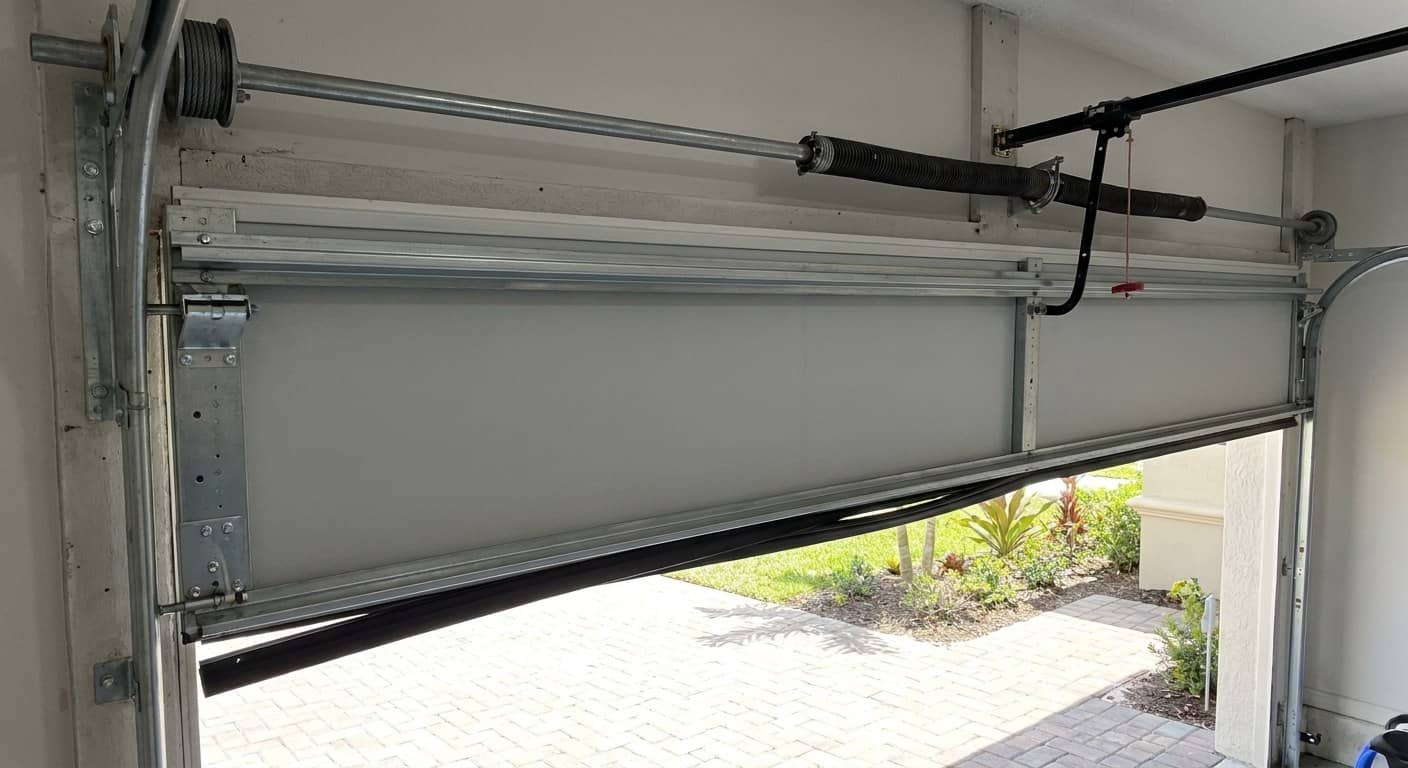
Cracked rubber
Sun-baked seal loses its shape and stops sealing
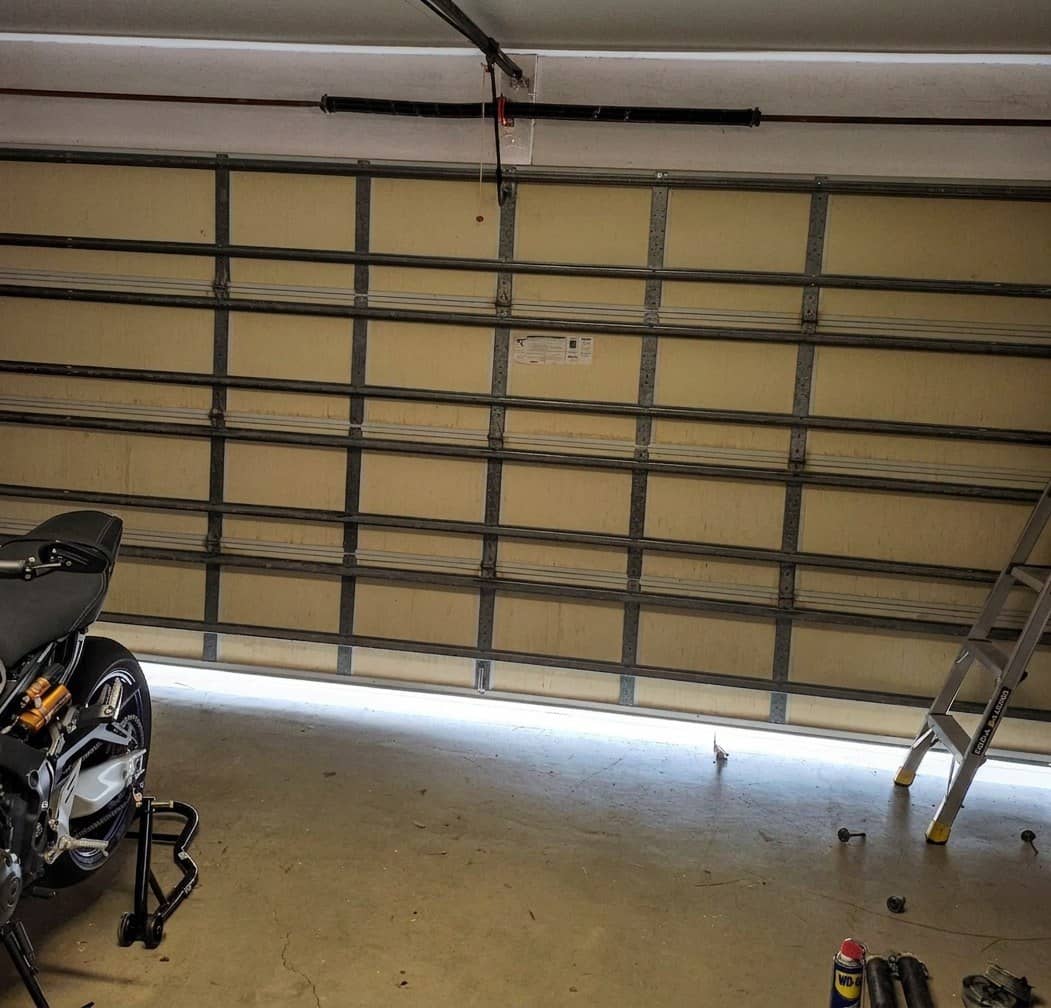
An uneven slab
A flat seal cannot follow a wavy floor
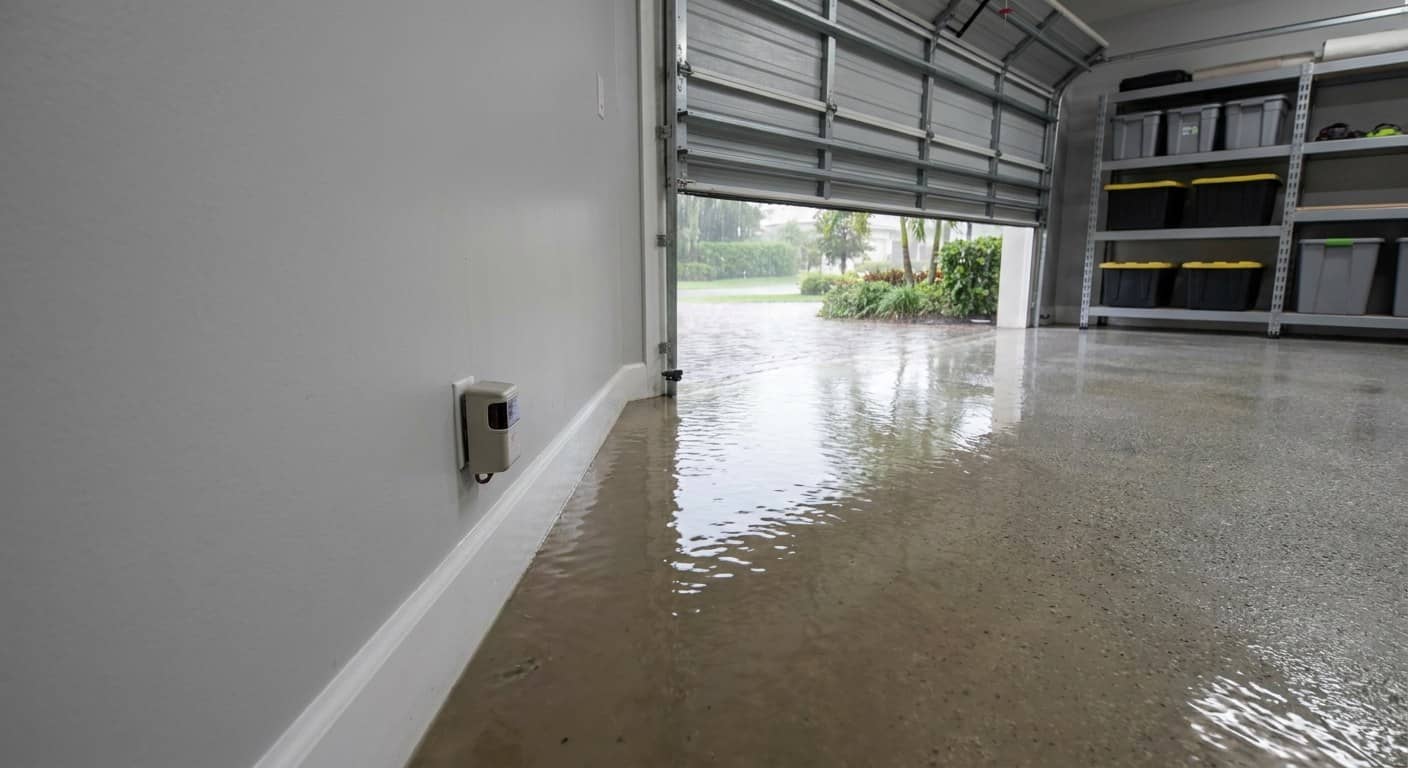
What gets in
Water, wind-driven rain, and everything that walks
Bottom seal symptoms
| Symptom | What it means | Urgency | Next step |
|---|---|---|---|
| Daylight under the closed door | The seal is worn, torn or too small | Routine | Replace the seal, check the limit |
| Water crosses the threshold in a storm | Seal and slab no longer meet | Soon | Replace, and consider a threshold seal |
| Rubber cracked and hard | Sun and heat, not mileage | Routine | A seasonal replacement item here |
| Gap only at one end | The slab is not level | Routine | A taller bulb seal follows the floor |
| Pests getting in | Any gap is an invitation | Routine | Sealing is the cheapest control |
| Seal keeps falling out | Wrong bead size for the retainer | Routine | Match the seal to the channel |
Why South Florida hardware wears out sooner

3–5 yr
realistic seal life in this heat
Squeeze
test: it must spring back at once
Retainer
profile decides which strip fits
More detail if you want it
Ultraviolet, not traffic, is what kills it
A seal in a northern climate wears through mechanically over a decade. Here it goes brittle chemically in about three to five years: sustained heat and intense ultraviolet break down the elastomer, the strip loses its ability to spring back, and it stops filling the irregularities in the concrete. The rubber can look intact and still be doing nothing.
Test it by hand rather than by eye. Squeeze the bulb between finger and thumb: it should compress easily and spring straight back. A strip that feels like a solid rod, or that stays flattened after you release it, has finished its working life even though it will look fine from across the garage.
Match the retainer, not the picture
The seal slides into an aluminum retainer fixed to the bottom of the door, and retainers come in incompatible profiles. A single-channel retainer takes a T-end strip; a double-channel takes a bead on each side. Buying the shape that looks right in a photograph is the usual reason a new seal will not thread in, or threads in and then pulls out under its own weight.
Measure the door's actual width and the channel opening before ordering, and take the old strip with you if you can. On an approved door there is a further consideration: the bottom fixture is part of the assembly documented in its approval, so replacing a retainer rather than just the rubber is a change worth matching to the original specification.
The slab is usually the other half of the problem
A new seal fitted to a door standing over an uneven floor still leaves gaps, because the strip can only bridge so much. Older slabs in this county settle, and driveways poured against them lift with root growth, so it is common to find a daylight gap at one corner that no amount of rubber will close. A threshold bonded to the floor is the usual answer where the deflection is more than the seal can take.
A threshold changes the drainage too, so it is worth thinking about before fitting one. Raising a barrier across the opening keeps water out of the garage in ordinary rain, and it also holds water against the door if the driveway slopes inward. Which of those you get depends on how the apron was poured.
Bottom seals in a wet climate: your questions
Will a new bottom seal stop a garage flooding?
A bottom seal stops wind-driven rain and shallow run-off, and it will not hold back standing water or storm surge.
- A garage door is not a water barrier
- Water goes around the jambs and under the slab edge
- Drainage and a threshold answer those conditions
Can a garage door bottom seal be fitted by the homeowner?
The rubber strip itself is one of the genuinely approachable jobs on a garage door: it slides out of its channel and a new length slides in.
- Soapy water does the work of a lubricant
- Nothing bolted on that section gets disturbed
- The retainer shares the section with the bracket
Does a hardened bottom seal change how a garage door closes?
A strip that no longer compresses meets the floor as a rigid stop, and the opener reads that resistance as an obstruction.
- The door reverses at the floor, every time
- It began around the time sealing got worse
- Two symptoms, one cause
How long does a garage door bottom seal last in this heat?
Three to five years is a realistic life for a bottom seal here, which is shorter than the packaging suggests.
- Squeeze it: sound rubber springs back at once
- Sun on the closed door does most of the damage
- The retainer profile decides which strip fits
Sources
- Florida Building Commission — Product Approval
- Miami-Dade County — Product Control and Permitting
Edited by Avidan Benichay · Updated
General information about garage doors in South Florida — not a diagnosis of your door, and not a quote. Code and prices vary by address and change over time. Terms of use
The parts around it
- Side and top sealsThe flexible flap nailed to the jambs and header of the opening does a different job from the strip under the door: it closes the vertical gap between the panel face and the frame, and it is the seal that decides whether wind-driven rain gets past the edges of a closed door during a squall.Frameis where stop molding is fixed
- Garage door won't closeWhen a door opens normally but reverses partway down, the opener is not broken — it is doing exactly what it was built to do, because something told it the path was blocked.6 inheight of the safety eyes above the floor
 The right lubricantTwo mistakes account for most lubrication damage on residential doors: using a thin penetrating spray as though it were a lubricant, and greasing the tracks.Nevergrease inside the track channel
Next step
Not sure which part failed?
Most garage door faults are identifiable from the noise and the way the door moves. Start there — it usually costs less than you expect.
You describe what the door is doing
The noise it makes, how far it travels, whether the opener runs.
We test it on site
Springs, cables, balance, tracks, opener force and the safety reverse.
You get the price before any work starts
Itemized in writing, including the permit when the job needs one.
- 4.9/5 from 300+ local reviews
- Licensed & insured
- Free visit, no obligation