
Parts and hardware / Miami-Dade
The bottom bracket is the one part you never unbolt
The two L-shaped steel fittings at the bottom corners of your door are where the lift cables terminate, which means they hold the full stored energy of the spring system whenever the door is closed. They are the reason garage doors carry warning labels, and they are the single component that turns a routine repair into an emergency-room visit.
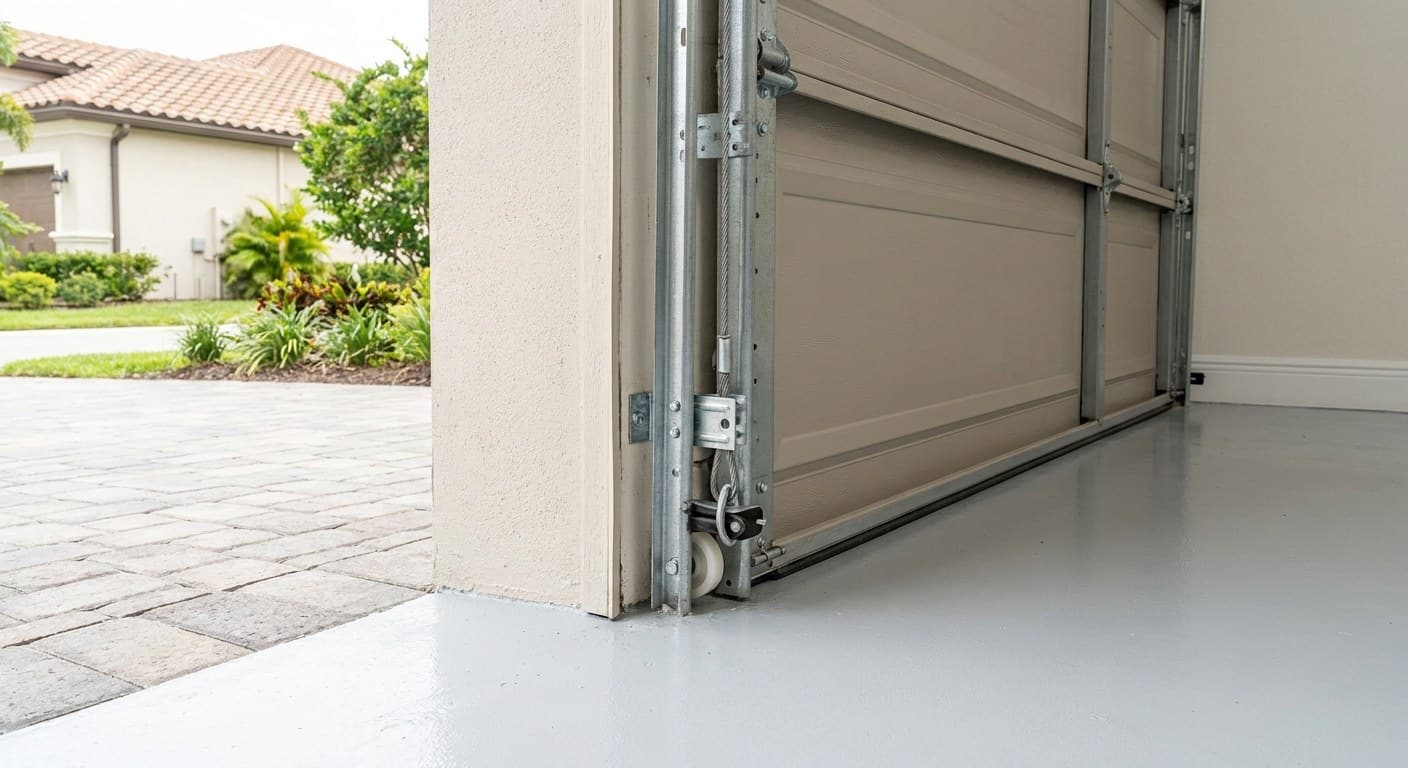
Three facts about brackets
The bottom bracket is loaded
always, even door closed
The top bracket guides
the section into the curve
Brackets hold the cable
that is why they are dangerous
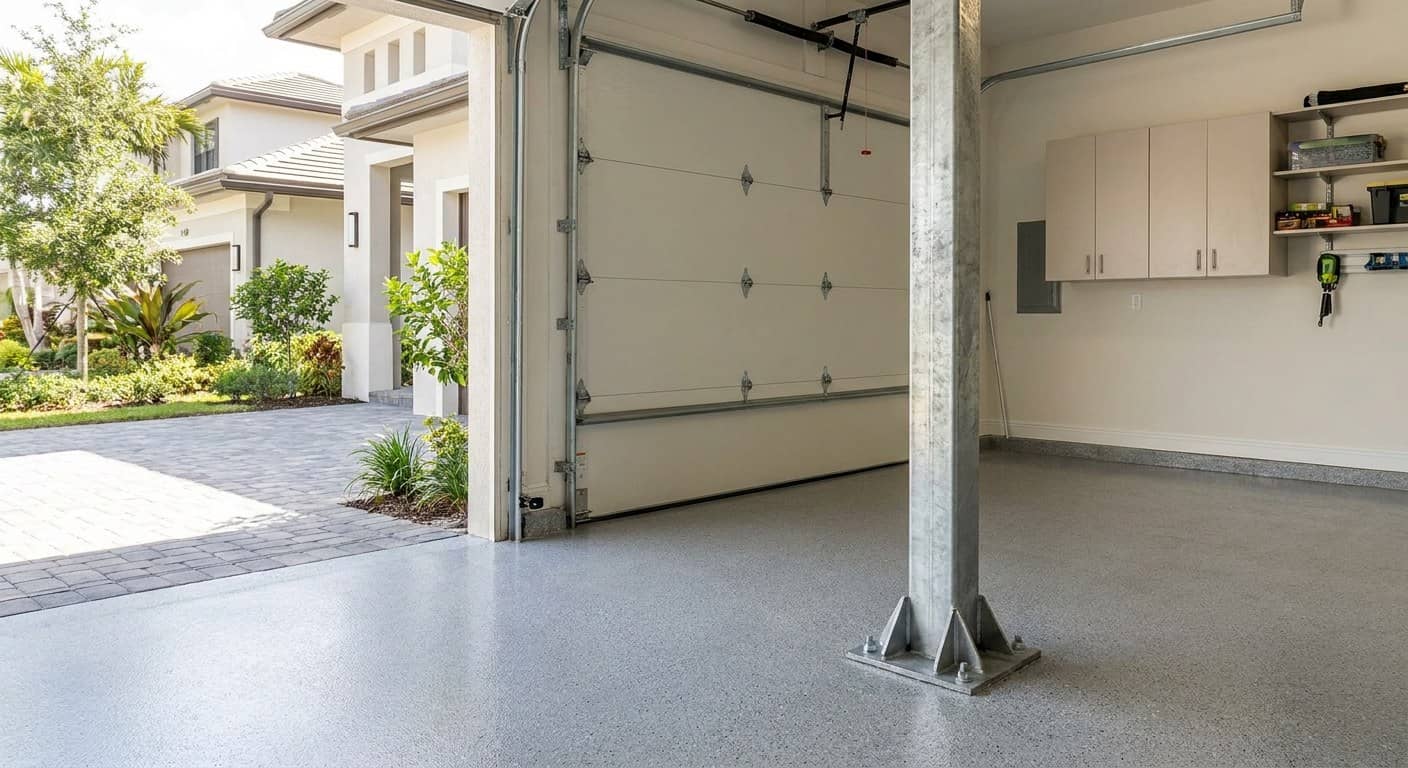
The brackets on a garage door
Bottom bracket
Where the lift cable attaches — under full tension at all times
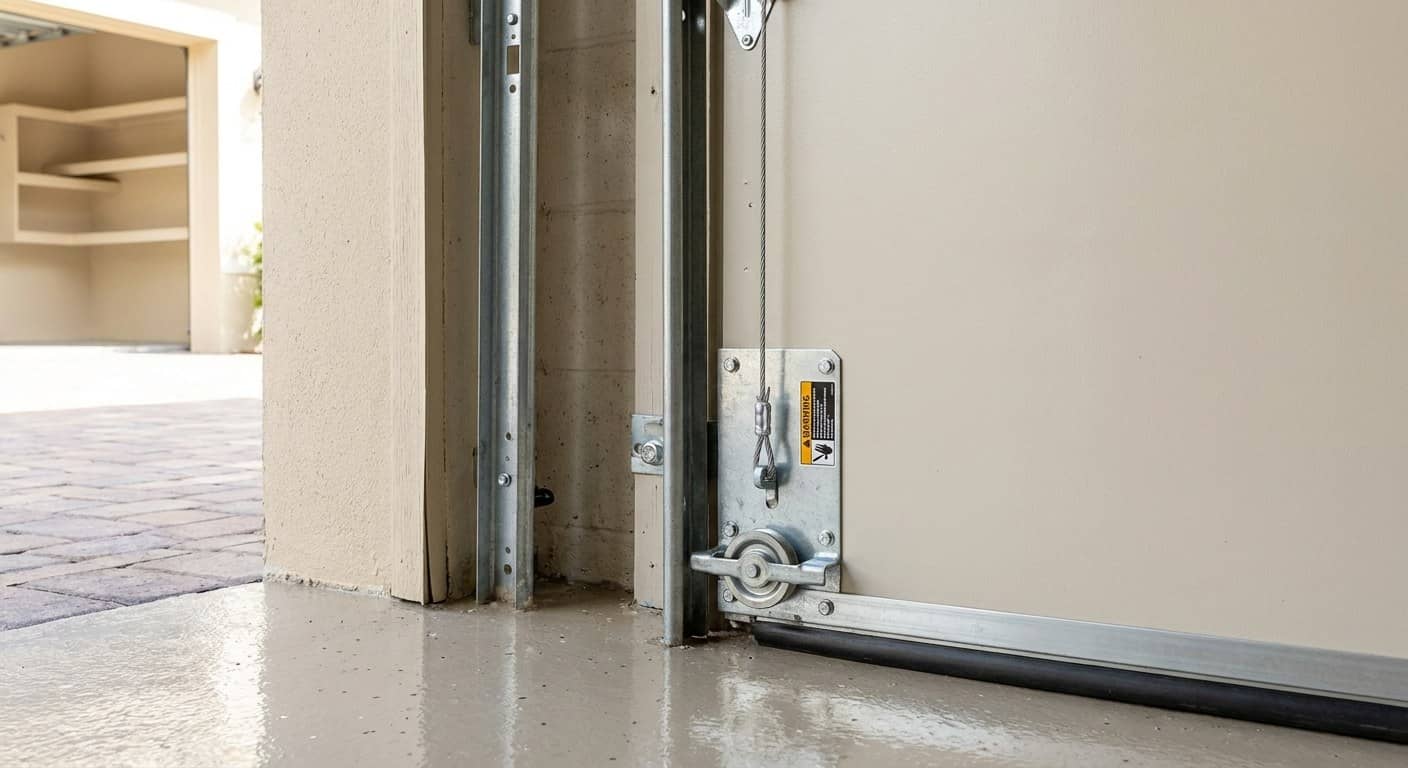
Top bracket
Carries the top roller into the horizontal track
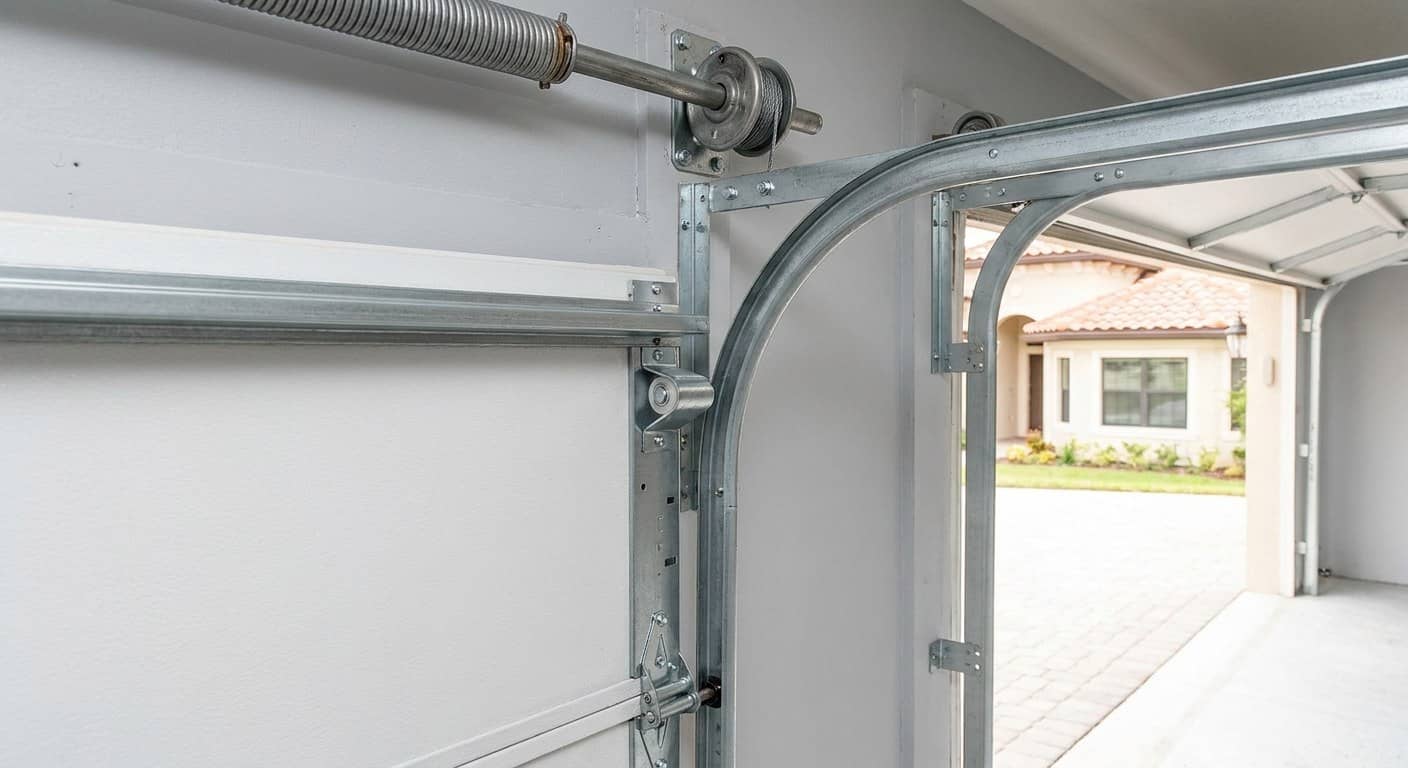
Track brackets
Fix the horizontal track to the ceiling or wall
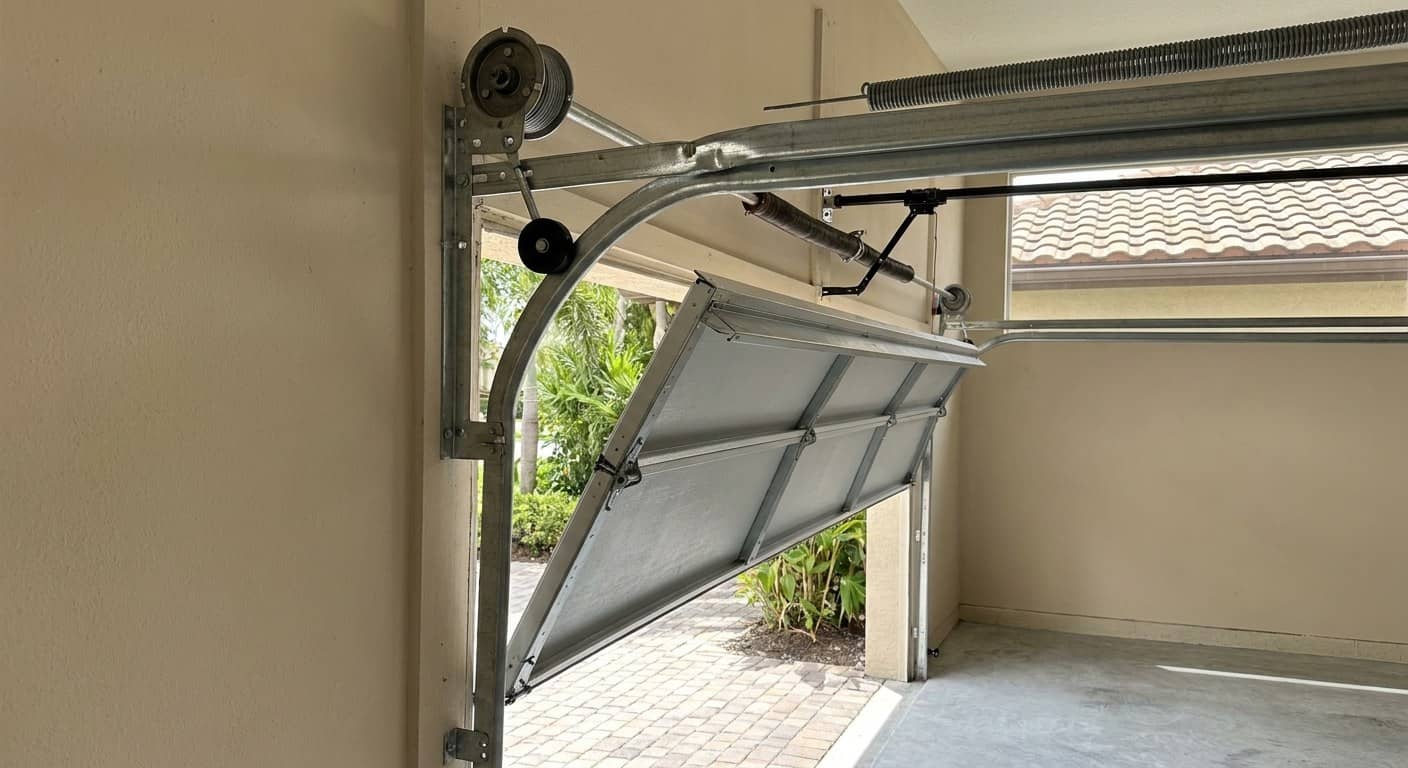
Jamb anchorage
On a rated door, the approval specifies these fixings
Bracket symptoms and what they mean
| Symptom | What it means | Urgency | Next step |
|---|---|---|---|
| A loose or bent bottom bracket | The most loaded fitting on the door | Urgent | Never touch it yourself |
| Track brackets pulling from the ceiling | Vibration has backed out fasteners | Soon | Book before the track shifts |
| A visibly bent bracket | Impact or overload | Soon | Replace, never straighten |
| Fasteners pulled from the jamb | Wrong anchors, or rotted framing | Urgent | This is what fails in a storm |
| After a vehicle touched the door | Brackets deform before panels show it | Soon | Have the whole assembly checked |
| On a rated door | Fixings are specified by the approval | Routine | Only approved anchors keep the rating |
The bottom bracket is the one part to never touch
Never loosen it
It holds the cable under full spring tension, closed or open
It releases explosively
This is a common cause of serious injury
Call instead
Releasing tension safely takes winding bars and training
2
brackets anchor the entire spring system
Oval
pin hole means the bracket is finished
Clamps
on the track before anything is undone
More detail if you want it
What the warning label on it actually means
Manufacturers print a warning directly on this bracket because the danger is not obvious from looking at it. Closed, the door appears inert — but the cable attached to that bracket is under the same tension the spring is storing, and the bracket is the only thing holding it. Remove its fasteners and the bracket becomes a projectile traveling along the line of the cable.
This is also why the advice on a broken spring is to leave the door closed. A homeowner reasoning that the spring is already broken, so the tension must be gone, is making an understandable mistake: on a two-spring door the surviving spring is still fully wound, and on a single-spring door the cable can still be loaded by the weight of the panels themselves.
How they fail, and what it looks like
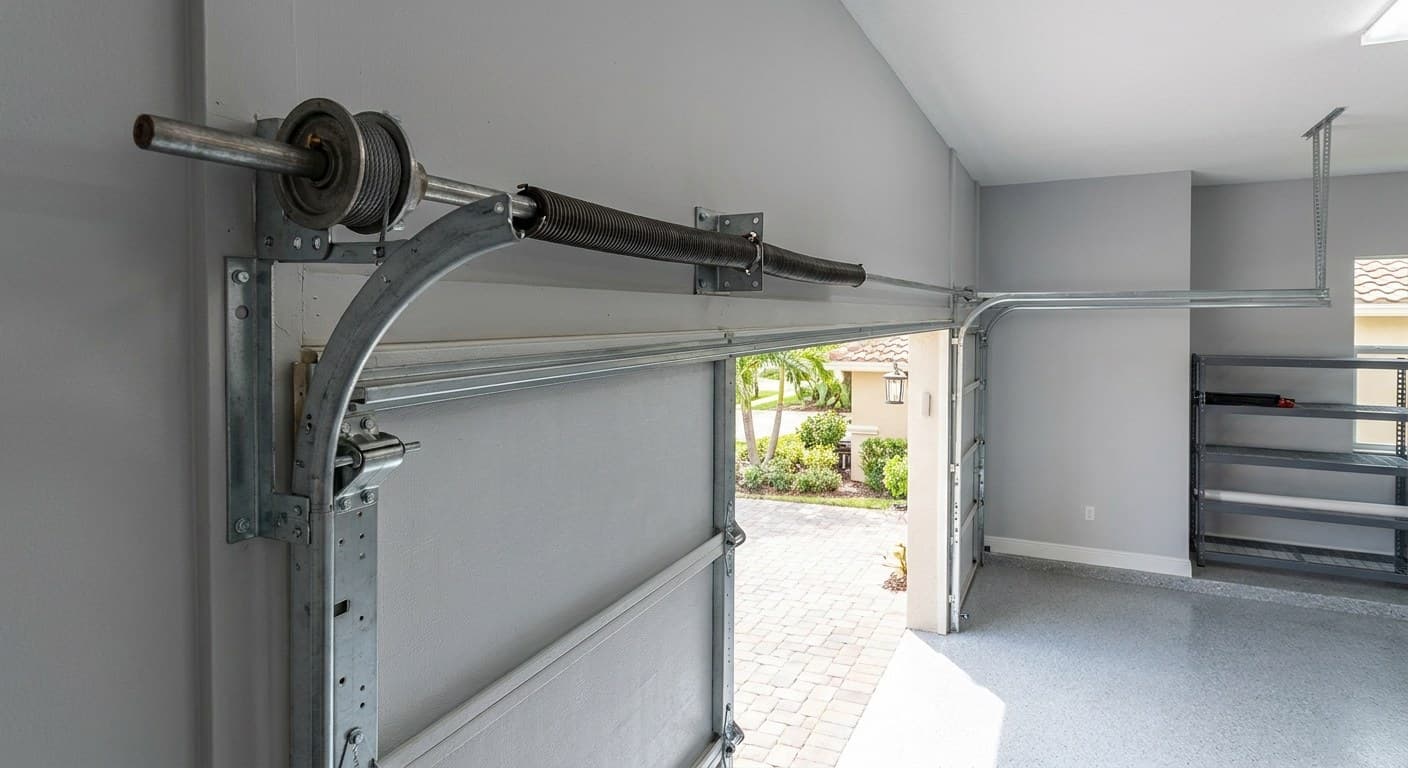
The usual failure is elongation: the hole the cable pin passes through slowly stretches into an oval under cyclic load until the pin no longer seats squarely. You see this as a cable that sits at a slight angle rather than running straight down from the drum. Left long enough the pin works its way out of the deformed hole, and that side of the door drops without warning.
Corrosion is the second path, and it is worse here than almost anywhere because these brackets sit at floor level. Every time water crosses the slab — a heavy afternoon downpour that drives under the seal, a garage that took surge water — it pools exactly where these fittings are bolted. Rust that has eaten into the bend of the L is structural damage, not cosmetic.
Replacing one properly
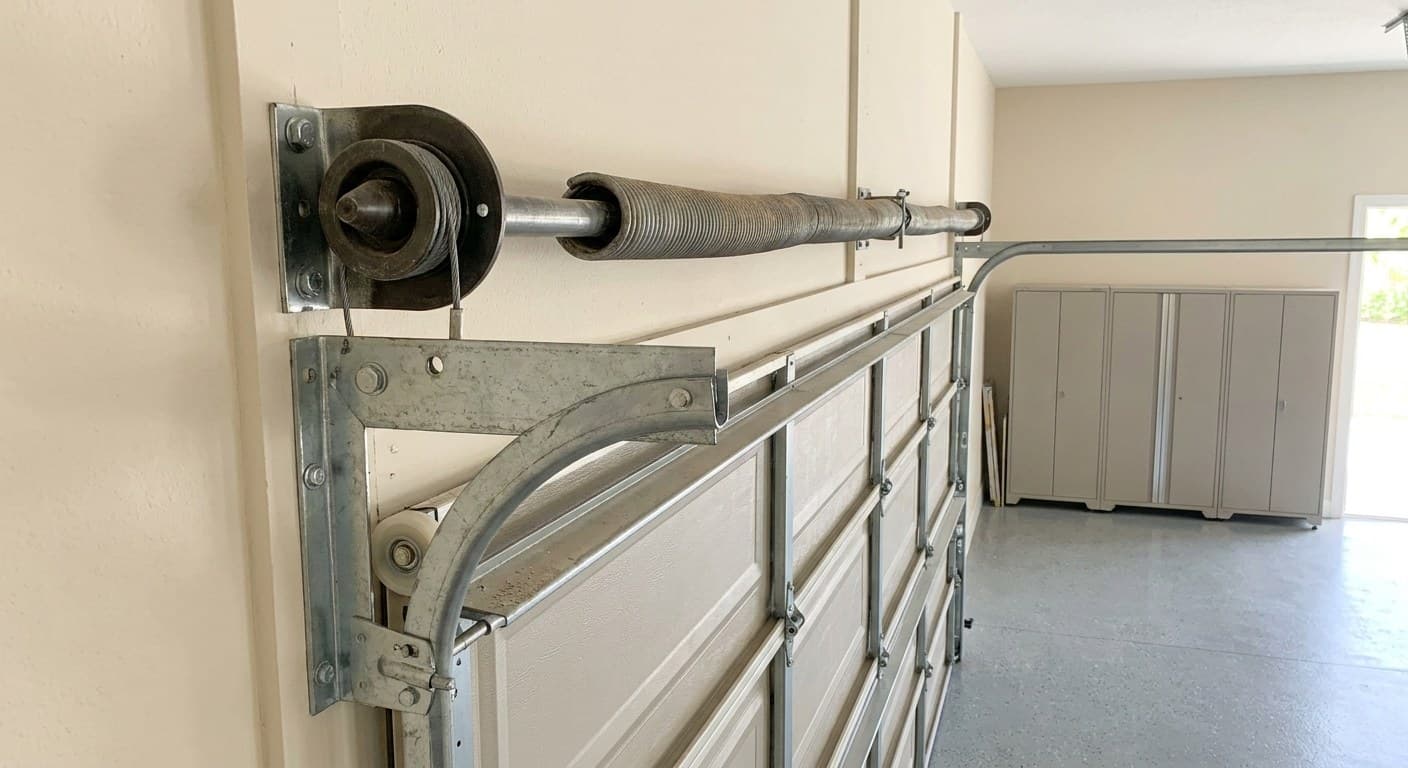
The sequence is not negotiable: secure the door in the closed position with clamps on the track, unwind the spring in measured increments with proper winding bars until the cables go slack, and only then remove the bracket. Fit the new one, re-seat the cable pin, rewind to the calculated turn count, and test the balance by hand before reconnecting the opener.
On an approved door there is one more step that gets skipped: the bottom bracket on a Miami-Dade assembly is often part of the tested configuration, fixed with specified fasteners into specified backing. A generic replacement bolted into whatever is behind it may hold the cable and still leave the door outside the configuration it was approved under.
Bottom brackets: the questions worth asking
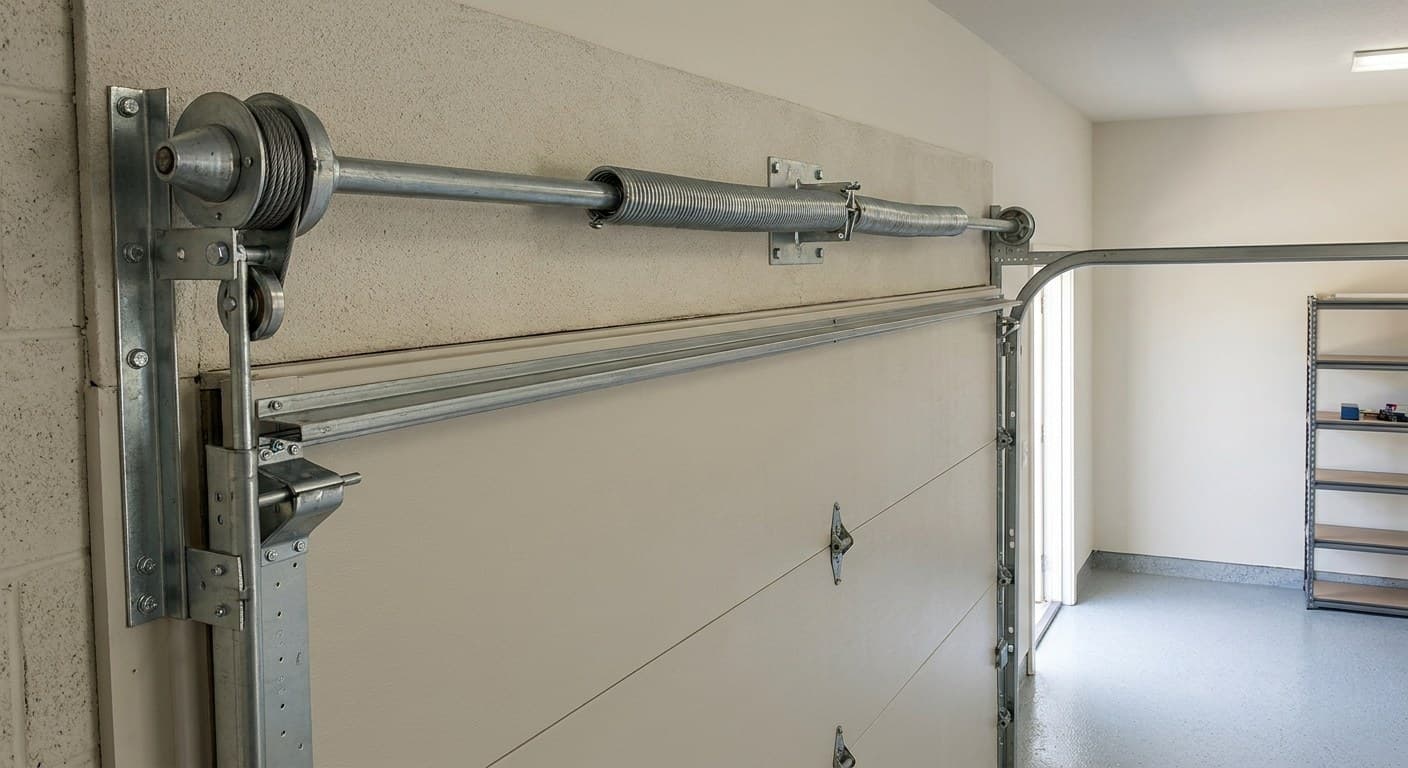
The warning label on my bottom bracket is worn off. Is the bracket still dangerous?
The hazard on a bottom bracket lives in the mechanics rather than in the sticker, and an old bracket with an illegible label is if anything more concerning.
- Age elongates the pin hole
- Age corrodes the inside of the bend
- Treat any bottom bracket as live when closed
Can a garage door bottom bracket be replaced without touching the springs?
A bottom bracket cannot safely be replaced without addressing the springs, because the cable attached to it is loaded by them.
- Clamps go on the track before anything is undone
- Some methods transfer the load rather than release it
- Every legitimate one starts by taking the load off
My garage flooded last season. Should the bottom brackets be checked?
Brackets are the first thing to look at after a garage has flooded, because standing water sits precisely at bracket height.
- Corrosion inside the bend is invisible standing up
- The metal at the fold, checked by hand
- The anchors into the wall or the slab
How do you know a garage door bottom bracket has reached the end?
An oval pin hole is the sign that finishes a bottom bracket, whatever the rest of it looks like.
- The hole was round when the door was new
- An oval one lets the cable end wander
- Both brackets get renewed together
Sources
- U.S. Consumer Product Safety Commission
- Miami-Dade County — Product Control and Permitting
Edited by Avidan Benichay · Updated
General information about garage doors in South Florida — not a diagnosis of your door, and not a quote. Code and prices vary by address and change over time. Terms of use
The parts around it
- Broken lift cableTwo steel cables carry the entire weight of the door from the bottom brackets up to the drums on the spring shaft.2cables, always replaced as a set
- Door off its trackA door that has jumped its track is the one fault where doing nothing is the right first move.0further cycles once the door is off track
 Cracked hingesEvery hinge on a sectional door carries a stamped digit, and that digit is not a part number in the ordinary sense — it sets how far the roller stem stands off the face of the panel, which is what keeps the door tracking correctly as it bends through the curve.1 to 5stamped numbers rising up the door
Next step
Not sure which part failed?
Most garage door faults are identifiable from the noise and the way the door moves. Start there — it usually costs less than you expect.
You describe what the door is doing
The noise it makes, how far it travels, whether the opener runs.
We test it on site
Springs, cables, balance, tracks, opener force and the safety reverse.
You get the price before any work starts
Itemized in writing, including the permit when the job needs one.
- 4.9/5 from 300+ local reviews
- Licensed & insured
- Free visit, no obligation