
Service life / Miami-Dade
How long should a garage door last on the coast?
A steel garage door is generally given fifteen to thirty years, and inland that is fair. Within a few miles of the water the number that matters is different, because the panel almost never wears out mechanically here — it corrodes from the bottom edge upward, and how long that takes depends far more on how the door is finished and rinsed than on how often it is used.
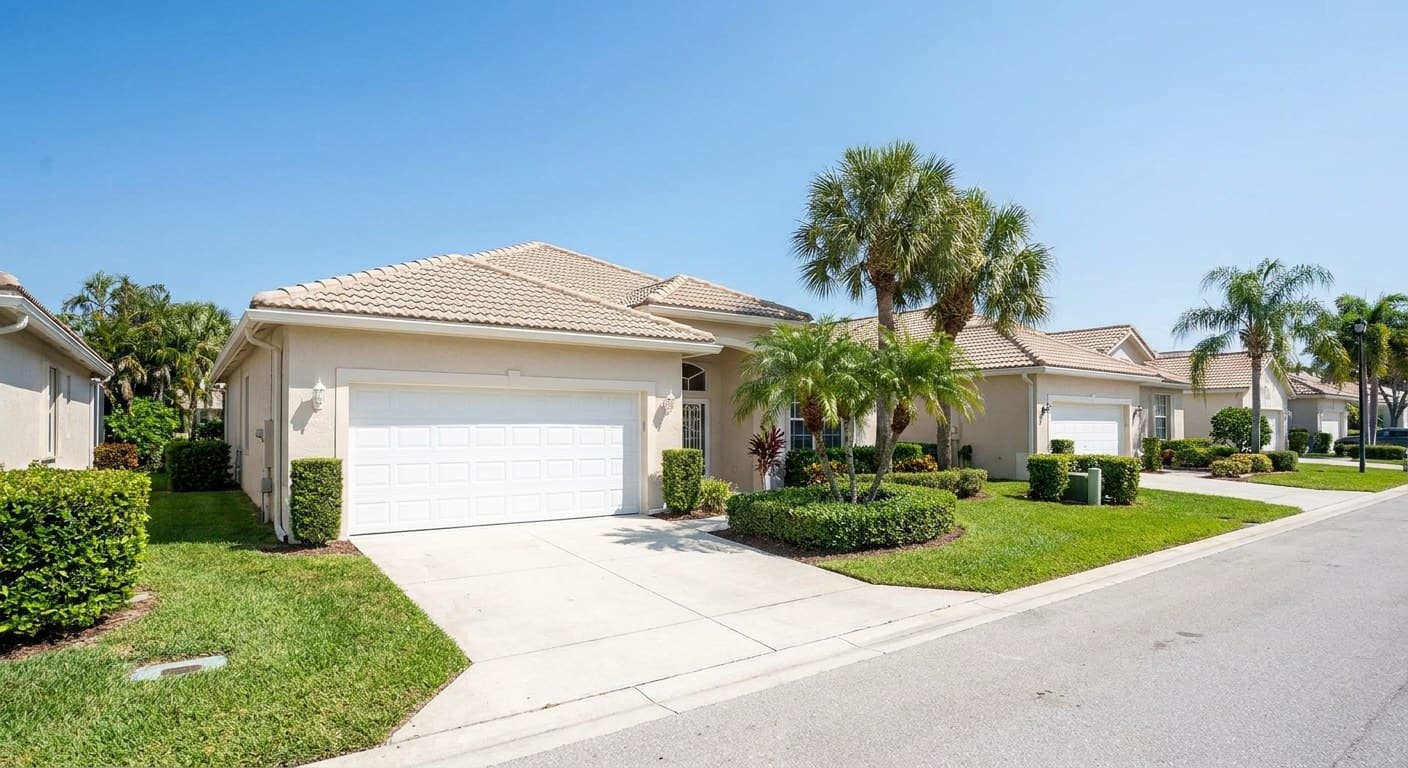
What a door's life depends on
The panels outlast the hardware
steel sections are rarely first to go
Salt sets the pace
coastal doors age on a different clock
Hardware is consumable
rollers, hinges, cables and seals
What actually wears out on a garage door
Steel sections
The longest-lived part, unless something hits them
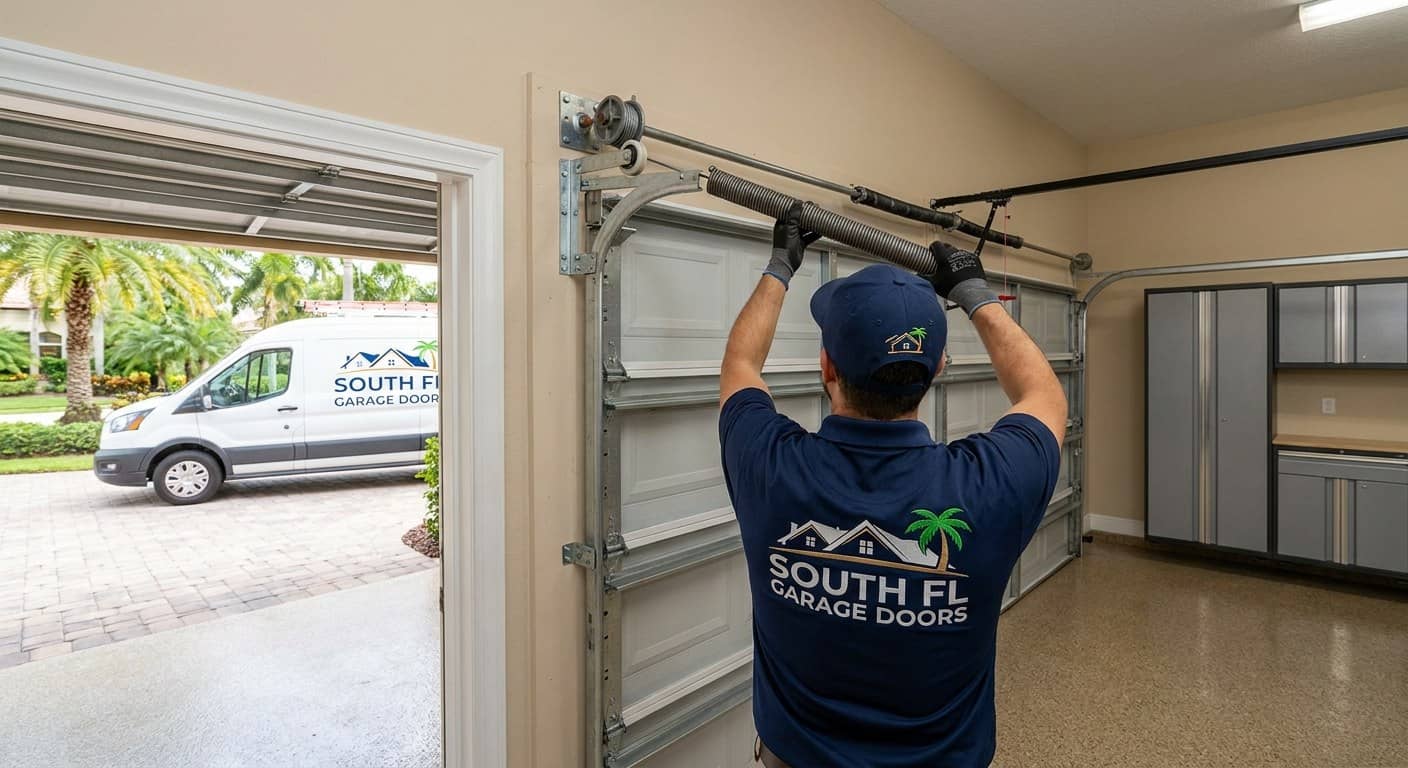
Bottom seal
Sun and heat crack rubber faster than use does
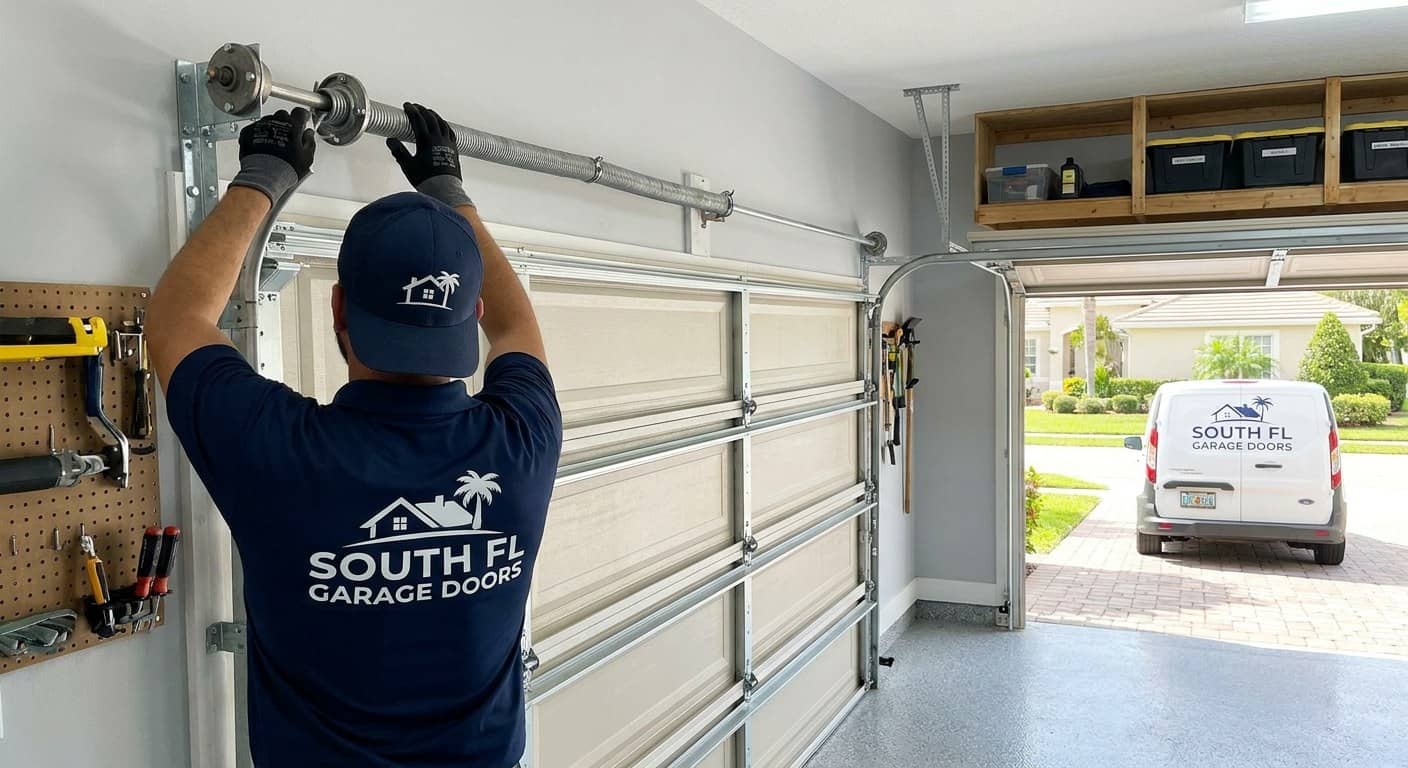
Rollers and hinges
The parts that move every cycle
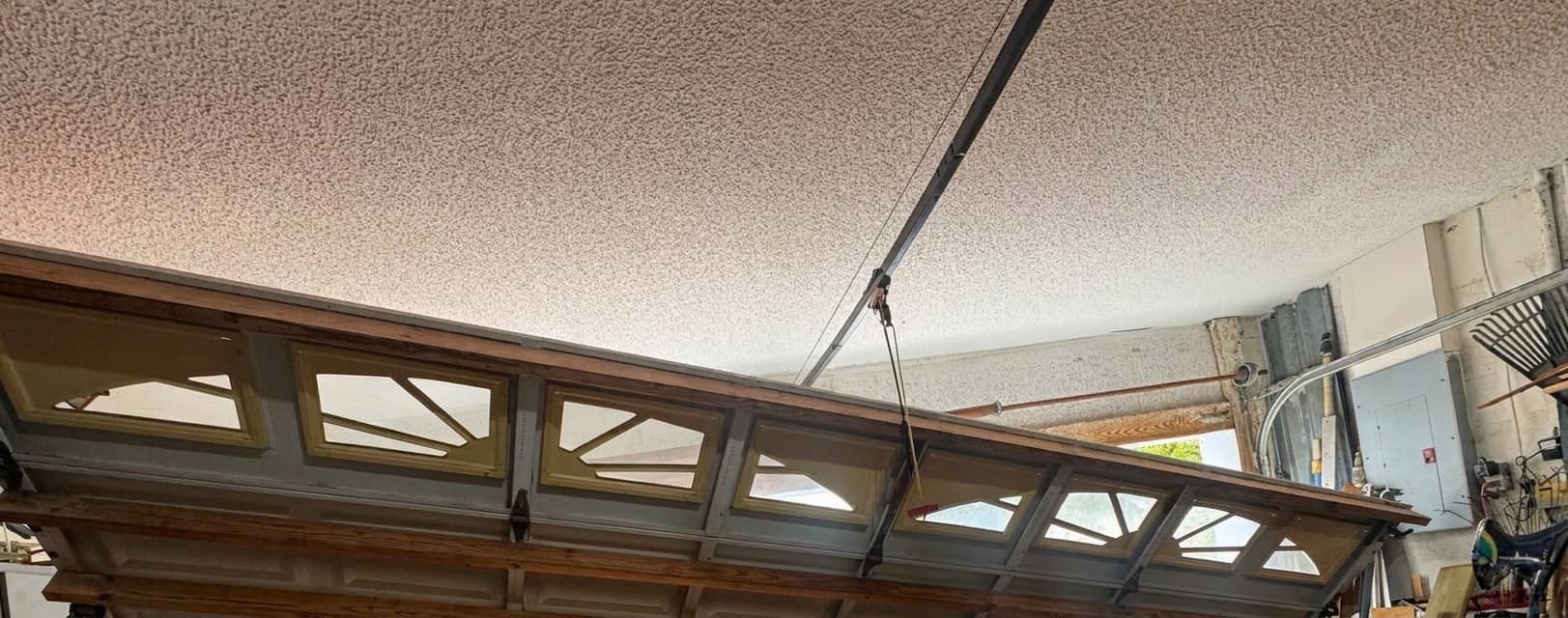
Cables and drums
Chloride attacks strand steel from the inside
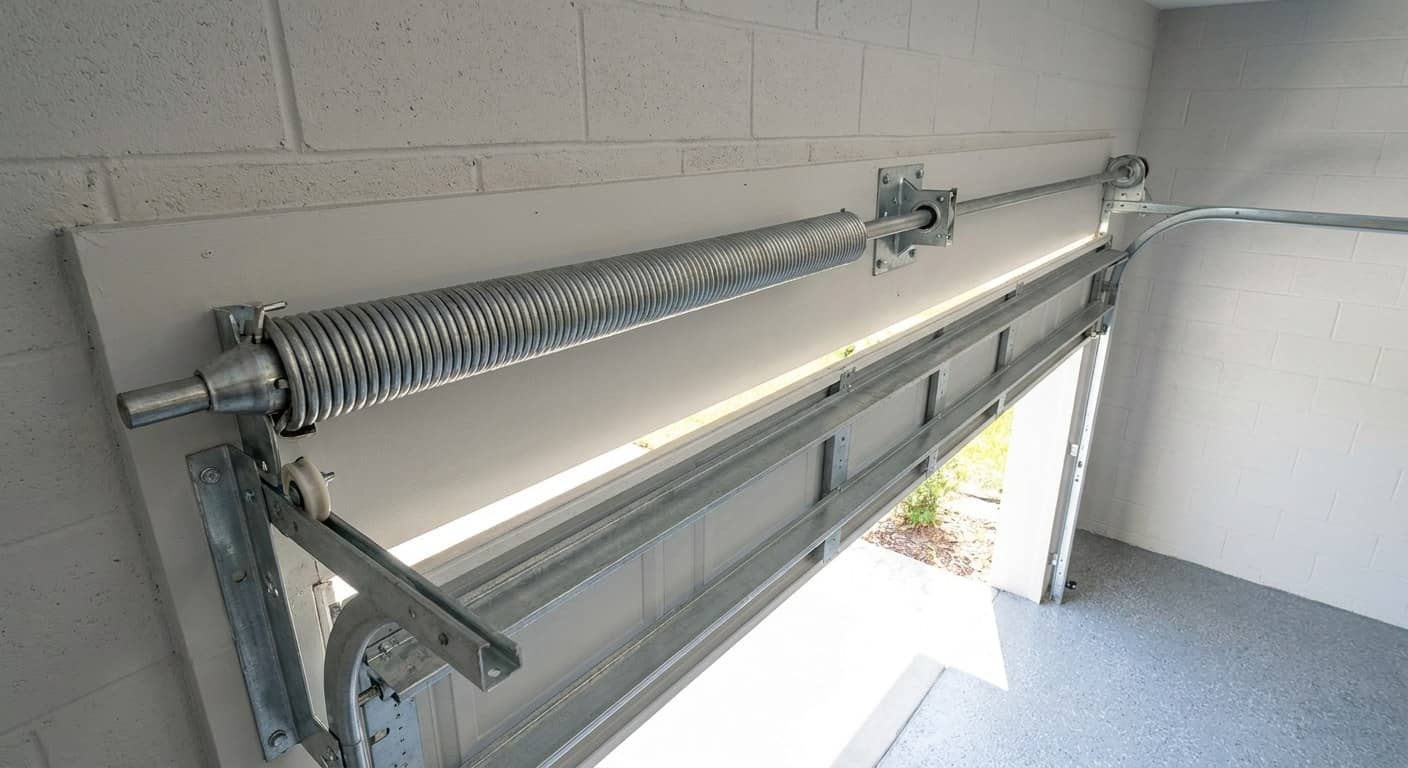
How long each part of the door lasts here
| Situation | What it means | Timing | Next step |
|---|---|---|---|
| Steel sections | Structurally sound long after the hardware tires | Fifteen to thirty years | Impact and rot end them, not age |
| Insulated sections | Heavier, quieter, same steel skin | Similar to standard | The insulation outlasts the finish |
| Rollers and hinges | Every cycle wears them | Five to ten years | The cheapest parts to renew on schedule |
| Cables and drums | Load-bearing and salt-sensitive | Shorter near the coast | Inspect yearly, replace on any fraying |
| Bottom seal and weatherstrip | Sun and heat, not travel | Two to five years | Cheap, and it keeps water out |
| An unrated door | Legal to keep, not legal to reinstall | Replace when it fails | The replacement must meet current code |
Why South Florida hardware wears out sooner

15-30 yr
national expectation for a steel panel
2 ft
bottom band where corrosion actually begins
3
sets of springs a long-lived panel outlives
More detail if you want it
Corrosion starts at the bottom, where you never look
The bottom section takes everything. It sits in the run-off from every rainstorm, it collects the salt that blows in and the salt that a car carries home, and it is the one part of the door that spends its life within a few inches of standing water. By the time rust is visible on the face, the inside of that section has usually been going for a while — steel corrodes where it is wet and unseen, not where it is bright and dry.
This is why two identical doors on the same street can be eight years apart in condition. One has a driveway that drains away from the opening; the other has one that pools against it. Nothing about the door explains the difference.
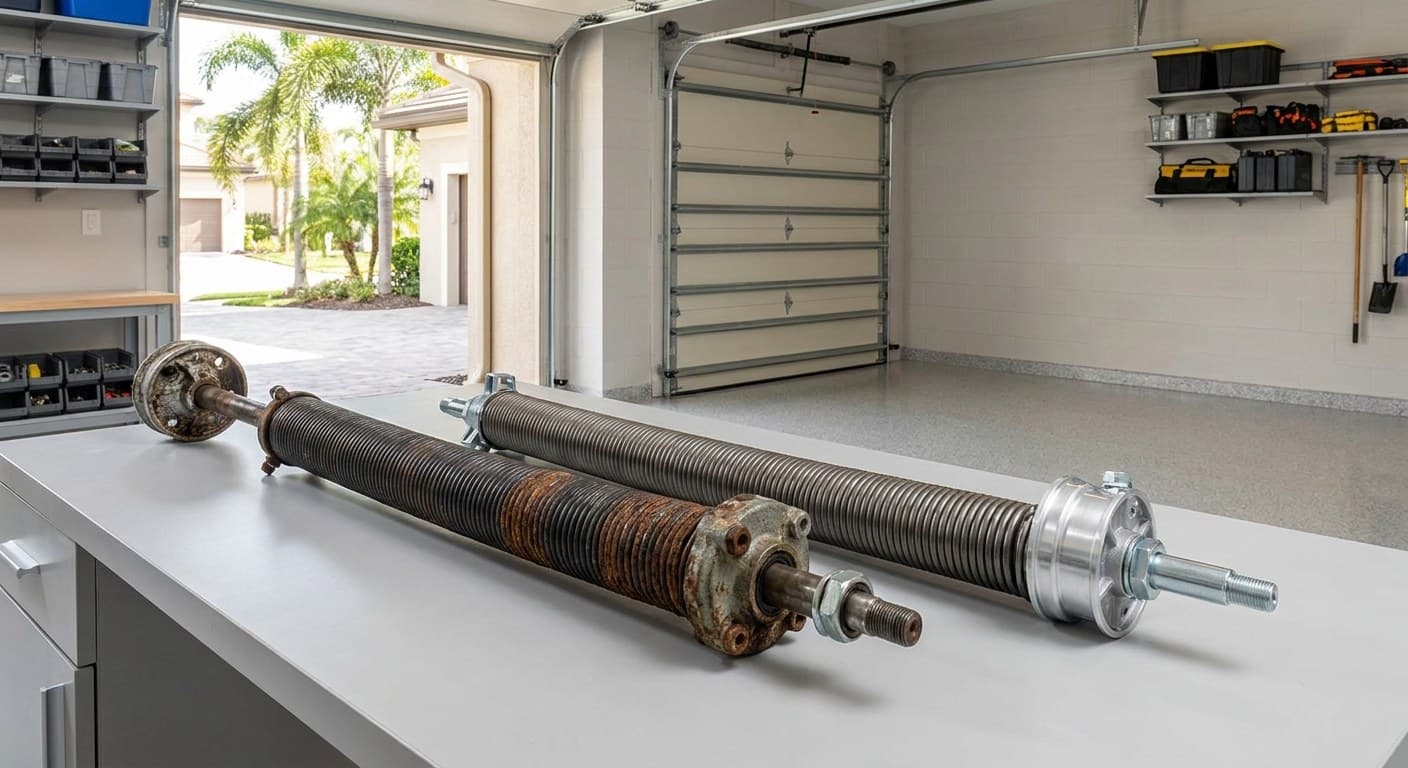
The parts that die on their own schedule
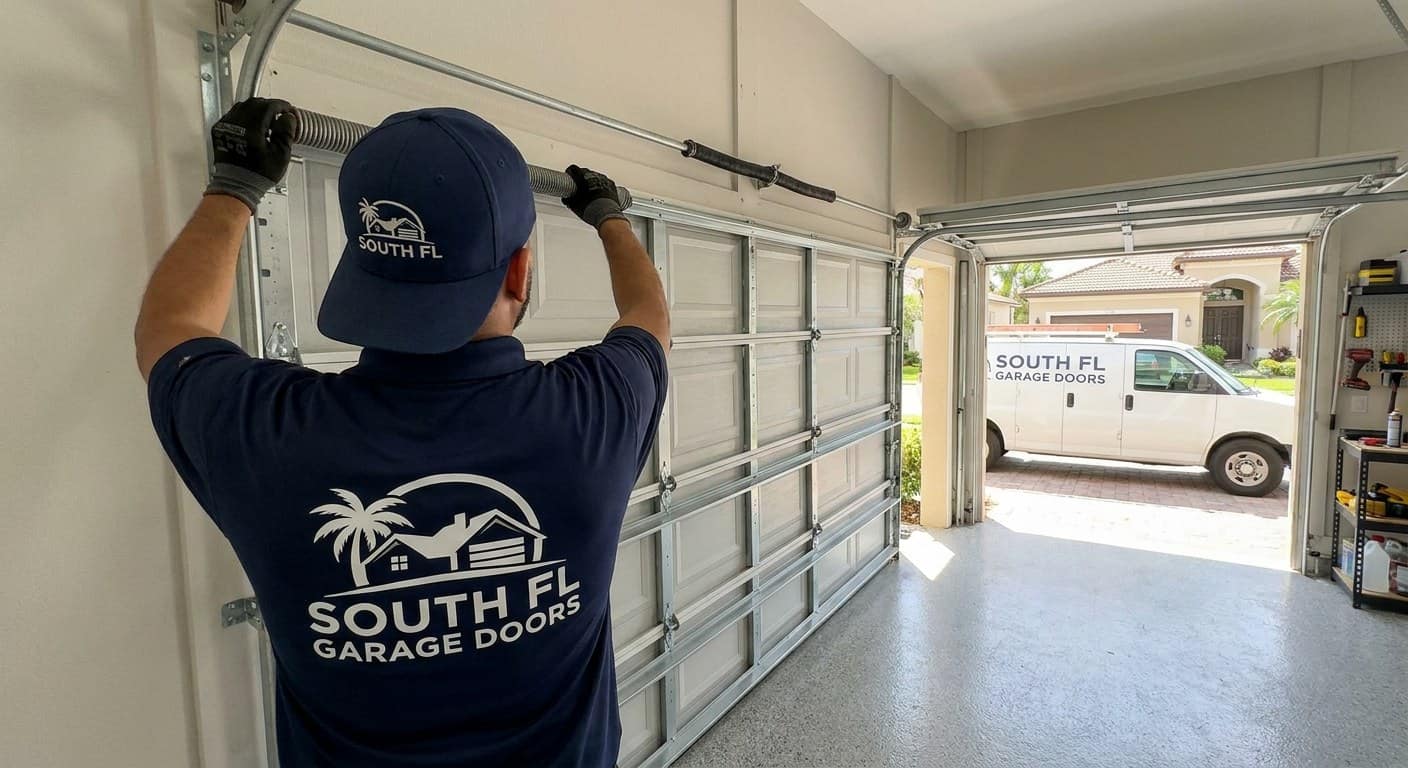
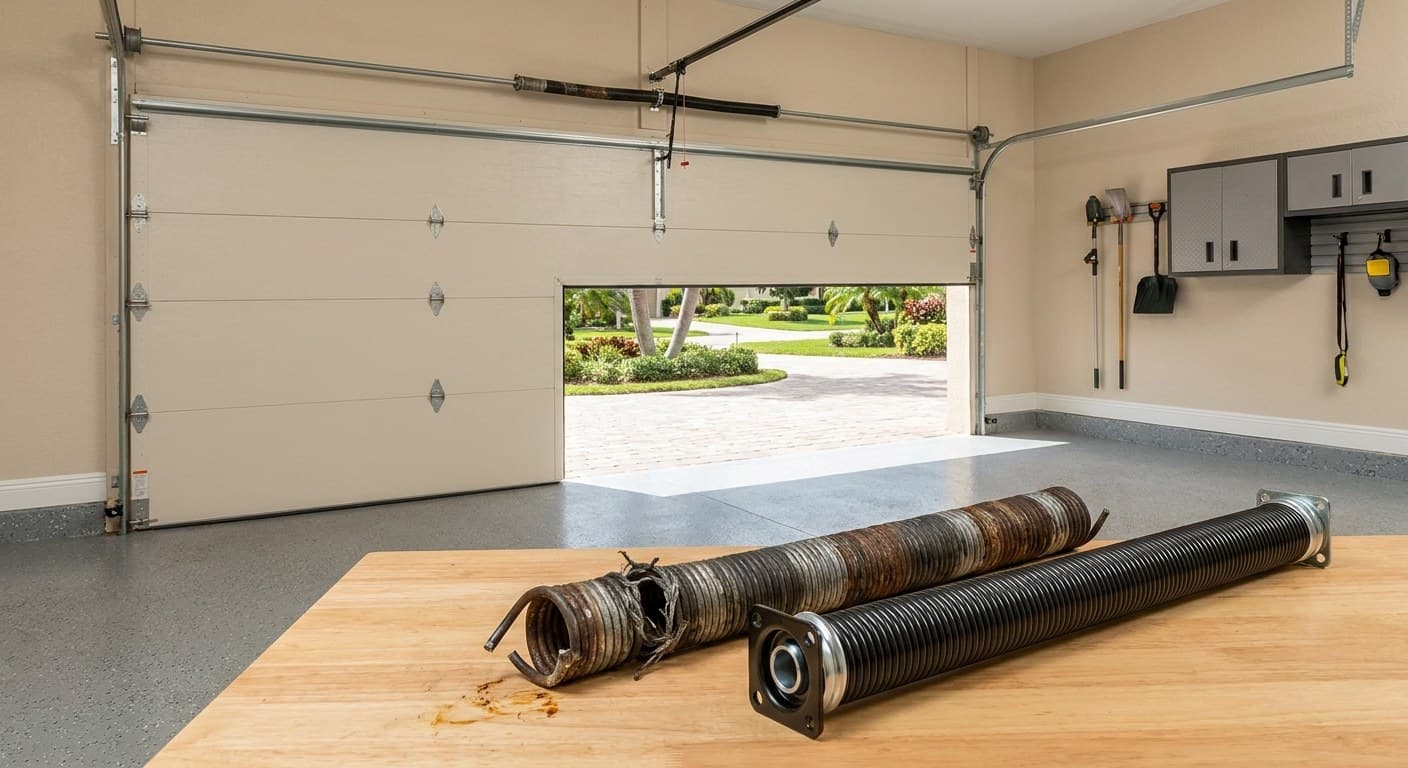
A garage door is not one object with one lifespan. The springs are consumables measured in cycles and will be changed two or three times under a panel that never moves. The rollers and hinges are hardware and will be changed once or twice. The opener has its own decade. Expecting all of them to end together is the single most common reason people think a door has failed early when what failed was a $300 component.
The useful mental model is a car. Nobody says a car lasted four years because it needed tires. The panel is the body; almost everything else is a wear item with a shorter and perfectly normal clock.
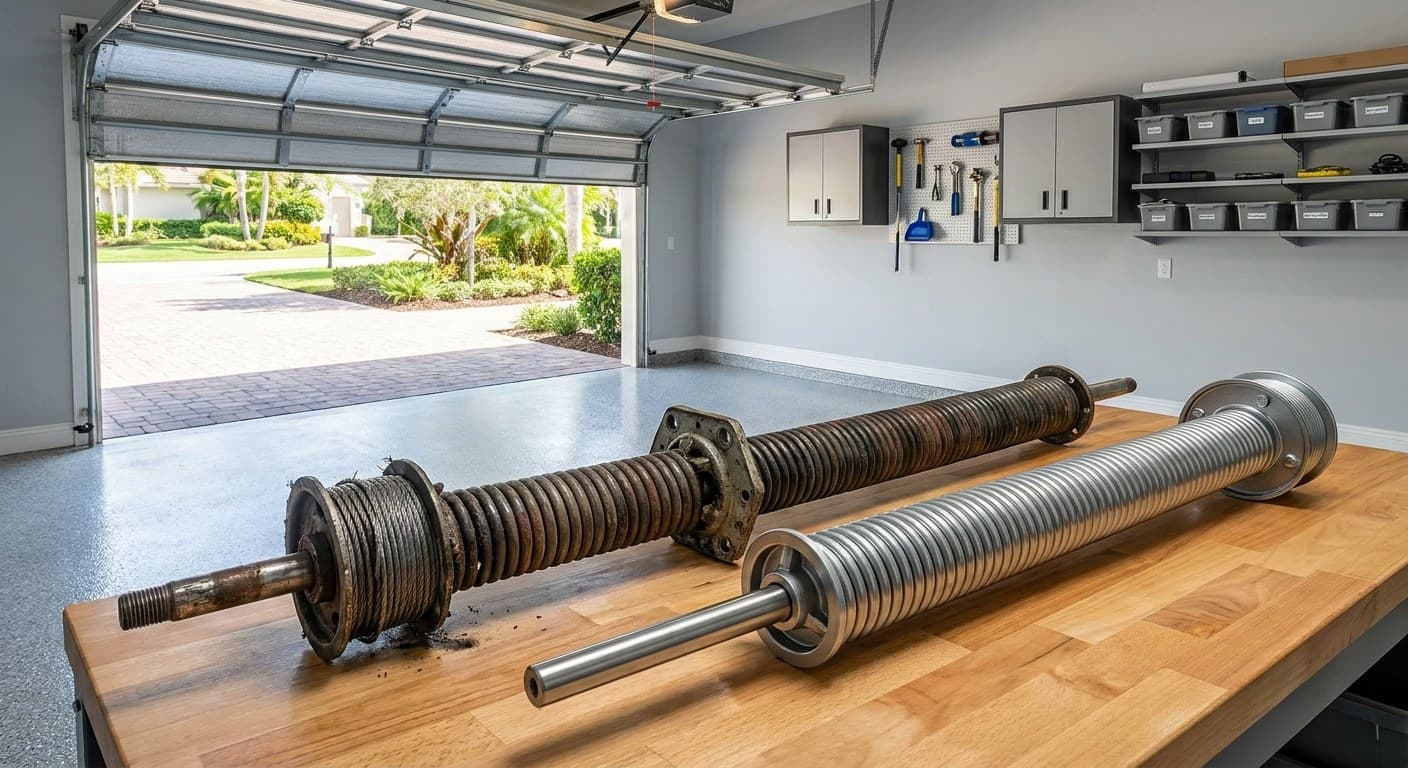
What genuinely extends it here
Rinsing the outside of the door with fresh water a few times a year does more for its life on this coast than any product sold for the purpose. Salt is only destructive while it is sitting there; removed, it stops working. Pay particular attention to the bottom two feet, the track brackets and the fixings, which are where the assembly loses its grip long before the panel loses its shape.
The second thing is drainage. If water stands against the closed door after a heavy afternoon, that is a civil works problem producing a garage door symptom, and no replacement panel will outlive the last one until it is fixed.
How long a coastal garage door lasts: your questions
Can a rusted bottom garage door section be replaced instead of the whole door?
A single corroded bottom section can be replaced on a door that is otherwise sound, and two conditions decide whether it is possible.
- Whether that section is still made for the model
- Whether the part keeps the approval intact
- A generic panel that merely fits is not enough
Does an older garage door lose its product approval as it ages?
The approval that was valid when a garage door was installed stays valid for that installation, because codes are not applied backwards to existing buildings.
- What ages is the usefulness of the paperwork
- Approvals get renewed and superseded
- It matters the day you need a matching part
Is a wood garage door a bad idea this close to the water?
A wood garage door does not corrode, so it removes the failure mode that ends most steel doors here and replaces it with a finish that has to be maintained on a schedule.
- Decades of life for an owner who enjoys upkeep
- Steel for anyone who wants to forget the door
- Neither choice avoids the hardware schedule
What genuinely extends a garage door's life on the coast?
Rinsing the outside of a garage door with fresh water a few times a year does more for its life on this coast than any product sold for the purpose.
- Salt only destroys while it is sitting there
- The bottom band and the inside of the seal
- Hardware corrodes on a shorter clock than paint
The one part almost nobody rinses is the hardware inside the garage, and that is where corrosion starts costing money first.
Sources
- Florida Building Commission — Product Approval
- National Hurricane Center (NOAA)
Edited by Avidan Benichay · Updated
General information about garage doors in South Florida — not a diagnosis of your door, and not a quote. Code and prices vary by address and change over time. Terms of use
Before you decide
- Repair or replaceRepair whenever the panel itself is straight and what failed is a component — springs, cables, rollers, a hinge, an opener.3rdrepair on one door that signals replacement
- Side and top sealsThe flexible flap nailed to the jambs and header of the opening does a different job from the strip under the door: it closes the vertical gap between the panel face and the frame, and it is the seal that decides whether wind-driven rain gets past the edges of a closed door during a squall.Frameis where stop molding is fixed
- Bottom sealEverywhere else the strip along the bottom of a garage door is sold as a draft excluder.3–5 yrrealistic seal life in this heat
- How long springs lastA standard torsion spring is rated for about 10,000 open-and-close cycles, which works out to roughly seven years for a household that uses the door four times a day.10,000cycles on a standard torsion spring
Next step
Find out what your address actually requires.
Design pressure depends on your exact wind zone and the geometry of the opening. We check it before quoting anything — no guesswork, no round numbers.
You describe what the door is doing
The noise it makes, how far it travels, whether the opener runs.
We test it on site
Springs, cables, balance, tracks, opener force and the safety reverse.
You get the price before any work starts
Itemized in writing, including the permit when the job needs one.
- 4.9/5 from 300+ local reviews
- Licensed & insured
- Free visit, no obligation